












Where the cutting head work starts
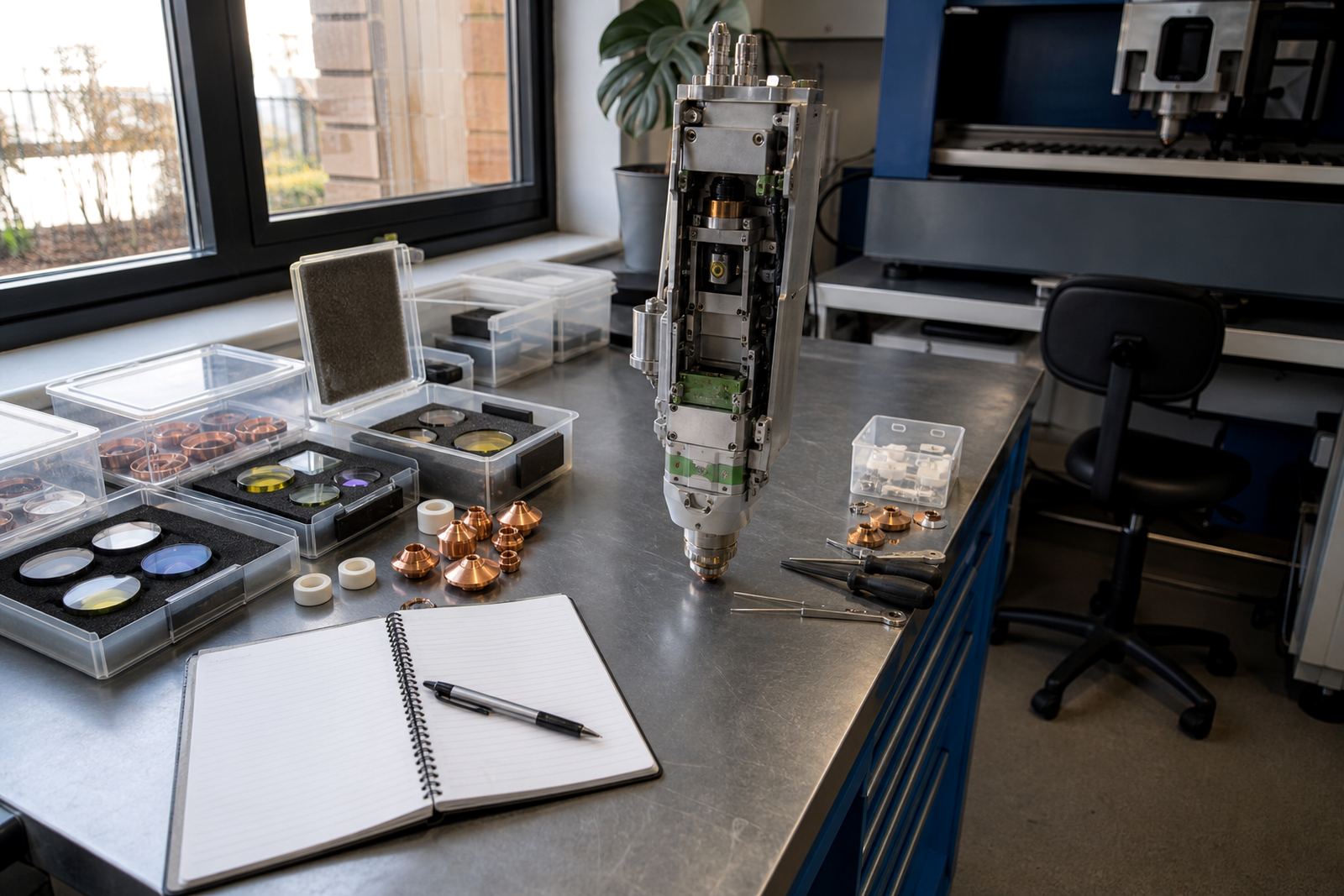
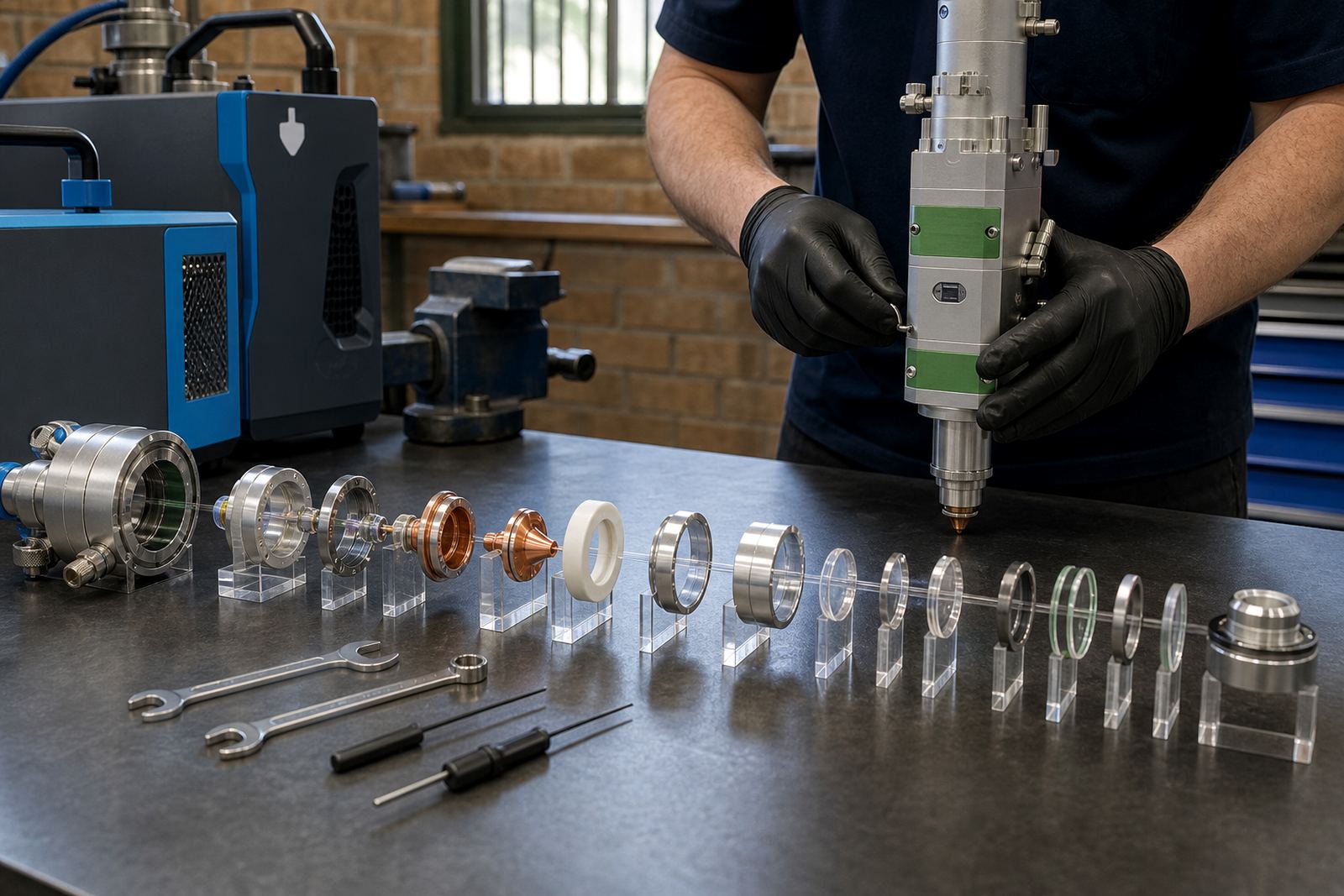
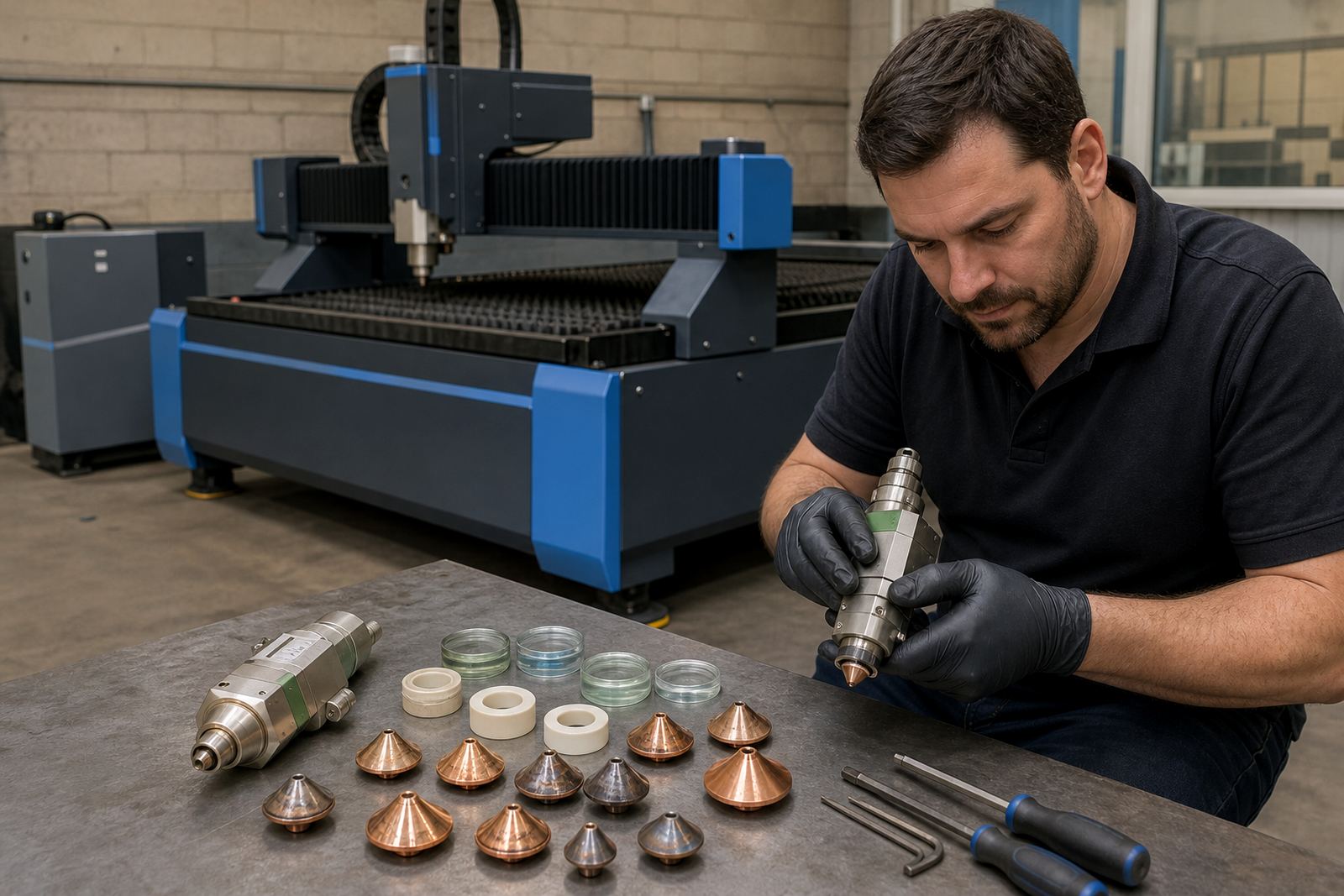
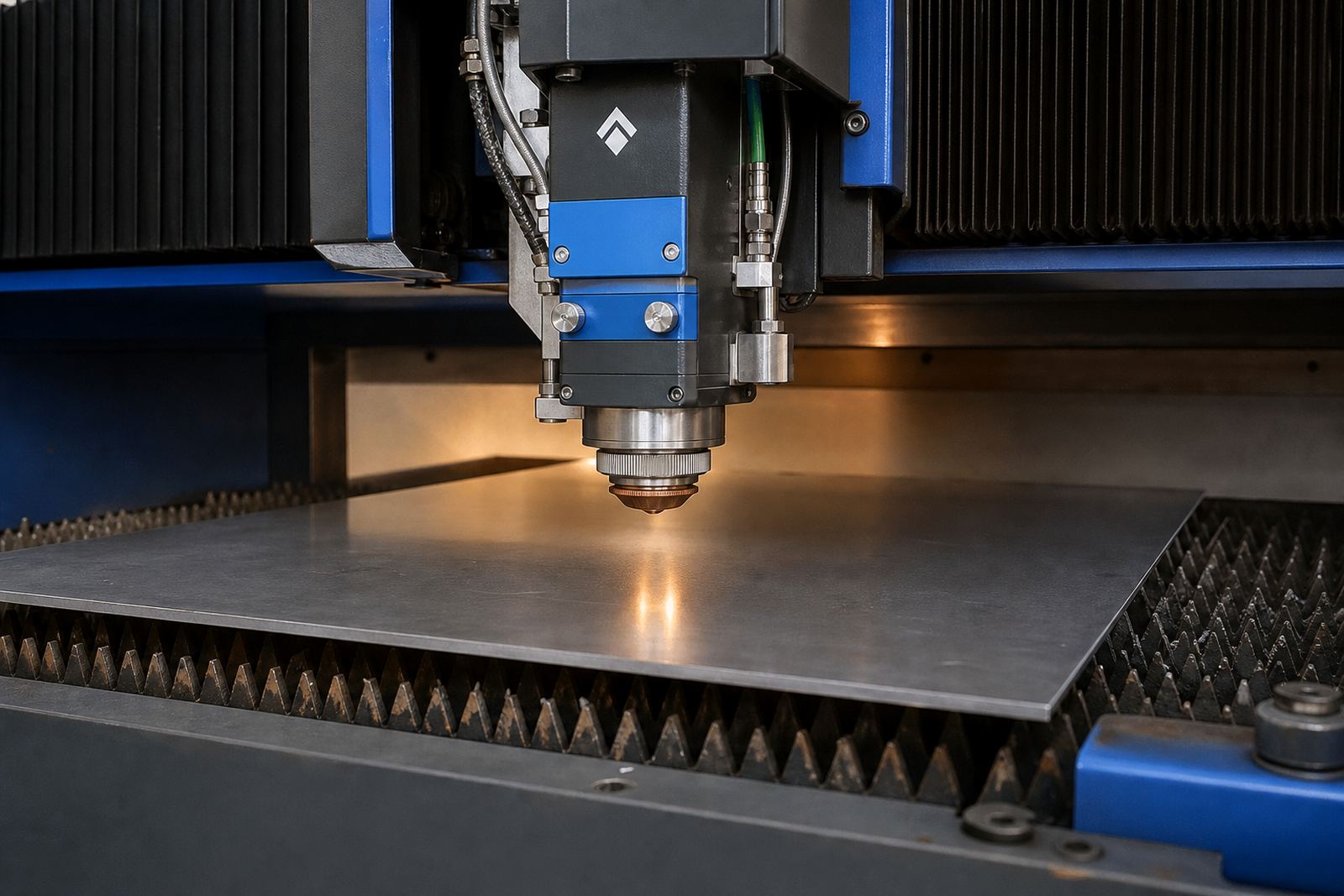
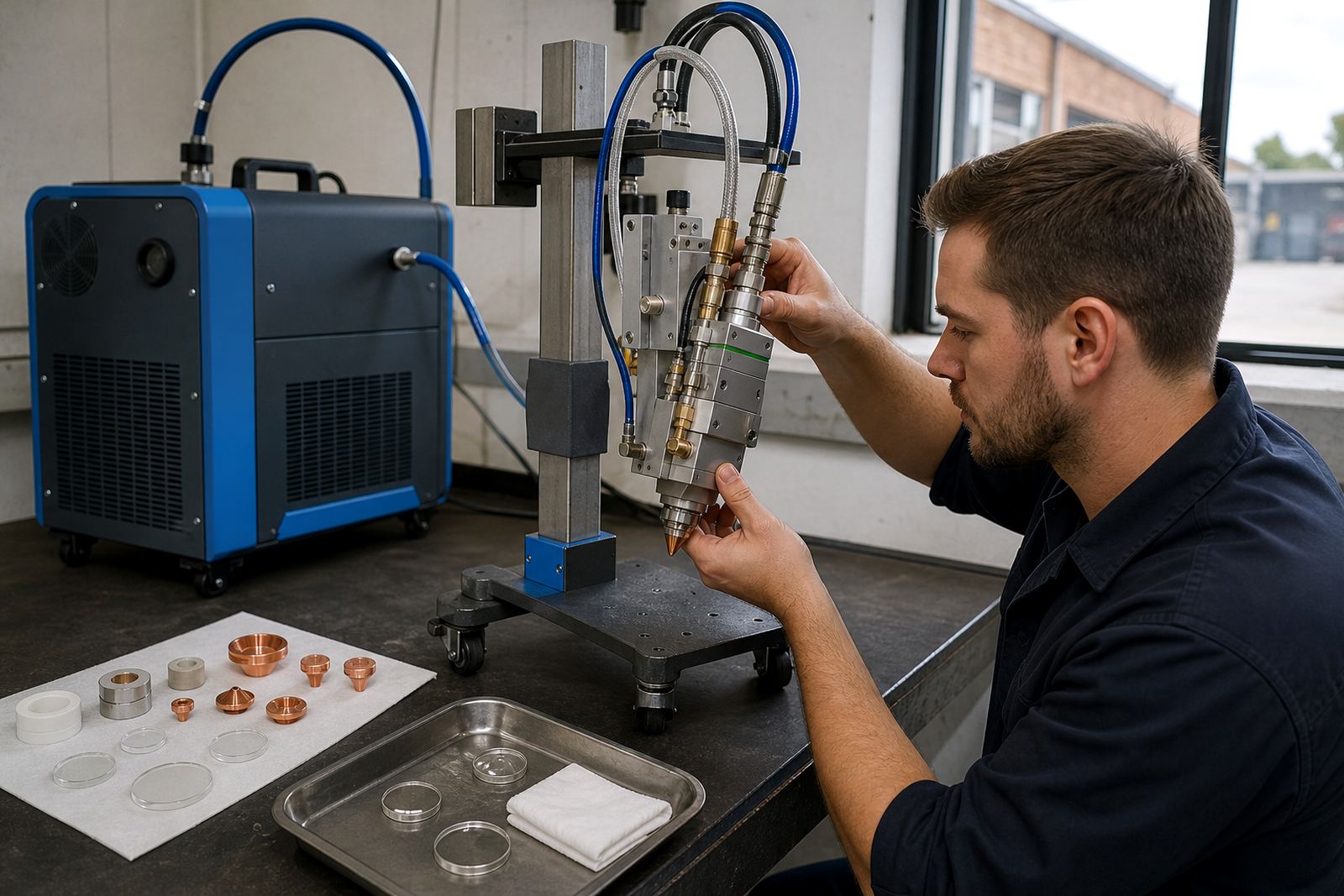
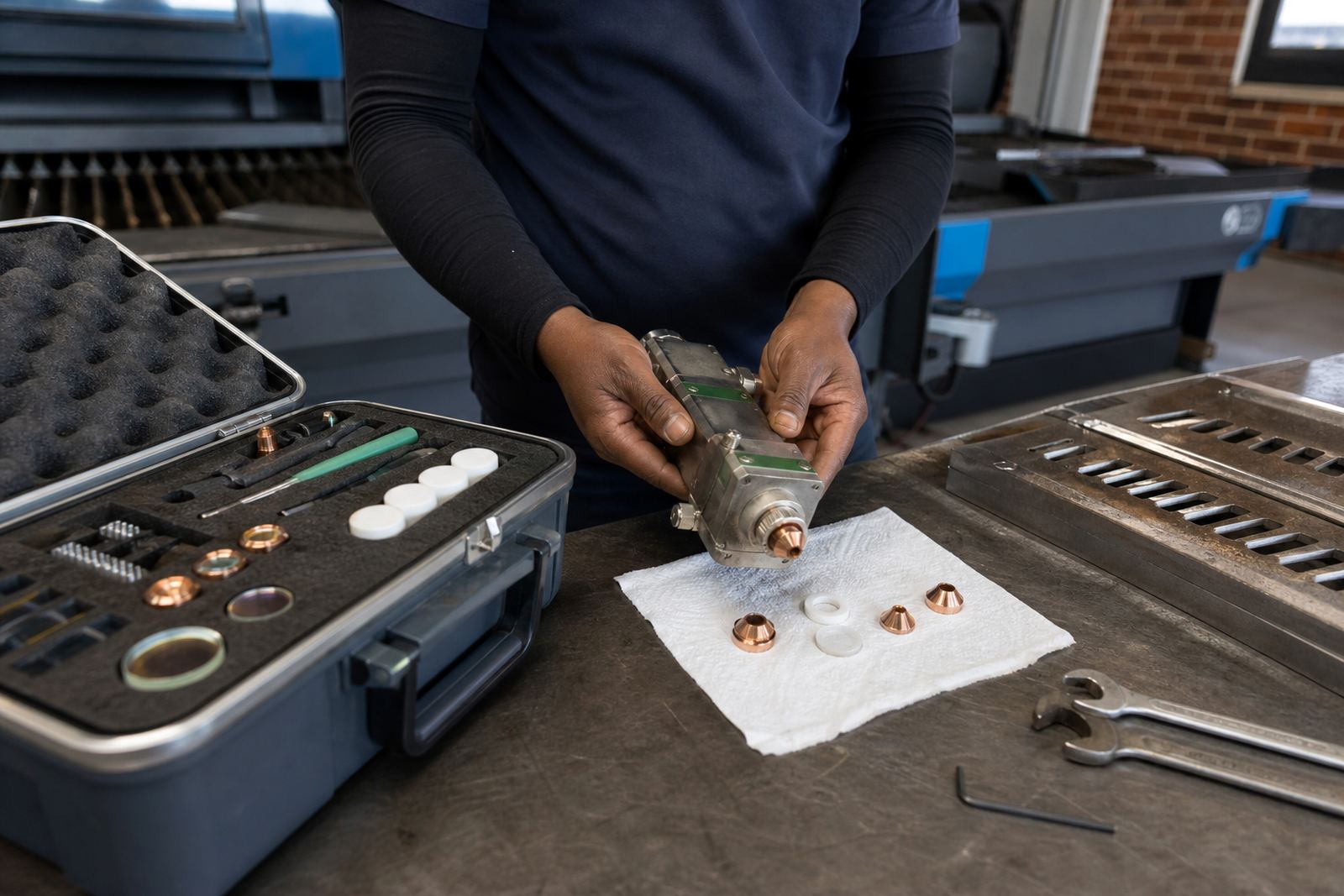
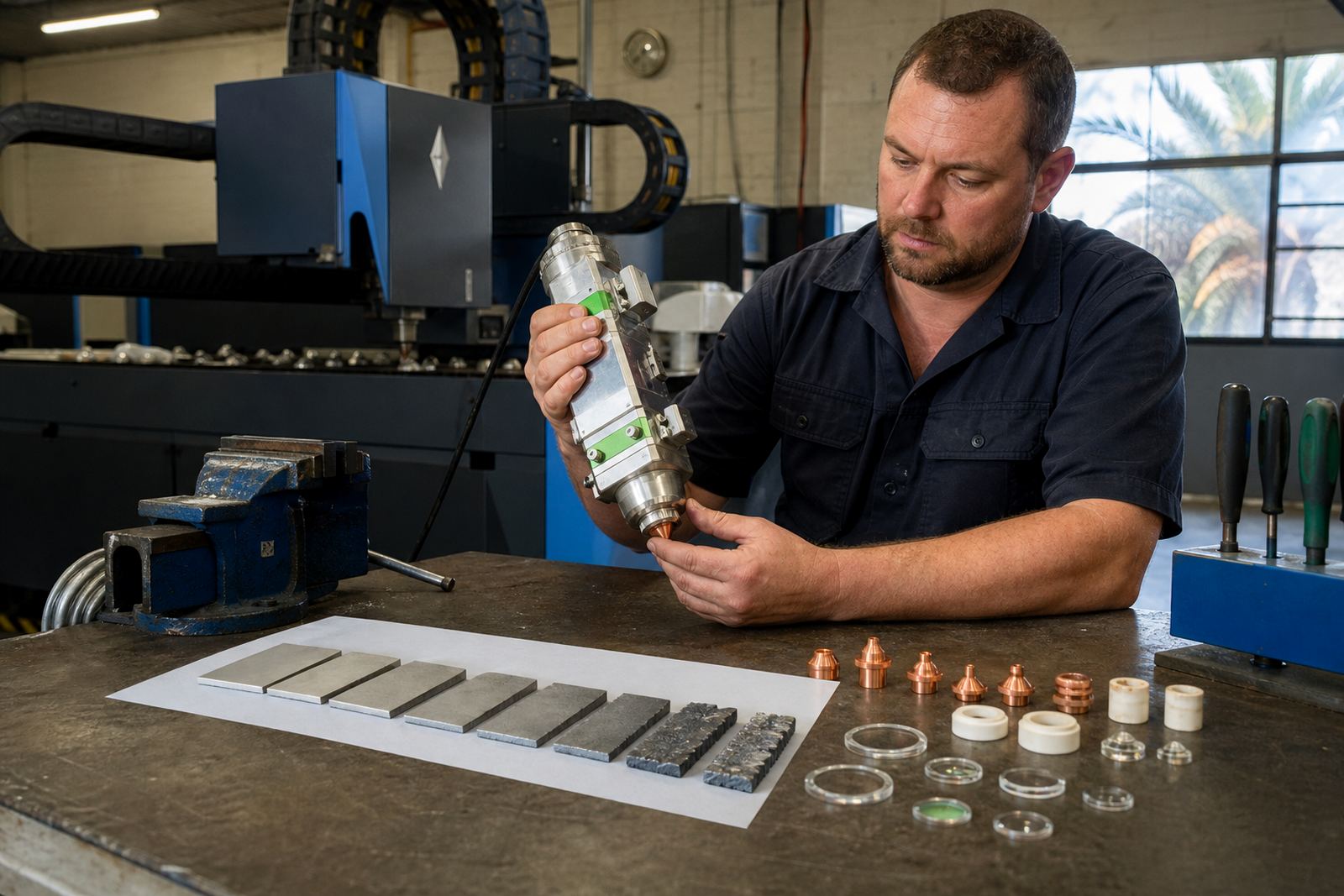
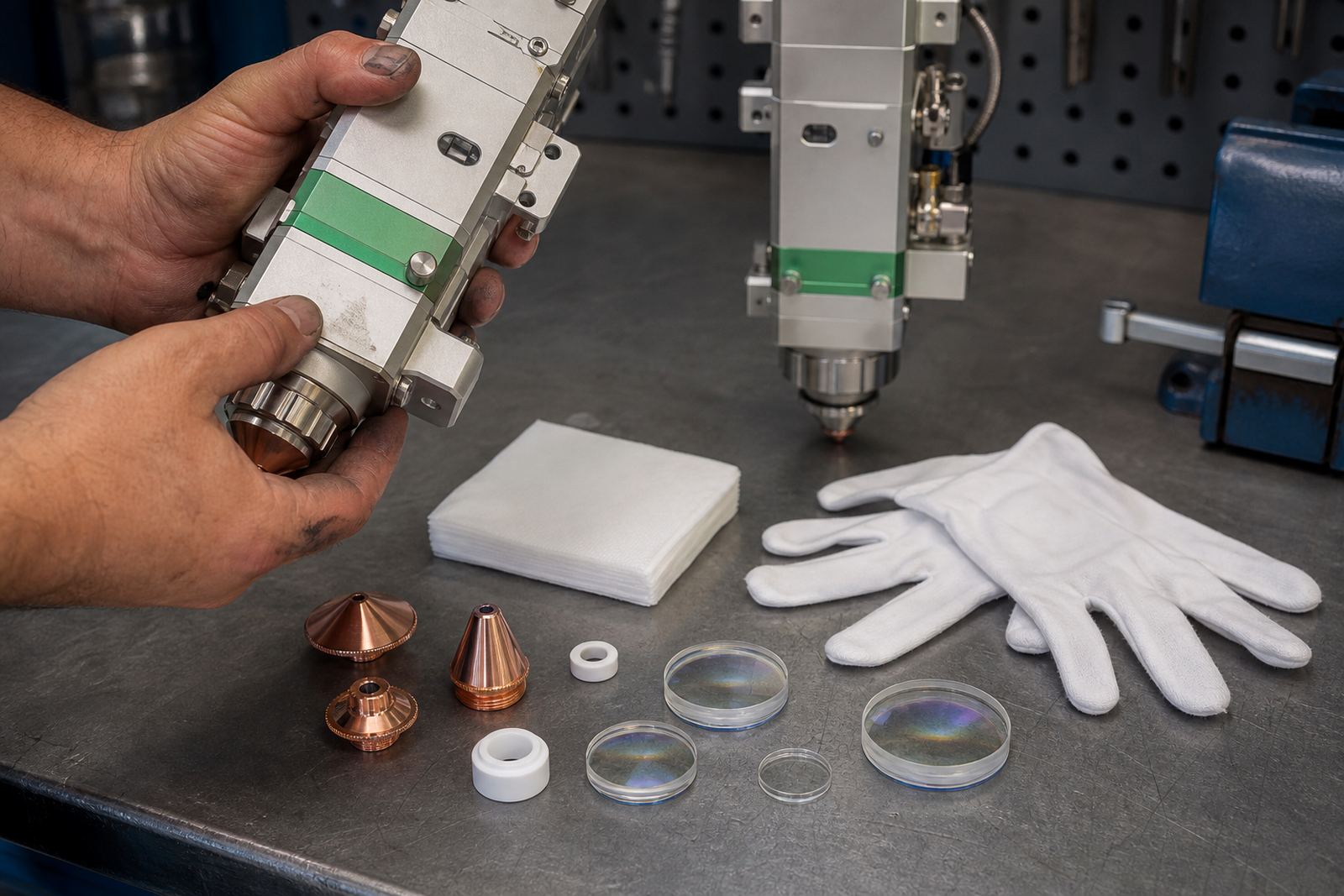
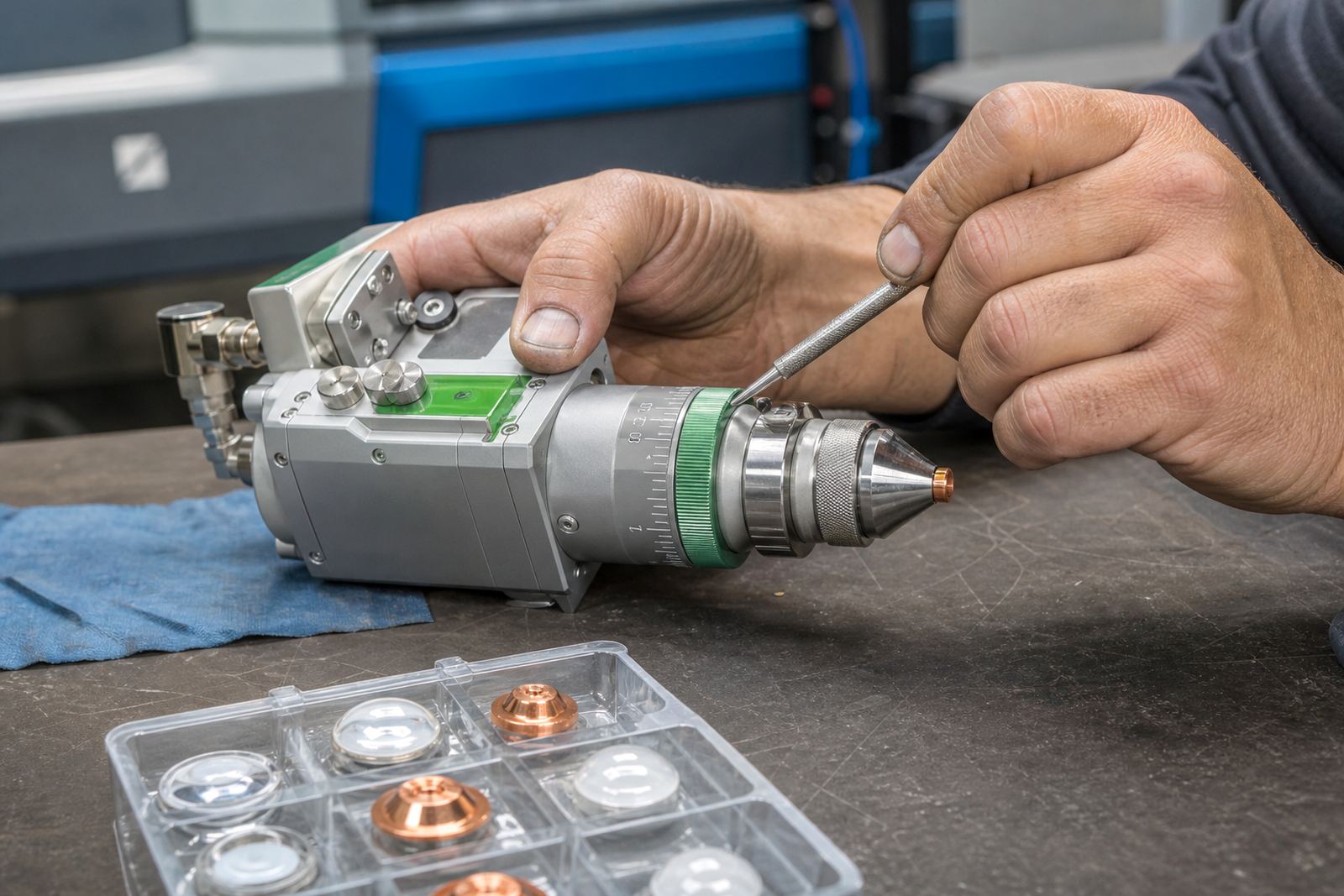
A fibre laser cutting head is a small assembly with a large job. It holds the lens stack, nozzle, ceramic ring and sensing parts in one housing, so a minor fault can show up as a rough edge, dross or a cut that wanders off line.
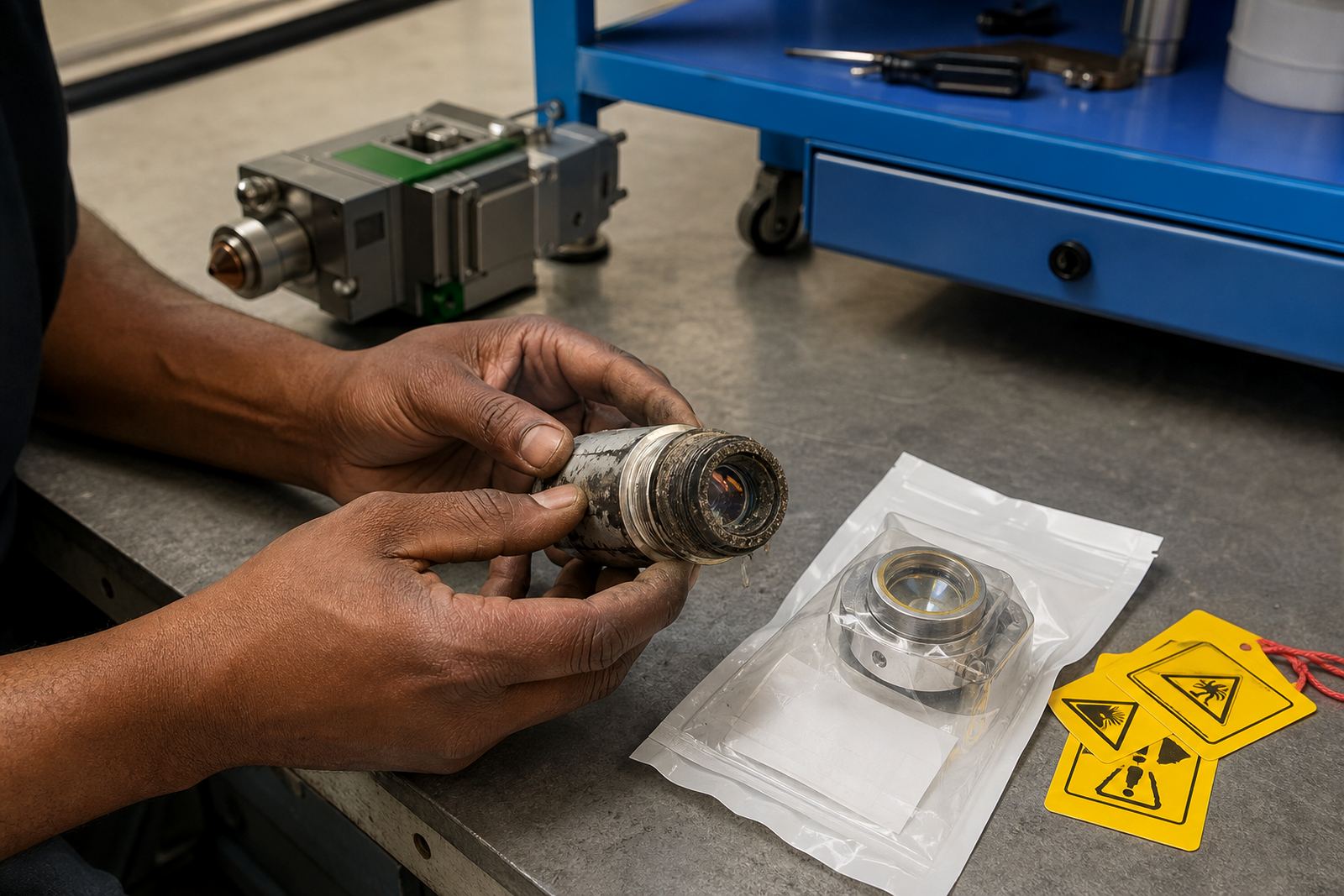
On the shop floor, the first check is usually visual. Look for spatter on the nozzle face, heat marks around the ceramic ring, or a protective window that has gone cloudy. Those signs often tell the story before the machine is opened up.
Nozzles, gas flow and the edge on the plate
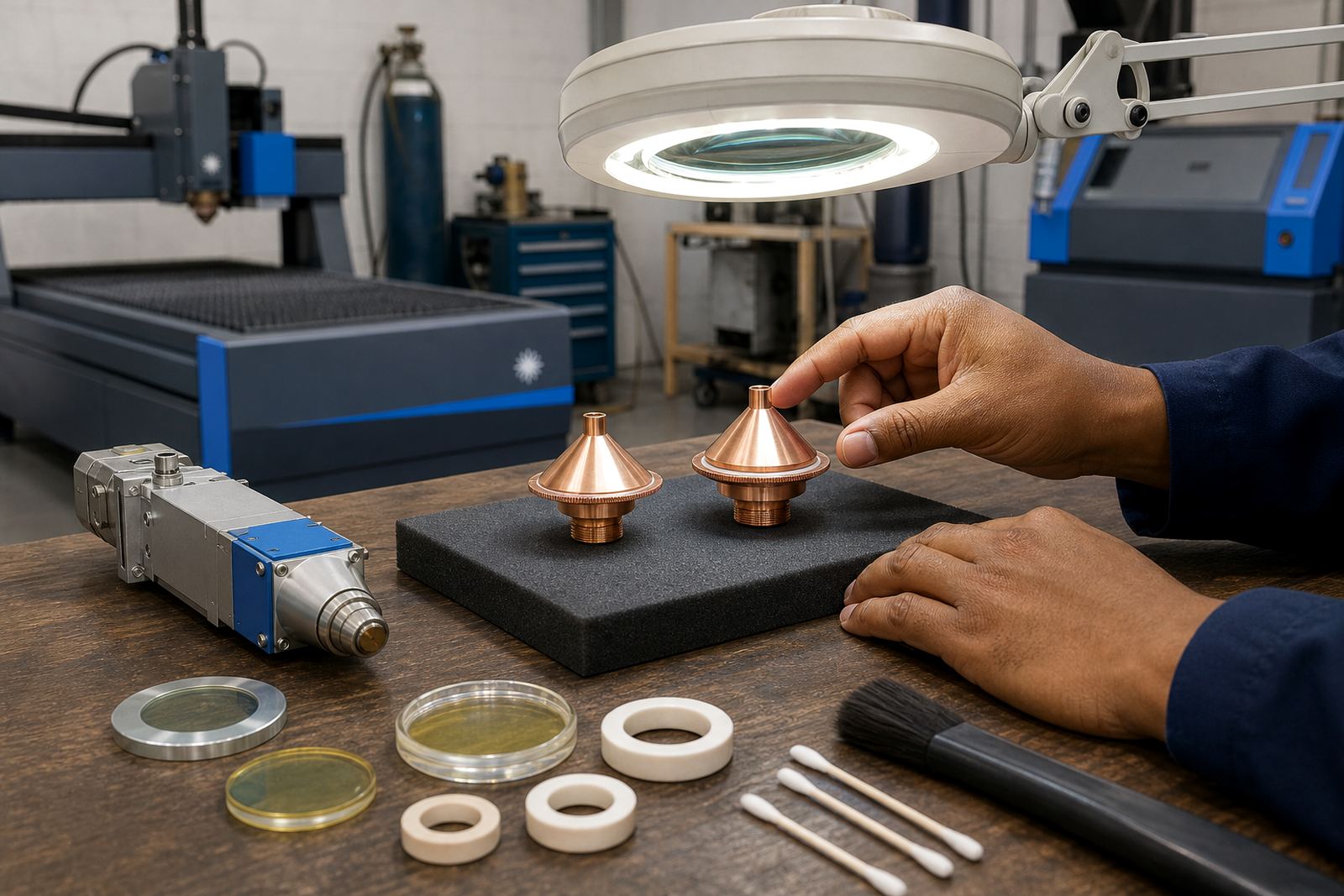
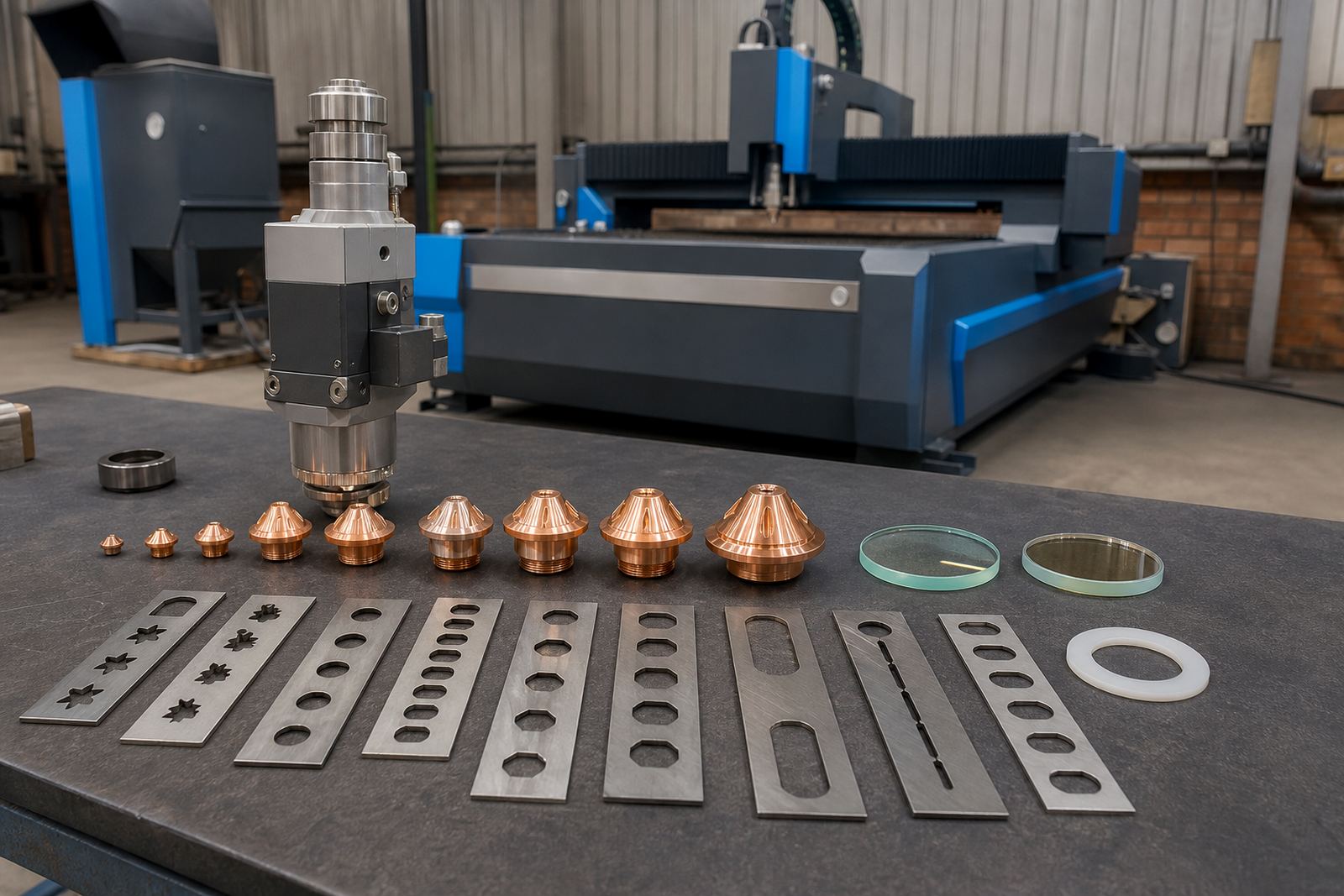
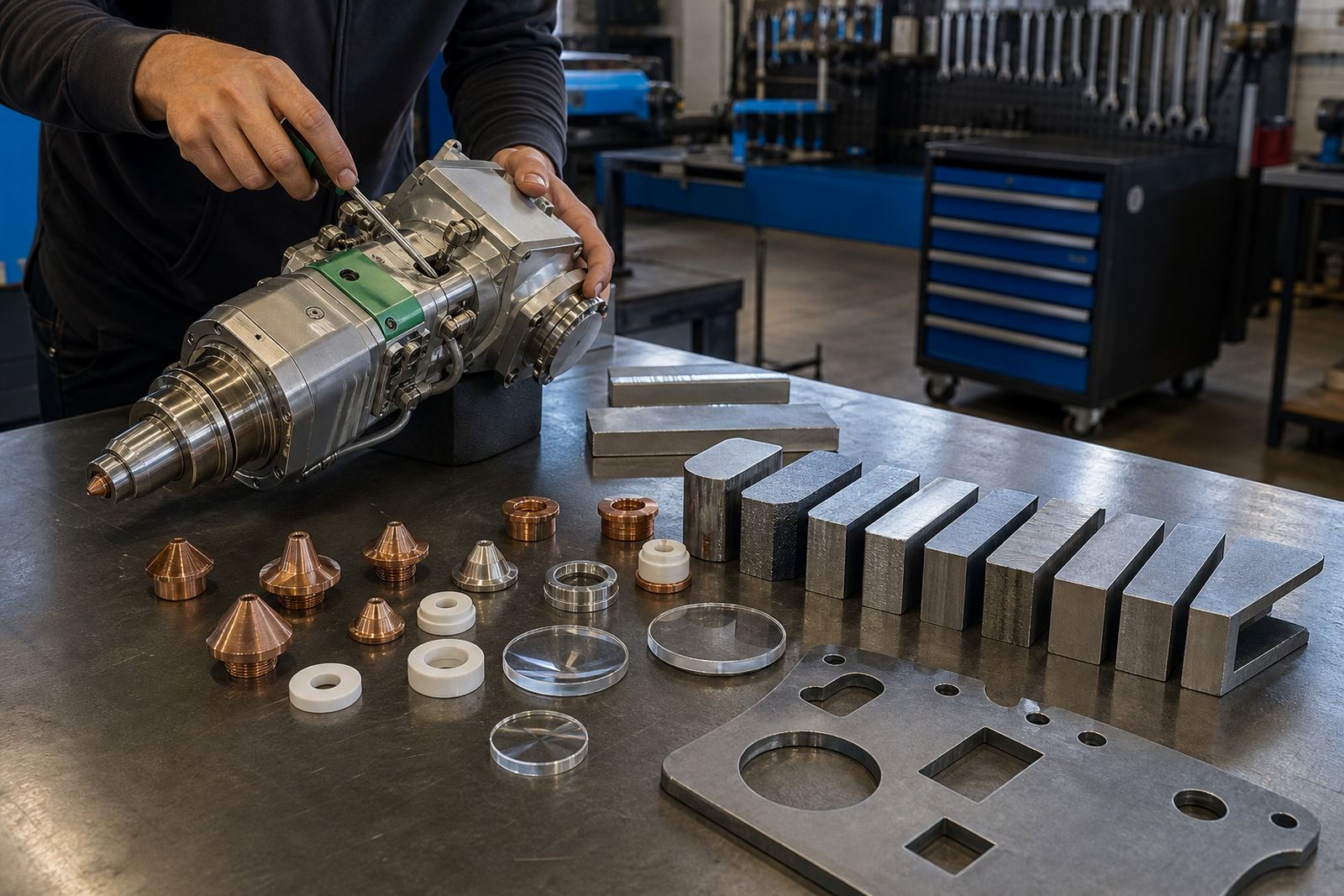
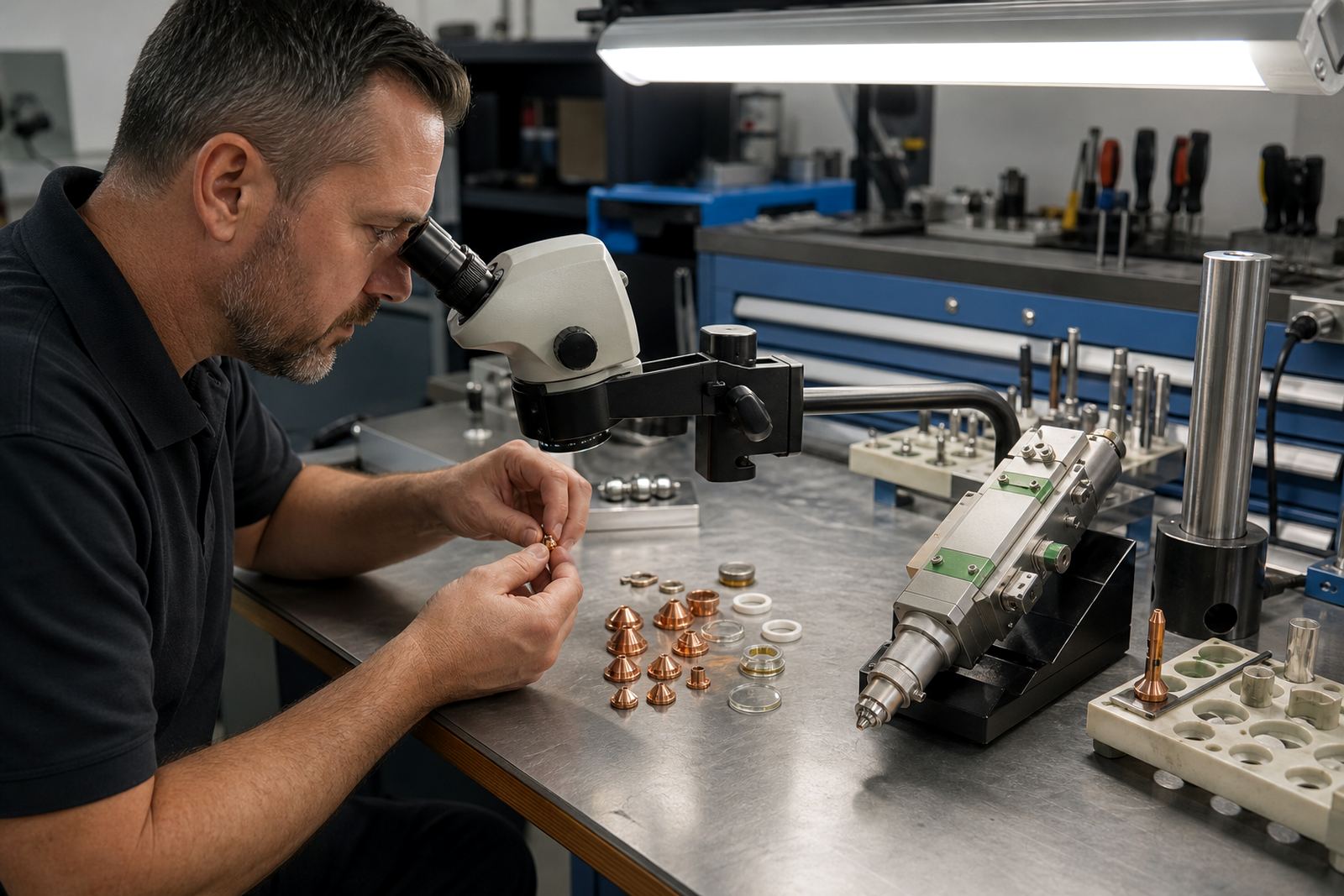
Nozzles guide assist gas into the kerf and keep the beam path clean at the tip. Single layer nozzles are common for general cutting, while double layer nozzles are often used where gas control and cut quality need a steadier stream.
- Check the nozzle orifice for damage or out-of-round wear.
- Match the nozzle size to the material thickness and gas choice.
- Keep the tip free of burrs, spatter and carbon build-up.
- Inspect the seat so the nozzle sits square in the head.
A nozzle that is not centred can leave one side of the cut heavier than the other. That shows up fast on thin sheet, and it is easy to miss if the shop only looks at the finished part later on.
Focus lenses, collimator lenses and the cut path
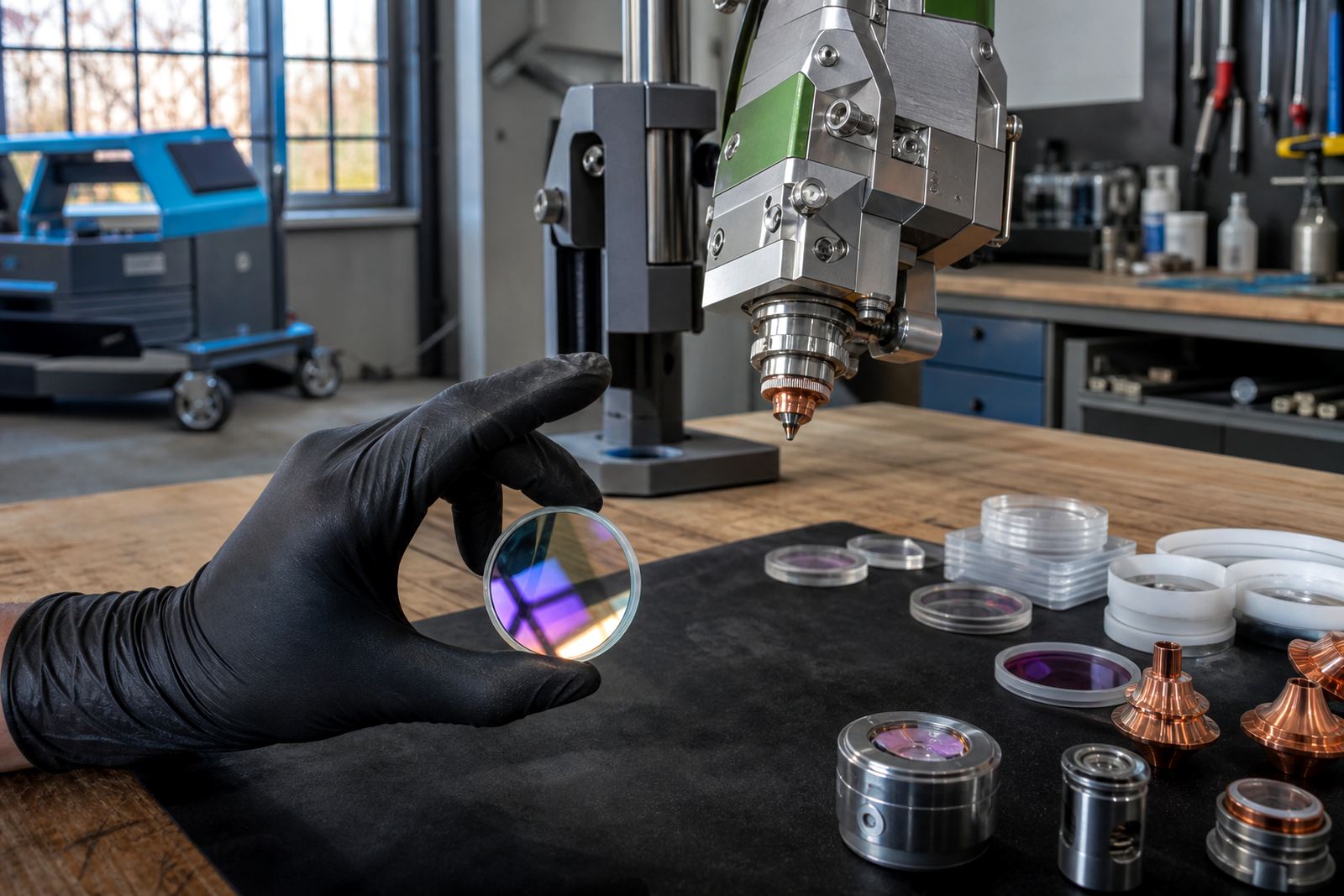
Focus and collimator lenses shape the beam before it reaches the workpiece. If either lens is dirty, scratched or fitted poorly, the head may still run but the cut quality slips away in a way that looks like a process problem.
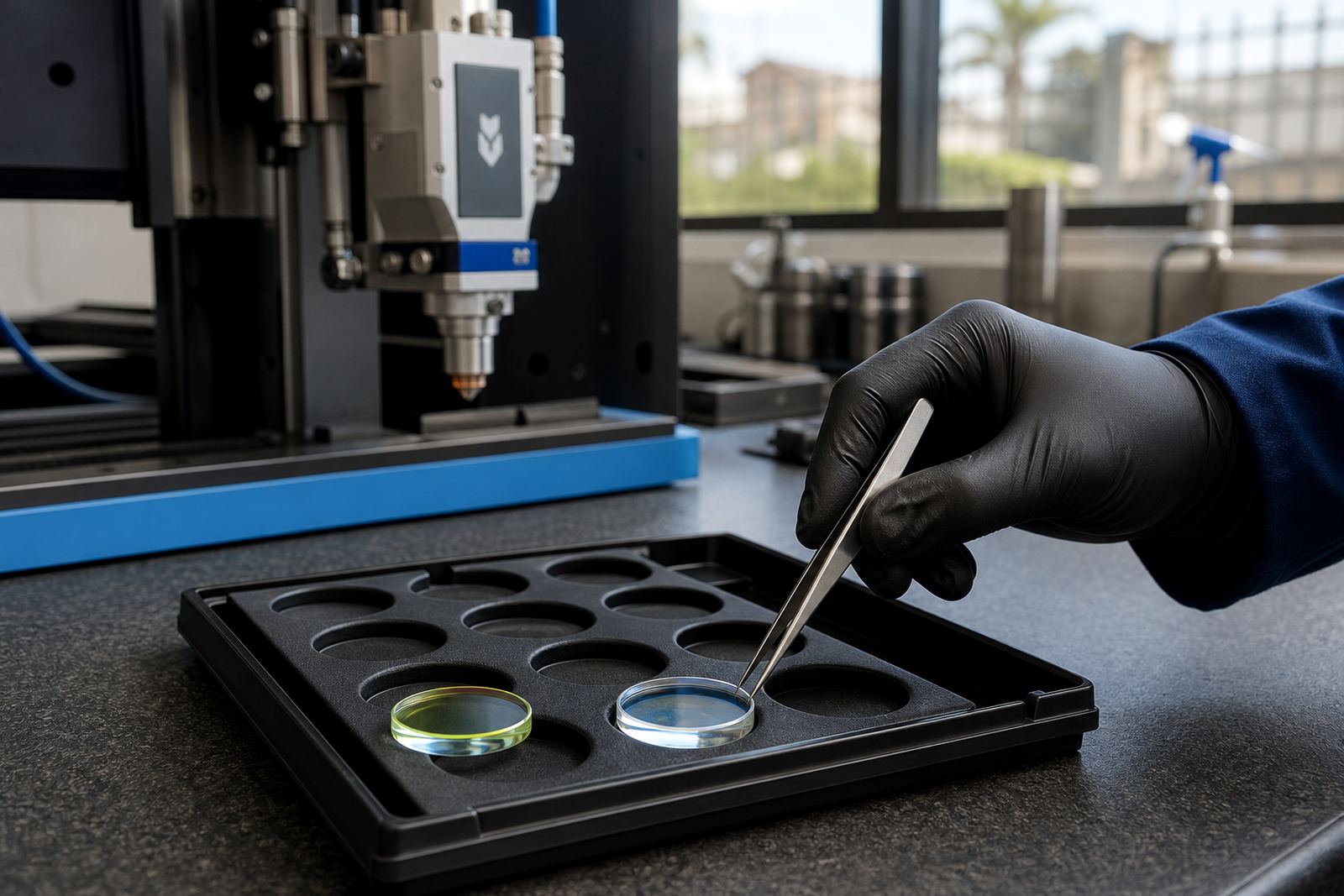
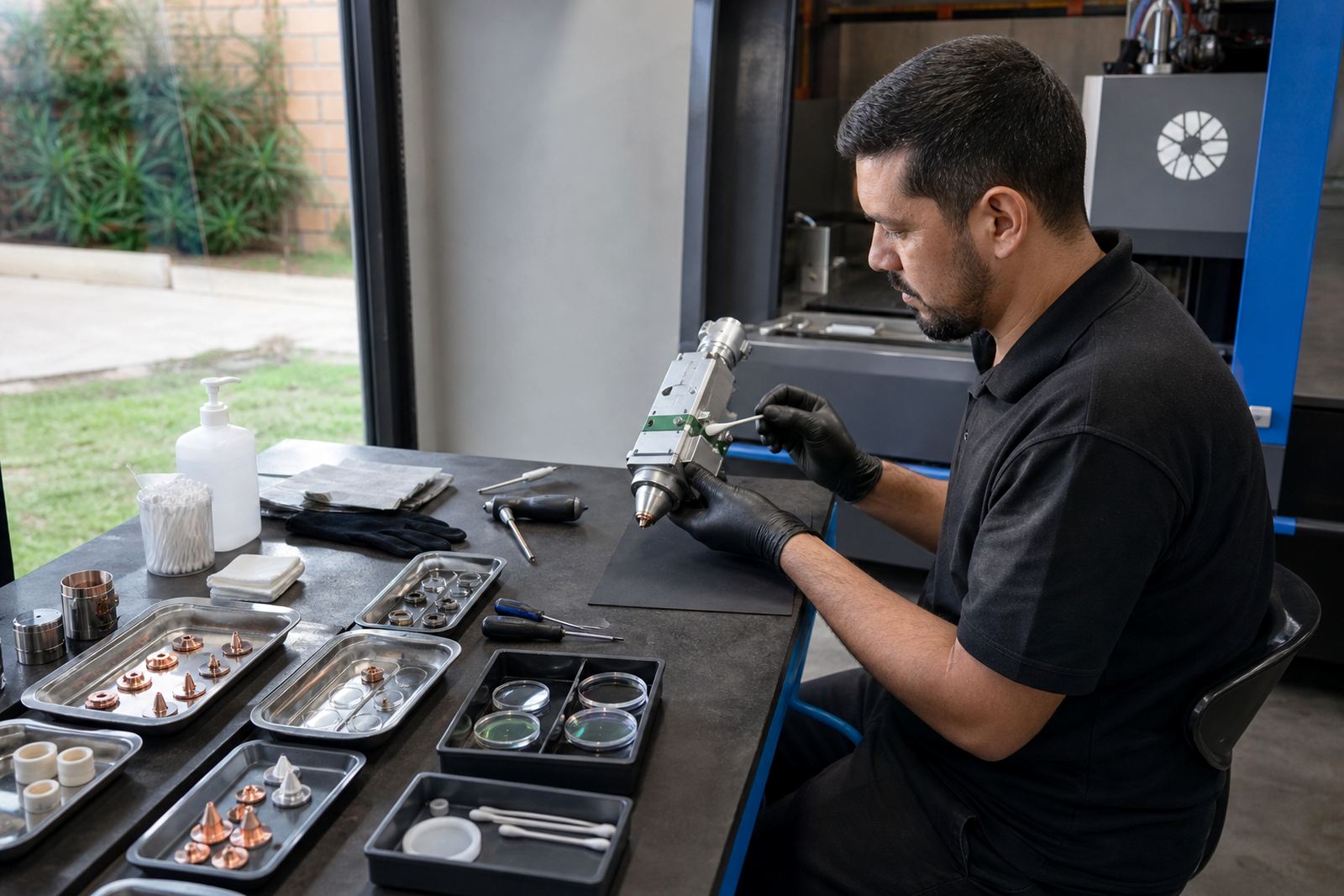
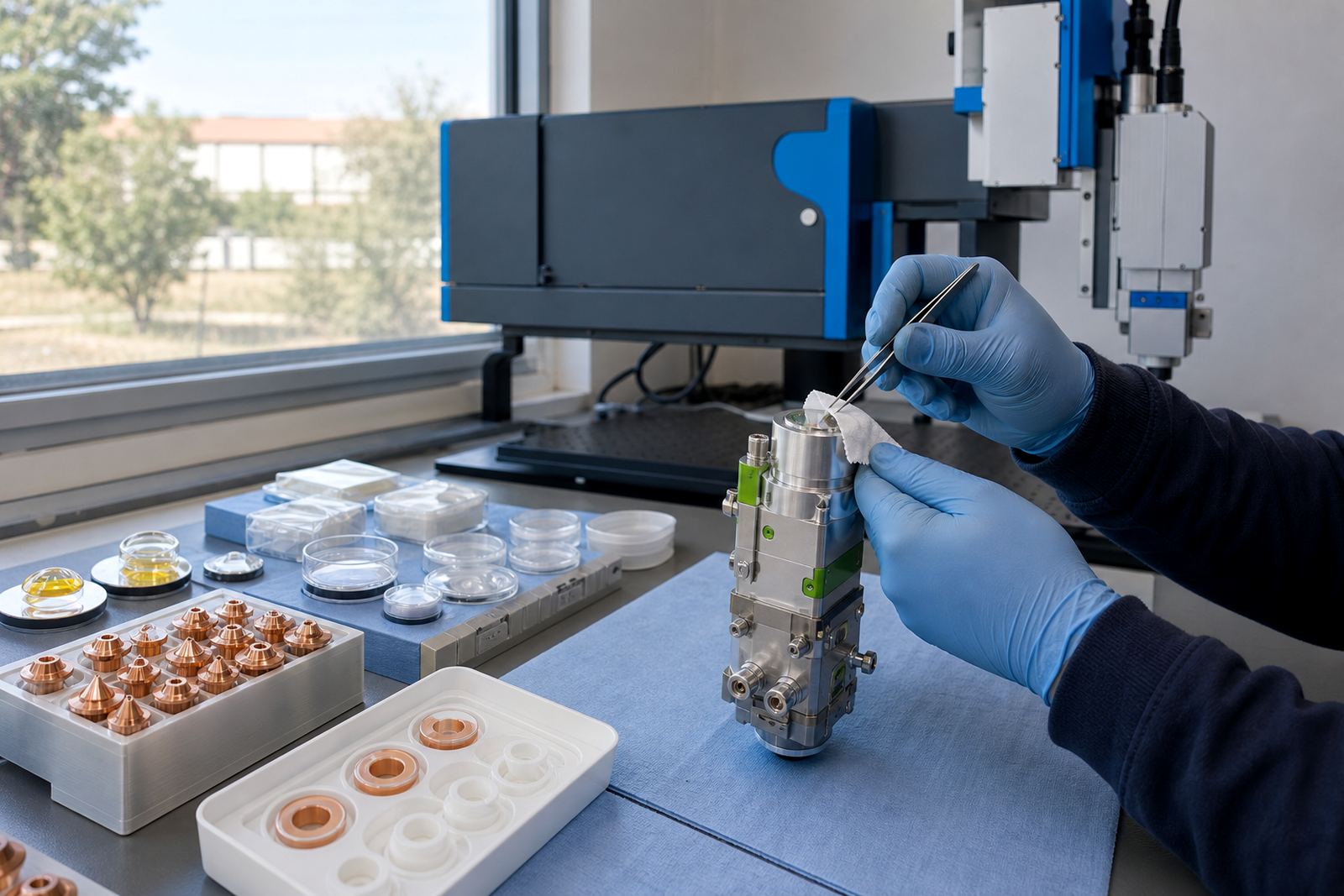
Lens cleaning needs a careful hand and the right wipes or swabs. Dust, oil vapour and tiny metal particles can settle on the glass, especially where the workshop air carries fine grit. A light mark can become a hot spot if it is left in place.
- Handle lenses by the edge only.
- Use clean gloves and a dust free bench.
- Replace a lens that shows pitting or a haze that will not clear.
- Check the stack orientation before refitting.
Protective windows and ceramic rings in daily use
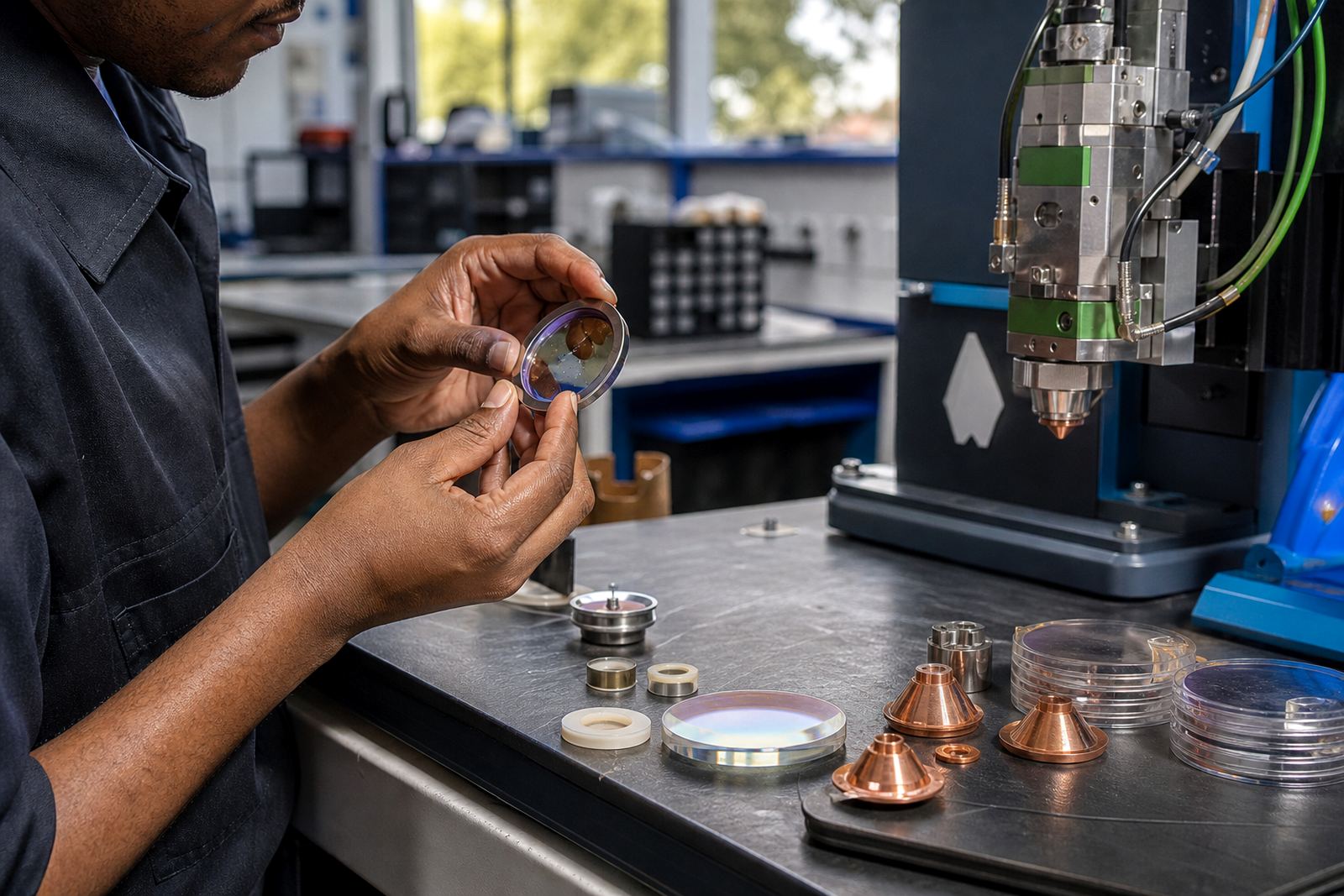
The protective window is the first line between the process and the expensive optics behind it. When the window is scored or clouded, power loss and heat damage can follow, so many shops keep a close eye on window condition during routine service.
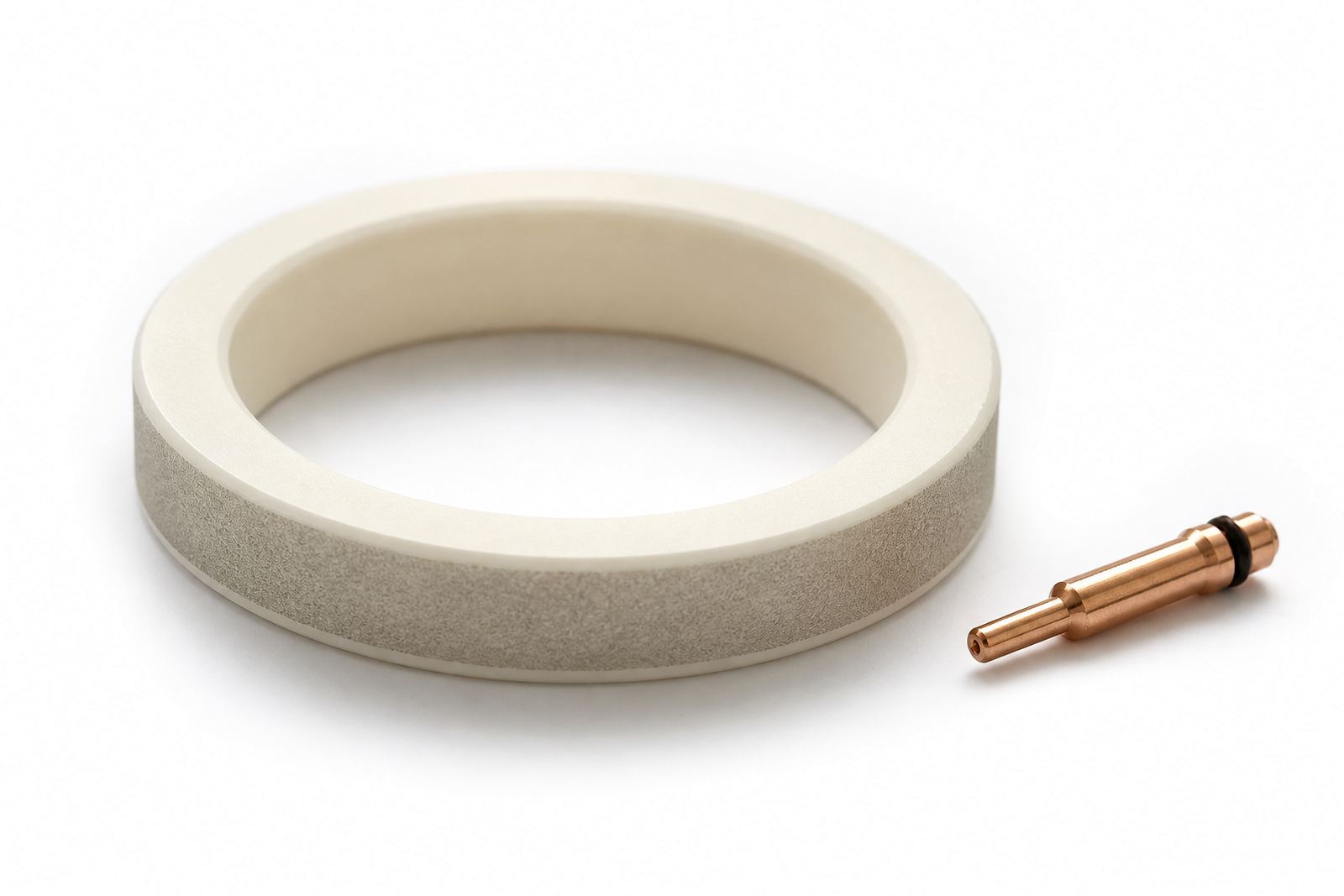
Ceramic rings hold the nozzle area steady and help keep the sensing system aligned. A cracked ring, loose thread or scorch mark can shift the nozzle position and disturb the height sensing signal. In practice, that often looks like a cut that starts well and then drifts.
- Replace protective windows before the coating fails badly.
- Check ceramic rings for cracks, chips and carbon tracking.
- Keep the seating faces clean before assembly.
- Confirm that seals sit evenly, not twisted or pinched.
Capacitive sensing and focus settings on real jobs
Capacitive height sensing measures the distance from the nozzle area to the plate. If the sensor reading is unstable, the head may hunt for position or start cuts at the wrong height, which is hard on the edge and hard on the operator too.
Focus settings need to suit the material, thickness and gas used. A setting that works on mild steel may not suit stainless or aluminium, and the difference can be enough to change piercing behaviour, edge texture and taper.
Common workshop checks include:
- Verifying sensor response on clean plate and on scrap.
- Testing the focus point after lens changes or crash damage.
- Inspecting the gas path for soot, moisture or debris.
- Looking for seal wear around the head body and nozzle seat.
Bench service, site alignment and spare head preparation
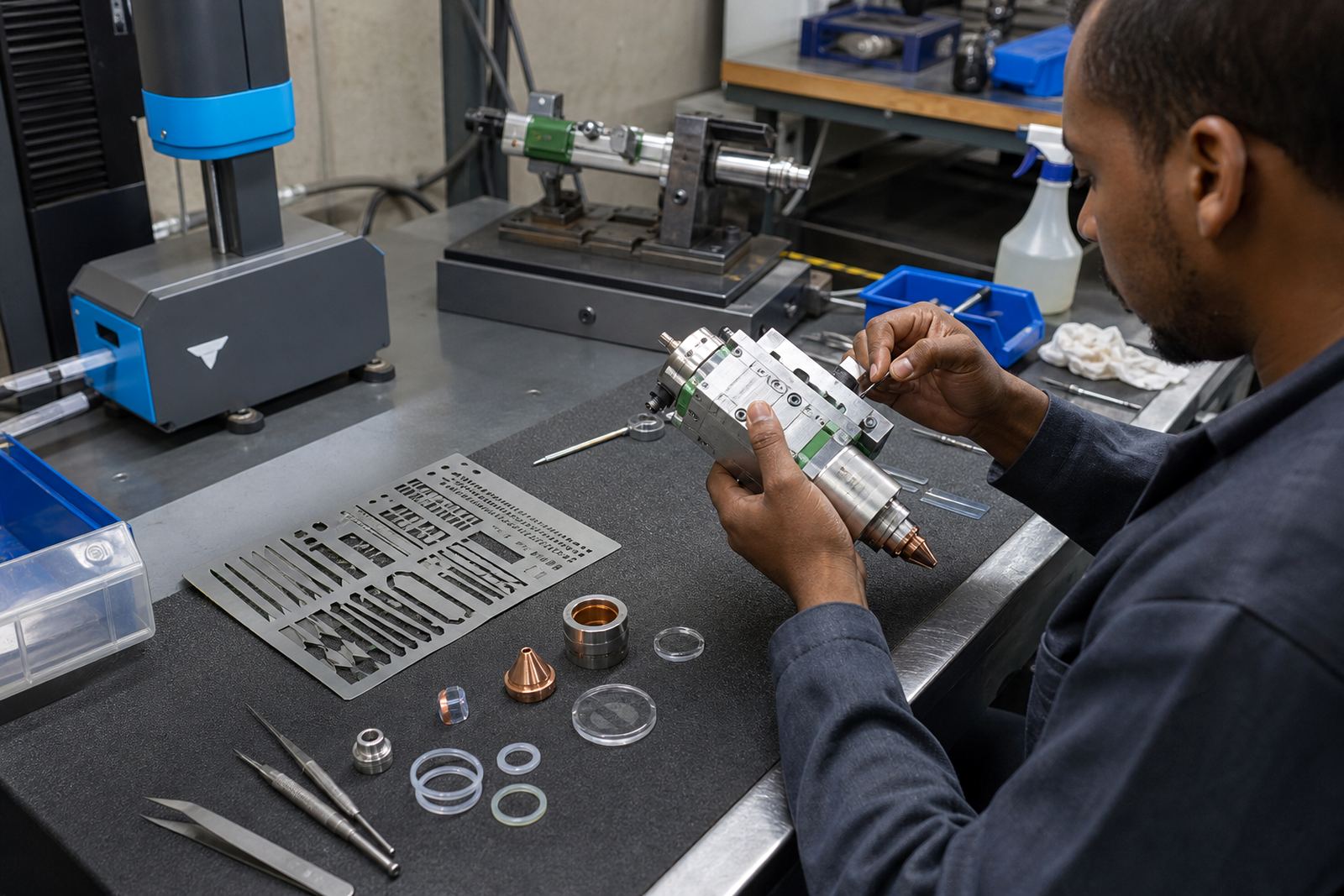
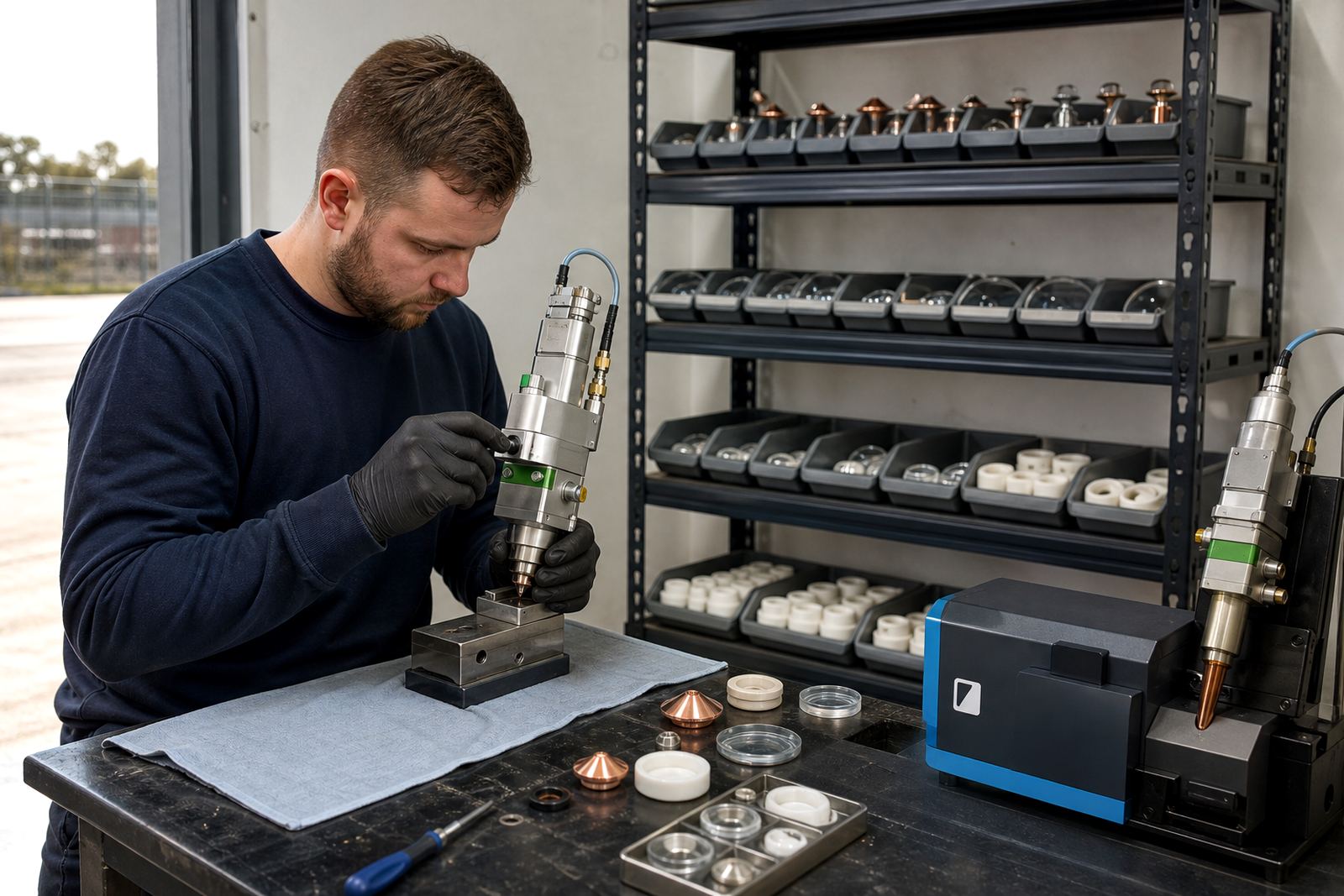
Some head problems need bench service, while others are better handled on site after a crash, misalignment or a recurring cut fault. Bench work suits detailed cleaning, head seal rebuilds and inspection of parts that need a steady, dust free surface.
On-site alignment is often the better option when the machine is already installed and the fault follows the head from job to job. In that case, the work is to square the optics, set the nozzle position and correct the sensing against the machine table and cutting programme.
For shops that keep a spare head ready, the usual notes are plain:
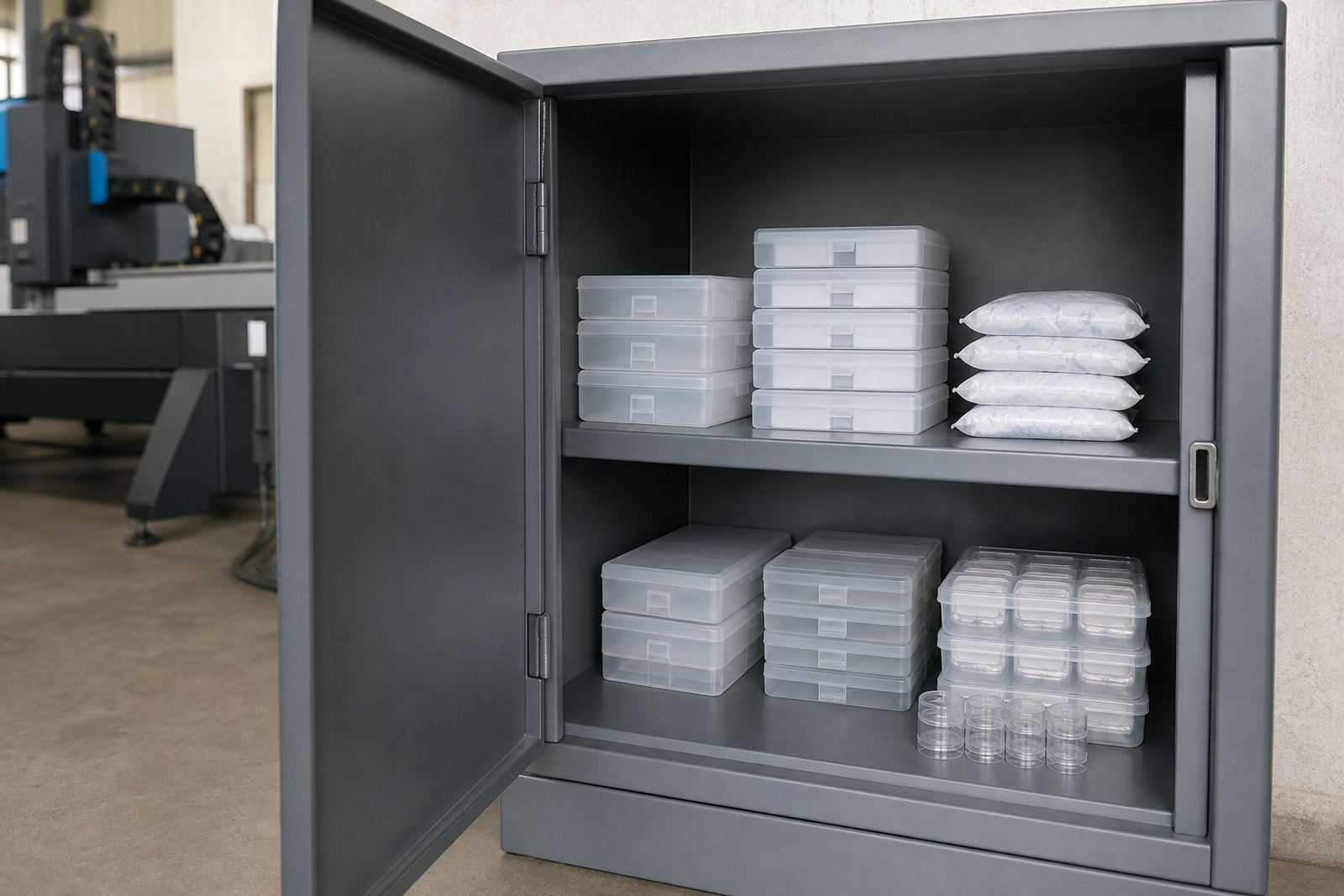
- Keep the optics package clean and capped.
- Record the last known focus and nozzle setup.
- Store spare ceramic rings and windows in sealed packs.
- Check the head before it goes back into service.