
Where heat starts creeping into the head
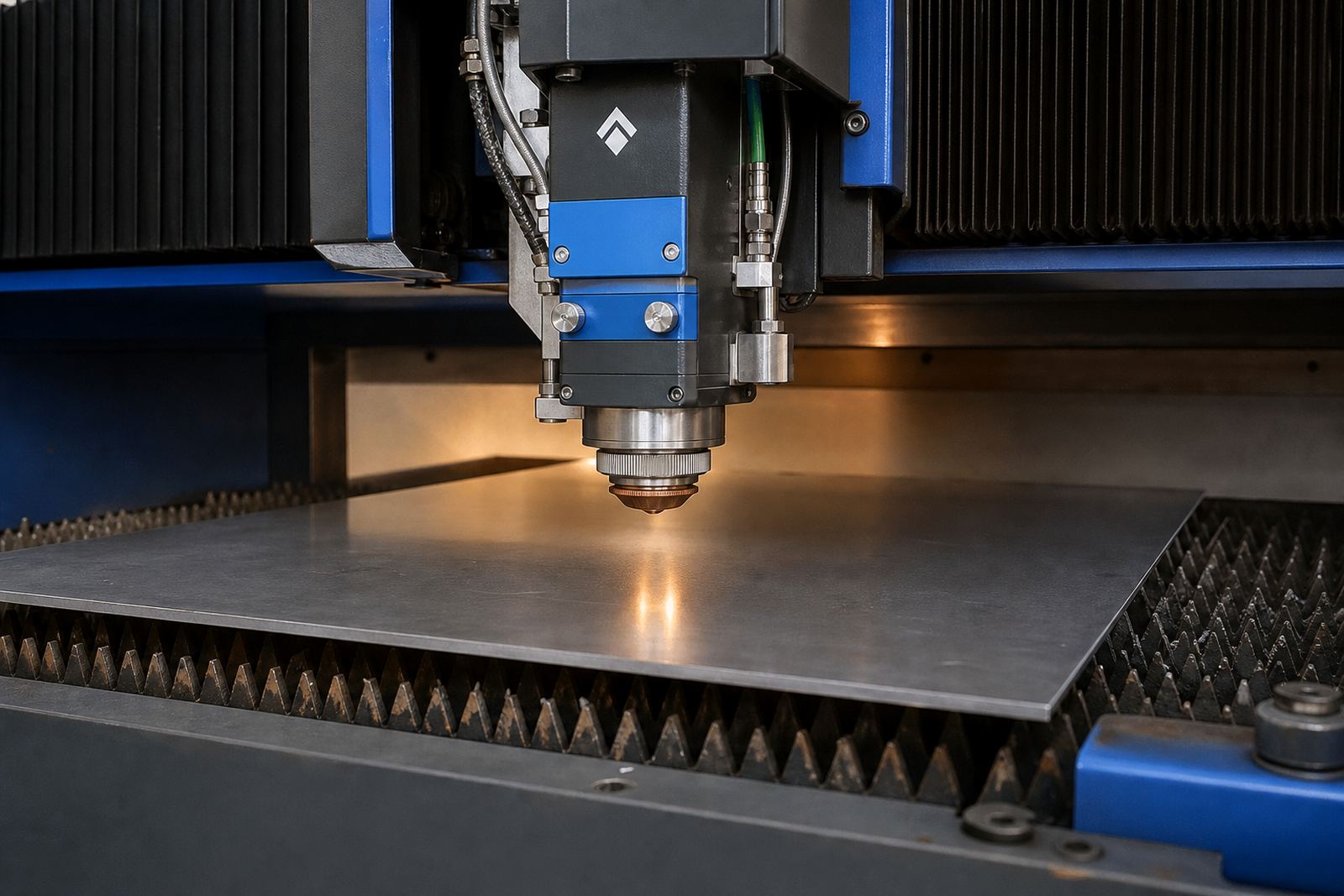
A cutting head runs close to the work, the assist gas and the moving machine, so heat does not stay in one place for long. If coolant flow is uneven, or a fitting is drawing air, the body, lens seat and sensor area can warm up faster than expected. That extra heat changes how the head holds focus and can disturb cut quality on thinner sheet, especially when a run stretches through the afternoon.
In practice, the cooling path should be treated as part of the cutting setup, not as an afterthought. The operator may see a clean cut for a while, then notice dross, edge roughness or a slight shift in pierce behaviour. Those changes are often linked to temperature movement inside the head or a partially blocked line somewhere between the chiller and the cutting head.
Checking fittings before the head gets blamed
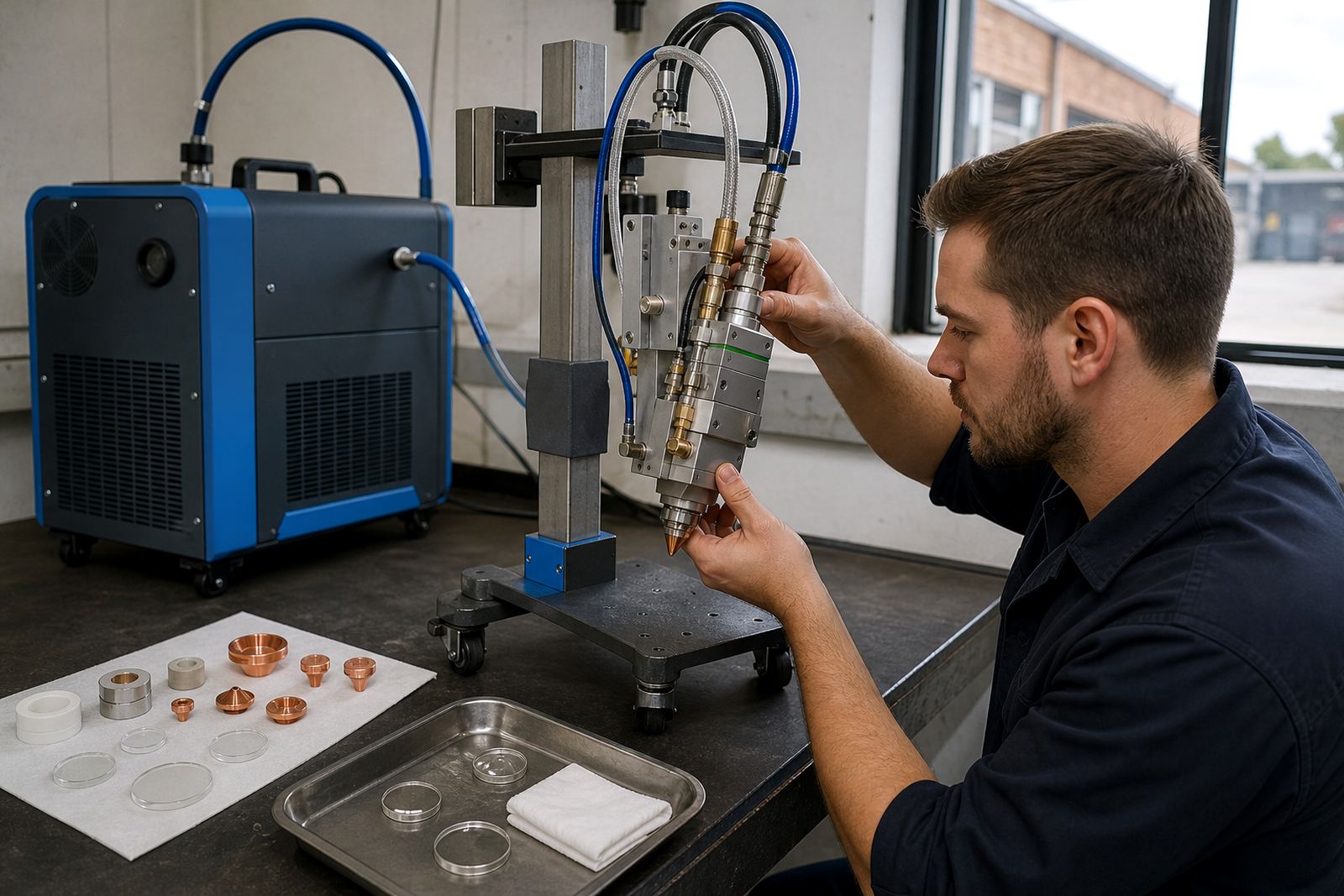
Start with the visible parts first. Loose hose tails, tired clamps, flattened seals and cracked pipe ends are common trouble spots, and they are easy to miss when the machine is under pressure to keep moving. A quick check can save a lens change or a full head strip.
- Look for damp marks around fittings and joints.
- Check whether the hose has gone soft, kinked or brittle.
- Make sure the flow direction matches the head layout.
- Inspect quick-connect ends for dirt and worn seals.
- Confirm that every clamp grips the hose evenly, not at an angle.
On a sheet-metal shop floor in Spartan or the East Rand, coolant lines often get nudged during routine cleaning or when a machine is moved for service. That is enough to loosen a fitting slightly, and a small leak can become a steady loss of pressure over a shift.
Flow paths inside the head need a clean route
Cooling passages inside the head are narrow by design. That helps heat move away from the cutting zone, but it also means scale, residue and dirty coolant can cause trouble quickly. If the system has not been flushed properly, deposits can settle in bends, around fittings or near the sensor side of the body.
A practical check looks at flow, not just the presence of liquid. Clear movement through the line matters more than a full tank and a working pump. If the return line runs warmer than normal, or the supply and return temperatures are too close together, the head may not be shedding heat as it should.
- Flush the line with clean coolant before refilling.
- Check for cloudiness, flakes or oily residue in the fluid.
- Keep the chiller filter clean and properly seated.
- Watch for trapped air after any hose change or seal rebuild.
- Use the coolant grade specified for the machine, not a mixed bottle from the shelf.
Capacitive sensing and temperature drift go hand in hand
Capacitive height sensing depends on a stable relationship between the nozzle, the workpiece and the head body. When cooling is uneven, the head can expand slightly, and that small change affects the sensing gap. The operator then sees hunting, uneven standoff or a cut that starts clean and finishes rough.
That is why cooling path checks should sit next to focus settings, nozzle centring and sensor checks. If the head is warm on one side, the electronics and sensing geometry do not behave exactly as they do when the head is cool and steady. A good service routine checks the cooling path before trying to correct the same issue through software or focus settings alone.
A Rustenburg job that showed the value of a plain inspection
A sheet-metal shop working on a mixed day of mild steel and stainless parts had one machine cutting well in the morning and then slipping into poor pierce quality later on. The nozzle had already been changed and the lens had been cleaned, but the head was still running hot. Once the cooling circuit was checked, a partly restricted fitting and a tired hose section were found near the return side.
After the line was cleaned, the fitting replaced and the head aligned again, the machine settled down. The point was not dramatic, just practical. The cutting problem had looked like an optics issue, yet the real cause was poor thermal control. That happens often enough in busy South African shops where the same machine carries long jobs, short jobs and frequent material changes.
A maintenance routine that keeps the head steadier
The easiest way to avoid heat drift is to build cooling checks into normal maintenance, rather than waiting for a fault. That means looking at the fluid, the fittings, the return line and the head body together. It also means cleaning the outside of the head carefully so dust, cutting fumes and fine metal particles do not sit around the service points.
- Wipe the head body before opening any covers.
- Check coolant level and clarity at the same time each service.
- Inspect hose routes for rubbing against machine frames or guards.
- Confirm that the chiller fan and filters are clear of dust.
- Record any unusual heat, vibration or repeated sensor alarms.
When cooling is steady, the head holds its focus more consistently and the nozzle work stays easier to manage. That helps with long sheet runs, corner cuts and repeat work where the operator wants the same result across a full batch.