When the bench earns the job
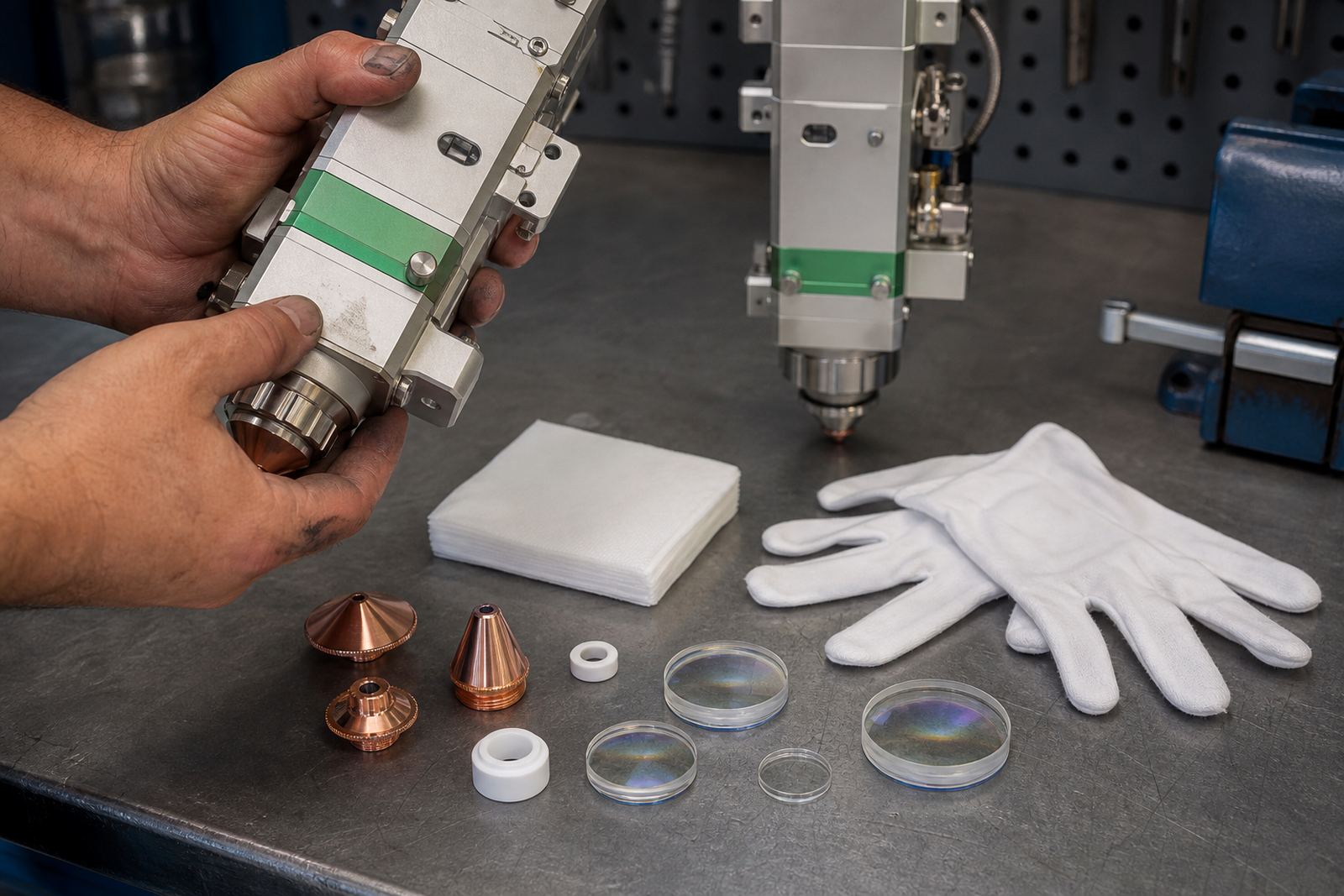
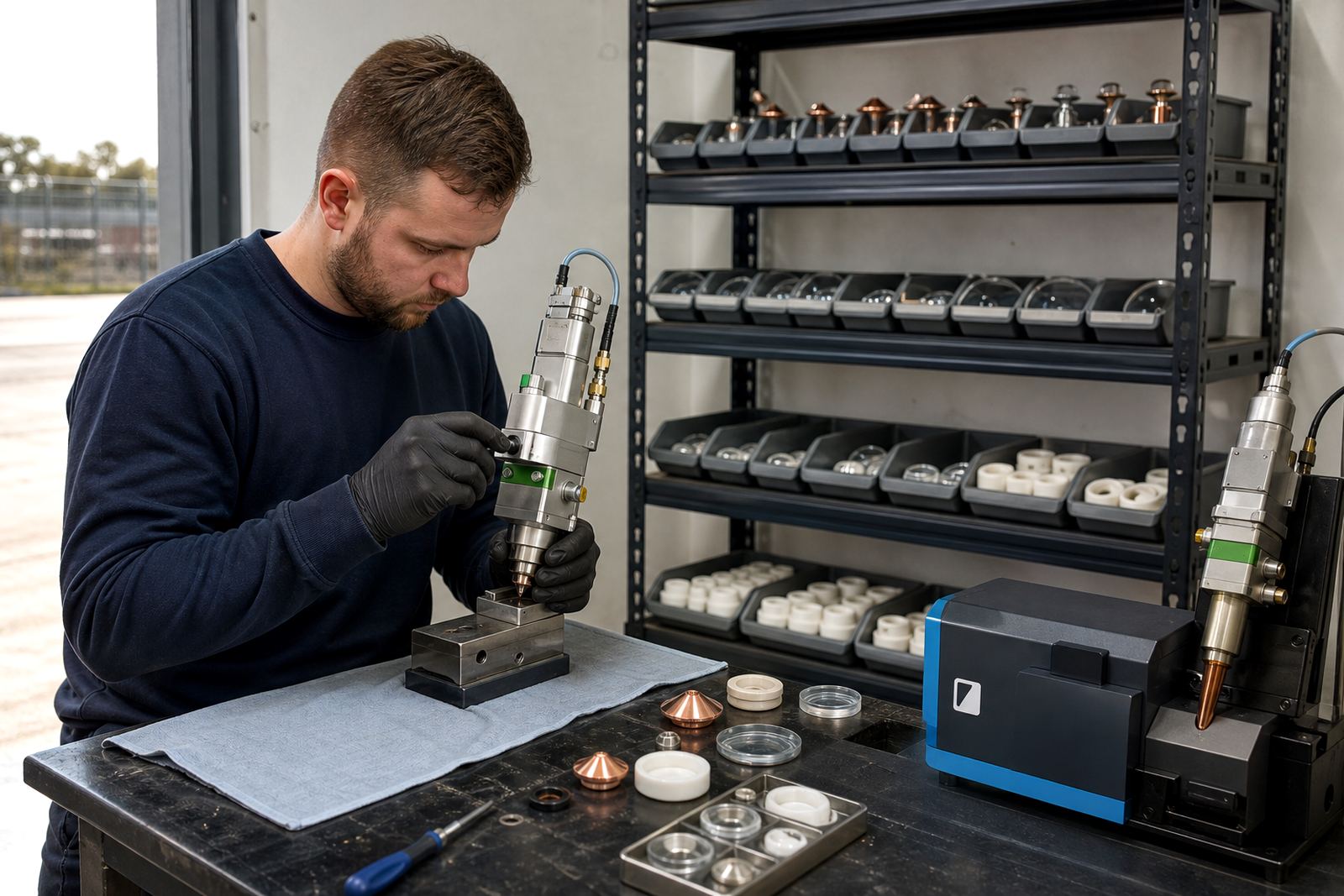
A controlled bench service makes sense when the head needs stripped inspection, lens cleaning, ceramic ring replacement, nozzle centring, seal work, or a careful look at the sensor stack. On the bench, Jaco Essop can inspect the head body, check the collimator and focus lens seats, test for contamination, and verify that the cutting head is square before it goes back into service.
This route is stronger when the machine has already shown repeated cut faults, unstable pierce quality, or a history of collision damage. A bench setup gives space for clean handling of protective windows, focus settings, and gas path parts without rushing around a live cutting bay.
- Useful after a crash or lens contamination
- Good for nozzle centring and ceramic ring replacement
- Best for seal rebuilds and deep inspection
When the machine itself needs attention
On-site alignment matters when the head is mechanically sound but the cut has drifted because of installation shifts, sensor trouble, or small errors in focus height. Lerato Tau handles machine-side checks where the cutting head must be aligned with the gantry, the nozzle height must be checked, or capacitive sensing needs recalibration against the actual sheet conditions.
This work suits plants that cannot spare the machine for removal, or where the fault only shows under cutting load. On-site intervention also helps when the issue sits in the machine's motion, not inside the head. A head can be clean and still cut badly if focus or sensor readings are off.
What a bench service can catch early
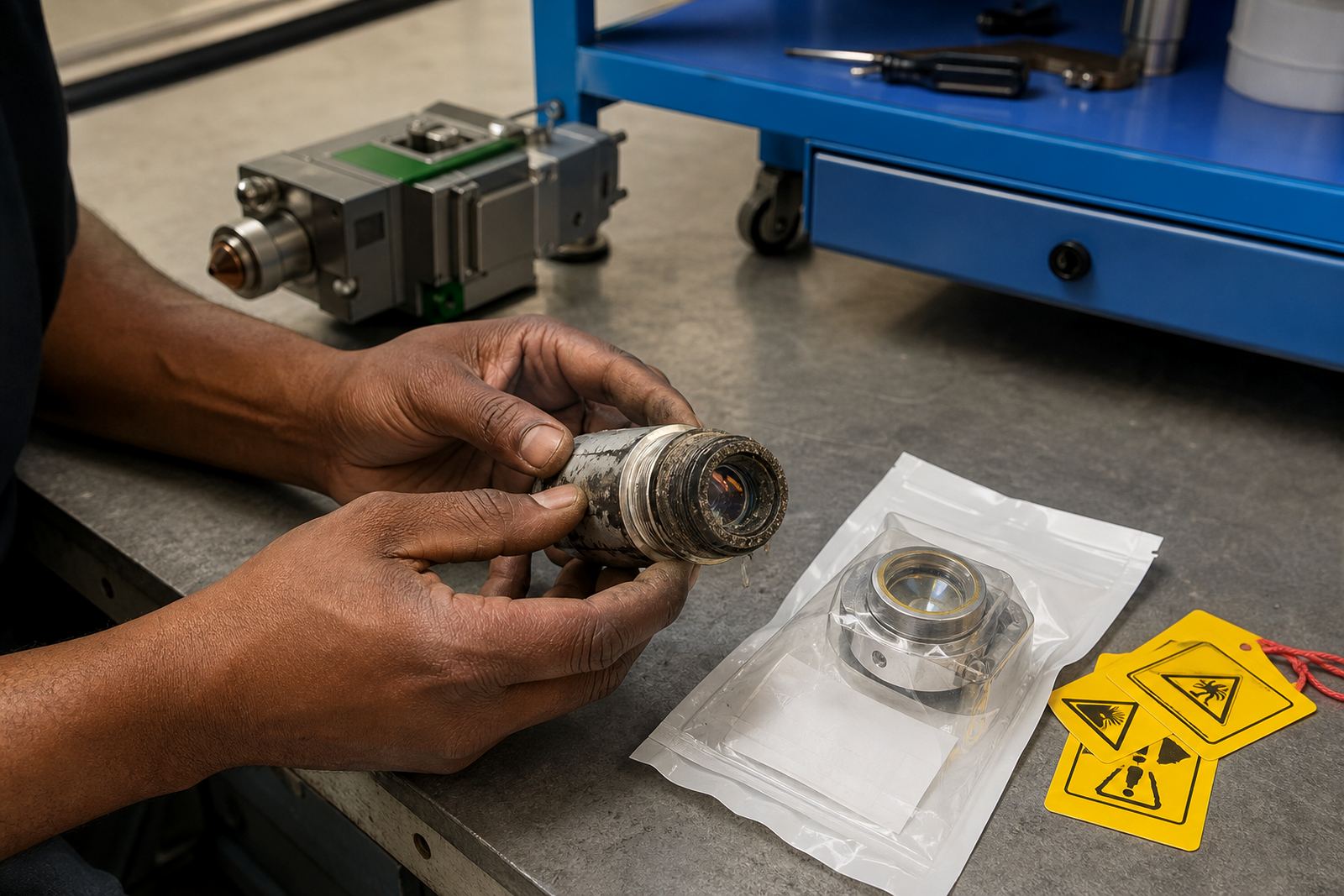
Bench work gives a clear view of wear that is hard to spot during production. Anele Daniels often sees parts requests tied to cracked ceramic rings, scorched windows, worn nozzle seats, and protective windows that have taken too much heat or spatter. Once those parts are out, the technician can inspect whether the cooling and sealing surfaces still hold properly.
It also helps with small faults that turn into larger ones if ignored, such as a slightly off-centre nozzle, dust on the lens edge, or a focus lens that has picked up haze from poor cleaning routines. In many shops around Gauteng and the East Rand, those small faults show up first as rough edges or odd dross, then become a full stoppage later.
- Protective window marks that hide real lens damage
- Gas path wear that affects assist gas flow
- Sensor drift that is easier to test off the machine
What on-site alignment solves faster
Some faults only make sense when the head is mounted and running against the actual machine. Willem Pretorius often checks capacitive height sensing, focus position, and nozzle lift behaviour while the head is in place, because the machine frame, cable run, and motion path can all affect the result. If the head cuts well on the bench but not on the machine, the problem is often in alignment rather than in the optical parts.
On-site work is also the better call when the machine must stay in its production position and the issue is narrow enough to trace there. That matters for Durban, Cape Town and Rustenburg shops that are working with long sheet runs, tight cut schedules, or limited spare heads on hand.
A practical split for busy sheet-metal shops
Thandiwe Rapetswa usually separates the job into two questions. Is the fault inside the head, or is it in the machine setup? If the answer points to lenses, seals, windows, nozzles, or a damaged head body, the bench is the safer place. If the issue is height sensing, focus tracking, or live alignment, the machine should stay in the conversation.
That split saves time on guesswork and helps the shop avoid moving parts around more than needed. It also reduces the chance of a rushed on-machine fix that hides a deeper fault, then shows up again during the next cutting shift.
- Bench for internal head faults and cleaning
- On-site for alignment, sensing, and live cutting checks
- Use both when crash damage affects the optics and the machine setup
Spartan handling, South African conditions
At Raytool in Spartan, Kempton Park, the team handles fibre laser cutting heads and spares daily for shops in Johannesburg, Pretoria, Rustenburg, the East Rand, Durban and Cape Town. Marius Johannes van der Merwe keeps the service side practical: the head is tested, the optical path is checked, and the technician decides whether the job belongs on the bench or at the machine.
South African sheet-metal shops deal with dust, humidity near the coast, and the wear that comes from long cutting runs. That is why a clean bench service and a careful on-site alignment are not interchangeable. Each one fixes a different kind of problem, and the better choice usually shows in the cut edge, the pierce, and the stability of the head under load.