The small ring that holds the cut steady
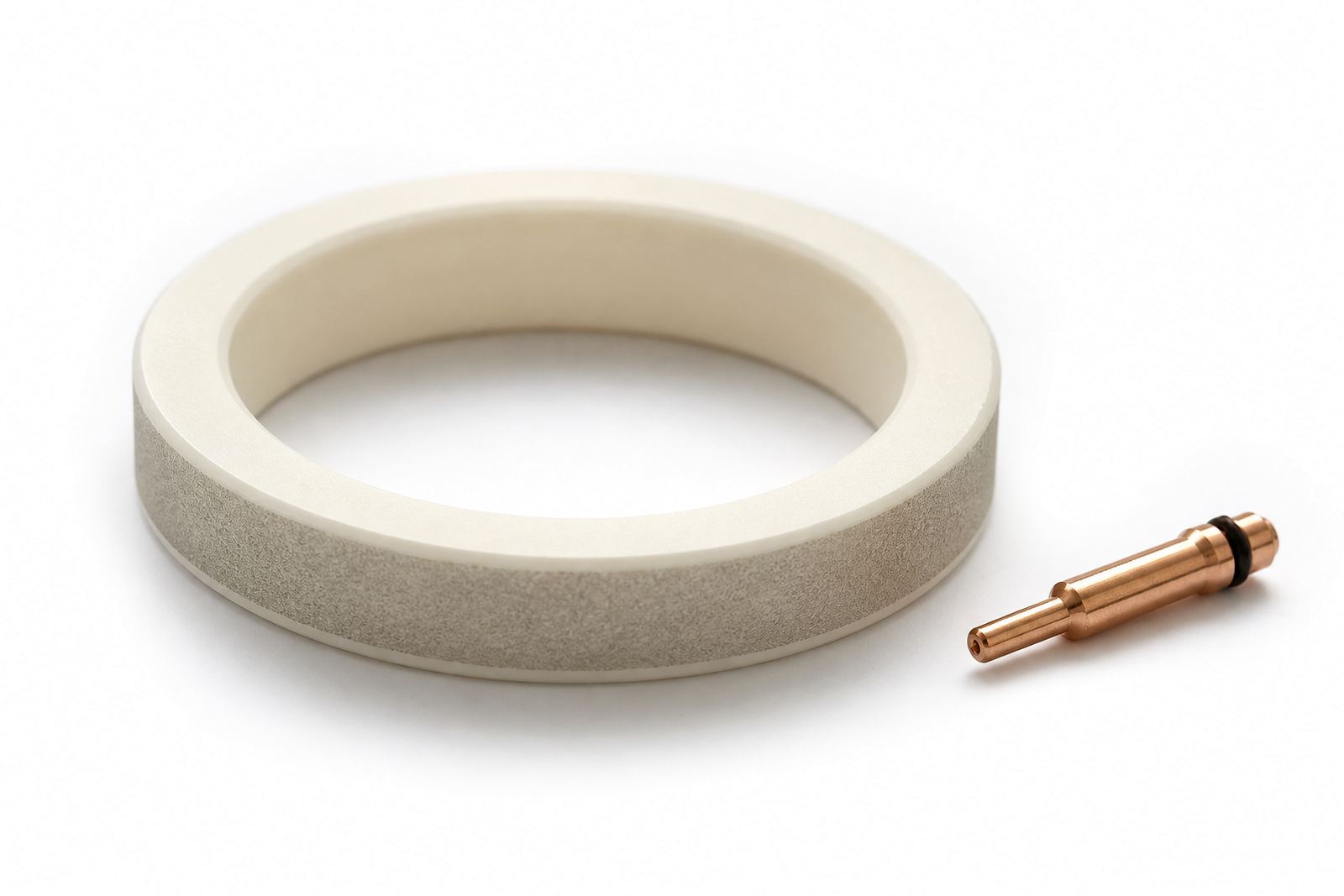
A ceramic ring sits between the nozzle area and the rest of the cutting head assembly. Its job is not decorative. It gives the nozzle a stable mounting point, keeps electrical insulation in place, and helps the sensing system read the cutting distance without stray contact interfering with the signal.
In sheet-metal work, that matters more than many shops first expect. A ring that is cracked, worn or contaminated can let the nozzle drift off centre, and that shows up as poor edge quality, irregular pierce behaviour or a cut that starts sounding different. On thin stainless and mild steel, those changes can be easy to miss until reject parts start piling up.
- Supports the nozzle in a fixed position.
- Insulates the conductive parts of the head.
- Helps maintain consistent capacitive sensing.
- Reduces movement caused by heat and vibration.
Why nozzle support matters on real work
The nozzle is the last part guiding assist gas into the kerf, so its position matters. If the ceramic ring is not holding the nozzle squarely, the gas stream can leave the nozzle at a slight angle. That does not sound dramatic, but on 1.5 mm sheet it can create dross on one side and a rougher edge on the other.
Many shops in Spartan and the East Rand run mixed batches through the day. A ring that has taken a small hit during a sheet crash may still look usable, yet the nozzle can sit just off line. That is enough to upset concentricity, especially when the job changes from carbon steel to stainless and the cut settings are already tight.
When the support is clean and true, the nozzle follows the programmed focus and gas pattern more closely. The machine does not have to fight against a crooked mounting point, and the cut head behaves more predictably across longer runs.
- Good support helps keep the nozzle centred.
- Stable mounting improves assist gas flow into the cut.
- Even a small chip can alter cut quality.
- Repeated crashes often damage the ring before other parts.
Insulation is part of the sensing chain
Capacitive height sensing depends on the head reading distance cleanly from the work surface. The ceramic ring contributes to that reading by insulating the nozzle area from the rest of the assembly. If contamination builds up, or if the ring has a hairline crack, the signal can wander and the head may hunt for height when it should be holding steady.
That is where the real nuisance starts. A shop may blame focus, gas pressure or the cutting programme, while the actual problem sits in the ring. In Durban, where humidity and fine airborne dust can combine, grime on the head can track across surfaces faster than expected. Coastal conditions do not help, especially when cleaning routines are light and inspection is rushed between jobs.
Regular checking is not complicated. Look for chips, dark tracking marks, looseness around the nozzle seat and any uneven wear where the ring meets the head body. If the machine has been through a crash, inspect the ring before the next production queue starts.
Cleaning routines that protect the ceramic ring
Cleaning is not only about appearance. A clean ring keeps the nozzle seat readable, and it helps the sensing system work without noise from dust or oil film. Use dry, careful cleaning methods first, then a suitable non-abrasive cleaner if residue remains. Avoid anything that can scratch the ceramic surface or leave a conductive film behind.
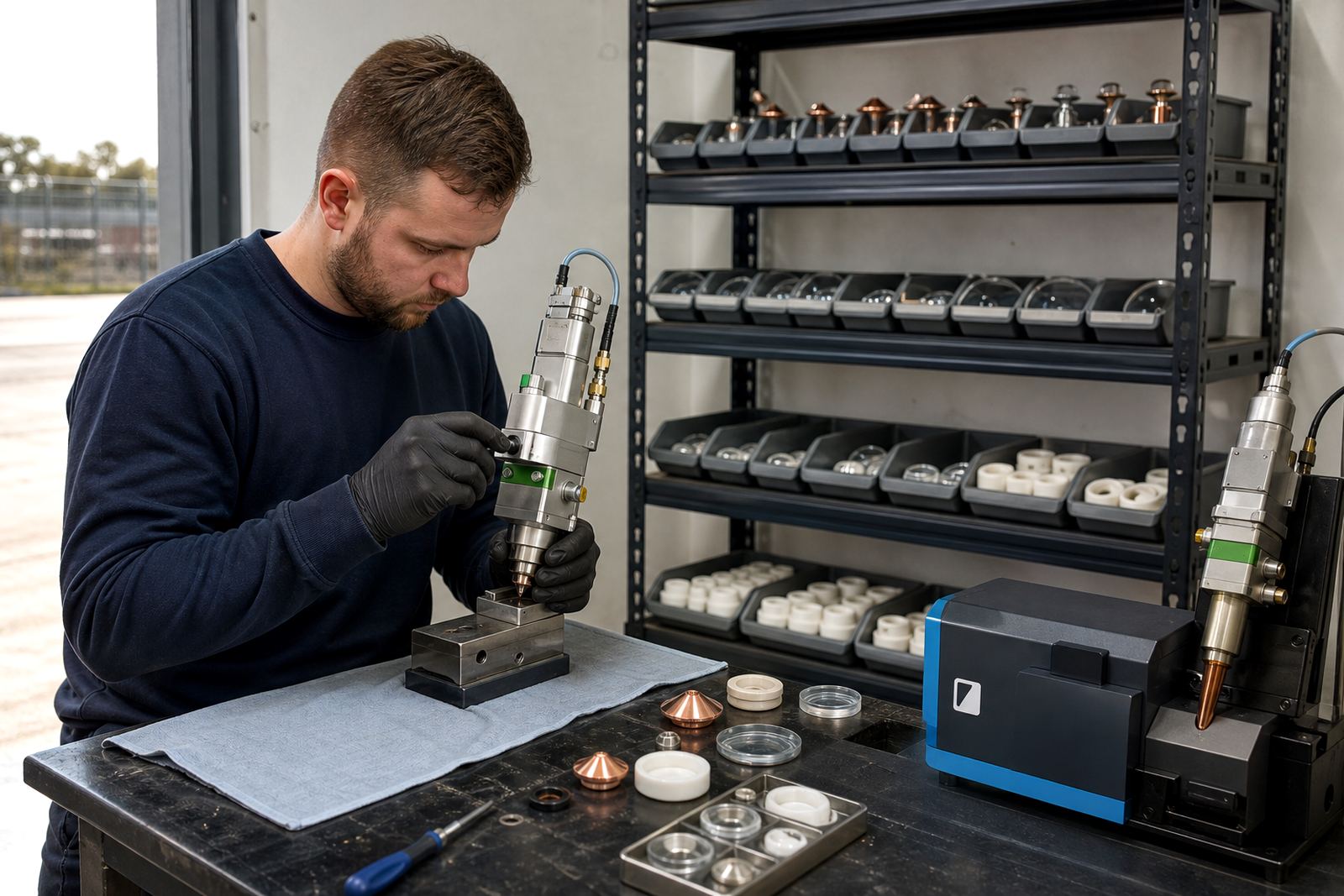
Bench service often reveals problems that onsite inspection misses. A head can look acceptable on the machine, then show scoring, sealing dust or a loose fit once it is stripped and checked properly. That is why ring replacement often sits alongside lens cleaning, protective window replacement and focus setting checks during a full service.
- Remove fine metal dust before it hardens onto the surface.
- Keep grease and cutting residue away from the insulation path.
- Check the nozzle seat for nicks and debris.
- Replace the ring after visible cracking or tracking.
On busy lines, it helps to assign one person to inspect the head during shift changeover. That habit catches small wear early, instead of waiting for a bad cut to flag the problem.
When a ring should be replaced, not reused
Some parts can be cleaned and used again in service. Ceramic rings are not always worth pushing that far. Once a ring has chipped, cracked or lost a proper seating surface, it no longer gives the nozzle the support or insulation that the head needs. Reusing it can cost more in scrap than the part itself.
There is also the matter of crash damage. When a nozzle hits a lifted sheet edge or a part tip, the ceramic may survive with an invisible fracture. The head can still run for a while, yet the cut quality slowly slips and the sensing becomes less trustworthy. In those cases, replacement is the cleaner decision.
Shops that cut daily across Johannesburg, Pretoria and Rustenburg often keep spare head parts ready for this reason. A spare ceramic ring is not expensive compared with idle time, spoiled plates or repeated callouts to correct an unstable head.
A Spartan example from the shop floor
A local sheet-metal shop in Spartan had a recurring issue on mixed mild steel jobs. The machine would start well, then the edge quality would wander after a few sheets. The operators had already checked gas settings and nozzle size, but the real trouble sat in a ring that had picked up fine damage during an earlier collision.
Once the ceramic ring was replaced, the nozzle centring improved, the sensing became steadier and the cut path settled down. The team also adjusted the focus setting check and cleaned the protective window while the head was on the bench. That combination solved more than one fault at once, which is usually how these heads behave in practice.
For shops working across Cape Town, Durban or the East Rand, the lesson is plain. A ceramic ring is not a spare to treat casually. It is part of the support structure that keeps the nozzle, sensing and gas delivery working together when the line is under pressure.
- Inspect after any head crash or lift fault.
- Replace cracked rings rather than trying to save them.
- Pair ring work with nozzle centring checks.
- Use bench service when the head shows repeated drift.