






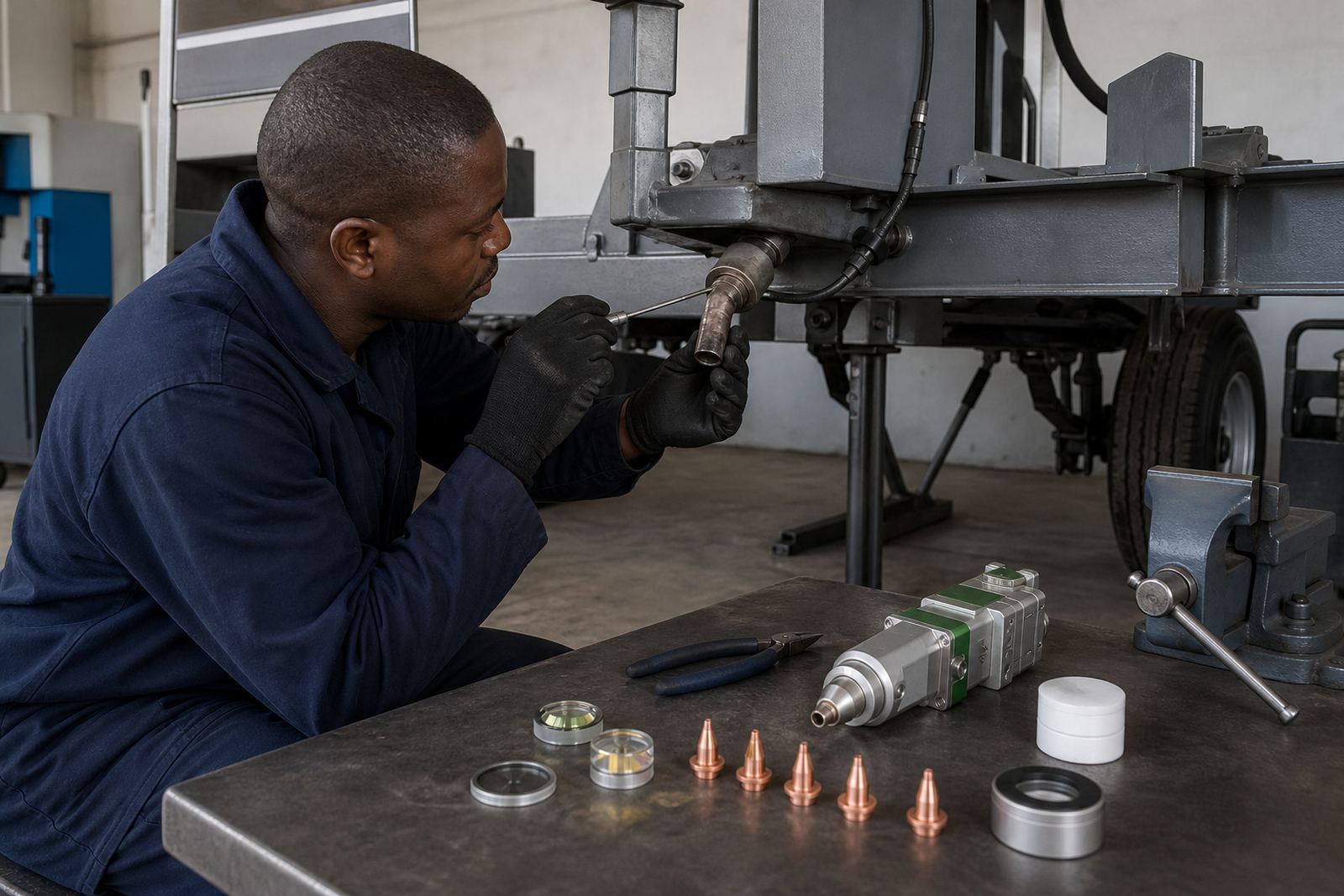

The jobs we group under head service
Fibre laser cutting heads can drift out of alignment after a crash, a poor pierce, worn consumables or long cutting runs on mixed sheet sizes. A clean nozzle path, correct focus setting and sound capacitive sensing all matter, because a small fault near the head shows up quickly in cut quality. These example jobs cover the practical work that usually comes in from sheet-metal shops working mild steel, stainless steel and aluminium.
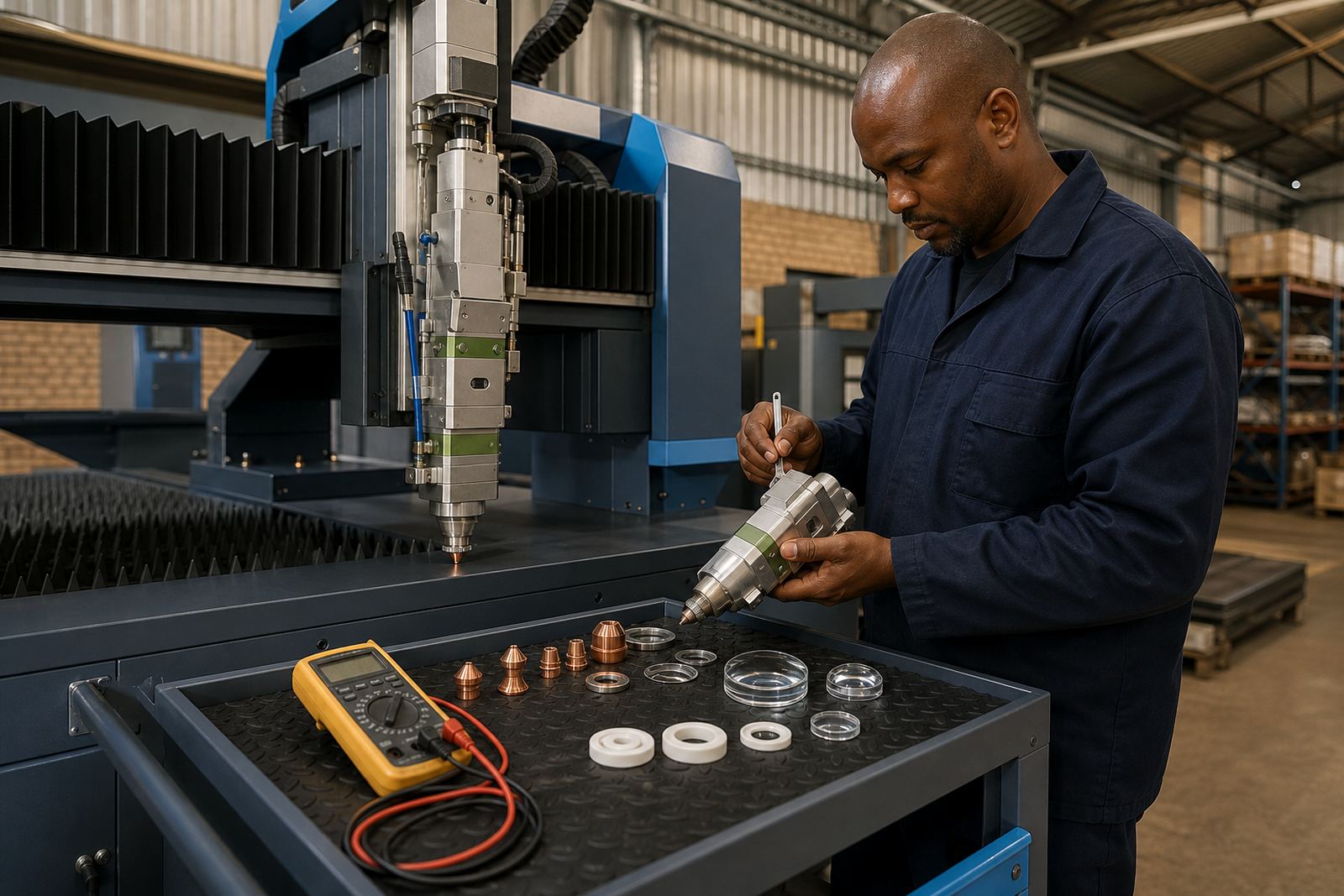
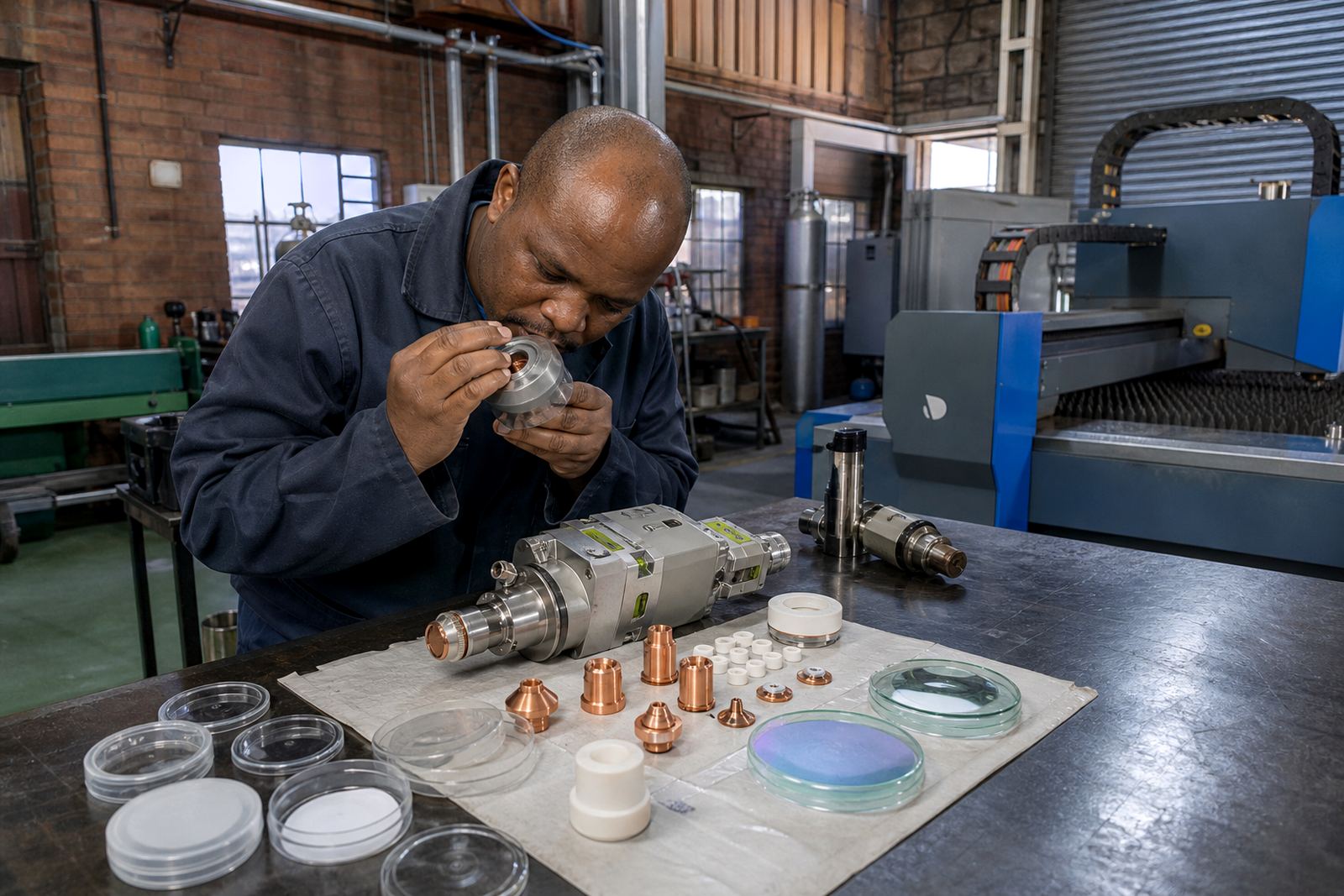
Some heads only need cleaning and a fresh protective window. Others need nozzle centring, focus checks, ceramic ring replacement or a full bench service with seals inspected under light and magnification. On-site alignment is useful when the machine is already installed, the head has shifted, or the cut edge shows taper and rough striations that point to a setting issue rather than a full rebuild.
Bench work that starts with the head apart
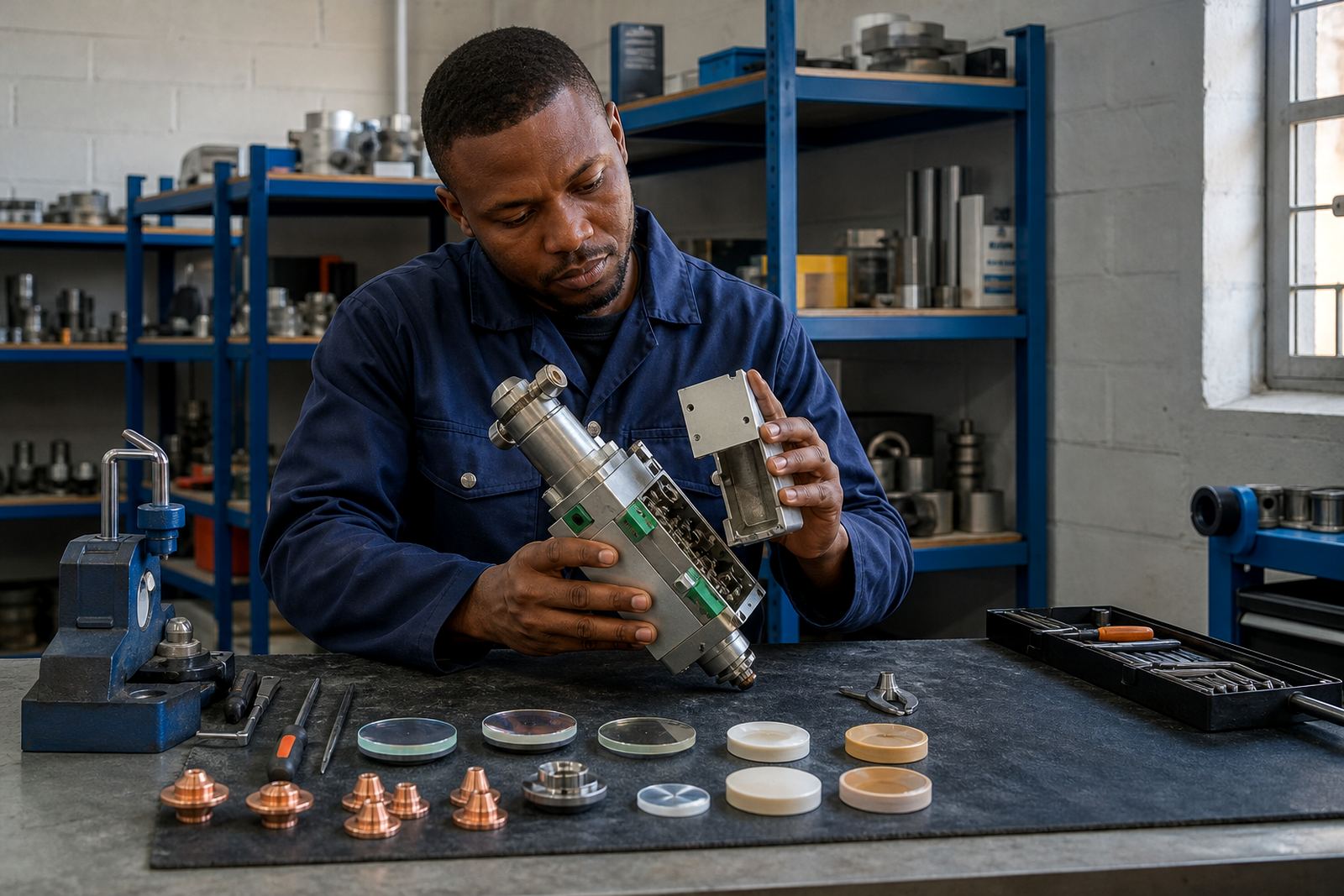
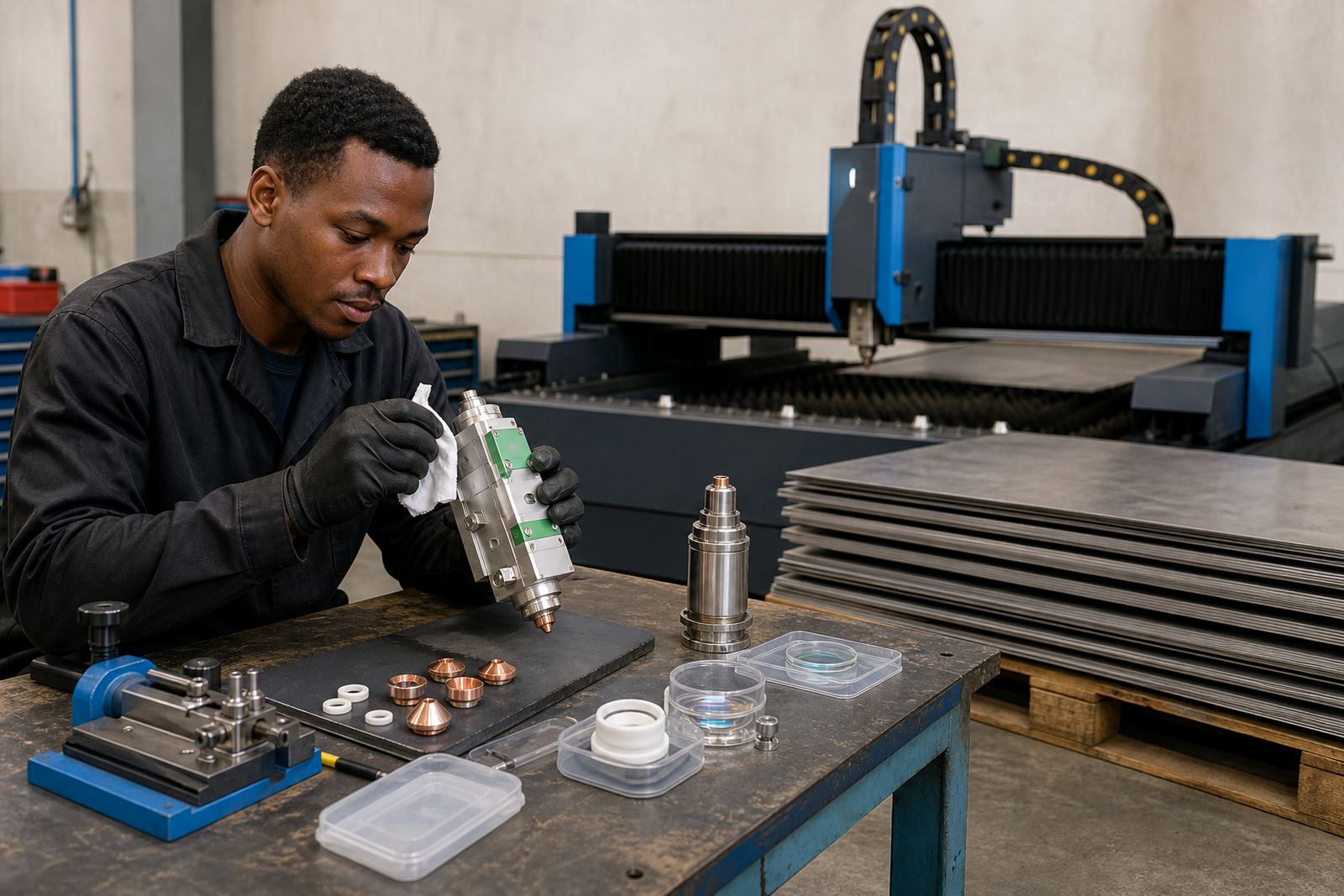
Bench service jobs suit heads that need careful stripping, inspection and reassembly in a controlled space. The technician can check the lens seats, inspect the gas path, clean dust from the optical zone and test the condition of the ceramic ring before the head goes back into use. That matters on busy cutting floors where fine slag and airborne dust work their way into fittings.
- Lens cleaning after smoke film or fine contamination
- Protective window replacement after spatter marks or haze
- Head seal rebuild where air leaks are showing up
- Crash damage inspection before the head is returned to the machine
Jobs that call for a field alignment visit
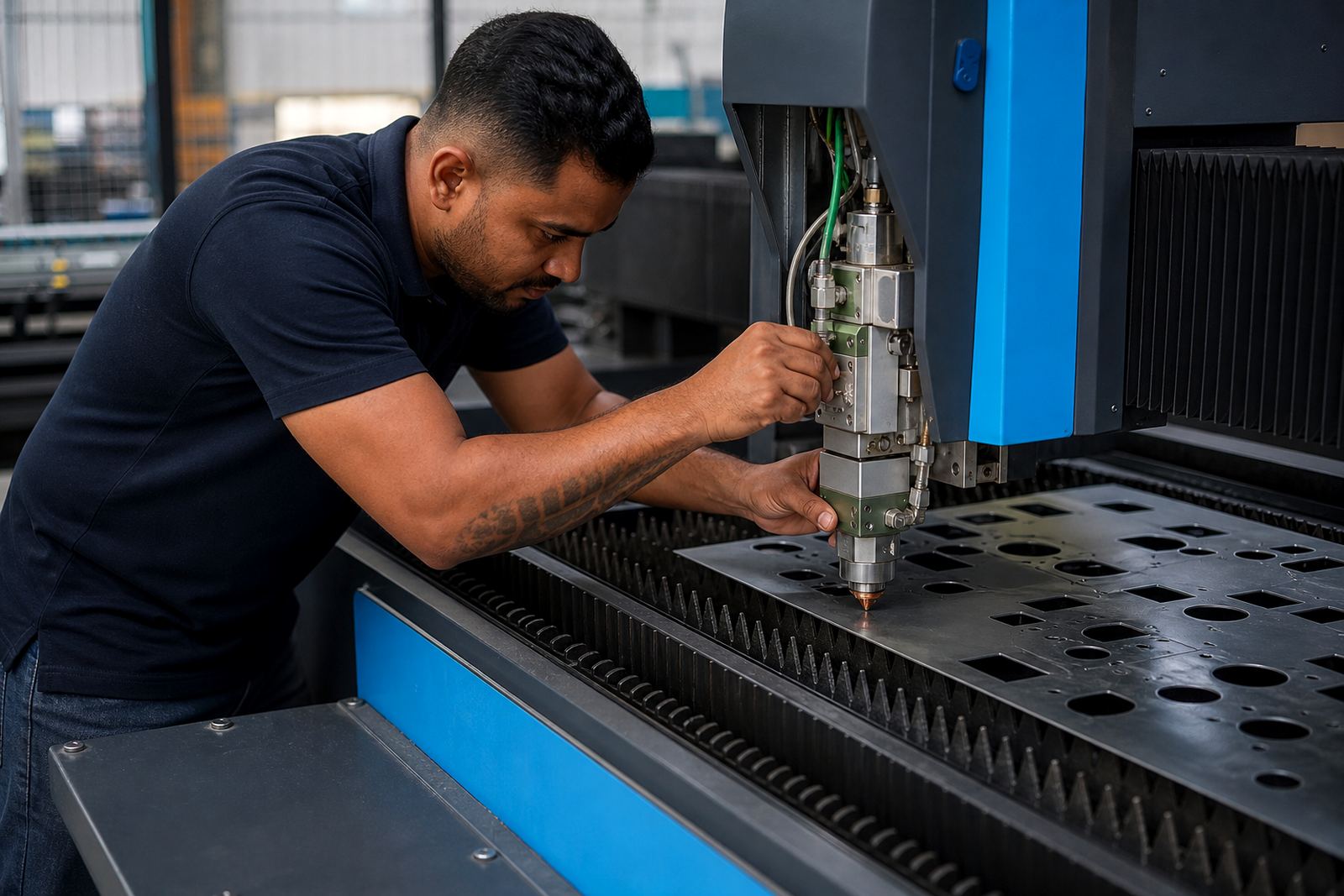
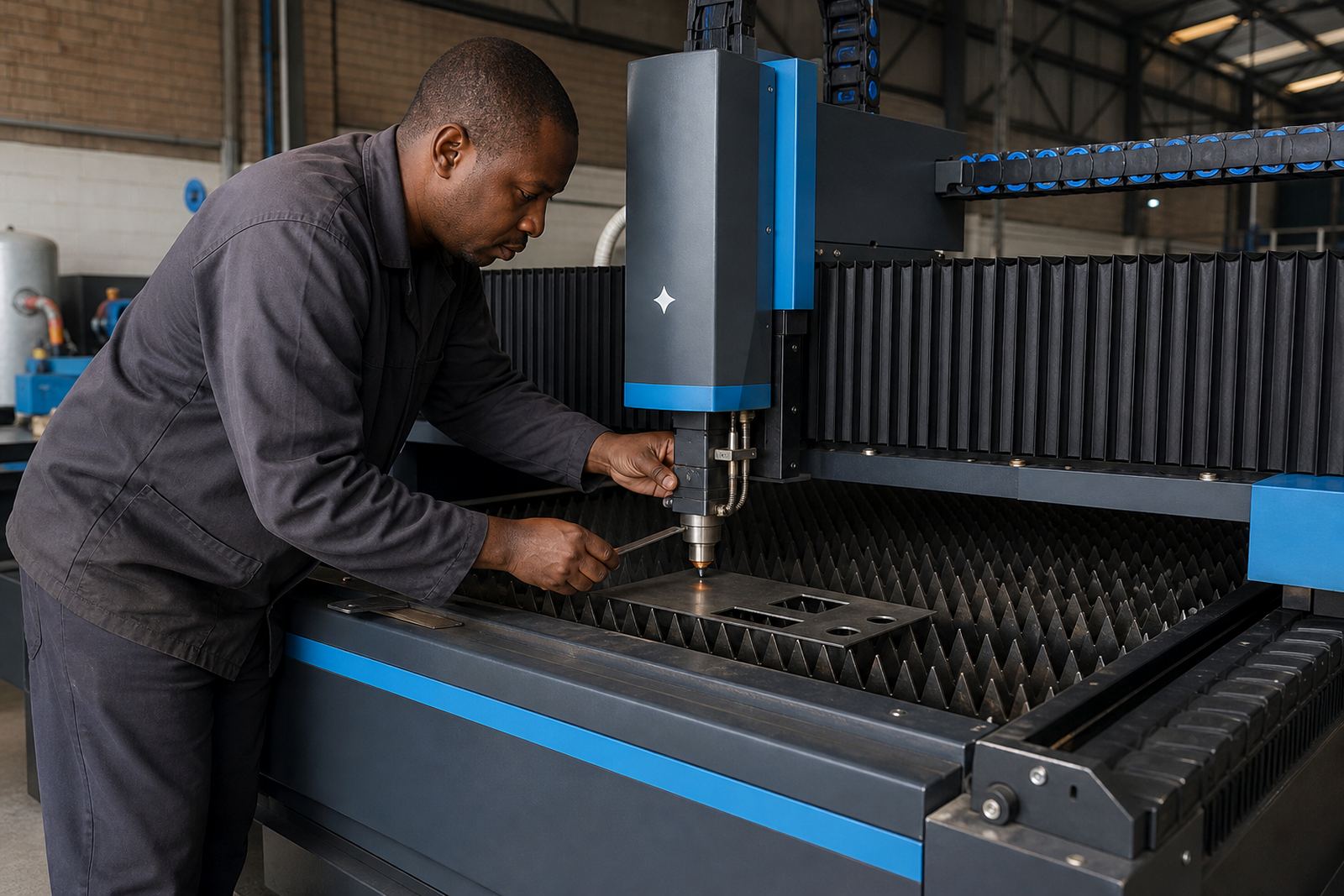
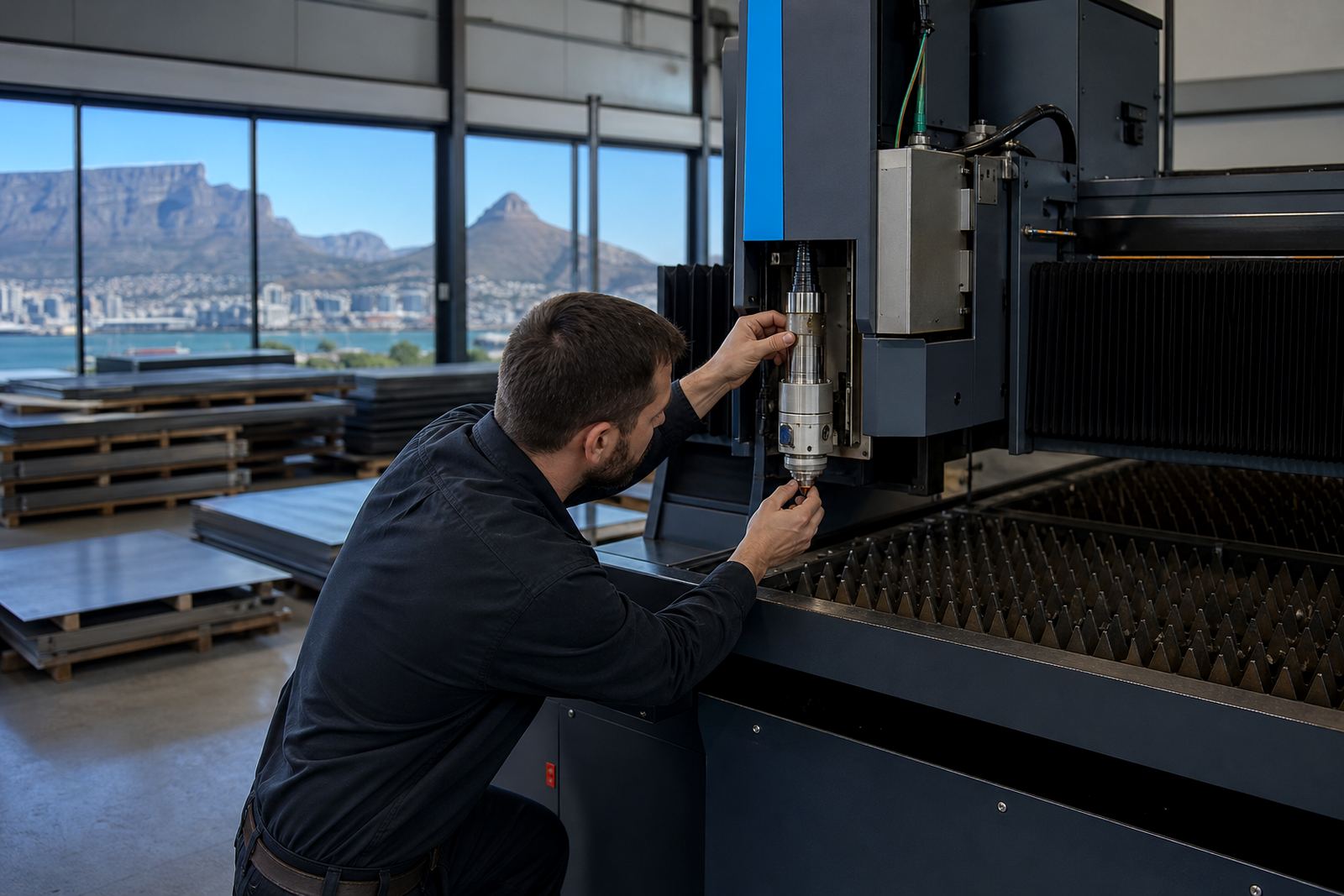
Some faults are better checked on the machine, especially when the cut issue only appears at a certain height, speed or pierce sequence. A field alignment job lets the technician confirm the head position, check the nozzle centre against the beam path and look at how the capacitive sensor is reading the sheet. That is useful when operators see unstable pierces, repeated nozzle strikes or a loss of cut quality on thicker plate.
On-site work also helps when production cannot spare the machine for a long strip-down. The head can be inspected in place, basic settings checked, and the machine returned to service once the fault has been narrowed down. It is a practical choice for shops in Johannesburg, Pretoria, Durban, Cape Town, Rustenburg and the East Rand that want the fault traced where it starts.
Typical service items listed on this hub
The cards are added separately, but the job types usually fall into a few clear groups. Each one points to a different part of the head, lens stack or consumable path, so the fault can be matched to the right bench or field work.
- Nozzle centring for single layer and double layer nozzles
- Focus setting check for cut quality, pierce behaviour and edge finish
- Capacitive sensor check where height sensing is unstable
- Gas path inspection where assist gas flow looks uneven
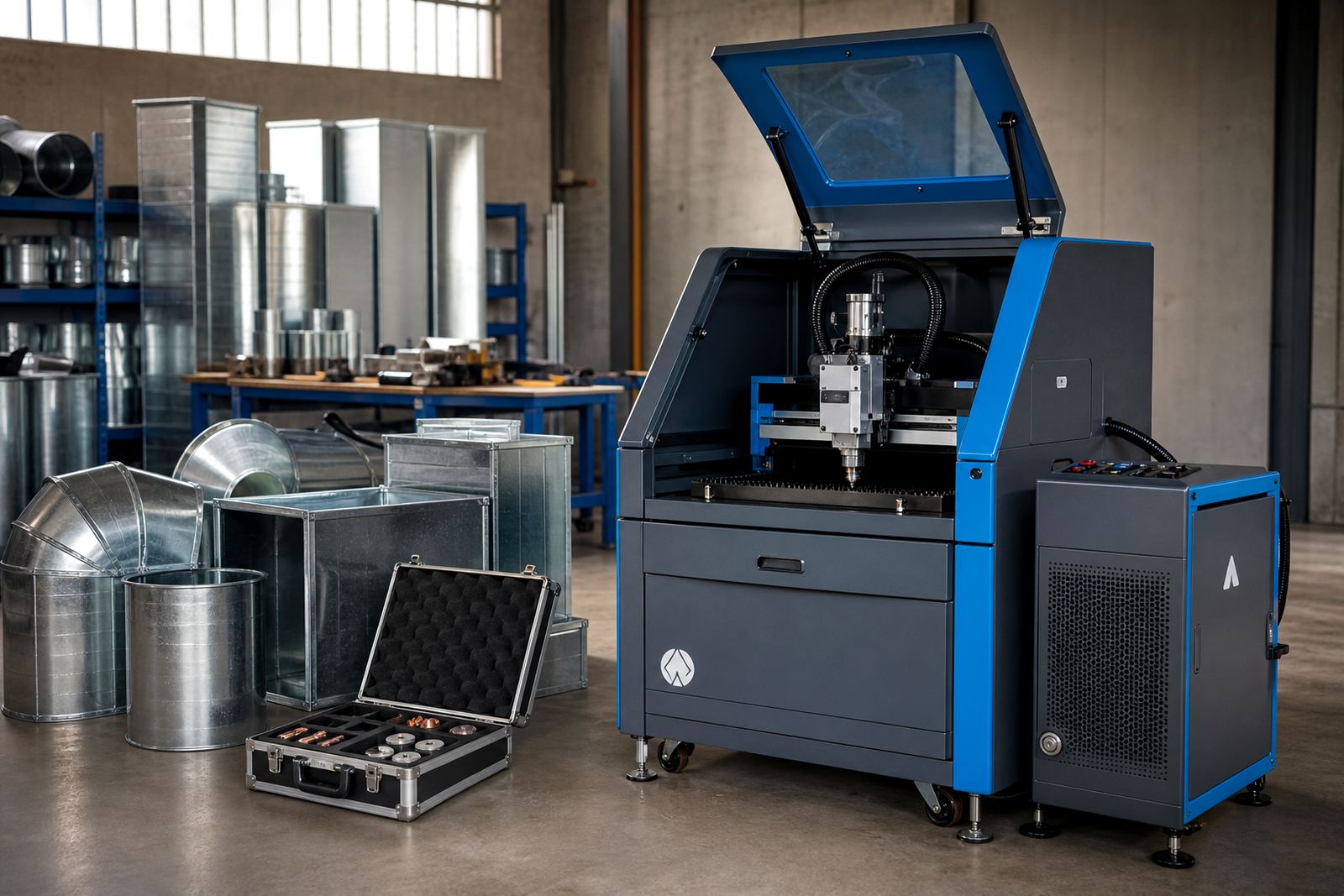
- Spare head preparation for shops that keep a unit ready on the shelf
How to read the examples before picking a job type
It helps to start with the visible symptom. A rough edge, a widening kerf or heavy dross can point to focus or nozzle wear. A cloudy protective window often points to contamination close to the head. Repeated head trips, false sensing or uneven cut height usually call for a sensor check and a closer look at the alignment. When the head has had a crash, the safest route is to treat it as a damage inspection first, then decide if the lenses, ceramic ring or seals need replacement.
The examples are arranged to show the work in plain terms, not to hide the fault behind trade jargon. That makes it easier for a shop supervisor, setter or maintenance team to match the issue to the right service entry before the machine is opened up.
What sits behind a clean, stable cut
Good cutting starts with small details. The nozzle needs to sit true, the focus point must match the material and thickness, and the protective window has to stay clear enough to protect the optics below it. If dust, spatter or a tired ceramic ring starts to interfere with the beam path, the machine can still run, but the edge quality usually slips and the cut becomes harder to trust.
That is why these head service jobs are listed together. They all live close to the same problem area, and each one helps keep the head working the way a sheet-metal shop needs it to work on a normal production day.