What the pierce mark is trying to tell you
A clean pierce usually leaves a tight entry point, steady flame and a short burst before the cut joins the path. When the mark grows wide, ugly or inconsistent, the head is often asking for attention rather than the sheet itself being blamed.
On mild steel in Gauteng, a shop might first notice that the pierce dimple is off-centre, or that the pierce leaves a hard bead around the entry. On stainless, the giveaway can be a darker halo and a rough start point that spoils nested parts. Those signs often point to nozzle wear, dirty optics, poor focus position or a height sensing fault.
- Rounded pierce start points can mean the nozzle bore has opened out.
- Back spatter on the nozzle face often points to gas flow trouble.
- Repeated strike marks near the same spot can point to head misalignment.
- Blackened glass or a hazy window can shift the beam and weaken the pierce.
Nozzles do more than guide the gas
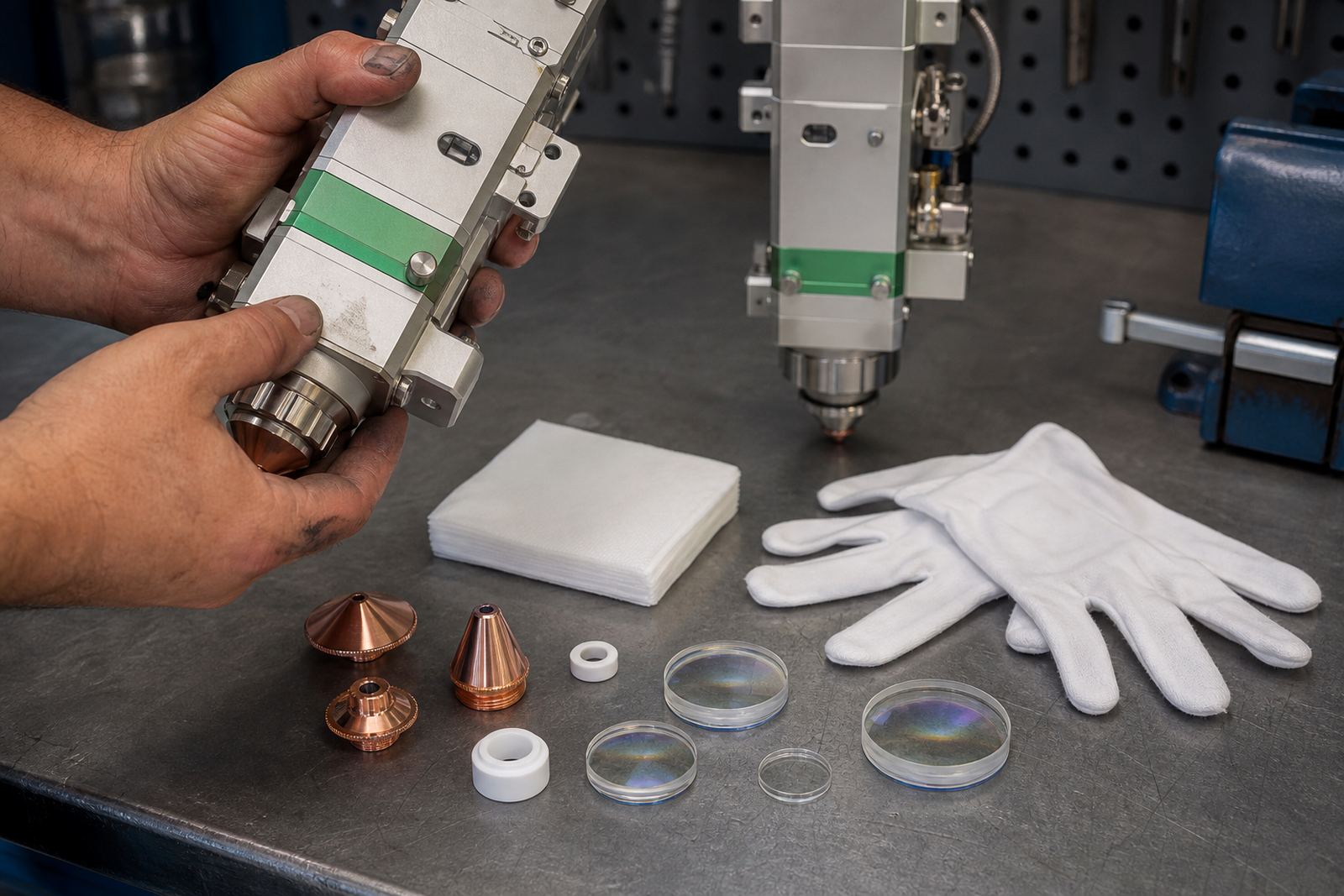
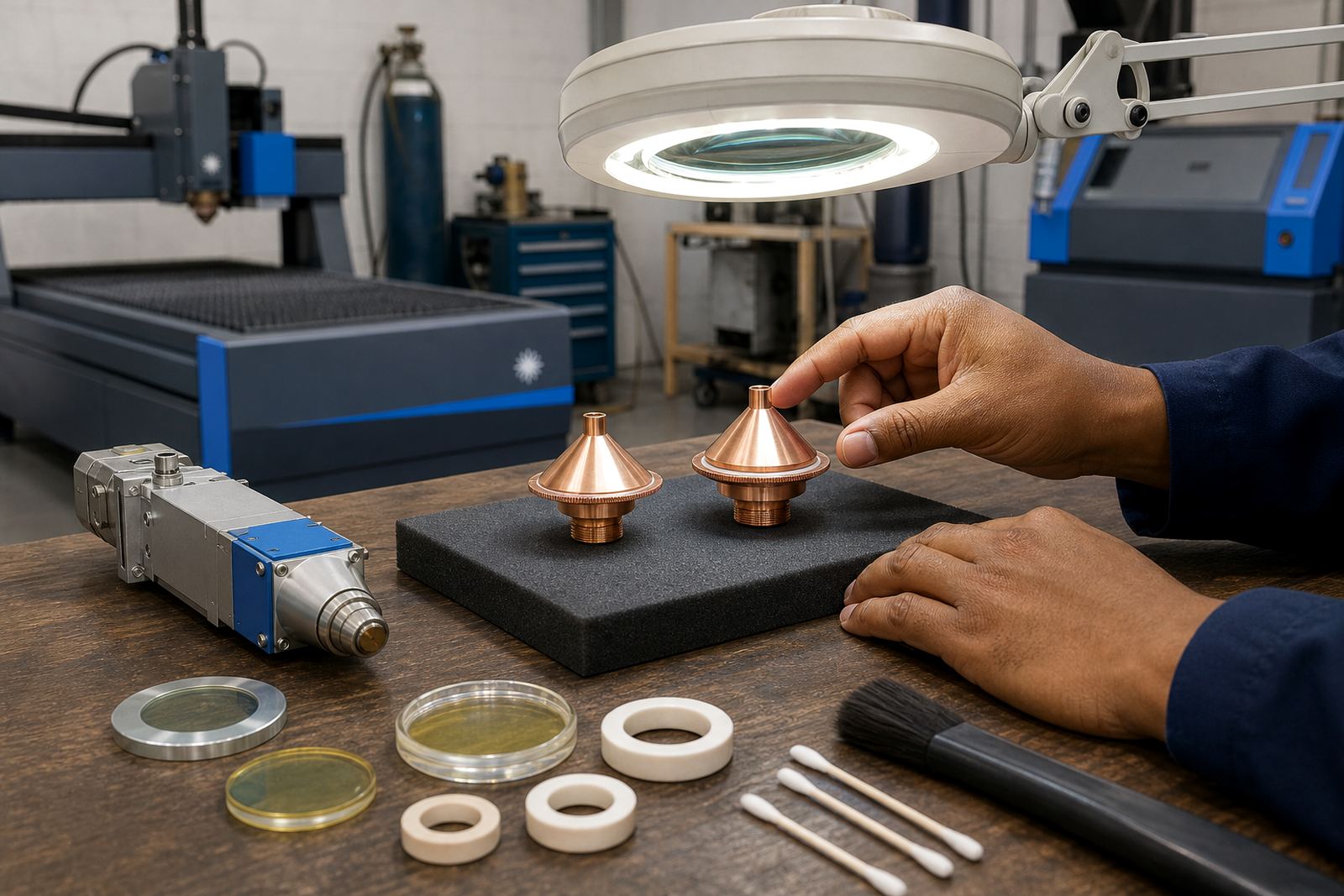
Single layer and double layer nozzles both need the right condition and size for the job. A nozzle that is slightly oval, nicked or full of residue will disturb the gas cone and the pierce can go soft before the cut path even starts. That is common on busy sheet-metal lines where a head runs long shifts and the nozzle gets knocked during a crash or a bad pierce.
If the pierce starts to spray upward, or leaves little droplets around the entry, the nozzle tip should be checked first. Centring matters too. A nozzle that is off-centre can still cut, but the pierce may wander and the edge quality will change from one sheet to the next.
- Single layer nozzles suit many standard cutting tasks and need clean gas flow.
- Double layer nozzles are often used where the gas stream must stay more controlled.
- A damaged tip can create poor pierce height and a wider heat mark.
- Carbon build-up around the nozzle face can cause unstable starts.
Lenses, windows and the hidden cost of haze
Protective windows take the first punishment, but focus and collimator lenses carry the beam path itself. When a window is clouded by fine dust, smoke film or a small chip, the machine may still cut, yet the pierce can lose punch and leave extra burr. A lens with contamination will often show the same pattern, only more sharply and with greater risk.
Cleaning routines matter because a careless wipe can do more harm than the original dust. On a humid day near the coast, moisture can hold residue on the glass and make a dull film appear again after a short run. A proper cleaning routine starts with clean handling, the right wipes, and checking whether the window was already heat-marked or cracked.
When a shop in Pretoria sees regular pierce weakness on the same thickness and gas setup, the problem may sit in the optics before it sits anywhere else.
Capacitive sensing and focus settings leave fingerprints
Capacitive height sensing helps the head keep a stable stand-off from the sheet. If the sensor reads badly, the pierce point can sit too high or too low, and the arc may hit the material with the wrong energy. The cut may still start, but the entry will look rough and the first millimetres will tell on the setup.
Focus settings also leave clear fingerprints. Too high, and the pierce can feel weak and spread out. Too low, and the pierce may dig a harsh crater or throw back spatter that dirtys the nozzle and window faster than expected. A careful check on focus position can save time that would otherwise be spent chasing random faults.
- Wrong stand-off can make the pierce flare before it closes.
- Bad sensor reading can change the entry point from one sheet to the next.
- Incorrect focus can leave a dull start and a heavy burr.
- Excess spatter often points to a mismatch between focus, gas and height.
When the head itself is out of line
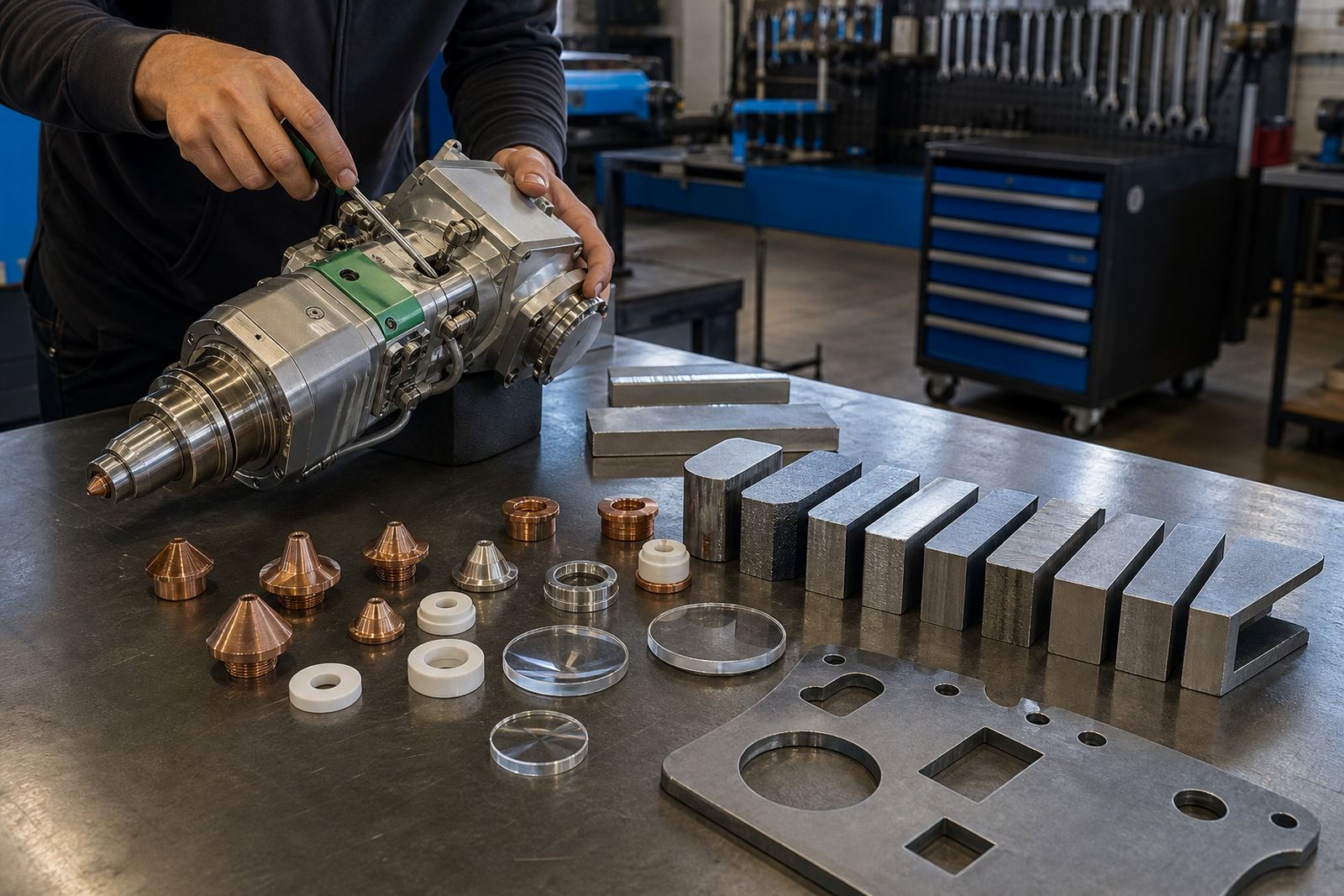
If consumables keep failing early, the head may need bench service or on-site alignment. A light crash can shift the internal path enough to show up first in piercing, not in full cutting. The machine may still run, but the pierce will drift, the nozzle may not sit true and the first signs will be waste on the floor.
Spartan, Kempton Park sits close to a lot of sheet-metal work, and the pattern is familiar. A shop in East Rand may call after seeing repeated misfires on mild steel, then discover a worn ceramic ring and a slight seal issue after a closer inspection. Another shop in Durban may see the pierce improve after the window is changed, the nozzle centred and the focus checked against the material stack it actually runs.
That is why a poor pierce should be read as a clue, not an isolated nuisance. The head, the consumables and the sensing system all leave marks.
A quick shop floor reading before the next shift
Before the next run, the operator can look for a few plain signs. No special tool is needed to spot smoke staining, a chipped window, a bent nozzle shoulder or a ceramic ring that no longer seats square. Those are the small faults that often turn into slow piercing, extra dross and avoidable rework.
- Check whether the pierce is centred and repeatable.
- Look for heavy spatter on the nozzle and head face.
- Look at the protective window for any clouding, pitting, or heat damage.
- Confirm the ceramic ring, seals and seating surfaces are clean.
- Review height sensing and focus before blaming the sheet.
In a Rustenburg workshop cutting mixed plate sizes, that short check can show whether the issue sits in consumables, alignment or the head itself. It is usually the pierce that speaks first, if someone knows how to read it.