

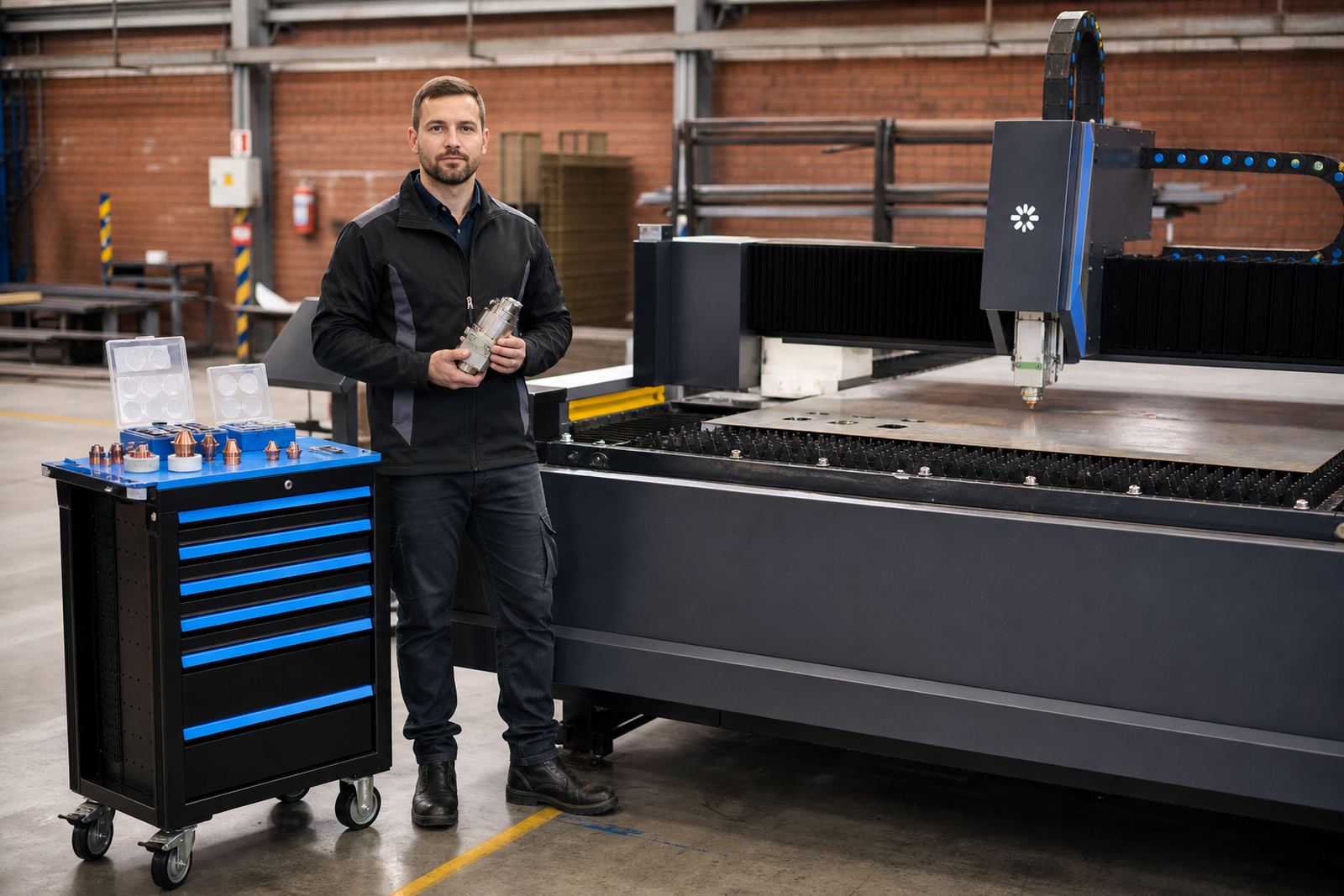
The bench, the field and the parts counter
Our work is split between the bench in Spartan and visits to shops that need a head aligned on site. That mix matters, because a fibre laser head can look fine from the outside while the nozzle centring, focus setting or protective window has already drifted out of range.
The team keeps the detail practical: gas path checks, ceramic ring changes, lens cleaning, sensor checks and crash damage inspections are handled with the same steady eye. In sheet-metal work, a small error at the head shows up fast on the cut edge, so the people here keep their notes tight and the sequence clear.
Marius Johannes van der Merwe keeps the technical line honest
Marius Johannes van der Merwe leads the workshop and field side of the business. He watches the service standard on cutting heads, focus checks, protective window handling and spare head preparation, and he keeps the team working to the realities of daily production in Johannesburg, Pretoria and the East Rand.
He is the person who weighs up whether a head needs a bench strip-down or whether an on-site alignment will do the job better. If a shop is fighting with unstable cut quality, he wants the basics checked first: centring, cleanliness, sealing and the condition of the optical path.
Thandiwe Rapetswa keeps the moving parts lined up
Thandiwe Rapetswa coordinates the flow between jobs, parts and site visits. She keeps the service notes in order, matches the right nozzles, lenses and ceramic rings to the head on hand, and makes sure the team knows what is already on the bench and what still needs to be collected.
Her role suits the kind of work that turns messy if nobody tracks it properly. A fibre head service may call for small parts in many sizes, and coastal humidity in places like Durban and Cape Town can make storage and handling tougher than many expect.
Jaco Essop works where the head opens up
Jaco Essop is the bench service technician. He strips, cleans and rebuilds cutting heads, checks seal faces, inspects the ceramic ring, and looks closely at the focus and collimator lenses before parts go back into the assembly. His job is where the hidden wear shows itself.
He also checks how the nozzle seat behaves under repeated use, because a poor seat or a damaged ring can make centring inconsistent. On sheet-metal work, that kind of fault can show up as rough edges, dross or cuts that wander on corners and thicker plate.
Lerato Tau handles alignment where the machine stands
Lerato Tau does on-site head alignment for shops that need the laser head set correctly in place. He works through nozzle centring, focus position, capacitive height sensing and the gas path, then checks the head against the machine conditions before the job gets handed back to production.
That field work helps when a machine has taken a knock or when a shop sees a change in cut behaviour after maintenance. A careful alignment can settle the head back into a cleaner cut pattern, but only if the surrounding parts are sound and the settings are checked in order.
Anele Daniels keeps the parts conversation straight
Anele Daniels handles parts sales and helps shops match the right consumables to the right cutting job. He spends a lot of time on nozzles, protective windows, ceramic rings and replacement lenses, and he knows how quickly the wrong part can throw a production run off line.
- Single layer and double layer nozzles for different cut conditions
- Protective windows for keeping the optical path clean
- Focus and collimator lenses for replacement work
- Ceramic rings and seals for head rebuilds
He speaks plainly about wear, contamination and fitment, which helps when a shop needs parts for repeated stainless, mild steel or aluminium work.
Willem Pretorius backs the detail work with technical support
Willem Pretorius leads technical support and keeps an eye on the way the team approaches focus setting, cleaning routines and sensor checks. He is the one who looks at the small things that often get missed, like a dirty window, a poor gas path or a height sensing issue that has been creeping in for a while.
His support is useful when a machine is cutting but not cutting well. The answer is not always a new part, sometimes it is a better clean, a proper lens check or a reset of the head settings so the machine can hold a clean edge again.