
The hole in the nozzle does more work than people expect
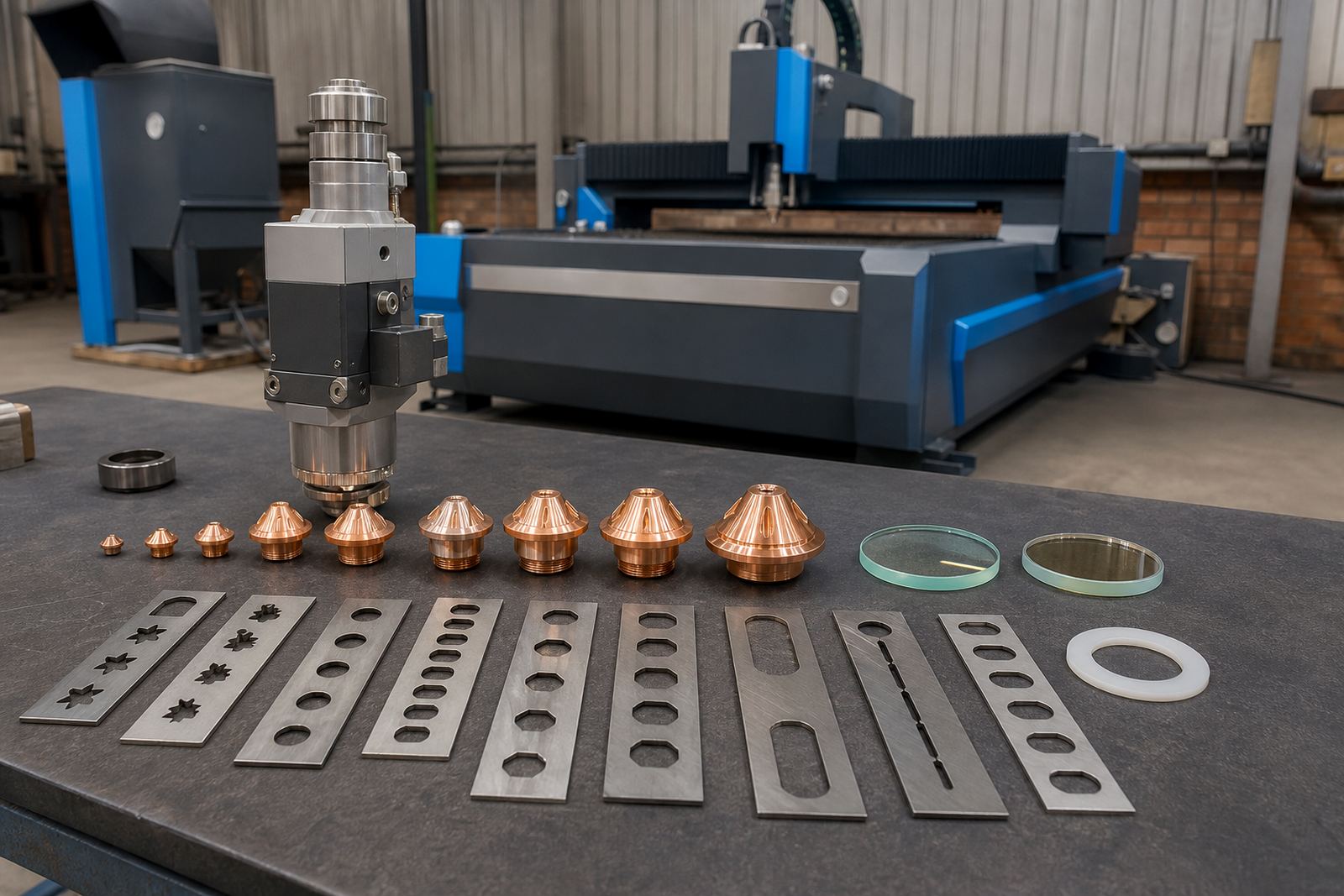
The orifice sets the shape and speed of assist gas as it leaves the nozzle body. A smaller bore pushes the gas into a tighter column, while a larger bore gives a broader stream with less direct punch at the cut face. That changes the way molten metal clears the kerf, how the pierce starts, and how much room the beam has to stay stable.
On fibre laser cutting heads, the nozzle sits close to the workpiece and works with focus setting, gas pressure and centring. If the bore is too small for the job, cutting may feel tight and the pierce can splash more than expected. If it is too large, gas loses shape before it reaches the cut and the edge can show roughness, dross or slight taper. The right choice sits between those two problems.
Piercing asks for a different nozzle mood than steady cutting
Piercing puts the head under more strain than a clean through-cut. The beam has to break through a fixed point while heat, vapour and melt are still building up in the kerf. The nozzle orifice must clear that material without scattering it back at the protective window or the ceramic ring. A poor match can leave spatter on the front face of the nozzle and shorten the service interval.
- Thin sheet often needs a controlled, narrower gas column to keep the pierce neat.
- Heavier plate usually needs more flow area so molten metal can leave the kerf fast enough.
- Where the pierce is noisy or uneven, the nozzle may be wrong before the lens gets blamed.
- A damaged or off-centre nozzle can make a good setup behave badly on the first strike.
In practice, pierce quality is one of the quickest clues that the orifice is not matched to the job. Shops in Gauteng and KwaZulu-Natal often see the issue after a machine changeover, when the new run uses a different thickness range but the nozzle is left at the old setting.
Gas speed and edge stability move together
Assist gas does not only clear molten metal. It helps hold the cut path open and keeps the beam working in a steady channel. That means nozzle choice affects edge stability as much as it affects material removal. A small orifice can give a sharp, fast stream, but if the pressure and focus are not aligned, the cut may start to chatter or leave fine striations. A larger orifice can soften the stream and reduce that pressure at the kerf, which may suit thicker material but struggle on finer work.
Cut stability is not just a matter of speed. Sheet flatness, tip wear, gas purity and lens condition all feed into the result. Even a slight burn mark on a focus lens or a dirty protective window can make the nozzle appear wrong when the real issue is contamination upstream. That is why a bench check usually looks at the full head, not only the orifice size.
For shops running stainless, mild steel and aluminium in the same week, nozzle choice often shifts more than expected. A single layer nozzle may behave well on one material and miss the mark on another. Double layer nozzles can give a different gas pattern, and they need proper centring to do their job. If the head is not aligned, the pattern leaves the nozzle at an angle and the cut quality starts to wander.
How centring, focus and nozzle size work as one set
Nozzle orifice choice never sits alone. The beam focus, the centring of the nozzle to the beam path, and the condition of the ceramic ring all interact. If the focus is set too high or too low for the material, the nozzle may seem oversize or undersize even when it is the correct part. That is why a focus setting check belongs beside any nozzle change.
- Centring keeps the beam in the middle of the gas stream.
- Focus position changes how the beam enters the melt zone.
- The ceramic ring keeps the head stable and insulated as designed.
- The protective window must stay clean, or the cut starts losing energy before it reaches the sheet.
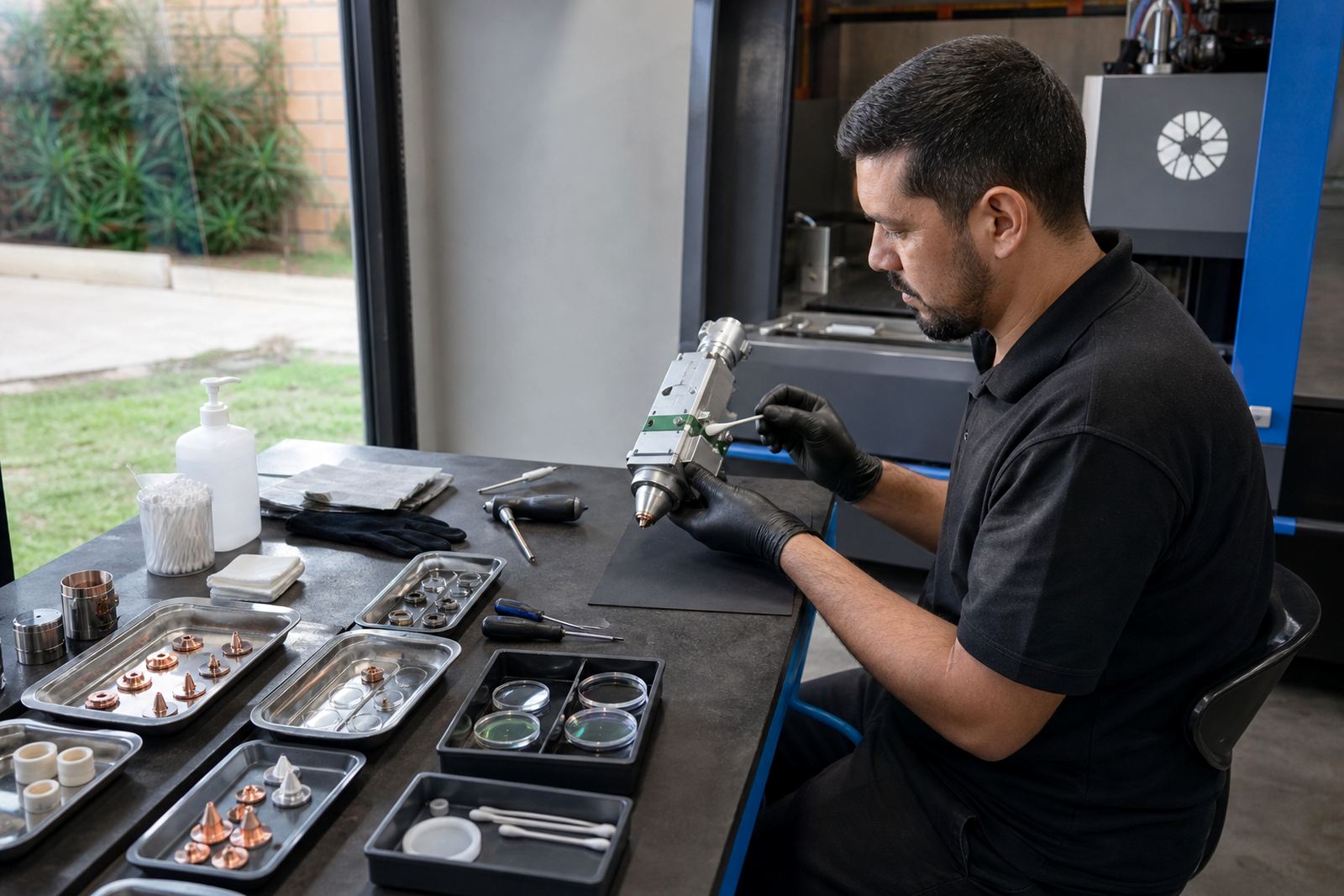
On a busy line, operators often see a rise in burr and think the nozzle has worn out. Sometimes it has. Just as often, the head needs cleaning, the lens needs attention or the gas path has picked up contamination. A proper bench service helps separate those issues instead of replacing parts one by one and hoping the cut settles down.
A local example from Spartan to a Rustenburg floor
A sheet-metal shop in the East Rand may be cutting light gauge panels in the morning and thicker bracket parts after lunch. The nozzle that works well on the first batch can leave a ragged edge on the second if the bore is not suited to the new thickness. In a case like that, the operator does not only need a different nozzle size, they need a clean head, a checked sensor, and a fresh look at gas path condition.
We see the same pattern when a machine moves between Johannesburg, Pretoria and Rustenburg sites. Vibration during transport can shift the head enough to upset nozzle centring. Dust from shop traffic and fine metal particles then add another layer of trouble. On-site head alignment helps put the beam and gas stream back in line, while bench service lets us inspect the nozzle seat, ceramic ring, focus lens and protective window together.
When the job is being pushed hard, the cleanest result often comes from a small, deliberate change rather than a large one. Adjust the nozzle orifice to the thickness, then check the focus, then confirm the cut with a short sample path before moving into production. That sequence saves time and it also keeps consumables from being blamed for a problem higher up the head.
A short shop-floor routine that keeps nozzle choices honest
Before a long cutting run, the best shops follow a basic routine that does not depend on guesswork. It is not glamorous, but it keeps the head working in a predictable way and helps the nozzle do the job it was selected for.
- Inspect the nozzle tip for dings, scoring and spatter.
- Check that the nozzle sits centred under the head.
- Confirm the focus setting for the current material and thickness.
- Look through the protective window for haze, specks or heat marks.
- Review the gas path and clean out any contamination.
- Replace worn ceramic rings before the fit starts moving.
That routine suits busy fabrication shops because it is practical. It does not ask for special language or fancy theory, only a clean head and a steady setting. When the nozzle orifice is matched to the cut and the rest of the head is kept in order, the machine spends more time cutting and less time chasing poor edges.