The beam does not enter the cut in the right shape
Inside a fibre laser cutting head, the beam leaves the fibre in a condition that still needs control. The collimator lens gathers that energy and shapes it into a parallel beam, which gives the final focus lens a cleaner starting point. If that beam is uneven, the machine can still cut, but edge quality, pierce behaviour and nozzle life tend to drift.
In practical shop terms, the collimator lens is not a decorative part hidden in the head. It sits in the middle of the optical chain and affects how the machine handles thin sheet, thicker plate and long shifts where dust and heat build up around the nozzle and protective window.
When a sheet-metal shop in Spartan is chasing a tidy cut on mild steel, stainless or aluminium, the collimator lens helps keep the beam geometry steady before focus happens. That matters because the rest of the head, from ceramic ring to nozzle, is only as consistent as the beam feeding it.
What the collimator lens changes before focus begins
The main role is beam conditioning. A well matched collimator lens reduces divergence and helps the beam arrive at the focusing lens with a shape the head can use predictably. That is important for cap sensing, focal position, and the small distance between the nozzle tip and the workpiece.
When the beam is well conditioned, the machine is less likely to fight itself with unstable spot size or uneven energy spread. The cutting head can then do a more controlled job with assist gas, whether the operator is working with nitrogen for clean edges or oxygen where the process calls for it.
- It prepares the beam for final focusing.
- It supports stable spot formation at the cut.
- It helps keep the head consistent across different material thicknesses.
- It works with the focus setting, not against it.
The lens is not a cure for wrong parameters. If the nozzle is off-centre or the protective window is dirty, the collimator lens cannot fix that on its own. It is one part of the optical chain, and that chain only works properly when every part is clean and aligned.
Small faults show up as cut quality problems
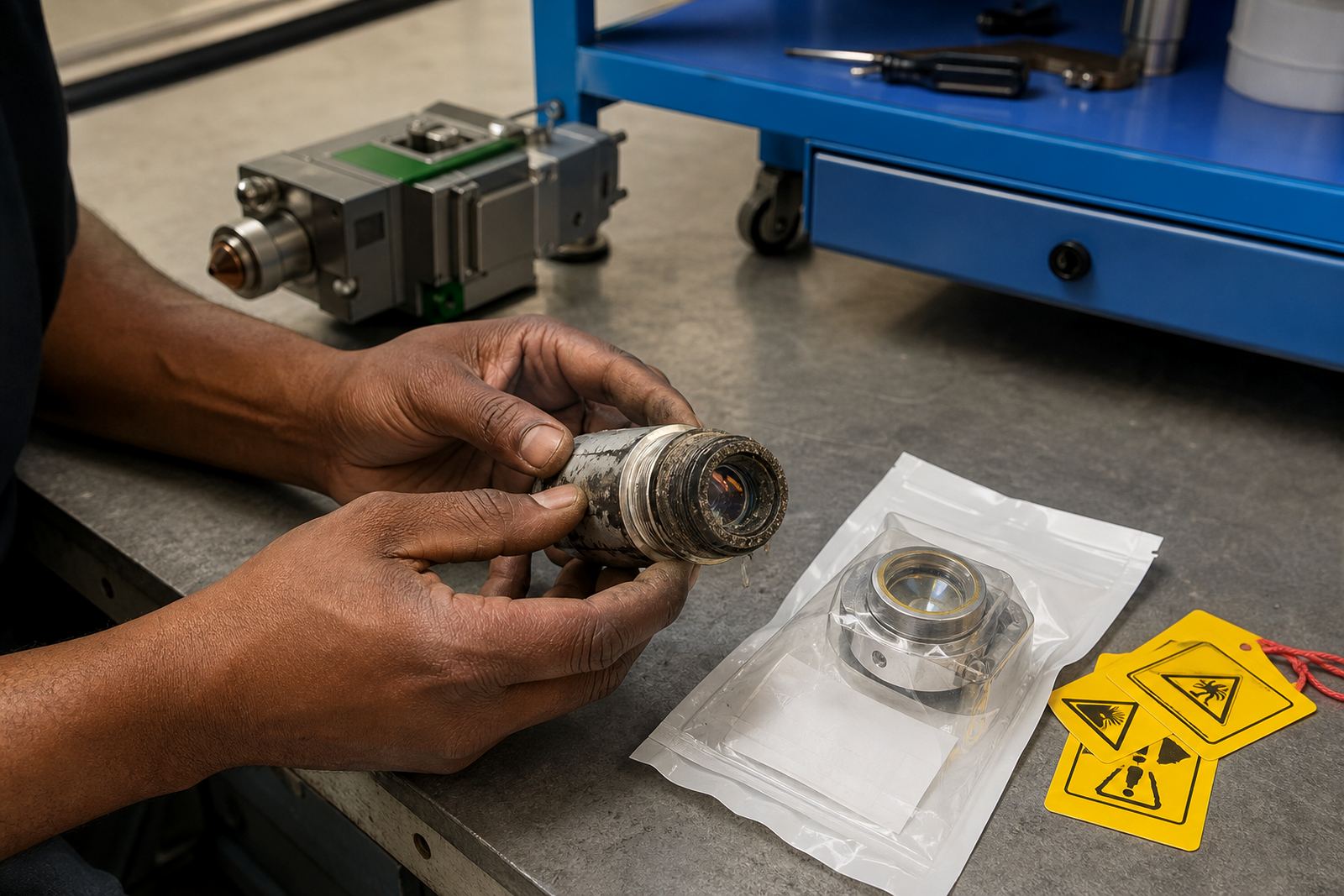
Most shops first notice a problem at the edge of the cut. Burr on one side, rough pierces, or a taper that was not there last week can point to optical trouble. The collimator lens may be dirty, marked, or slightly out of alignment after a minor crash. Even a small shift changes how the beam is presented to the focus lens.
A damaged lens can also make the machine feel inconsistent across the sheet. The operator may adjust focus settings more often than usual, then the cut still varies from corner to corner. That is often the moment to check the full head rather than only the program.
- Look for rougher edges on repeat parts.
- Check whether pierces are taking longer than normal.
- Watch for changing cut width on the same material.
- Inspect the protective window before blaming the lens stack.
In Durban, where humidity and airborne dust can be hard on exposed components, a dirty optical stack can show up quickly. A shop might blame the nozzle first, but a stained collimator lens or a clouded window often sits higher up the list than people expect.
Bench service keeps the optical stack honest
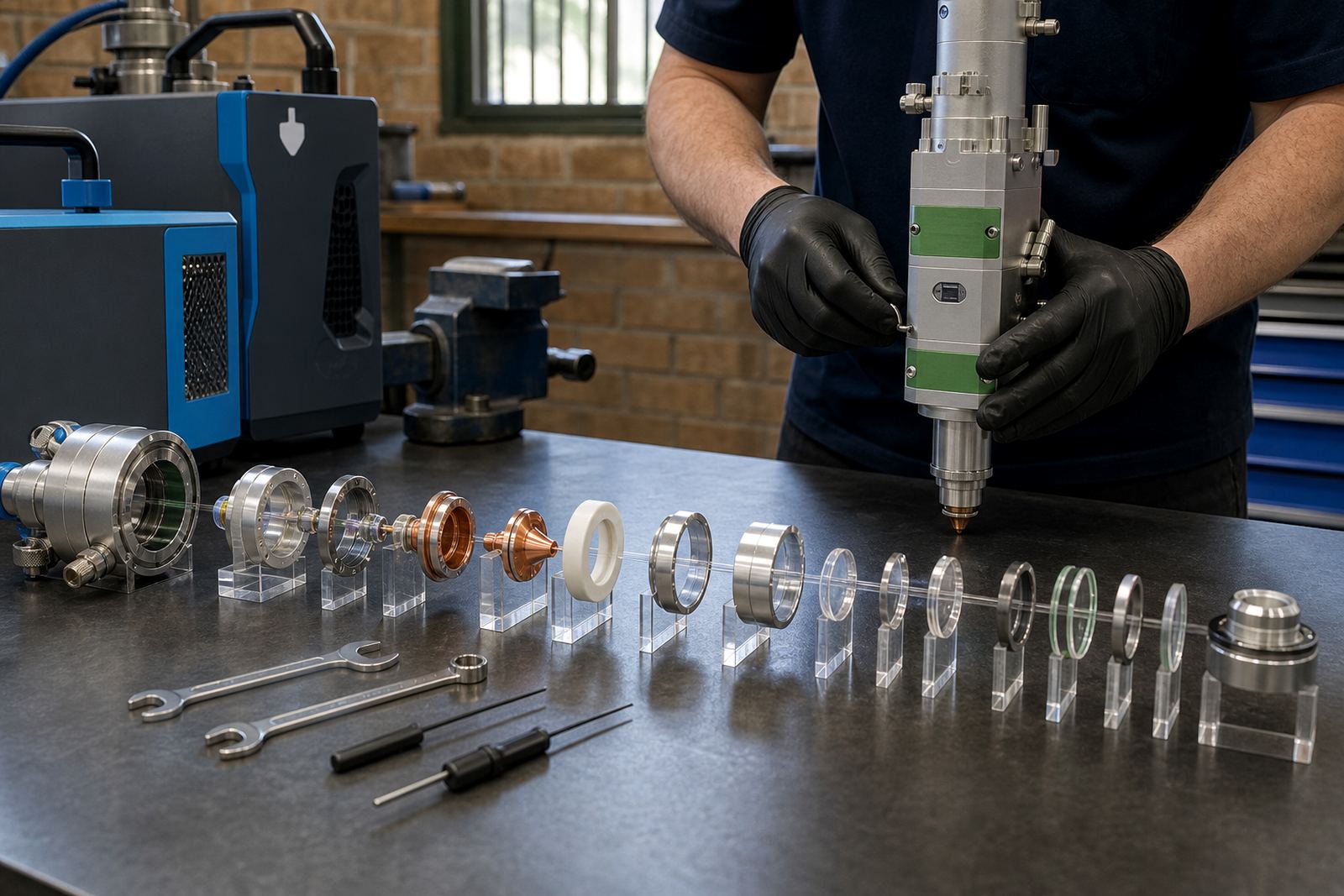
Raytool works with fibre laser cutting heads on the bench and on site, because the lens path needs more than a visual glance. Bench service gives the technician room to inspect the collimator lens, focus lens, ceramic ring, seals and the seating surfaces without rushing through the job.
That is where lens cleaning, head seal checks and crash damage inspection matter. A lens should be handled with care, cleaned with proper solvent and lint free materials, then checked for marks under suitable light. If the coating is damaged, cleaning will not restore it. In that case, we recommend replacing it for safer operation.
On the bench, the team can also check the gas path and nozzle centring at the same time. Those items sit close to the beam path and they affect how the collimated beam behaves at the cut. A tidy optical stack and a centred nozzle usually make the machine easier to set up.
On-site alignment helps when the head stays on the machine
Not every job can be lifted off and brought into the shop. Some heads stay mounted because production is lined up and the machine is large, awkward or tied into a full cutting schedule. In those cases on-site head alignment is the practical route, especially when a machine in Pretoria or Rustenburg needs attention without a full strip down.
On site, the technician checks the head position, nozzle centring, focus setting and capacitive height sensing. If the collimator lens is not presenting the beam correctly, the symptoms often appear in the cut height control and the behaviour of the nozzle near the sheet surface. The head must sit true before the machine can cut cleanly.
For shops across Johannesburg, East Rand and Cape Town, the value is in keeping the optical path within spec without guessing. The work is part inspection, part adjustment and part common sense. If the head has taken a knock, the collimator lens may be only one item in a list that includes protective windows, ceramic rings and the seal stack.
The cleaning routine is part of the lens story
Keeping the head clean helps our collimator lens last longer. That does not mean constant opening or random wiping. It means a routine that suits the shop, the material mix and the dust load around the machine. Sheet-metal offcuts, fumes and fine debris can settle where people do not expect them.
Good routine work usually starts with the outside of the head, then moves inward only when needed. The protective window gets checked first because it is easier to replace than a lens. The nozzle gets inspected for wear, the ceramic ring for cracks, and the lens seat for dust or residue. That order saves time and keeps the wrong part from being blamed.
- Use clean handling methods when opening the head.
- Check the window before touching the lens stack.
- Keep a record of crash events and nozzle changes.
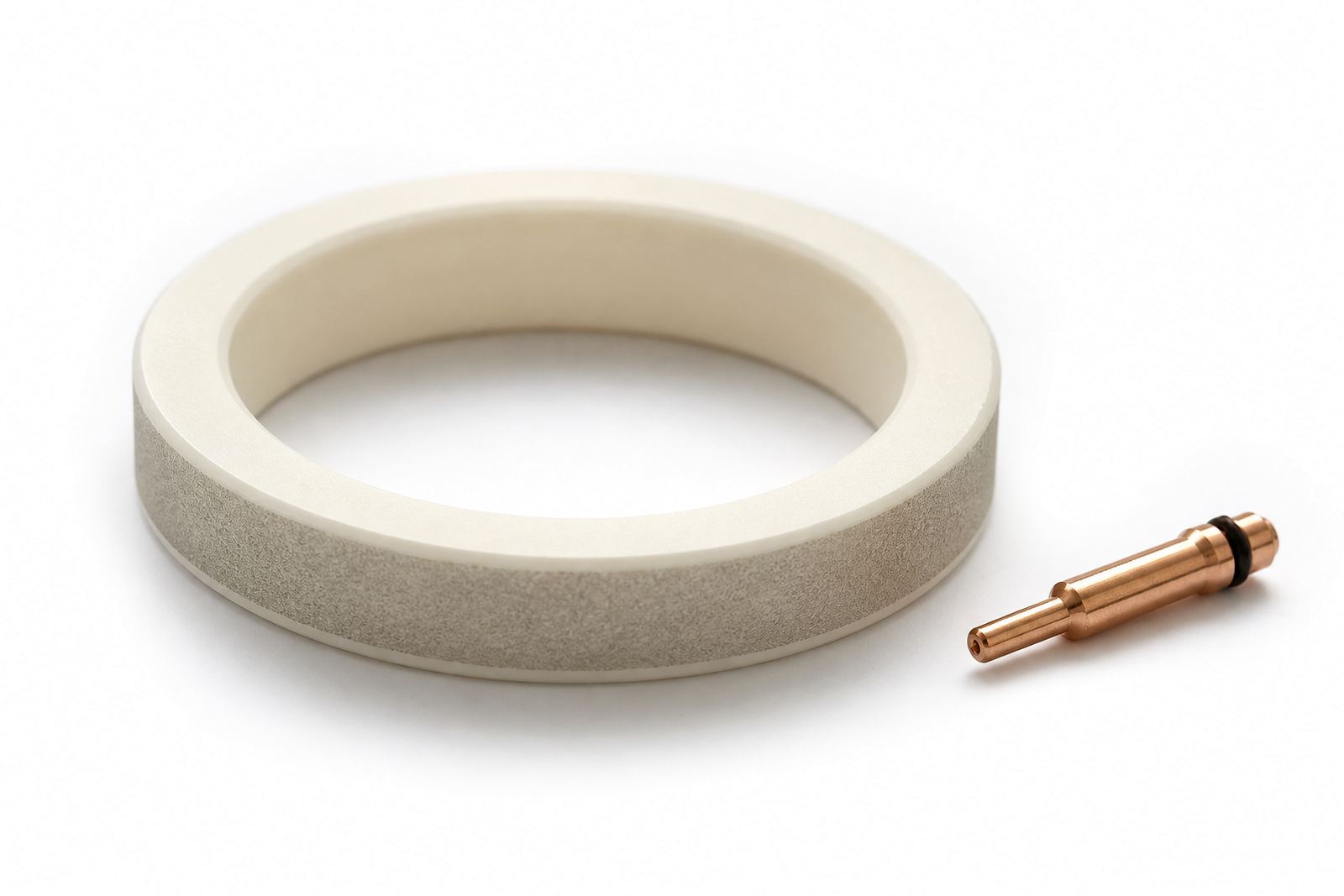
- Replace worn ceramic rings before they affect alignment.
A careful routine matters in busy Spartan workshops where the machine may run parts for mild steel in the morning and stainless later in the day. The collimator lens has to serve all of that without being treated like a consumable after every job, but it still needs proper inspection when cut quality shifts.
A local cut line tells the real story
A Rustenburg fabrication shop asked for a check after the cut edge began showing heavy dross on one job and a wider kerf on the next. The nozzle had already been changed and the focus settings were altered twice. The issue turned out to be a dirty protective window with a slight mark on the collimator side as well. Once the optical stack was cleaned and the head was aligned, the cut settled back into a more even pattern.
That sort of problem is common because the collimator lens sits in a part of the head where small faults are easy to ignore. People look at the visible nozzle first, yet the beam conditioning happens deeper in the head. When the lens is checked properly, the machine gives a clearer answer and the operator spends less time chasing settings that were never the real fault.
For shops that cut daily across South Africa, the collimator lens is worth respecting as a working optical part, not just a hidden piece of glass. Keep it clean, keep the head aligned and check the full beam path when cut quality moves off pattern.