

When the head starts chasing the plate
A healthy capacitive system keeps the cutting head floating at the right distance from the sheet. When that signal becomes noisy or intermittent, the head can hunt up and down, hover too close, or pull away for no clear reason. The operator may see the Z axis making tiny corrections that never settle, especially on thin mild steel and reflective sheet where the surface return is less forgiving.
That movement is not just cosmetic. A nervous signal can change pierce height, disturb cut height and leave the edge with extra dross or a rough lower face. On a busy shop floor in Spartan or the East Rand, this often shows up first on parts with long straight runs, because the head seems fine at the start then begins to wander once the job warms up.
- Height changes that do not match the program
- Head movement that sounds busy but cuts poorly
- Gaps in cut quality near sheet edges or corners
- Erratic pierce marks that repeat across parts
Signs that point to sensing rather than cutting power
Many teams first blame gas pressure, lens condition or nozzle wear. Those parts matter, but unstable sensing has its own pattern. If the cut face changes more than the machine settings do, the head may be losing a clean reference from the sheet. That can happen when the ceramic ring is damaged, the protective window is dirty, or the head seal has dust in the wrong place.
A sensing fault often leaves the machine able to fire, yet unable to keep a stable distance. You might notice the cutter pausing oddly before a pierce, then recovering after the first few holes. In some cases the machine cuts one side of a nest well and the next side poorly, because the signal changes as the head moves across different sheet conditions or oxidised areas.
- Cut quality varies without a matching program change
- Pierces drag or spatter more than normal
- Our cutting head may improve after cleaning, then start acting up again later.
- Fine features lose shape before heavy sections do
What to look at before the fault becomes expensive
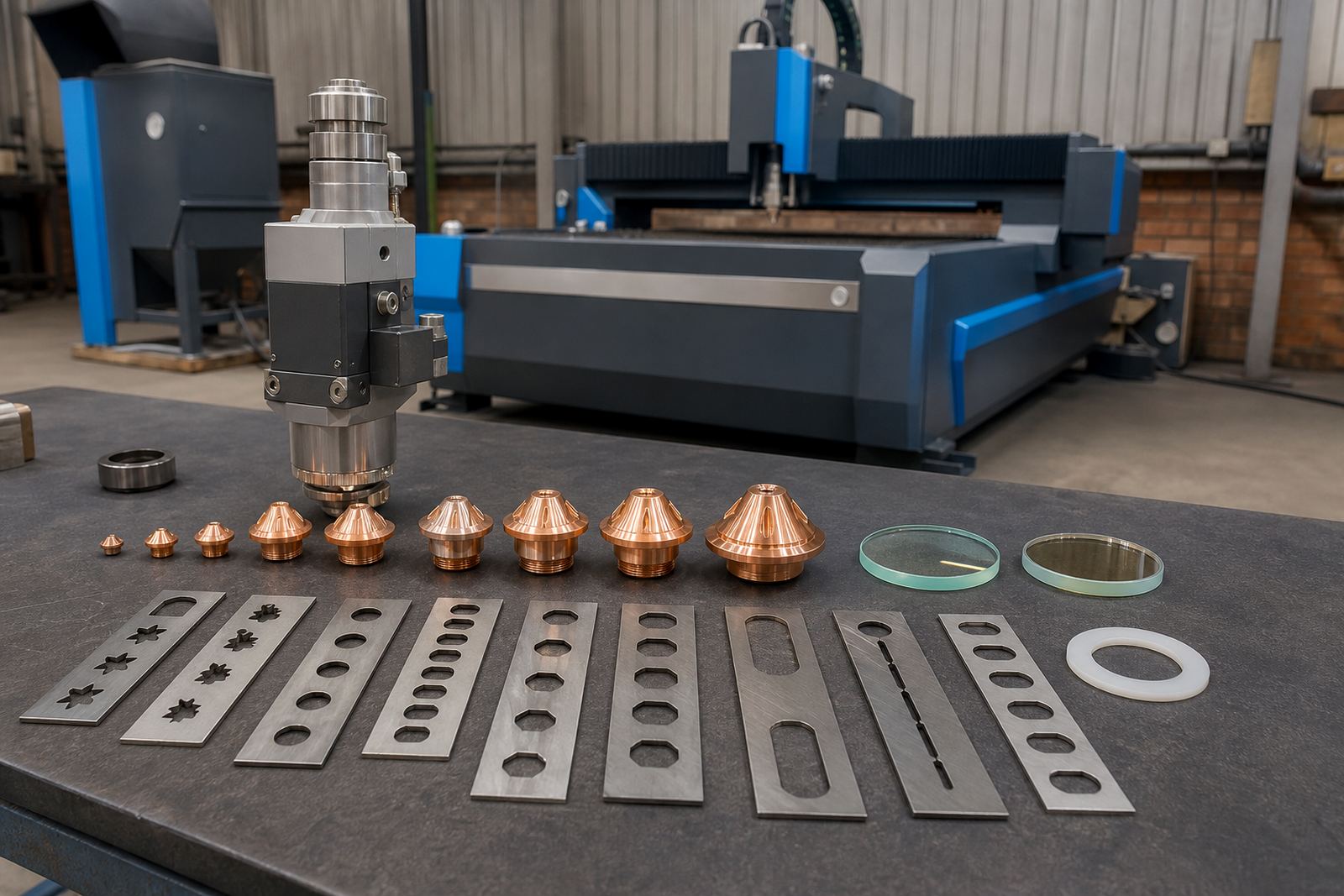
Start with the simplest checks. Look at the nozzle tip for wear, centring and spatter build-up. A bent or dirty nozzle can affect both the gas flow and the sensing signal. Then inspect the protective window and focus lens for haze, dust tracks or heat marks. Even a light film can distort the return that the sensing circuit depends on.
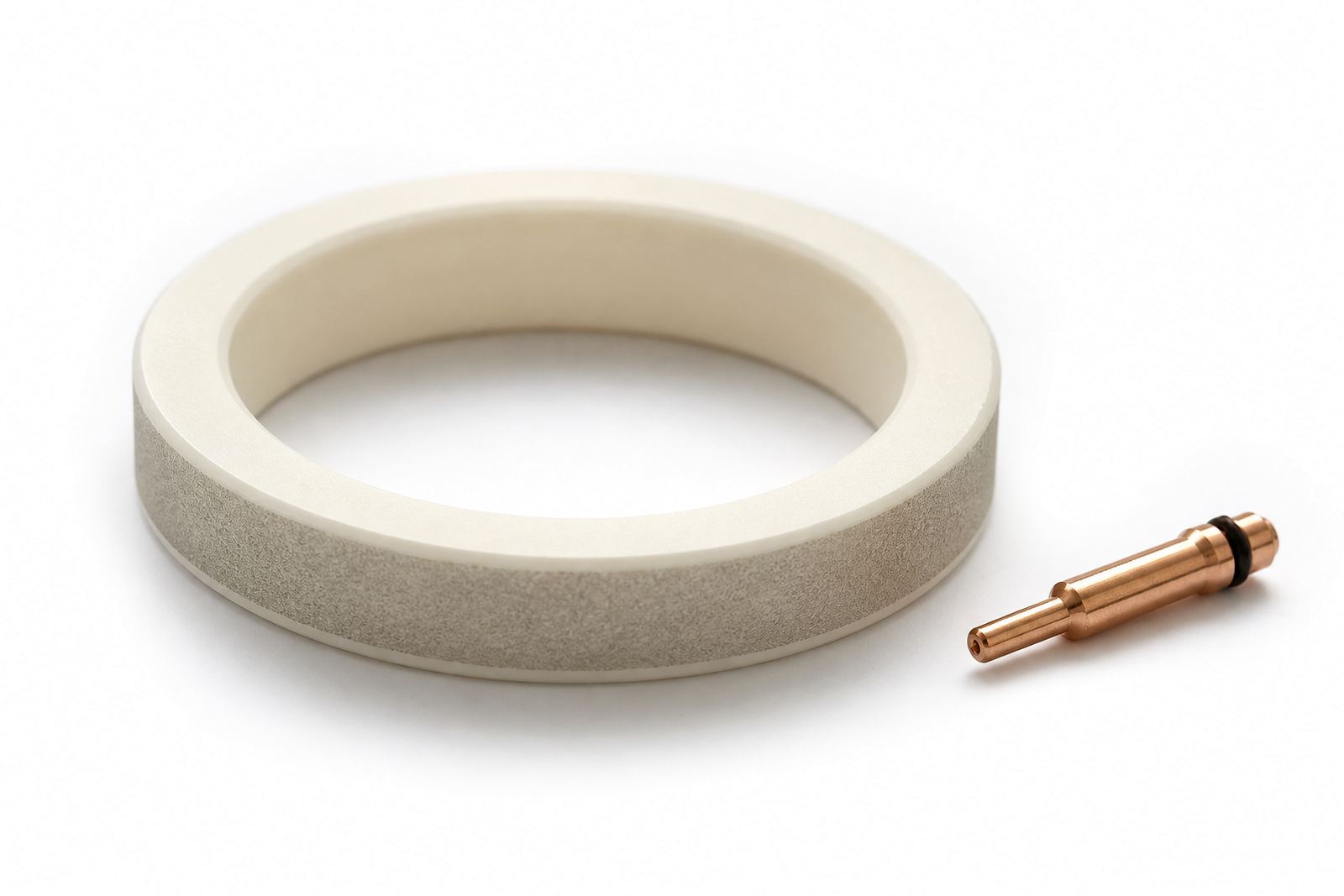
The ceramic ring deserves equal attention. A chipped ring or loose fit can upset the spacing between the head body and the work surface. Focus settings also need review, because an incorrect focus position can make the cut seem unstable when the real issue is a drifting sensing reference. On a machine doing mixed thickness work, that problem may only show on certain nests or at the tail end of a shift.
- Nozzle wear or off-centre jet
- Dirty protective window or focus lens
- Damaged ceramic ring or poor seating
- Incorrect focus setting for the material thickness
Cleaning habits that keep the signal steadier
Cleaning is not only about optics. A tidy head helps the capacitive circuit stay consistent because dust, oil mist and metallic fines change the conditions around the sensor. Use the right cleaning routine for each optical surface and do not wipe dry grit across a lens or window. On the bench, a careful service can pick up small marks that are easy to miss under shop lights.
It helps to keep the gas path clean too. If slag or dust moves into the area around the nozzle and sensor, the machine can begin to read the plate unevenly. That is why many shops in Durban and Cape Town schedule bench servicing before a major production run. Coastal humidity can leave residue that looks harmless at first, then becomes a fault after the head warms and cools across different jobs.
- Clean optics with the correct non-abrasive method
- Check for dust around the ceramic ring and seals
- Keep spare nozzles and windows sealed until needed
- Inspect the gas path for contamination and loose particles
How unstable sensing looks on live jobs
In practice, the fault often appears first on one type of part. Thin sheet may show a wandering kerf, while thicker plate may show delayed pierce or a rough start hole. If the machine uses capacitive height sensing to follow the sheet, a noisy signal can also create tiny marks where the head corrects too late, then over-corrects on the next move.
One Rustenburg sheet-metal shop described it as the head sounding unsure near the end of a nested sheet. That is a fair description. The machine was not failing outright, it was losing confidence in the spacing. After bench testing, the issue came back to a worn nozzle, a dirty protective window and a ceramic ring that was no longer seating neatly. Once those were sorted, the head held its line again.
The point is simple: when the sensing drifts, the cut usually tells the story before any alarm does. The shop floor may hear it in the head movement, see it in the edge, or spot it in the pierce marks long before the machine stops.
When bench service or on-site alignment makes sense
Some issues need a controlled bench service, especially where the head has suffered crash damage, seal wear or repeated contamination. Other cases call for on-site head alignment, particularly when the machine is cutting but the sensing behaviour changes across the bed. The right approach depends on whether the fault lives inside the head, in the sensing path, or in the way the head is tracking the sheet.
For teams in Johannesburg, Pretoria, Rustenburg, the East Rand, Durban and Cape Town, the real question is not whether the cutter can still finish a job. It is whether the head is keeping a dependable distance through the full cut. If not, the symptoms will keep returning until the nozzle, optics, ceramic ring and sensing setup are checked together.
- Bench service suits damaged or contaminated heads
- On-site alignment suits drifting settings across the machine bed
- Head preparation helps before critical production runs
- Spare head setup reduces disruption during fault finding