Start with a clean place, not a busy shelf
Optics should not live near grinding dust, open oil containers or the corner where offcuts pile up. In a sheet-metal shop, even a short walk from the cutting bay to the store room can carry fine grit on gloves and sleeves, and that grit is enough to mark a window or lens surface if parts are laid down loosely.
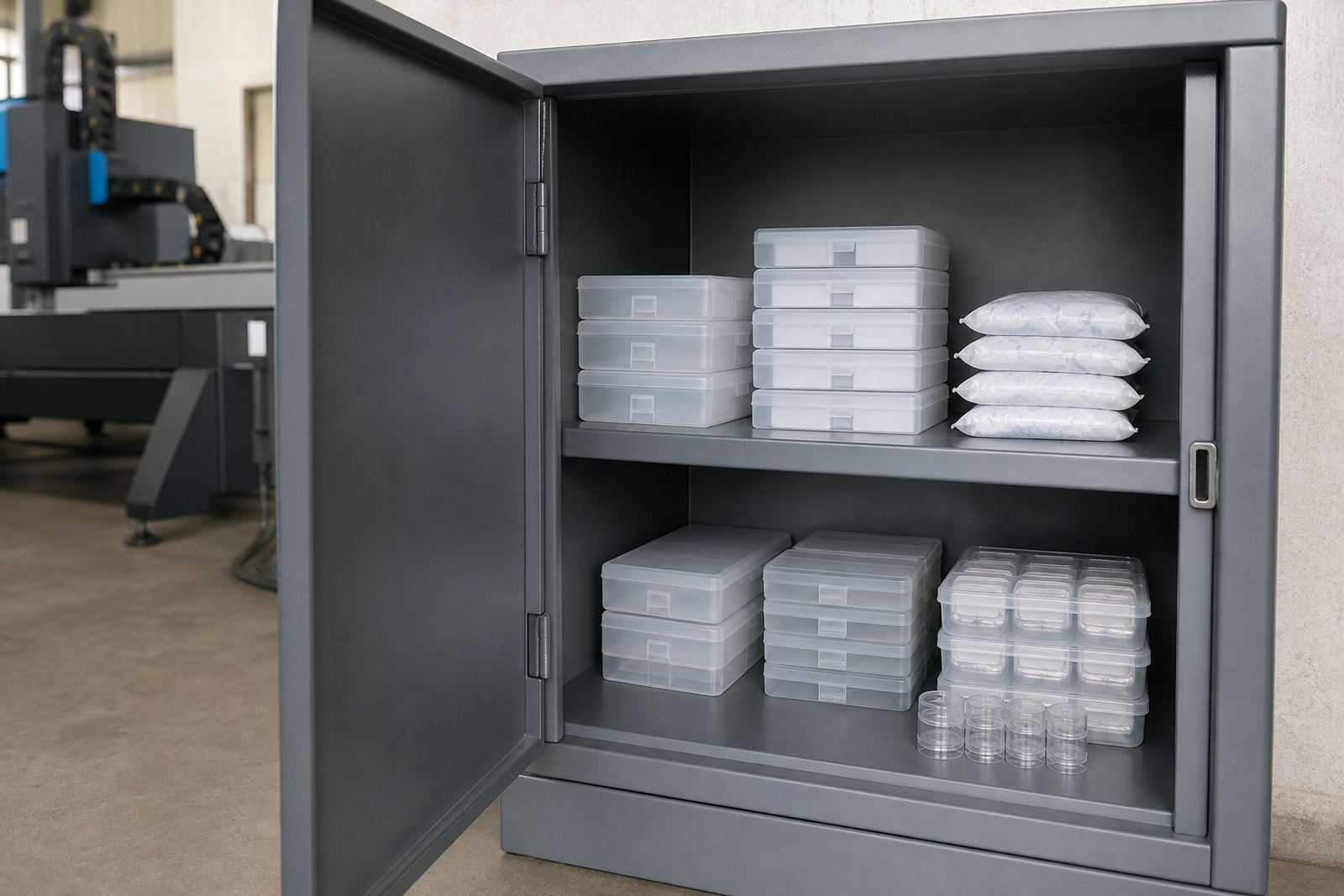
Use a closed cabinet or drawer set aside for laser parts only. Keep it away from direct sun, wash bays and floor damp. In Spartan and other industrial areas around Kempton Park, morning condensation and airborne dust from neighbouring work can settle on exposed packaging faster than people expect. A dry, stable room with a clean bench beats a packed shelf every time.
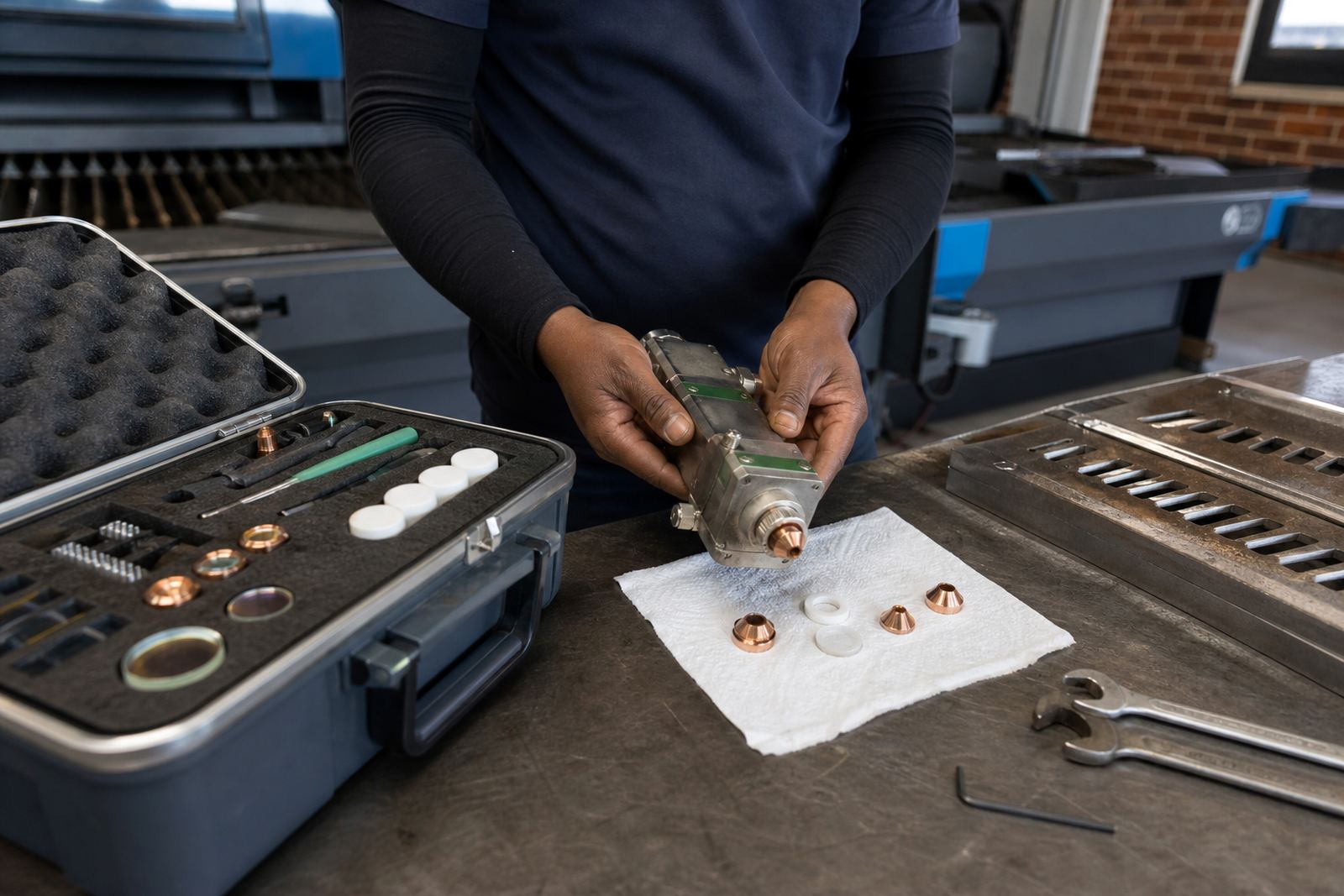
For shops handling fibre laser cutting heads, the storage point should also be practical. Parts move better when the labels face out, the seal packs stay intact and each size has its own tray. If the store room also holds nozzles, ceramic rings and seals, the optic area needs its own space so that small items do not get mixed into the wrong packet.
Keep lenses and windows sealed until the job is real
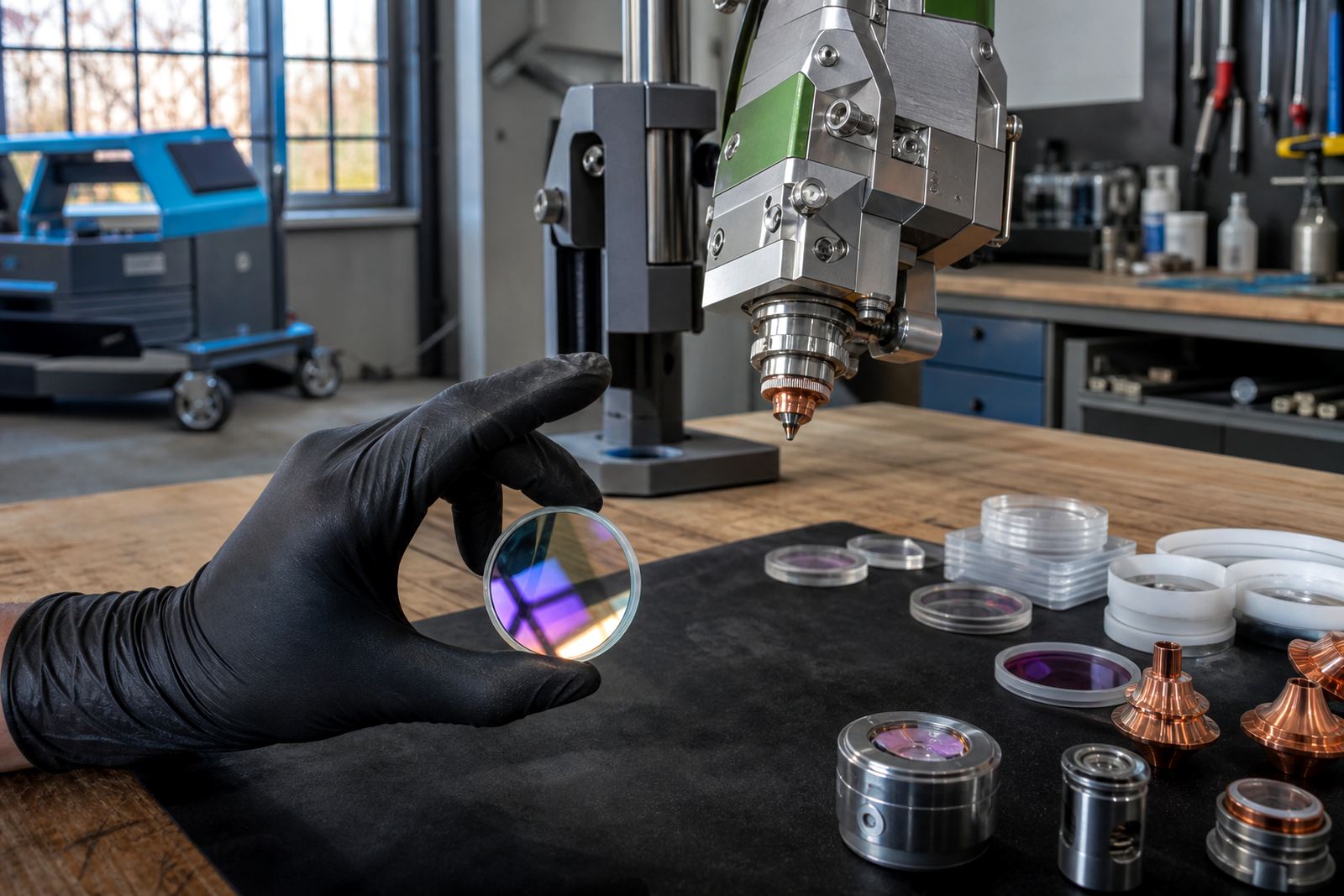
Focus lenses, collimator lenses and protective windows arrive with clean faces for a reason. Once the pack is opened, the countdown starts. Fingerprints, airborne dust and tiny scratches from rough paper can all shorten service life. A lens that sits loose in a tray with other parts is already at risk before it reaches the head.
Seal packs should stay closed until the technician has the correct head model, the correct size and the correct orientation. If a part is removed for inspection and the job pauses, put it back into a clean container straight away. Never rest an optic on tissue, cardboard or a bench top that also carries nozzle dust or carbon residue.
- Leave each lens in its original sleeve until fitment
- Use clean, dry trays with divided slots
- Keep spare windows flat, not tilted against a wall
- Mark opened packs with the date and job reference
That small discipline helps with stock control too. When windows, lenses and nozzles share the same box, the wrong part goes back into the wrong kit and the next service slows down. A better habit is to separate opened stock from unopened stock, then move used packaging out of the optics area altogether.
Moisture is a storage problem, not just a workshop problem
Moisture does its damage quietly. A sealed optic can still suffer if it is stored in a damp room or near a door that opens to humid air from the outside yard. In Durban that matters even more, where coastal humidity can leave metal fittings feeling cold and slightly wet in the morning. The glass may look fine, but the packaging and metal rings around it do not always stay that way.
Protective windows and lenses need dry conditions with stable airflow. Avoid shelving above washing areas or under roof leaks. If the store room has no climate control, use sealed cabinets with desiccant packs and check them as part of the stock routine. We are not trying to build a laboratory. The point is to keep moisture from building up on boxes, bags and metal edges.
Parts stored for long periods should be checked before they are issued for a head service or spare head preparation. A bag with a slight haze inside, a rust stain on a ring, or a dirty sealing edge can point to a storage fault rather than a machine fault. Catching that early saves time when the head is already on the bench.