Beam Path: From Fibre Feed To The Kerf
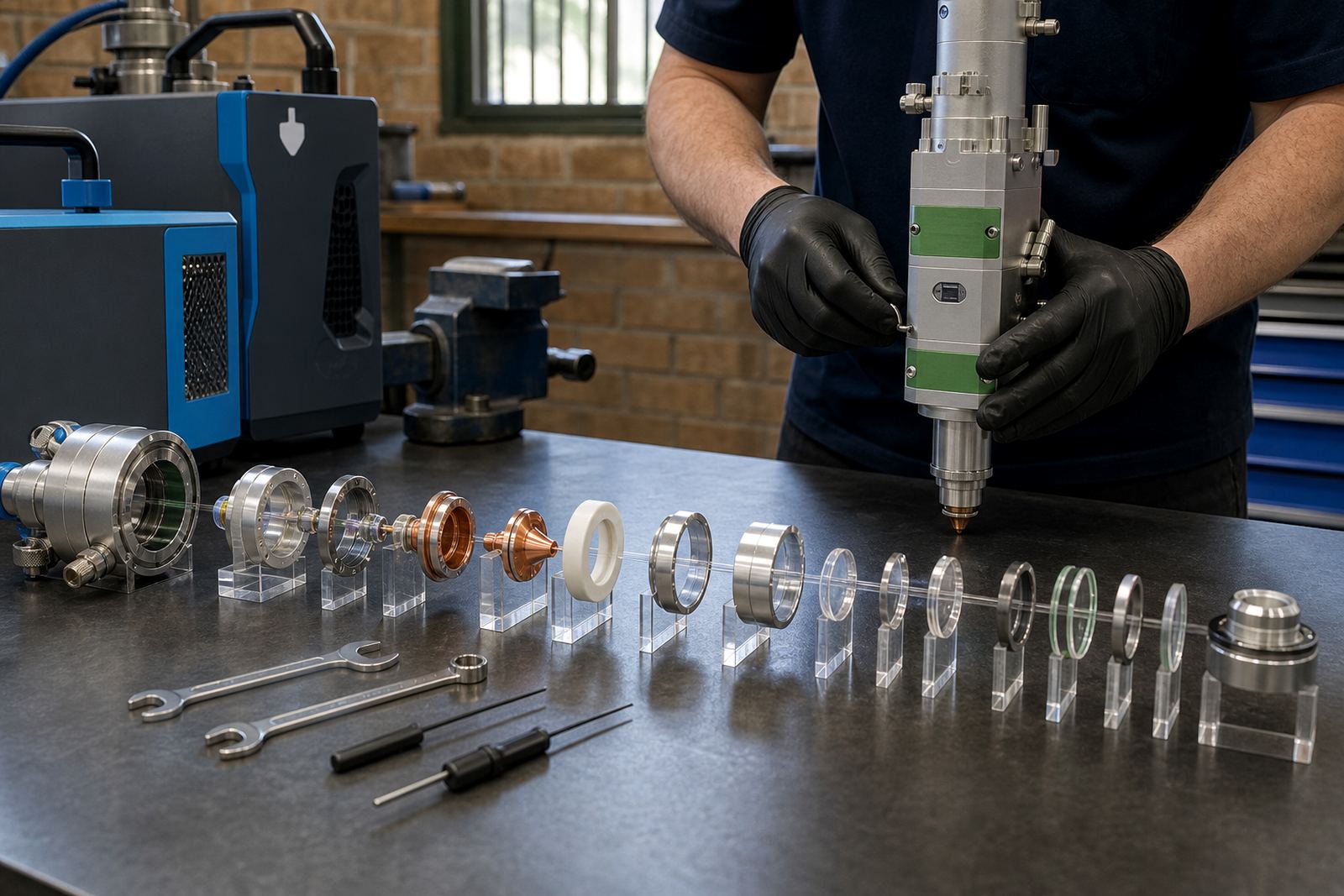
Inside a fibre laser cutting head, the beam arrives through the fibre and moves through the collimator lens first. That lens changes the beam into a more controlled path, then the focus lens brings it down to a tight point at the sheet. The aim is not only power, but a stable spot size that matches the plate thickness and the cut style needed on the day.
When the lens stack is clean and the head is aligned, the beam hits the work with far less scatter. A dirty protective window can darken the path and the cut starts to drag, especially on stainless or mild steel with fine details. In a busy shop, that shows up as more dross, a wider kerf and corners that do not hold their shape.
On the shop floor in Spartan or on a site in Rustenburg, the beam path is often the first thing to check after a crash, a poor cut finish or a sudden rise in sparks. A good head does not need guesswork. It needs clean optics, the right focus point and a nozzle that sits square to the sheet.
Gas Delivery Begins At The Nozzle
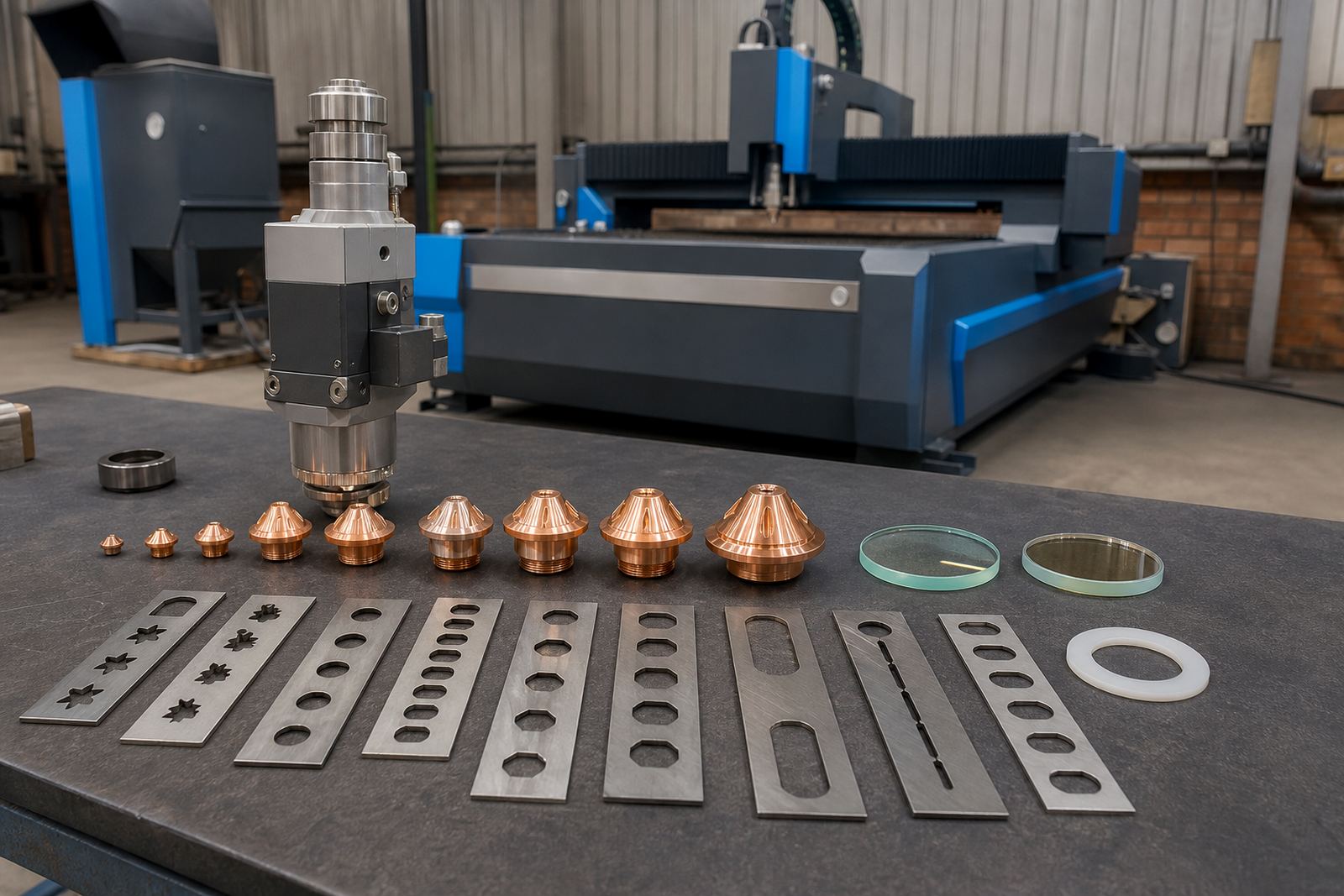
The nozzle is where assist gas meets the cut. Single layer nozzles are common for general cutting, while double layer nozzles are used where gas control and cut edge quality need more steadiness. The hole size and condition matter, because a small nick or carbon mark changes the gas stream before it reaches the kerf.
Assist gas does more than push molten metal away. It also helps keep the cut edge cleaner and controls how heat leaves the cut zone. If the nozzle is off-centre, gas leaves at an angle and the cut may show burrs on one side, blowback on another, or a rough line that should have been neat.
- Check nozzle centring before a long run of nested parts.
- Replace nozzles that show oval wear or impact marks.
- Keep the nozzle tip clean, not polished to the point of rounding.
- Match nozzle type to material and gas choice, not habit.
A nozzle that looks acceptable from a distance can still be out by a fraction. That small offset is enough to spoil sheet-metal work where the tolerances are tight and the nest has little margin.
What The Head Sees Before It Cuts
Capacitive height sensing tells the machine where the sheet sits so the head can keep a steady stand-off distance. That distance matters because the beam, the gas and the molten pool all change when the head rides too high or drops too low. On warped sheet or slightly bowed plate, the sensor helps the machine follow the surface without scraping the nozzle.
Focus settings work with that sensing. The head does not cut in one fixed way all day long. Thin sheet often wants a different focus position from thicker plate, and some jobs need a shift in focus to improve piercing, edge finish or corner stability. A technician who understands the machine will check both the focus position and the sensing signal before looking elsewhere.
When the sensor window is dirty or the head seal is tired, the reading can wander. Then the machine may chase the sheet instead of reading it properly. That is the point where a neat machine becomes a troublesome one, not because the laser is weak but because the head is no longer reading the job cleanly.
Optics: Lenses, Windows And The Cost Of Dust
Focus lenses and collimator lenses are precision parts, and they do not like dust, oil mist or careless handling. Protective windows act as the first barrier, taking the abuse before the more expensive optics do. In a warm coastal shop, or in a room where fine metal dust hangs in the air, a window can cloud faster than the team expects.
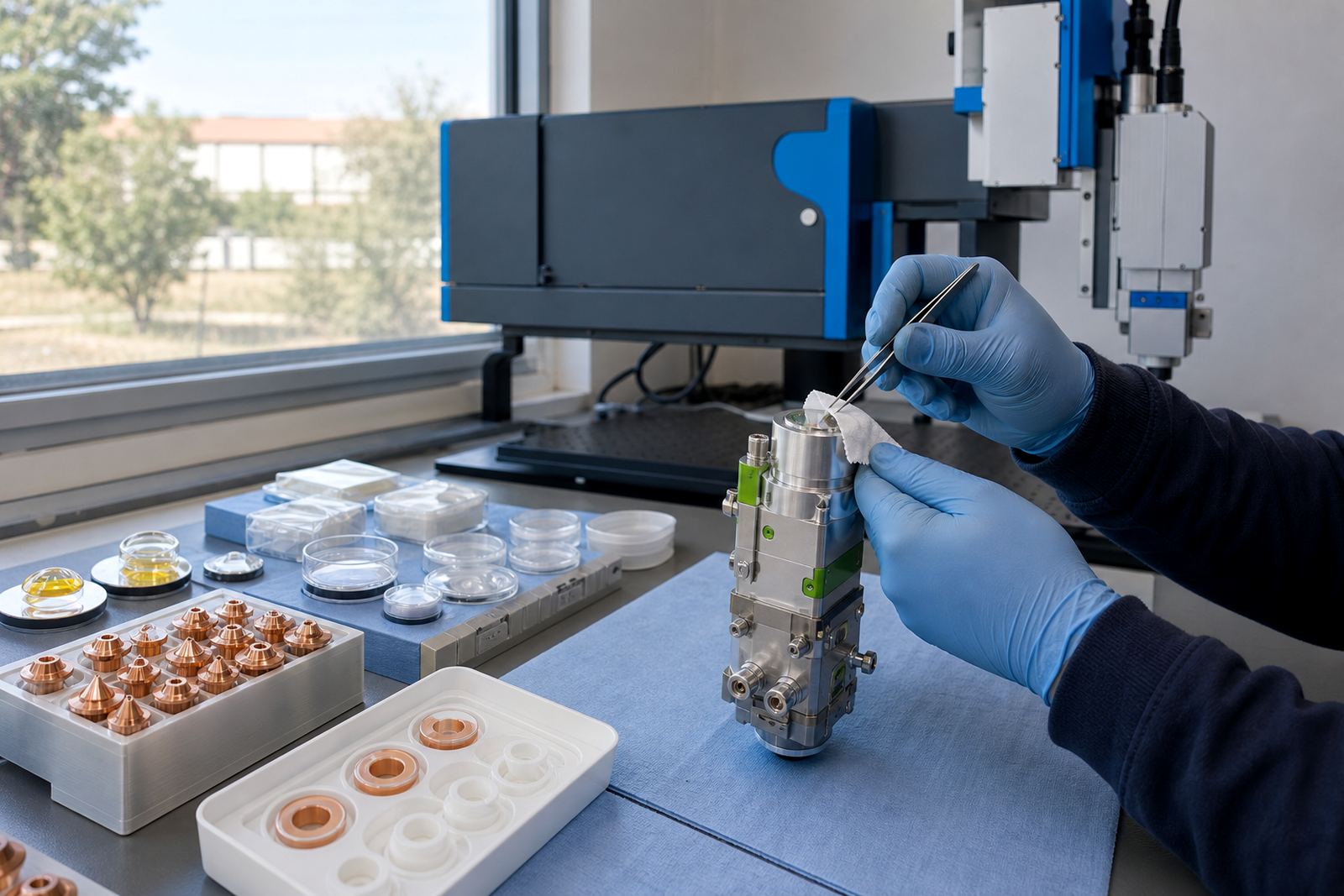
Lens cleaning routines must be calm and deliberate. The part should be handled with clean gloves, inspected under good light and cleaned with the right swab and fluid. Rubbing a window with a cloth that carries grit is a fast way to scratch it and turn a small maintenance task into a bigger parts bill.
- Inspect the protective window for haze, spatter and pinholes.
- Check the focus lens seating before reassembly.
- Keep collimator surfaces free of fingerprints and residue.
- Replace damaged optics rather than trying to save a marked surface.
A spotless optic stack is not optional. It separates a precise cut from one that needs to be redone.
Ceramic Rings, Seals And The Signs Of A Tired Head
The ceramic ring supports the nozzle area and helps keep the front end of the head stable. It also sits close to the parts that get hot, so cracks and chips are common after a crash or after long service. When the ceramic ring is damaged, the head can lose position and the nozzle may no longer sit the way it should.
Head seals, internal rings and mounting faces matter too. If air leaks or dust gets inside, the optics and sensing parts take strain. A head that has been dropped, struck or run too close to the sheet may need more than a simple nozzle change. It may need a bench strip, seal rebuild and a careful look at the alignment of every moving part.
Jaco on the bench and Lerato on site deal with the same pattern in different ways. The bench work suits detailed strip-down, while site alignment suits machines that cannot be moved easily. In both cases, the goal is the same: keep the cutting head square, clean and predictable.
A Job In East Rand That Showed The Pattern
A sheet-metal shop in the East Rand might see the problem as a rough edge on mild steel, but the real issue can sit inside the head. One line of cuts may look fine, then a change in material thickness shows a rougher edge and a slight taper. The operator checks gas, then the nozzle, then the window, and still the fault remains.
When the head is opened and checked properly, the cause is often a mix of contamination, worn nozzle geometry and a small focus shift. After cleaning the optics, replacing the nozzle and checking capacitive sensing, the cut usually settles back into shape. That is the useful part of understanding how the head works. It saves time spent chasing the wrong fault.
For shops in Johannesburg, Pretoria, Durban, Cape Town and Rustenburg, that same approach still applies. A fibre laser cutting head is a chain of small parts that must agree with one another. When the beam path, gas stream and sensing are working together, the machine does what it was set up to do.