Begin with the laser parts that take the hardest wear
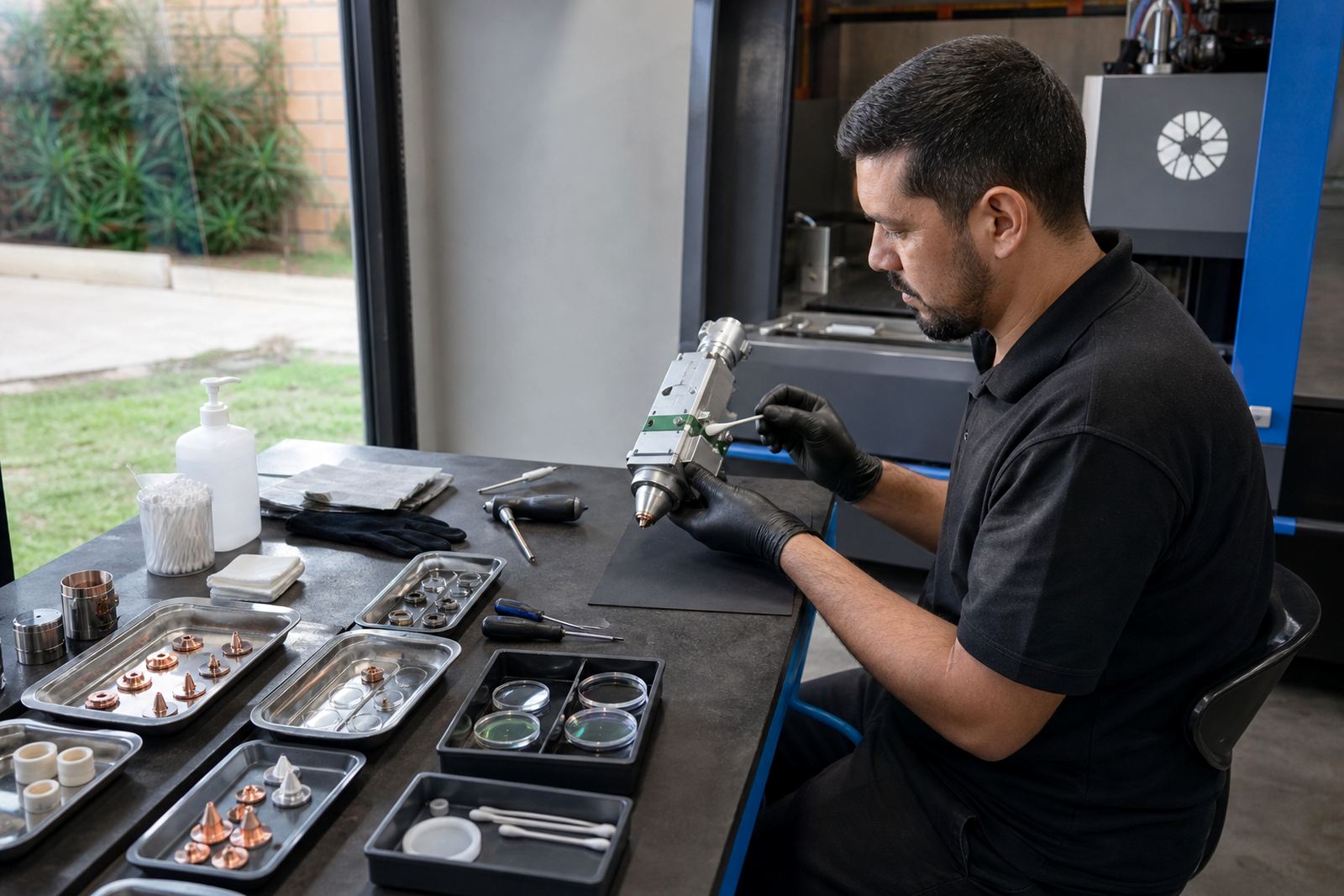
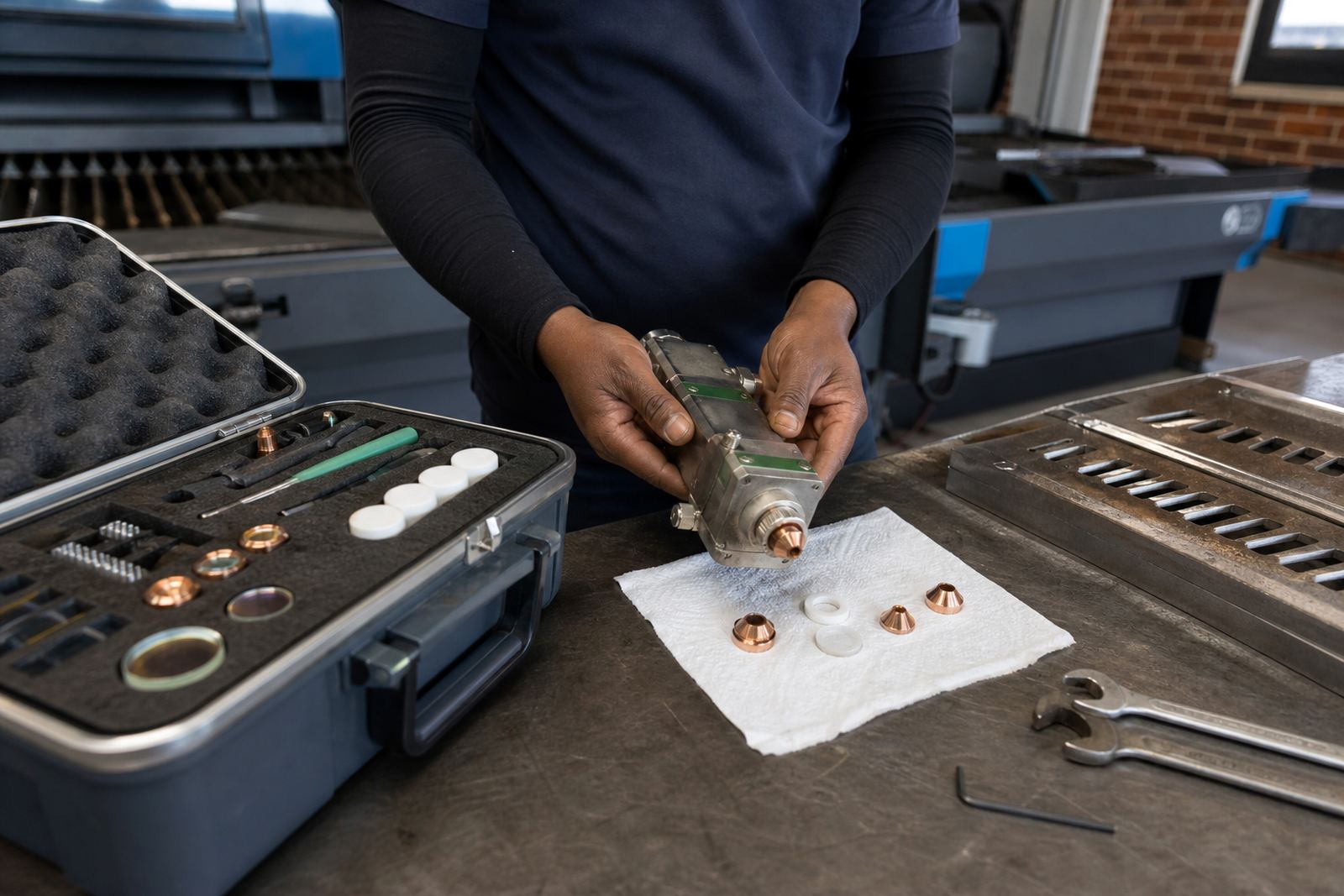
After a nozzle strike or sheet lift, the first job is to look at the front end of the cutting head and work backwards. On site in Johannesburg or on the bench in Spartan, we usually begin with the nozzle tip, ceramic ring, protective window and the lower face of the head. A small dent on the nozzle can throw the gas stream off centre, and the cut edge shows it quickly.
If the crash was hard enough to leave a witness mark on the sheet, check whether the nozzle thread still seats cleanly. A bent thread, chipped ceramic ring or oval nozzle bore can change stand-off and make the cut unstable. One bad hit can also loosen the body parts enough to let dust into areas that should stay clean.
The five checks that catch most hidden damage
A good crash inspection is more than a quick wipe with tissue and a torch. The parts below need a close look, because damage often sits where the eye does not expect it.
- Nozzle: check the tip, bore shape and thread for burrs or flattening.
- Ceramic ring: look for chips, cracks and heat marks around the body.
- Protective window: inspect for spots, haze, pinholes and edge damage.
- Focus lens: check for dust trails, staining and any sign of heat stress.
- Collimator lens: inspect if the crash sent debris or fumes deeper into the head.
When a nozzle has been clipped, the cut may still start, but the kerf can widen and pierce quality drops. That is why a damaged front end should not be treated as a cosmetic issue. It often points to a bigger alignment fault inside the head.
What a nozzle crash does to cut quality
Single layer and double layer nozzles both need a clean gas path. If the nozzle edge is chipped, the assist gas does not leave the tip in a straight cone. The beam can still fire, but the edge quality changes, slag builds up and piercing gets noisy. On thinner sheet the problem shows as a rough kerf, while thicker plate can leave dross at the bottom edge.
A crash can also upset capacitive height sensing. If the sensing face is dirty, bent or seated badly, the head reads the sheet at the wrong height. That throws off focus setting and gives uneven results across the table. In a Rustenburg job we saw a shop lose a full batch on 3 mm mild steel because the nozzle face was sound to the eye but the seating was not square after a sheet strike.
Cleaning and lens handling after debris gets in
Dust, metal fumes and tiny splash marks can move into the head after a crash. That is where cleaning routines matter. Protective windows should be changed if there is any haze, pitting or heat tint. Never keep running a marked window just because the beam still passes through it.
Focus and collimator lenses need careful handling, because a fingerprint or grit line can become a hot spot. Use the correct cleaning method for coated optics and inspect the edges as well as the centre. If the lens seat has shift marks, the optic may no longer sit true, which affects beam shape and focus position.
- Check for dust on both sides of the protective window.
- Inspect lens cells for movement, scratches and heat discolouration.
- Look for seal damage that may let dirt back into the head.
- Replace ceramic rings that show cracking or glaze marks.
When bench service is safer than a quick swap
Some heads only need a nozzle, ring and window replacement. Others need bench service because the crash has moved internal parts out of line. If the head body has taken a sideways knock, a bench check lets the technician inspect seals, sensor parts and lens alignment without guessing. That matters on machines cutting mixed sheet thicknesses where focus consistency is critical.
Bench work also helps when the gas path has picked up fine swarf. A head can look clean from the outside and still carry debris around the seal faces. If the seal rebuild is skipped, the same fault often returns after a few runs and the cutting shop loses more time than the repair saved.
On-site alignment for real production floors
For larger sheet-metal shops across Gauteng, Durban, Cape Town and the East Rand, on-site head alignment is often the practical answer after a crash. The machine frame, rail condition and cutting bed all affect the final setup, so the head should be checked in the same environment where it runs. A laser cutting shop in Spartan may see one pattern on the bench and another once the gantry is back over the full table.
On-site work is useful when the crash came from a lifted sheet, bad clamp position or a scrap part that sat proud on the nest. Those strikes usually leave more than one fault. The nozzle may be damaged, the focus may be out, and the capacitive sensor may need checking before the head is put back into normal work.
A short crash list for the next inspection
Check the head after a sheet strike or nozzle crash. It keeps the inspection practical and stops small faults from slipping through.
- Inspect the nozzle body, bore and thread.
- Check the ceramic ring for cracks and chips.
- Fit a new protective window when it shows marks or clouding.
- Clean or replace the focus lens after any debris event.
- Inspect the collimator lens if the head took a hard impact.
- Verify capacitive sensing and focus setting before test cutting.
- Look at seals, gas paths and the head body for hidden damage.
That final test cut should tell the truth. If the kerf is steady and the edges are clean, the head is probably back in line. If not, the fault is still in the head, not in the sheet.