
The parts that fail first on a working cutting head
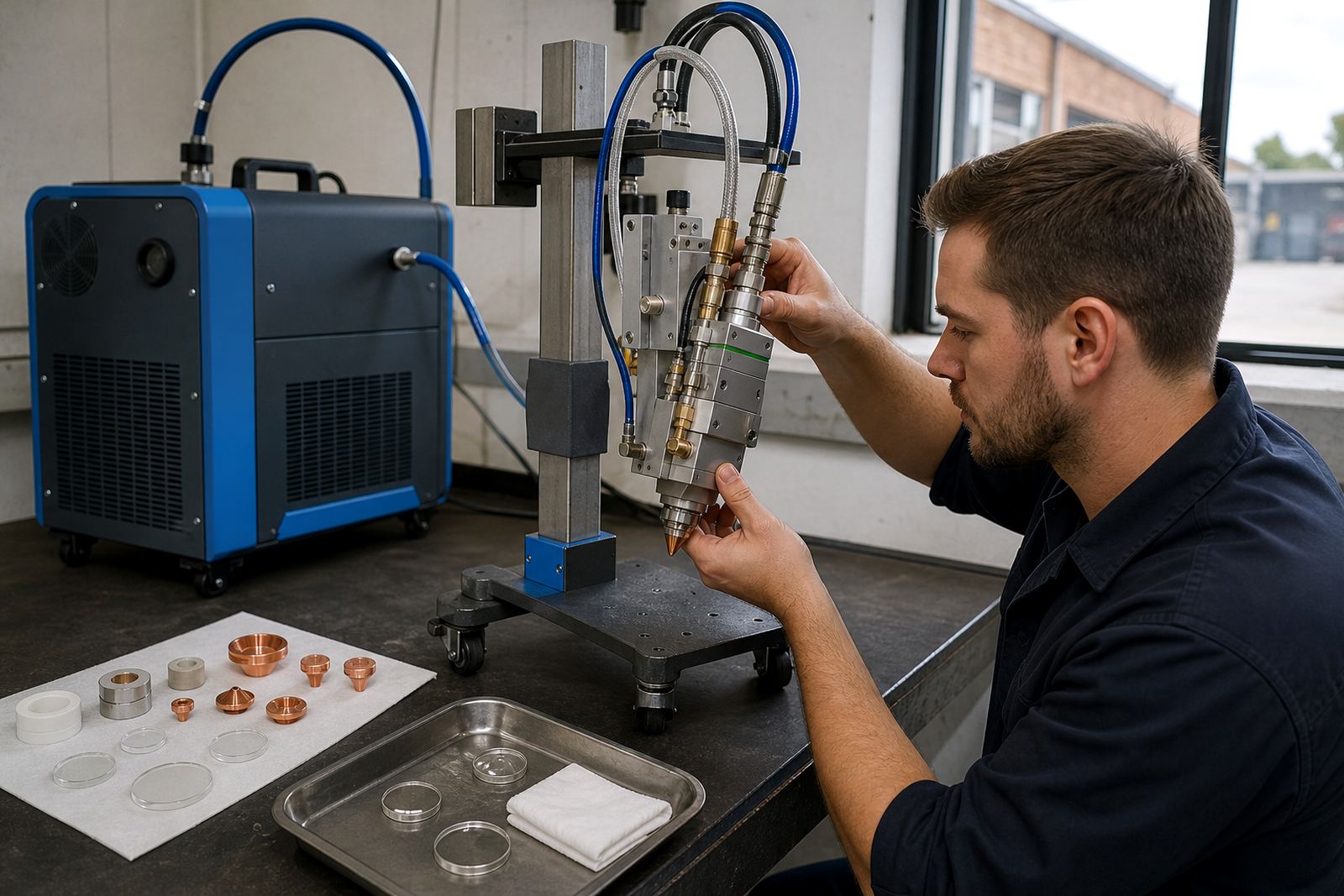
A fibre laser cutting head lives close to heat, dross, splash-back and dust. The first parts to suffer are usually the nozzle, protective window, ceramic ring and the lenses that sit in the beam path. When those parts are tired, cut quality slips before the machine stops outright. The cut edge can show extra burr, the pierce can spit, or the head can start reading height in a way that feels inconsistent.
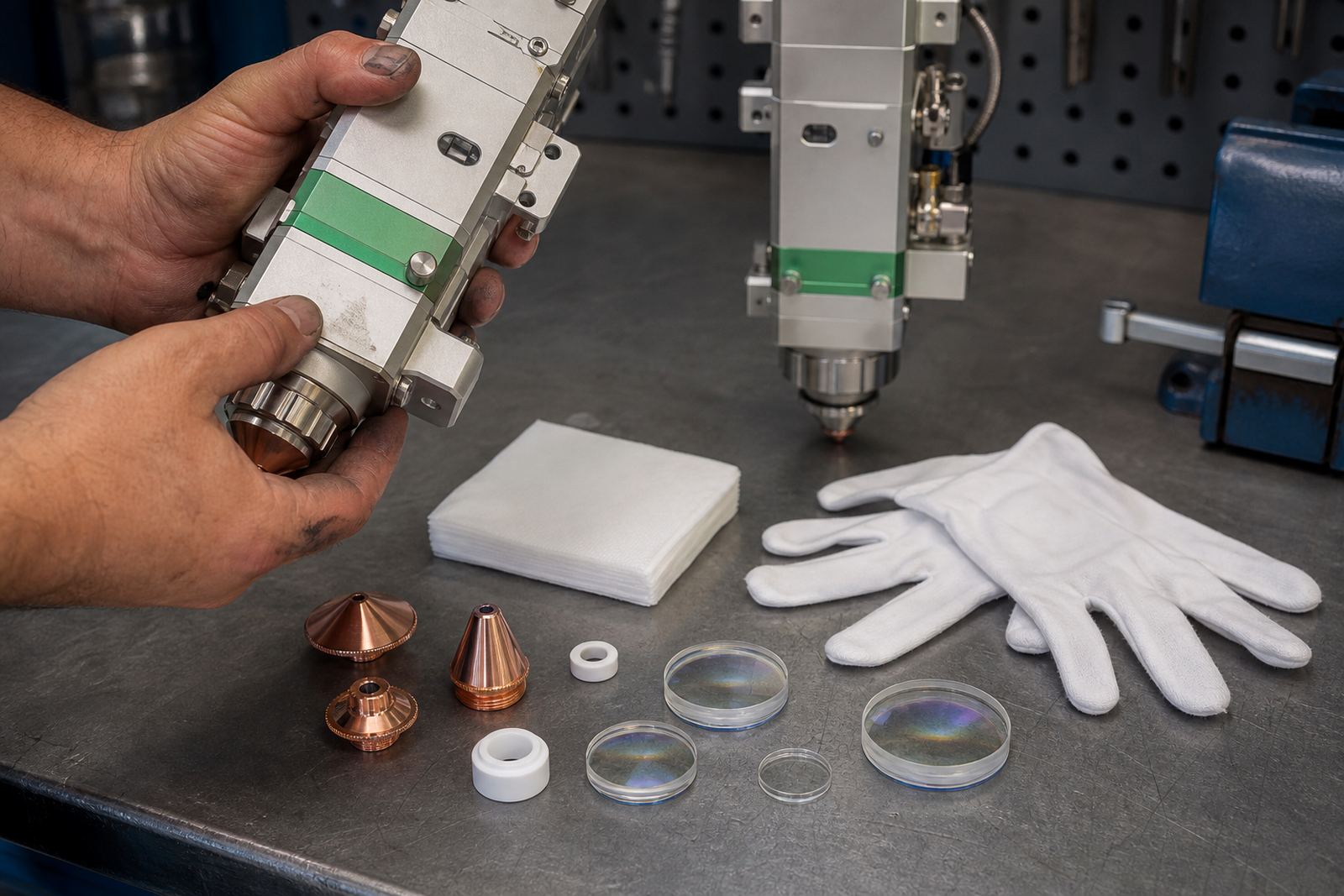
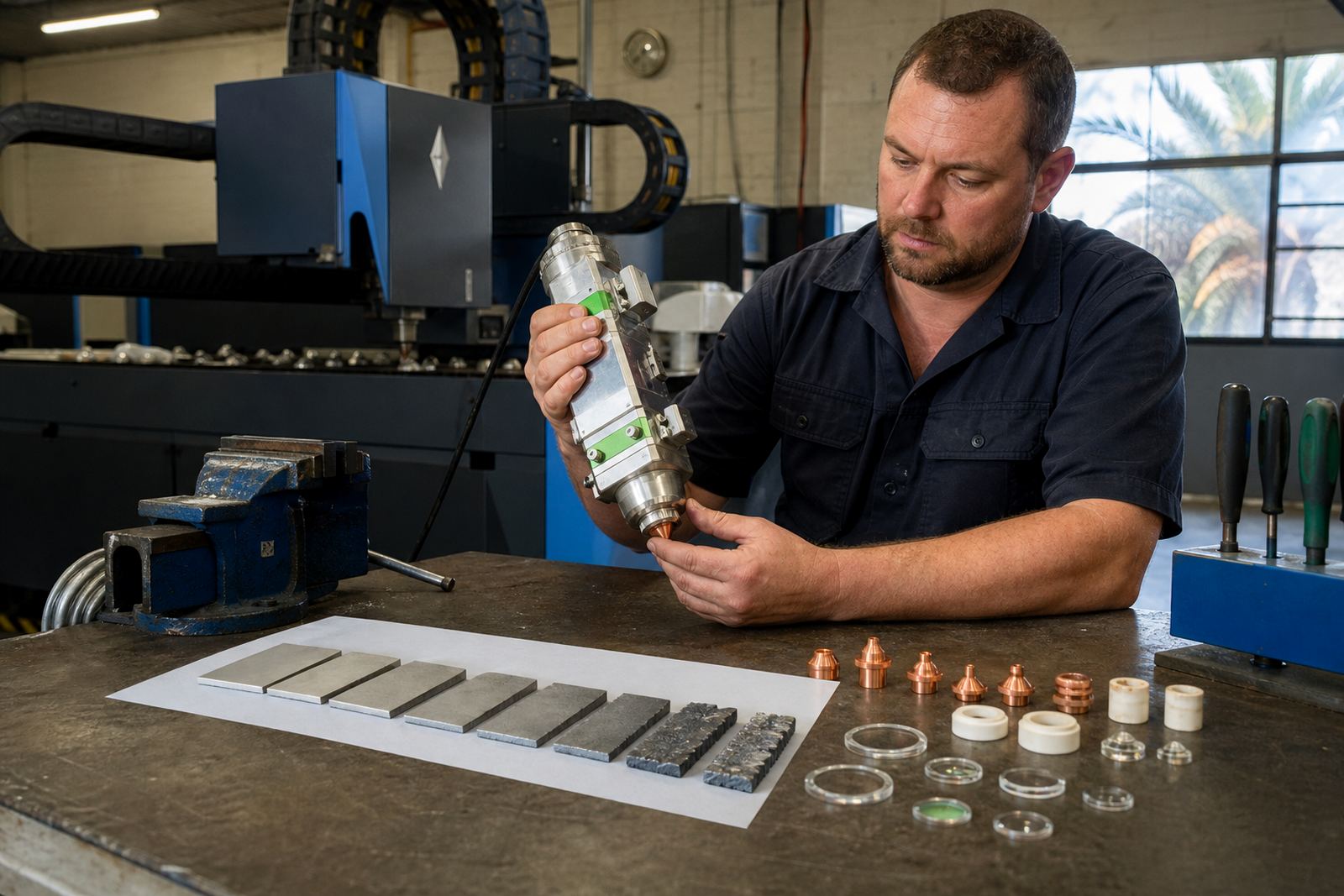
That is why many sheet-metal shops keep a small group of spares close by. The aim is not to stock the whole head, only the pieces that fail often enough to justify sitting on a shelf. A spare nozzle set, a protective window, a ceramic ring and a clean lens can save a shift from turning into scrap and clean-up. On thin material, even a small mark on the window can upset the cut path and throw off the finish.
- Nozzles for daily wear and accidental blockage
- Protective windows for smoke, spatter and dust marking
- Ceramic rings for insulation and head seating wear
- Focus and collimator lenses for beam clarity and spot shape
What each spare does when the cut starts drifting
Single layer and double layer nozzles do more than hold gas. Their bore size, edge condition and centring affect how the assist gas reaches the cut. When a nozzle is worn or bent, the jet loses shape and the kerf can widen, narrow or lean off line. That is why shops often keep a matched selection for common material thicknesses rather than one general piece that has to do everything.
The focus lens and collimator lens are less visible, but they are central to stable cutting. The collimator shapes the beam before it reaches the focus unit, while the focus lens sets the point where energy is concentrated. If either lens has contamination, heat marks or a tiny chip, the cut can lose consistency across the sheet. A protective window takes the dirty work first, which is a good reason to replace it before staining reaches the more expensive optics.
Ceramic rings are small, yet they matter. They hold the nozzle assembly correctly, support insulation around the head and help with repeatable seating. A cracked ring can create offset problems that show up as poor centring or a head that feels difficult to set back after service.
A practical shelf list for shops that cut every day
A sensible spare-parts shelf depends on how hard the machine works, the mix of plate thickness and how often the head takes knocks during loading or sheet change. Shops that cut mild steel, stainless and aluminium in the same week usually need a wider mix of nozzle sizes and a few extra windows. A business running short production batches may prefer more focus on quick swap items, while a high-volume plant can justify deeper stock on wear parts.
- Single layer nozzles in the sizes used most often
- Double layer nozzles for thicker sections and cleaner gas control
- Protective windows kept sealed and clean
- One or two spare ceramic rings for immediate replacement
- A matched focus lens and collimator lens set for planned service work
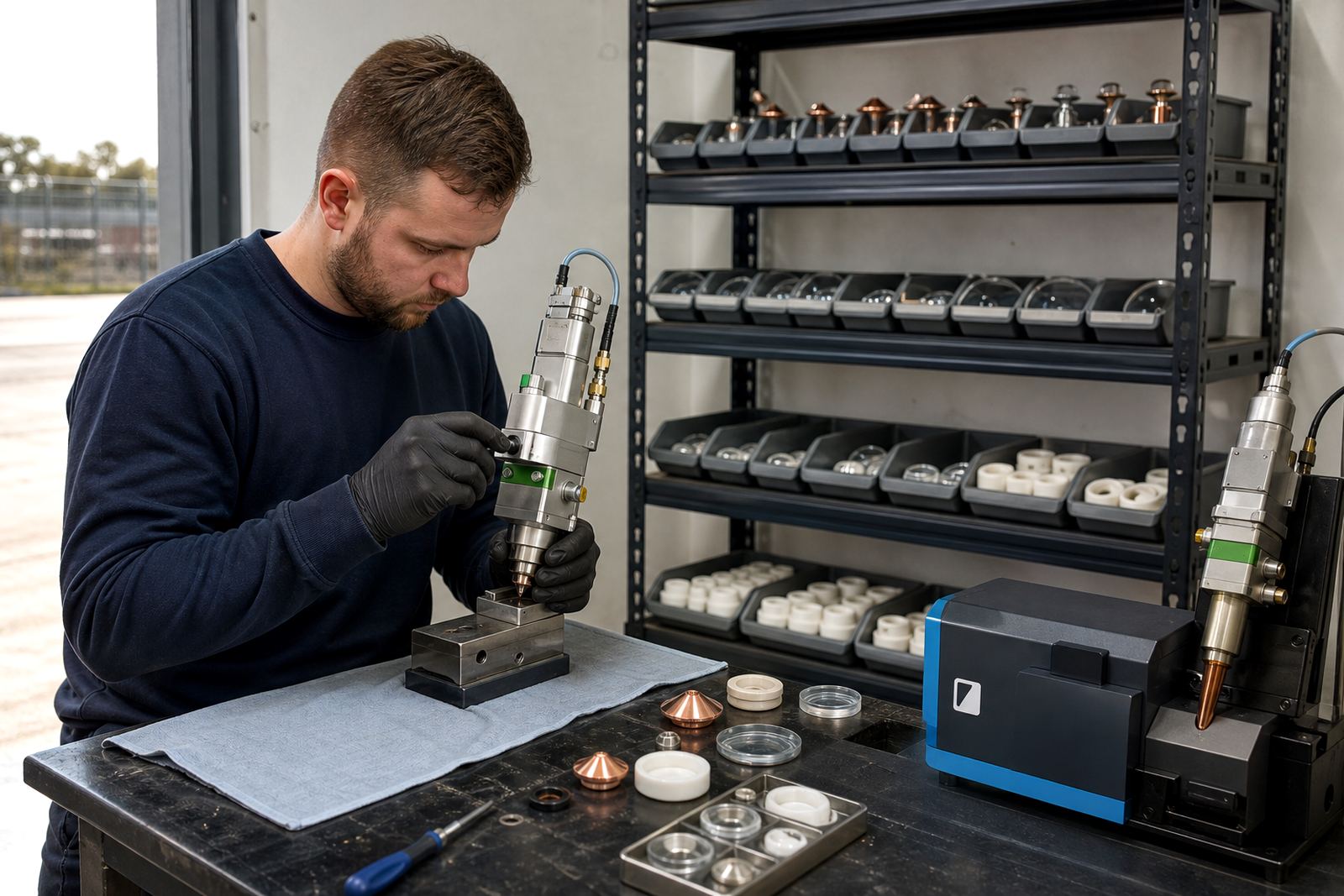
It also helps to keep the storage method tidy. Lenses must stay in clean packaging, away from grit and fingerprints. Nozzles should be sorted by size and type so a shift lead does not waste time hunting through mixed trays. In a humid coastal shop, sealed storage matters even more because fine corrosion on the wrong surfaces can start earlier than people expect.
When bench service and spare parts work together
Bench servicing is where head problems become visible. A technician can check sealing surfaces, inspect gas paths, clean optics, test capacitive height sensing and check whether the focus setting still holds under normal use. If a head has crash damage, a bent seating face or a tired seal, a spare part on the bench makes the repair practical instead of drawn out.
On-site alignment becomes useful when the head is mechanically sound but the cut is still off. The nozzle may be centred, the sensor may need checking, or the focus point may need a measured reset. Spare parts help here too, because a field technician can replace a worn nozzle, ceramic ring or protective window before finer alignment work begins. That order matters, because alignment on damaged parts is a waste of time.
In the East Rand and around Spartan, Kempton Park, many sheet-metal shops prefer to keep a small stock of service parts close by, then book bench work when the damage is too far gone for a quick change. That mix keeps the machine practical, especially when jobs are stacked and the next sheet is already waiting.
What a local spare kit looks like in real use
A cutting shop in Johannesburg that runs mixed batches may keep several nozzle sizes, a spare window pack, a ceramic ring and at least one lens set for planned maintenance. A Durban shop with coastal air may pay more attention to sealed storage and extra windows because moisture and airborne contamination can shorten clean intervals. Pretoria and Rustenburg sites often focus on stable centring and reliable height sensing, since repeatability is what keeps the cut edge predictable.
The useful habit is to pair each spare with a reason for keeping it. If a part only fails every few months, a single spare may be enough. If it is exposed every day, the stock level should be a bit higher. That is not about overspending, it is about avoiding the awkward pause where a whole machine waits for one small item. We see that pattern often enough to know the difference between having stock and having the right stock.
A short note on cleaning before replacement
Not every problem calls for a new part. Sometimes a protective window just needs proper cleaning, or the nozzle seat needs a careful wipe before the next cut. The same goes for focus and collimator lenses, which can often be inspected and cleaned if contamination is caught early. Cleaning must be done with clean tools and the correct method, because a rough wipe can do more damage than the dirt itself.
When a part is scratched, chipped or heat marked, replacement is the safer route. That is especially true on the window and lenses, where a small defect can change the beam path or burn into the next job. In practice, the best spare kit is one that supports both cleaning and replacement, so the head stays ready for the kind of work the shop actually does.