



Inside the cutting head, where the cut is won or lost
A fibre laser cutting head depends on clean optics, steady alignment and the right distance between the nozzle and the sheet. When the focus lens, collimator lens or protective window carries contamination, the beam can wander, heat builds unevenly, and edge quality starts to move around from job to job.
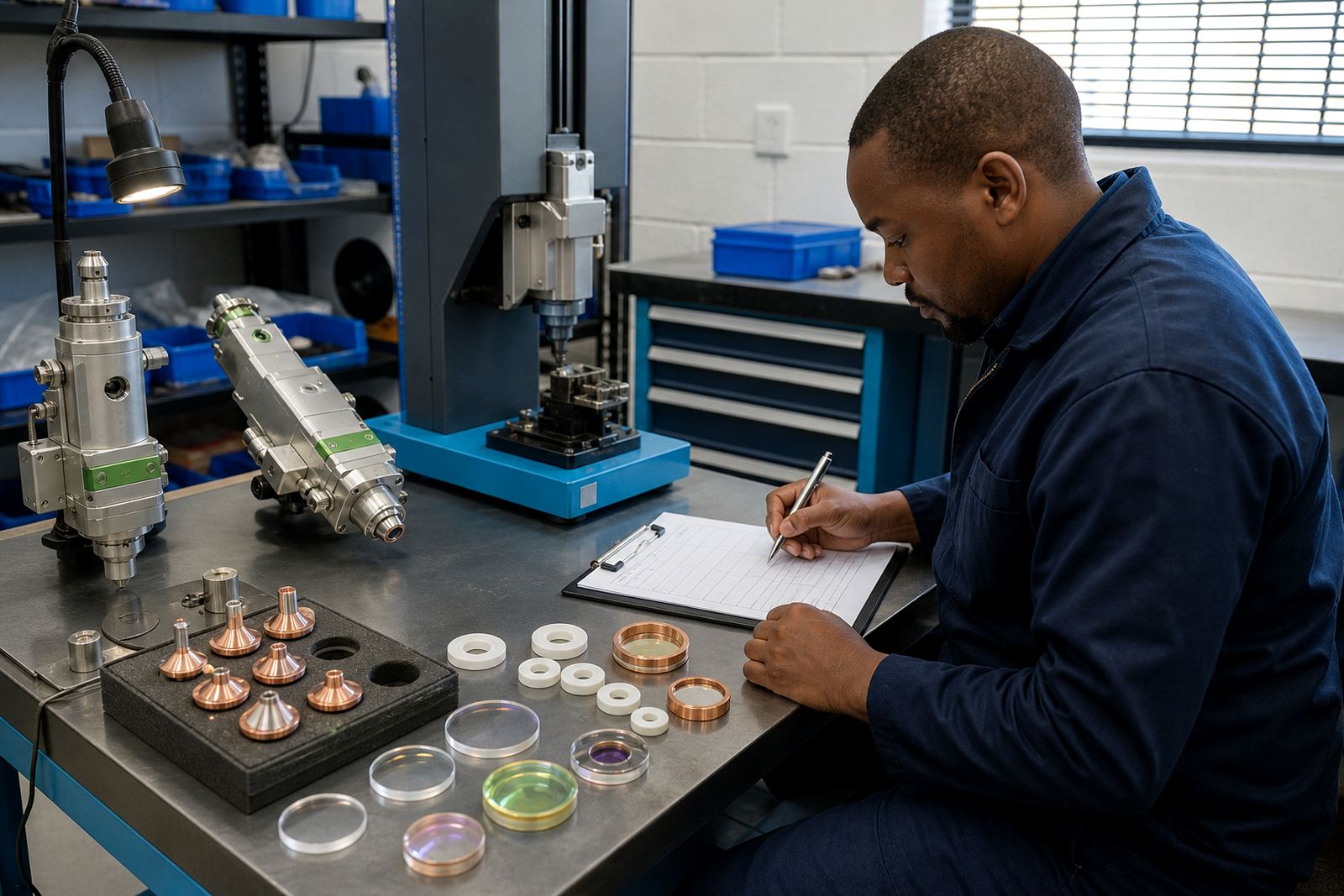
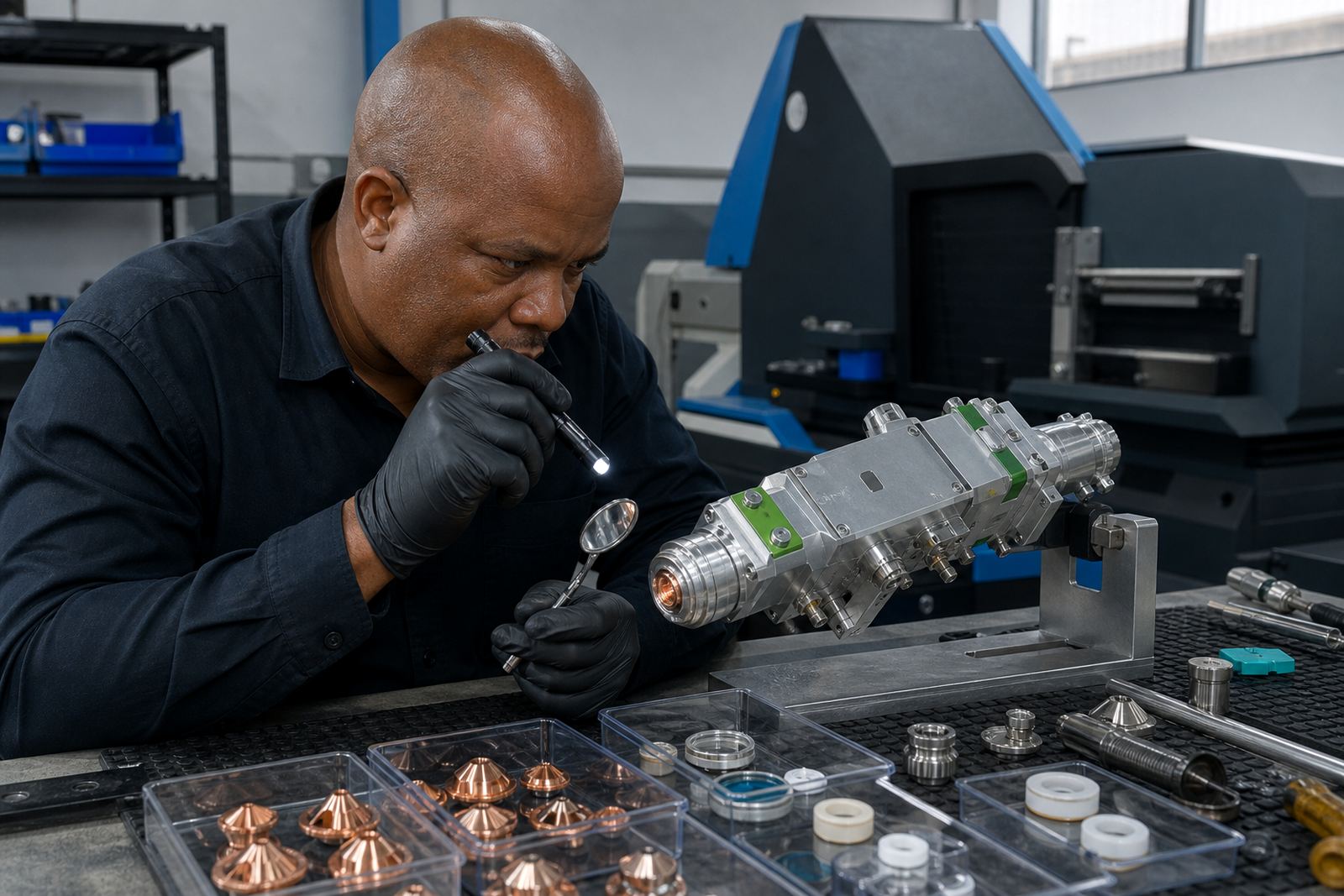
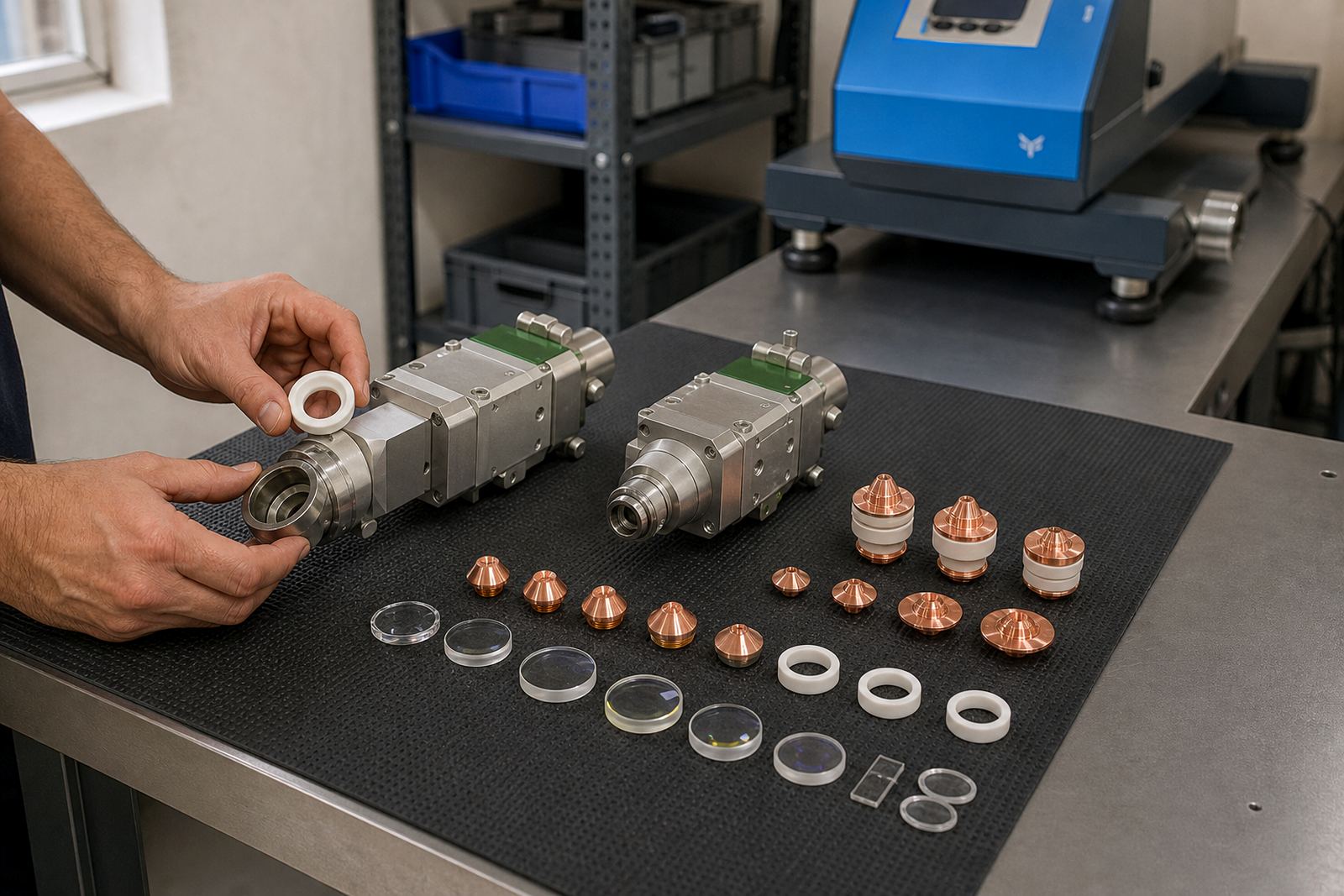
Our head servicing work deals with the parts that sit closest to the cut. That includes fibre laser cutting heads, nozzles, focus and collimator lenses, protective windows and ceramic rings, plus the checks that hold those parts in line. A head that has taken a small crash or has been run with poor cleaning routines often needs more than a quick wipe, it needs measured checking on the bench.
Bench service for the parts that need careful handling
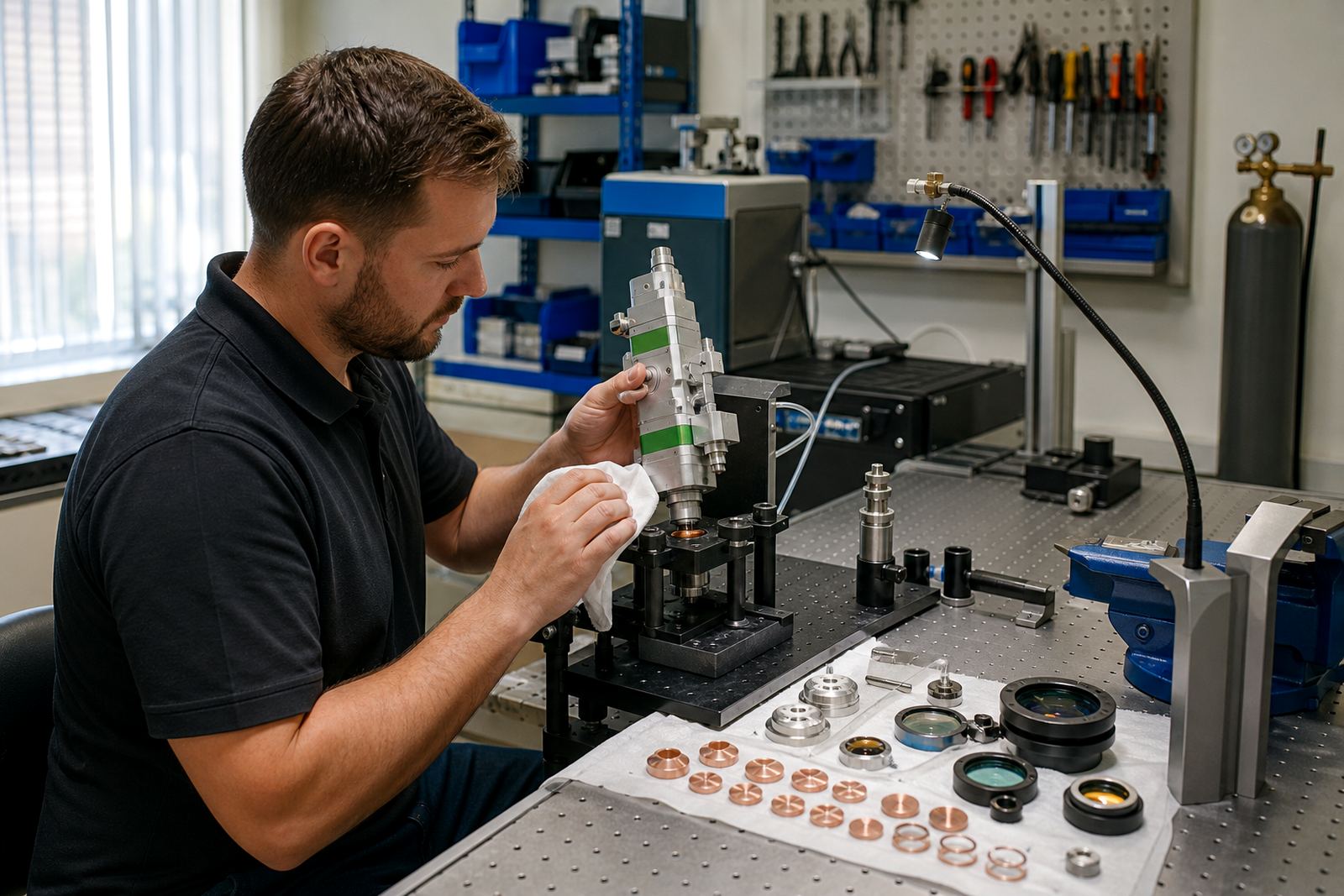
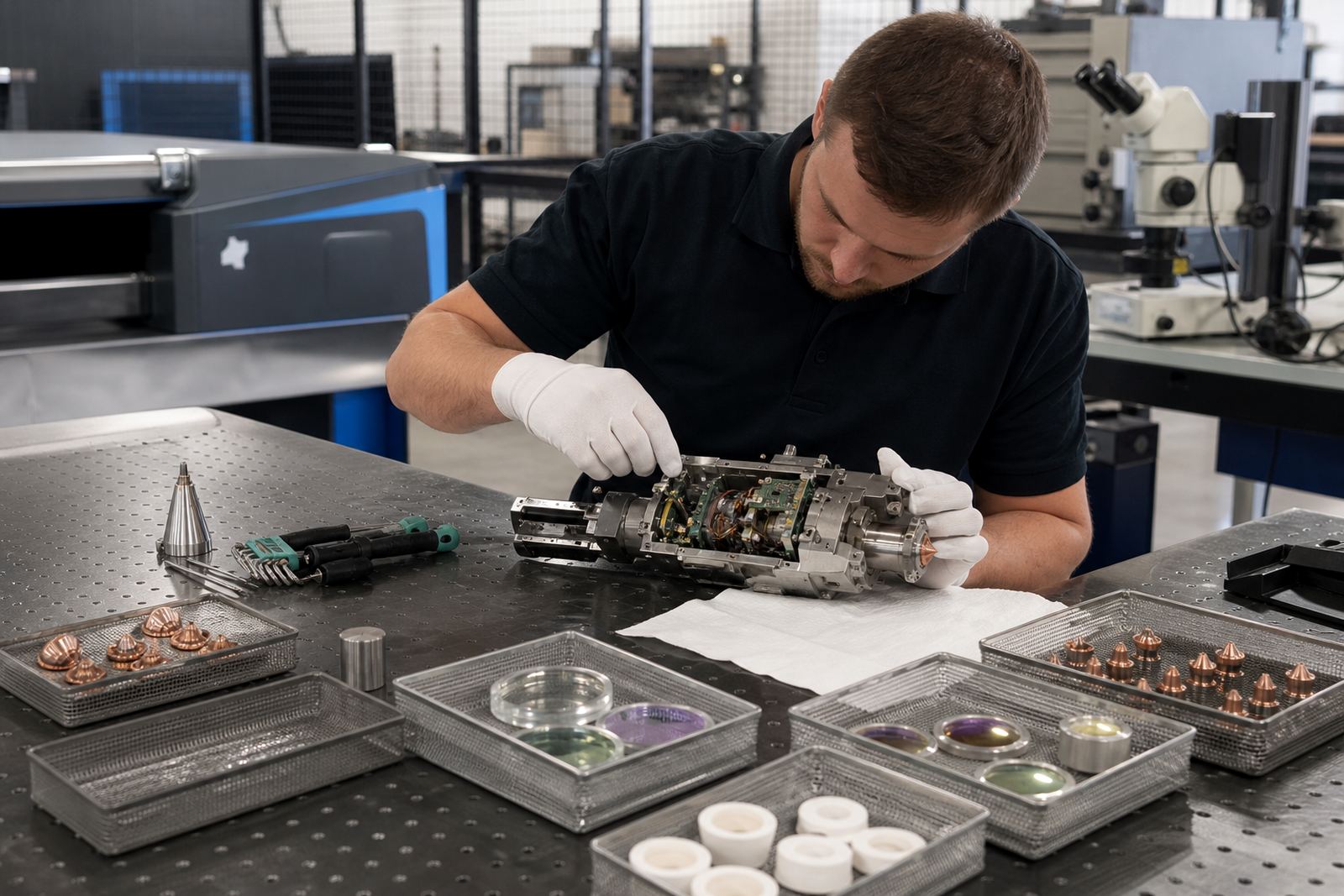
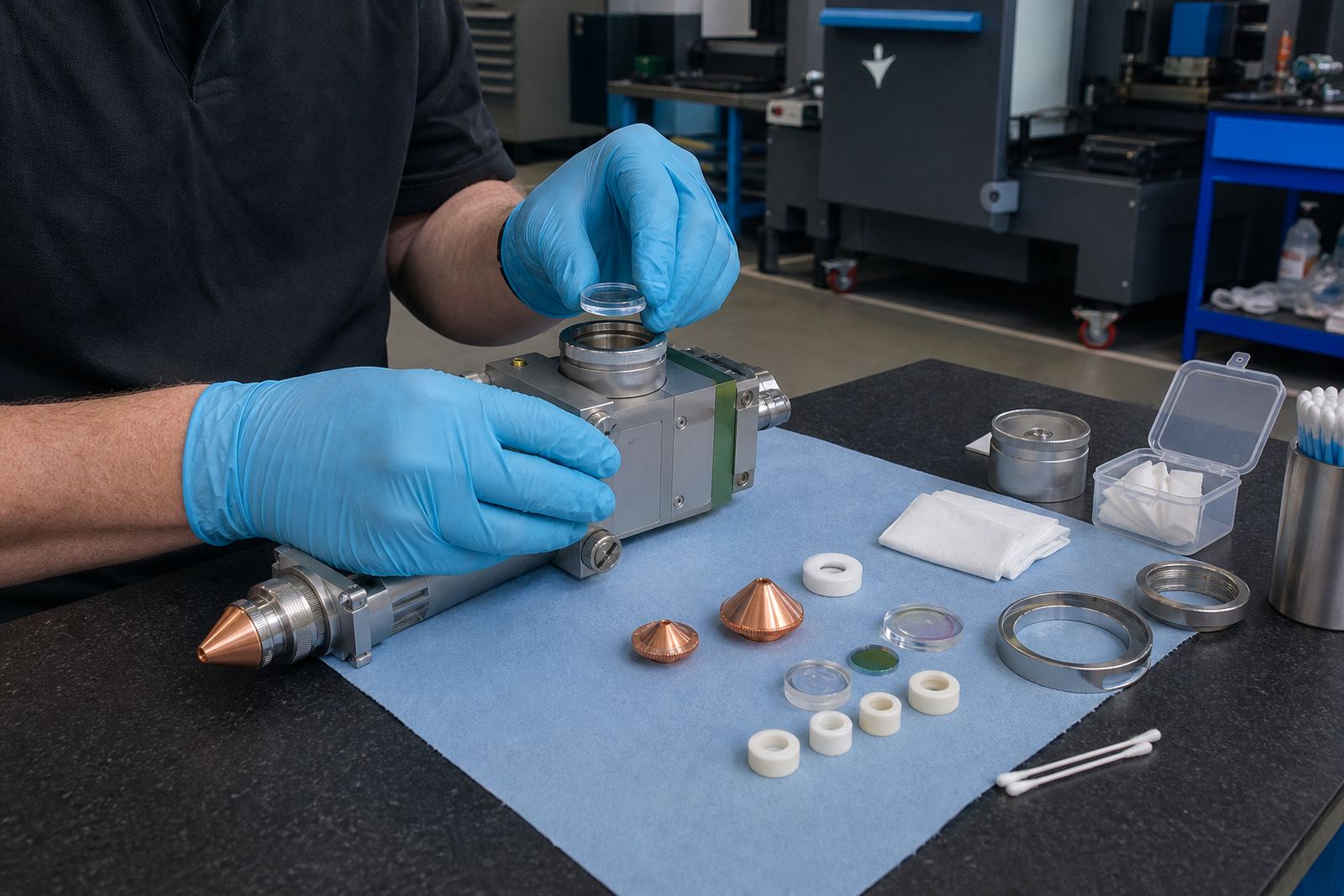
Bench Head Service suits heads that need stripping, cleaning, inspection and rebuild work away from the machine. We check the body, seals, lens seats, nozzle seat and the condition of the ceramic ring, then look for wear that affects beam path or gas flow.
- Lens cleaning for focus and collimator lenses
- Protective window replacement where heat marks or spatter are visible
- Head seal rebuild when dust or gas leakage shows up
- Crash damage inspection after a nozzle strike or head knock
- Spare head preparation for shops that need a ready unit on hand
Clean handling matters here. A small smear on a window or a nick on a sealing face can change the way the head behaves under cutting pressure, and that is often felt first on thinner sheet or reflective material.
Nozzle centring and focus setting checks
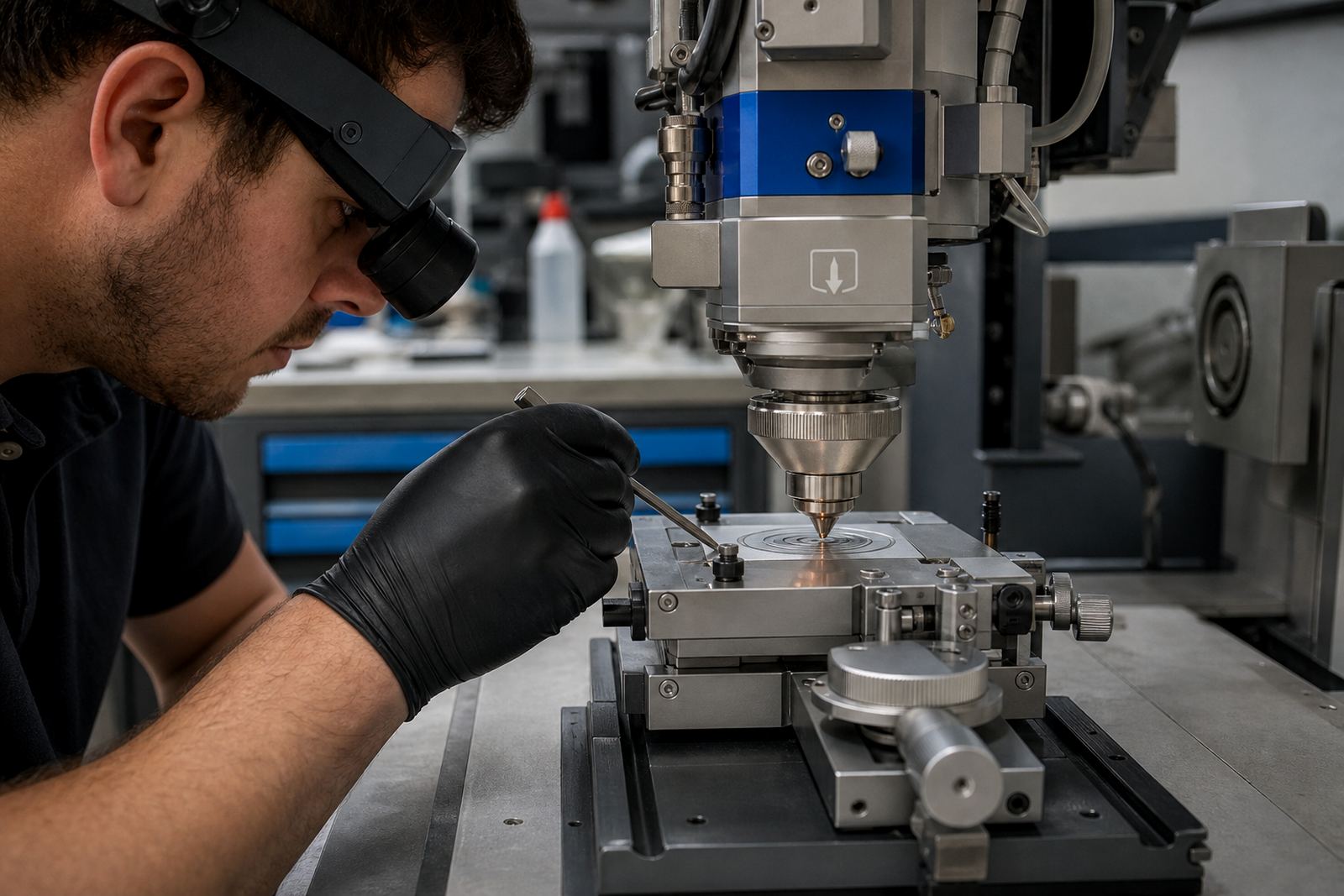
Nozzle centring and focus setting check work sit close together. If the beam is not centred through the nozzle, gas delivery becomes uneven and the cut can lean, burr or leave heavy dross. If the focus setting is off, the head may still cut but the edge finish will drift, especially on fine detail or thicker plate.
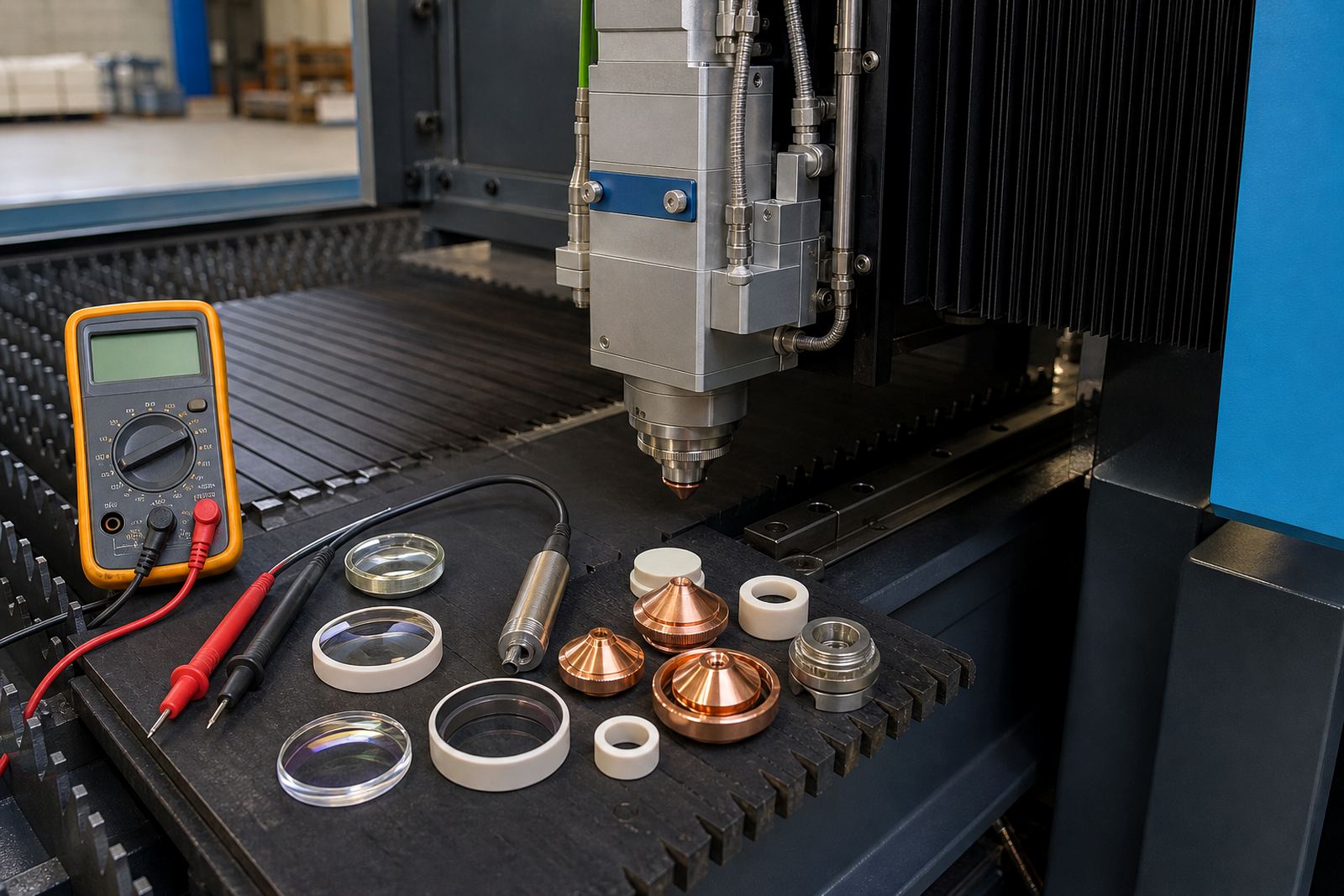
We check single layer and double layer nozzles, along with their fit and condition, then confirm the focus position against the cutting result the machine is giving. Capacitive height sensing is part of this as well, because the head has to read the sheet correctly and keep the standoff stable while it moves across the table.
- Single layer nozzle inspection for wear and centring
- Double layer nozzle inspection for gas flow consistency
- Capacitive sensor check for steady height control
- Focus setting review when the cut edge has drifted
On-site alignment for shops that cannot park the machine
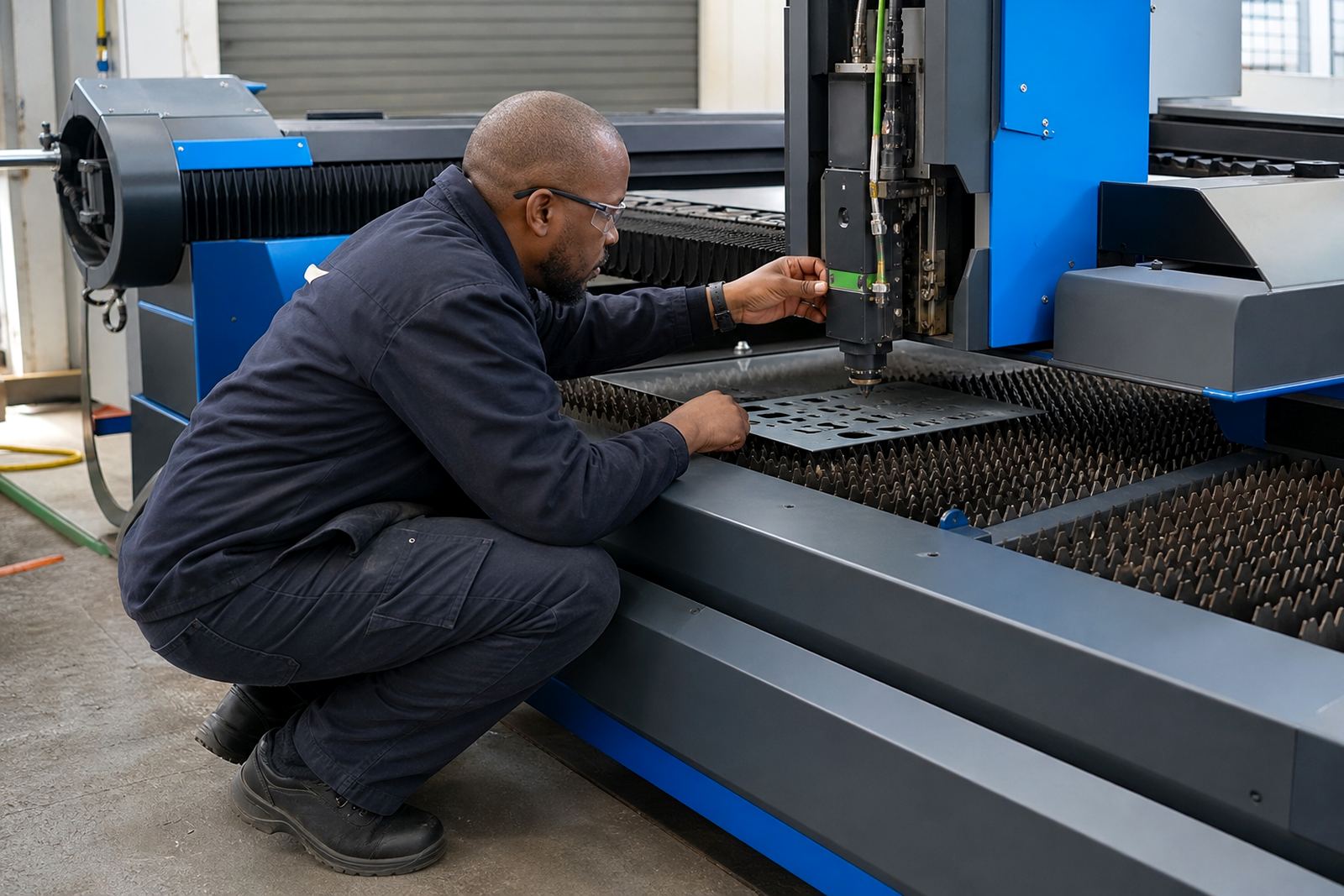
Some heads can be sorted on the bench, while others need alignment on the machine. On-site Head Alignment suits production floors where strip time is limited or where the fault only appears once the machine is under load. We operate across Spartan, Kempton Park, Johannesburg, Pretoria, Durban, Cape Town, Rustenburg and the East Rand.
This work is useful after a crash, after a change in cutting behaviour, or when the cut is inconsistent across different zones of the bed. The alignment process looks at beam position, nozzle alignment, sensor reading and the way the head tracks across the sheet. It is practical work, and it saves a shop from guessing at parts that may still be serviceable.
- Beam and nozzle alignment checks
- Field inspection after crash damage
- Capacitive sensor checks on the machine
- Adjustment of head position against live cutting conditions
The parts that suffer first in dusty or hot rooms
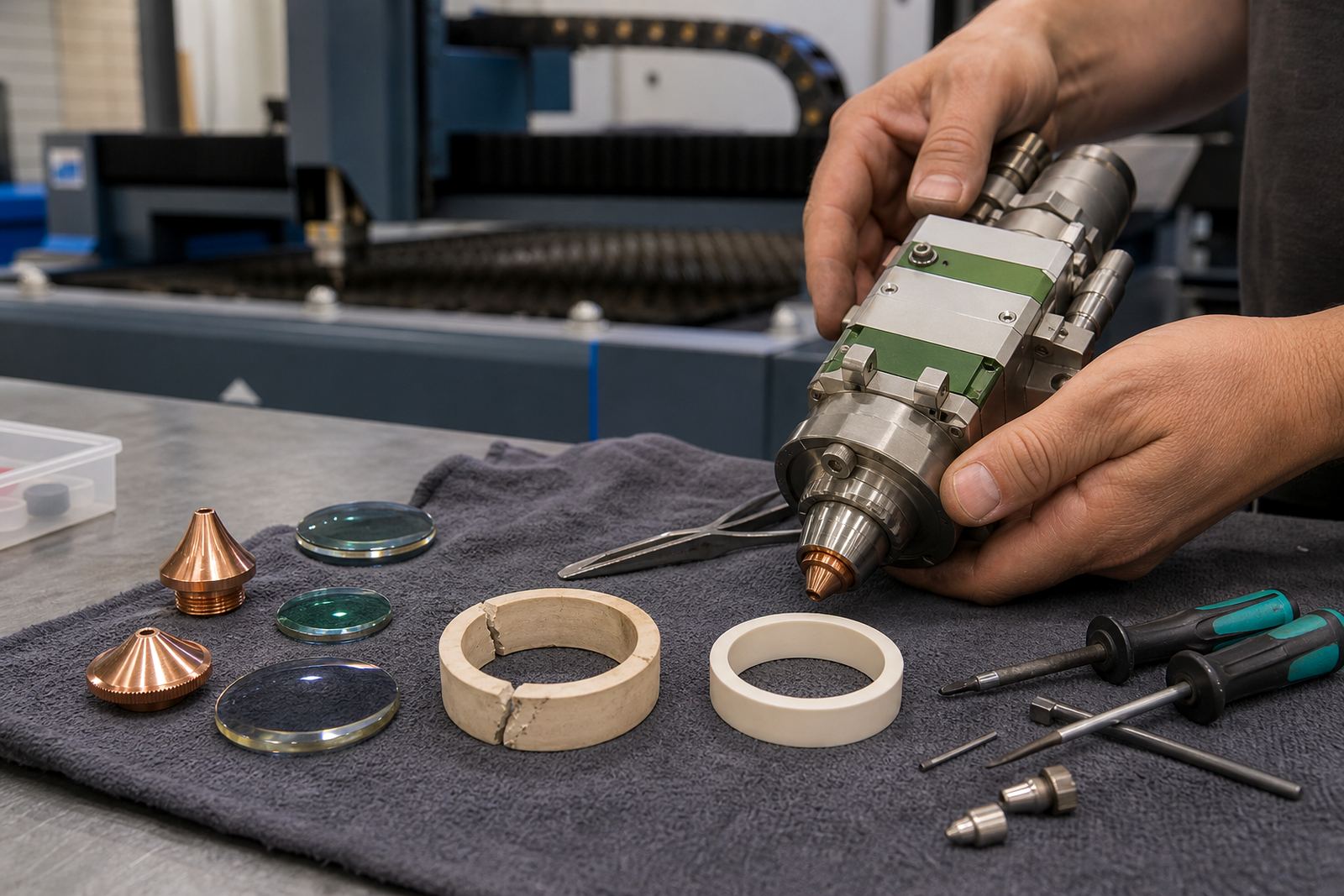
Protective windows, ceramic rings and nozzles are often the first items to show heat, dust and impact marks. In coastal air, fine moisture can settle on exposed parts more readily, while in busy sheet-metal rooms the issue is often spatter, slag and abrasive dust pulled into the head during a long shift.
Ceramic rings need a clean seat and even contact. Protective windows need careful handling because a small mark can spread heat into the optics above or below it. Nozzles need to stay true, otherwise the gas stream loses shape. We keep these points in view during every service job, not as a side note but as part of the head itself.
How a service request is sorted in practice
Each job starts with the symptom. A rough edge, changing kerf width, a sensor fault or a crash mark all point to a different service path. That is why the service pages are split into specific tasks, so a shop can ask for the work that fits the fault instead of sending in a vague brief.
Raytool works from Spartan, Kempton Park, with parts support and head servicing for sheet-metal shops that need practical handling on fibre laser equipment. If your head needs bench work, alignment on site or a parts check around the cutting head, use our contact form and add the machine details, the fault seen on the cut and whether the head has had a knock or cleaning issue.
- Bench Head Service for strip-down and inspection
- On-site Head Alignment for machine-side adjustment
- Spare head preparation for floor support