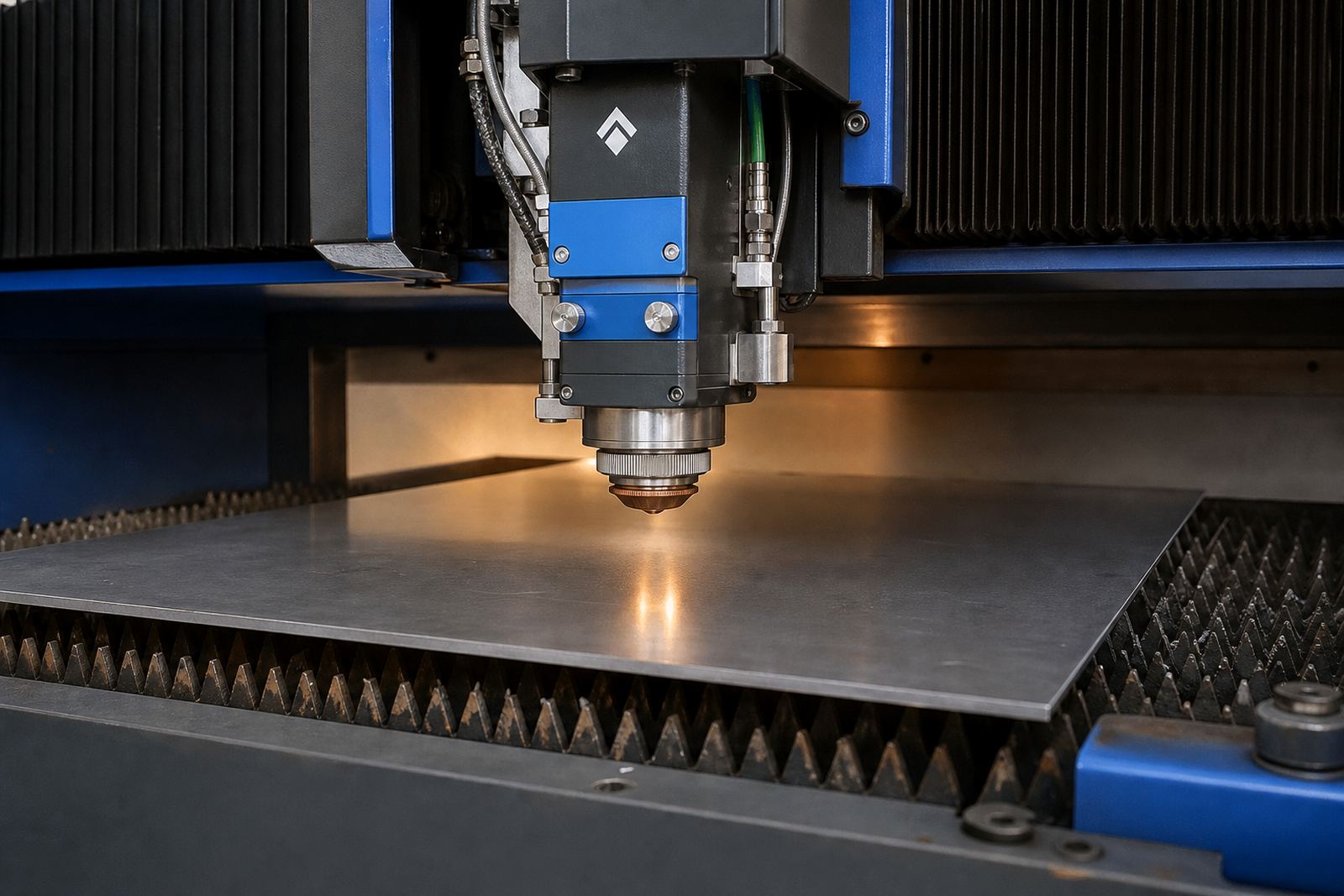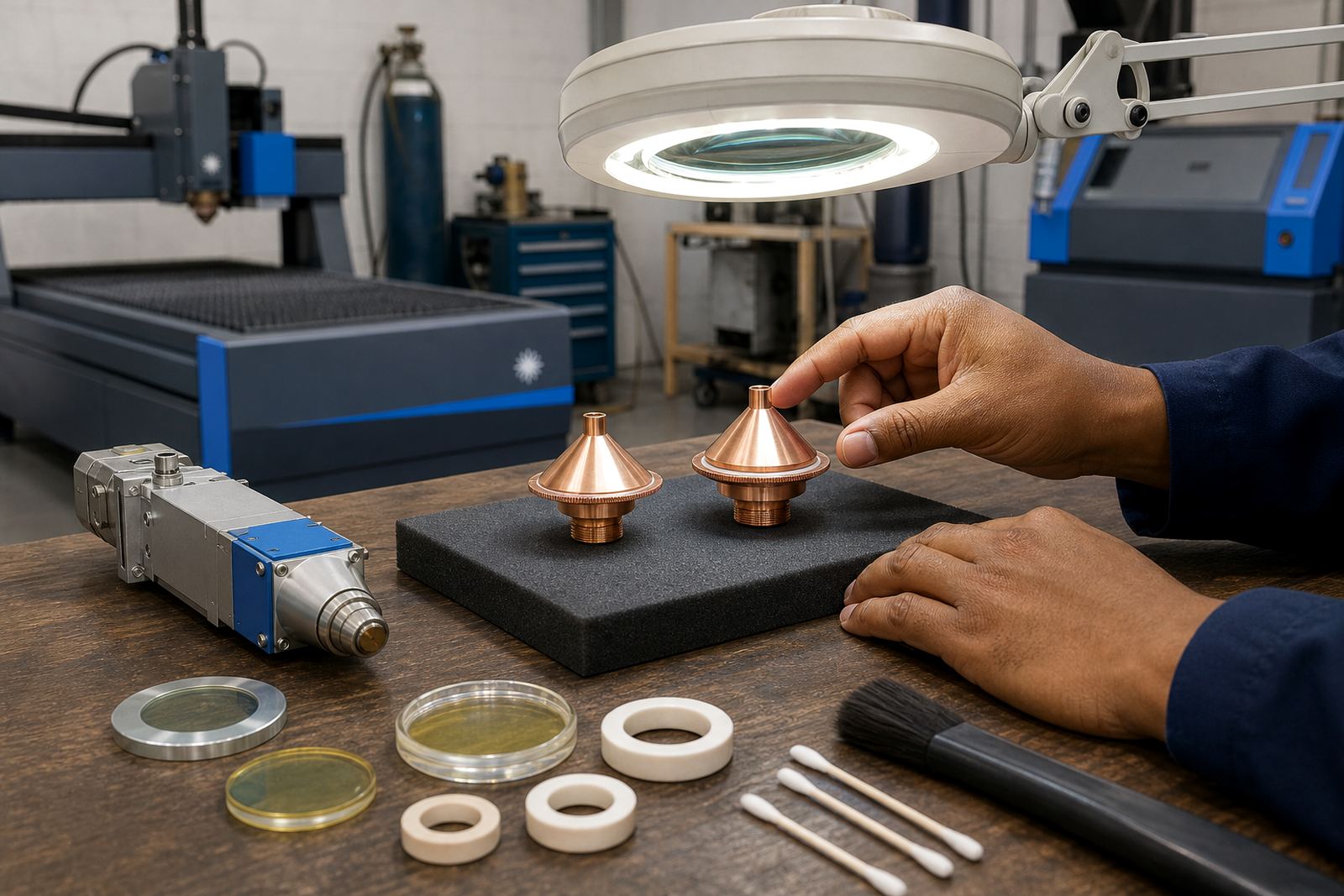
Two nozzle shapes, two different gas paths
A single layer nozzle has one internal passage from the body to the exit. Gas moves through one chamber and leaves in a tighter, more direct stream, which suits many standard cutting jobs on clean sheet. A double layer nozzle has two internal sections, usually arranged to help the gas remain steady and less disturbed as it reaches the cut zone.
That extra layer changes the way the gas exits the nozzle. On some jobs it helps keep dross down and protects the kerf better, especially when the cut is sensitive to small shifts in flow. The real point is not that one nozzle is better than the other, but that each geometry behaves differently when the head, lens set and height control are not right.
Where single nozzles usually earn their keep
Single layer nozzles are often used where the cut is straightforward and the sheet is fairly consistent. Thin to medium plate, clean surfaces and regular production runs can suit this style well. The opening is simple, and when the nozzle is centred properly the gas stream is easy to predict.
- Good for routine sheet-metal work with stable material quality
- Useful where the shop wants a direct gas path and simple setup
- Often chosen for sharper, more compact cut zones on lighter material
- Can be sensitive to misalignment, spatter and worn consumables
In a Gauteng workshop cutting brackets and covers from mild steel, a single nozzle may give tidy results all day if the ceramic ring, focus lens and protective window are kept clean. Once the nozzle mouth is nicked or the centring is off, the edge can start to show a wider frost line or heavier burr.
Where double layer nozzles make more sense
Double layer nozzles are often used when the job needs a steadier gas curtain at the cut face. That can matter on thicker sheet, reflective material and jobs where edge finish is being watched closely. The second layer helps reduce turbulence, which is useful when the machine is running at higher pressure or the operator is chasing cleaner pierce points.
These nozzles can be more forgiving on certain production jobs, but they are not a fix for a dirty head. If the focus setting is drifting, the protective window has marks on it, or the nozzle is off-centre, the cut can still go off line. A double layer shape just gives the process a different starting point.
- Useful where gas flow stability matters more than sheer speed
- Often preferred for thicker plate or tighter edge quality targets
- Can help when the shop wants a calmer cut face under heavier assist gas use
- Needs the same care with centring, cleaning and height control as any other nozzle
What changes when the head is not set properly
Nozzle style only works as intended when the rest of the cutting head is in order. Capacitive height sensing has to read the sheet cleanly, focus must sit where the cut calls for it, and the nozzle must sit true under the beam. If any of those pieces move, the difference between single and double layer becomes harder to judge because both will cut badly in their own way.
We often see a head in the workshop after a crash, or after long use in dusty conditions, where the nozzle seat has a slight mark and the ceramic ring no longer locates neatly. In that state the gas stream wanders a little and the operator starts compensating with settings that should never have been needed. The machine may still run, but the cut quality becomes patchy.
The small checks that save a lot of scrap
Before blaming the nozzle type, it helps to look at the basics. A clean lens stack, sound protective window, good ceramic ring and a clear gas path matter more than most people want to admit. On a fibre laser head, a tiny shift at the nozzle can show up as rough edges, more soot or a cut that leans one way on the sheet.
- Check nozzle centring after changing the tip
- Inspect the nozzle mouth for spatter and oval wear
- Keep the protective window free of haze and marks
- Confirm the focus setting matches the material and gas choice
- Look for dirt around the ceramic ring and sensor face
- Watch for unstable standoff height during cutting
Cleaning routines matter too. A shop that wipes lenses carelessly or leaves dust around the head can burn through consumables faster than expected. It is a small habit, but it changes the life of the parts and the consistency of the cut.
A local changeover example from Spartan to the shop floor
A sheet-metal shop in the East Rand may run a mix of 1.6 mm and 6 mm mild steel in the same shift. On the light material, a single nozzle can give a neat result when the gas stream is tidy and the focus is kept tight. On the thicker work, the same shop may switch to a double layer nozzle to keep the cut steadier through the plate.
The change only works when the head is aligned and the consumables are in good shape. If the operator swaps the nozzle but leaves a worn protective window in place, the result is usually disappointing. The smarter move is to treat the nozzle as one part of the whole system and not the only variable that matters.
For benches in Spartan, Kempton Park and the wider Johannesburg area, that usually means checking the head on the bench first, then carrying the same logic to on-site alignment when the machine is already installed and running production.
Picking the nozzle that matches the job, not the habit
Single and double layer nozzles are not a style choice. They are part of a process choice. The right one depends on thickness, surface condition, cut edge target, assist gas behaviour and the level of care the head is getting. If the shop cuts a wide spread of parts, it is worth matching nozzle type to the job rather than using the same piece for everything.
For shops in Pretoria, Durban, Cape Town and Rustenburg, the practical habit is simple: keep the consumables clean, watch the focus, check centring and replace worn parts before the head starts marking the material. That setup cuts downtime on the floor and helps the cut stay more consistent, which is important when orders are heavy and the sheet stack keeps changing.