



What the guide set covers in the workshop
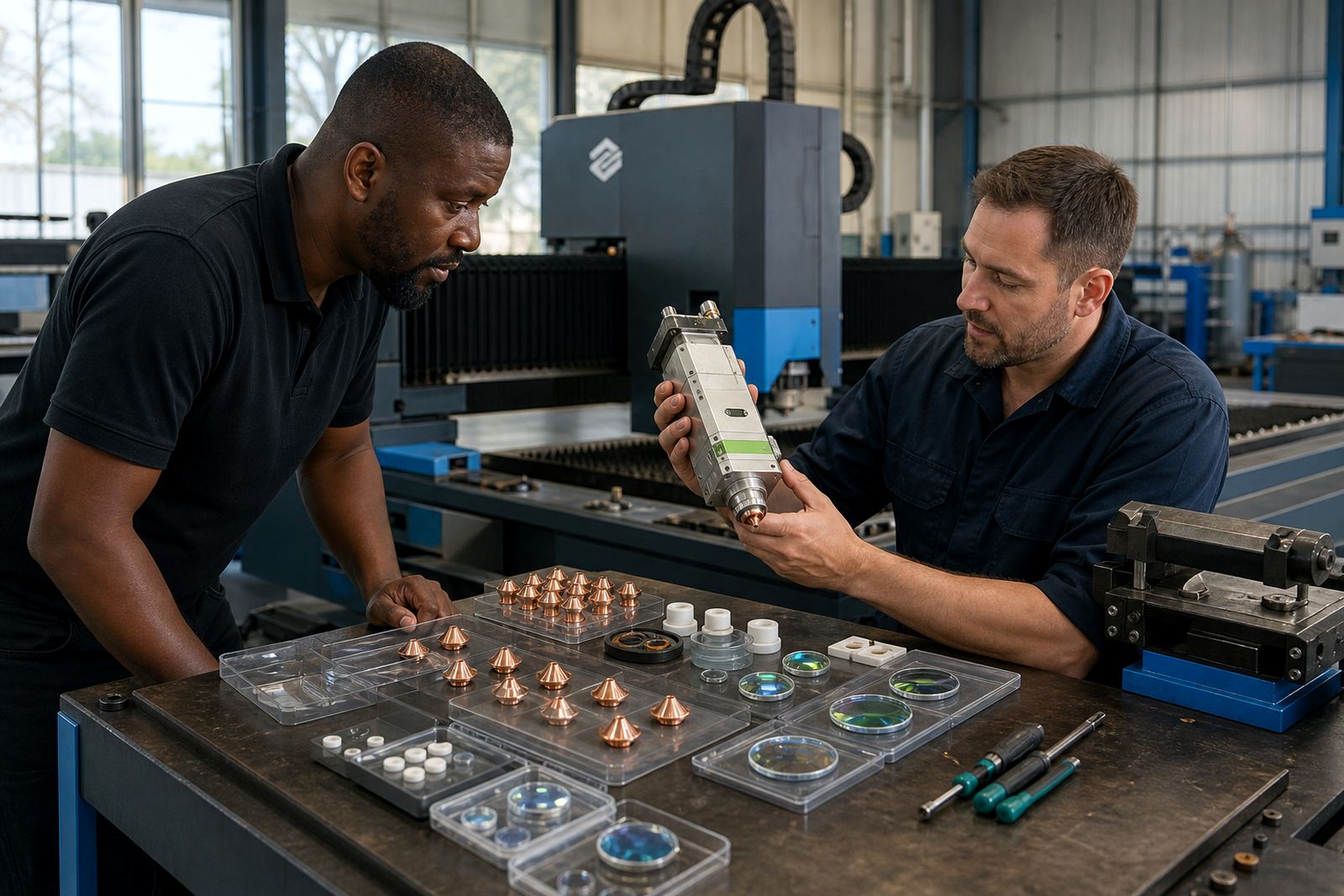
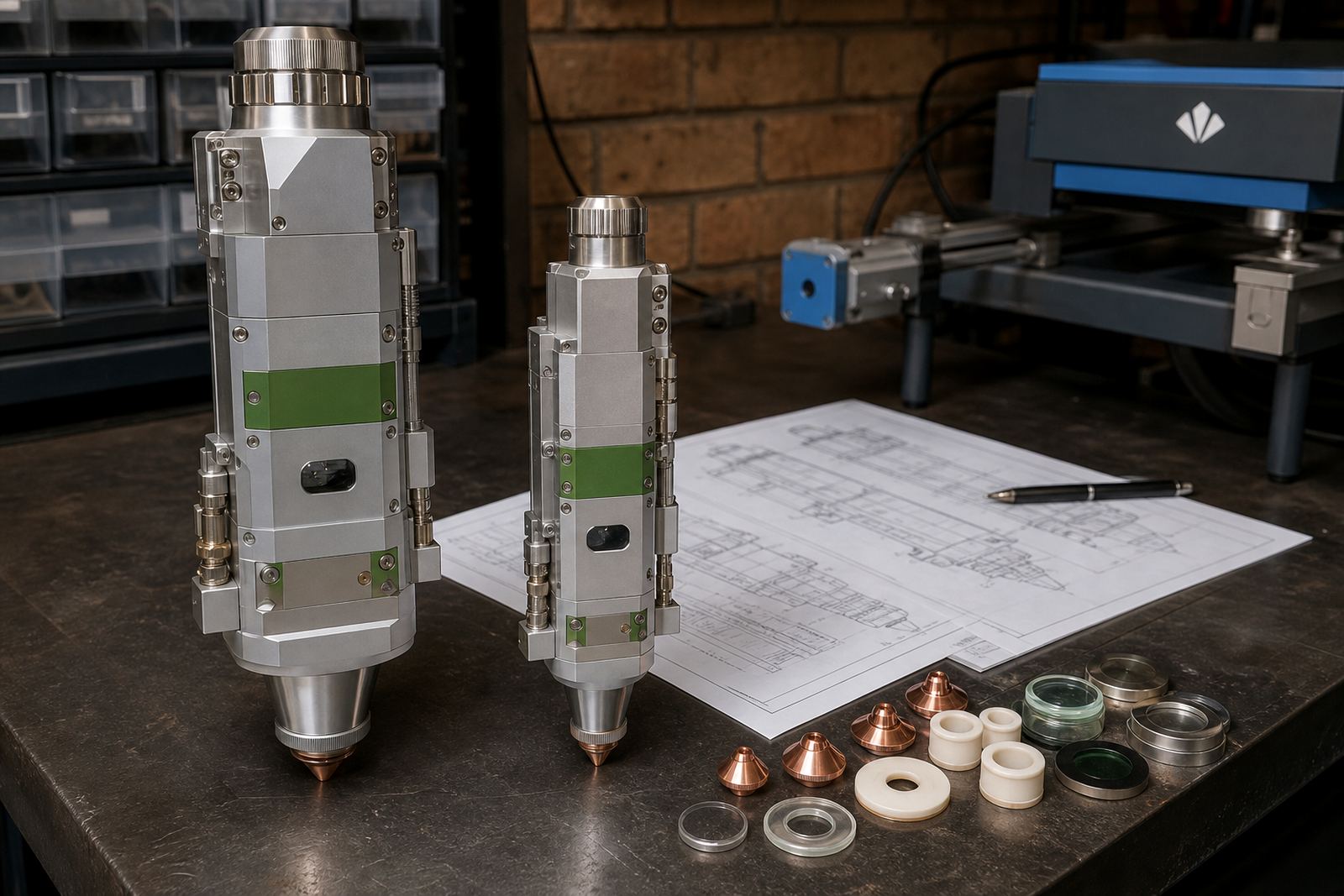
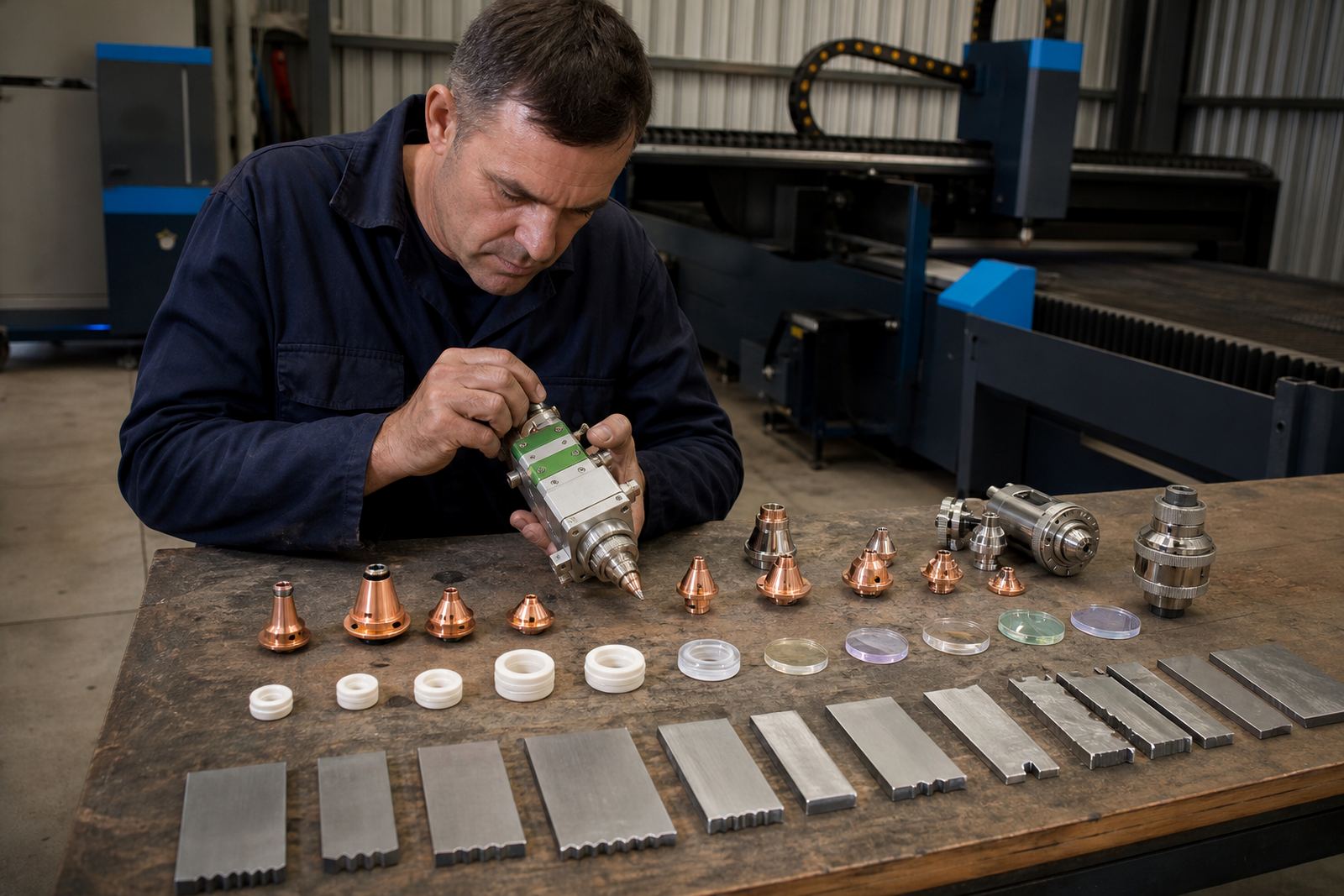
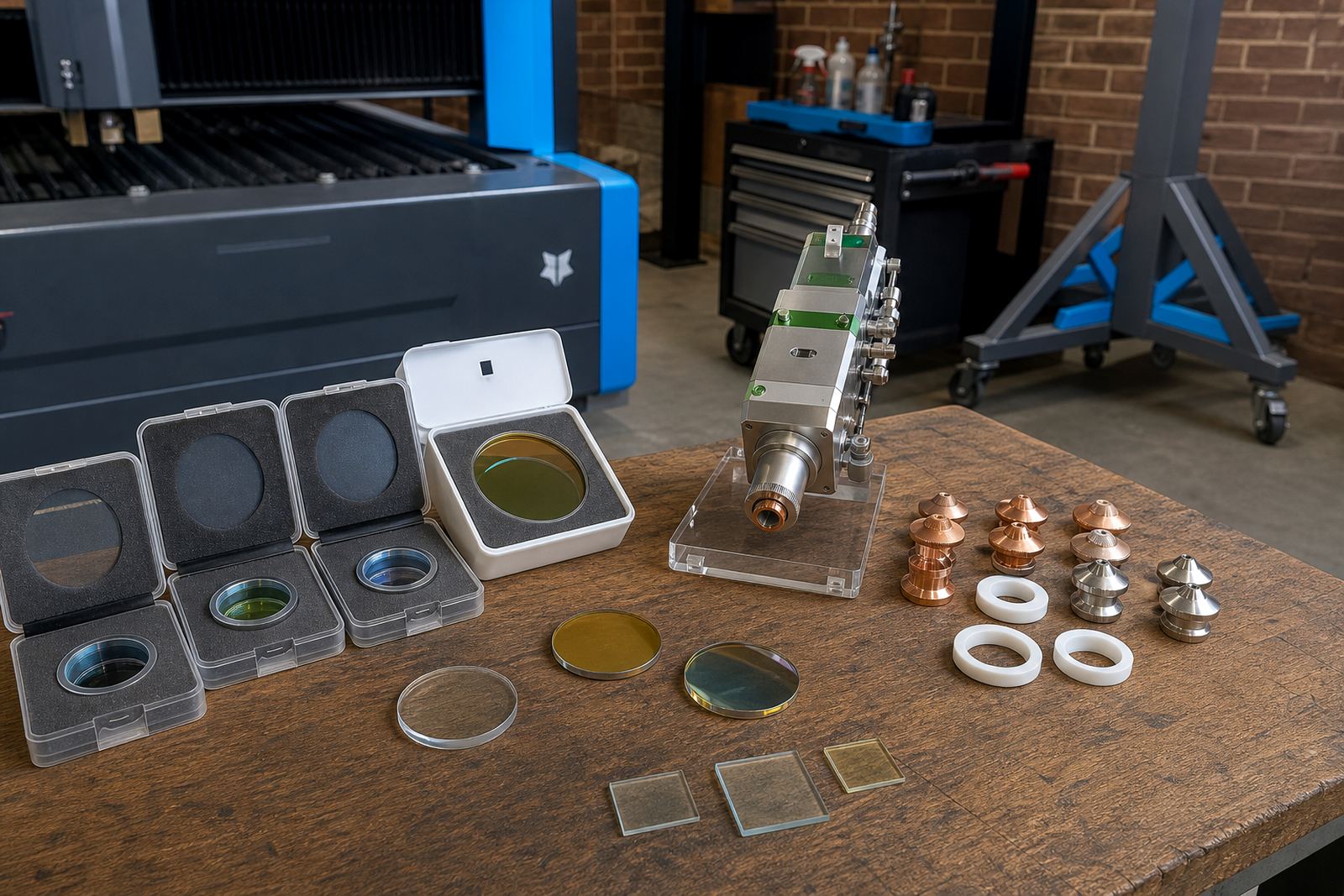
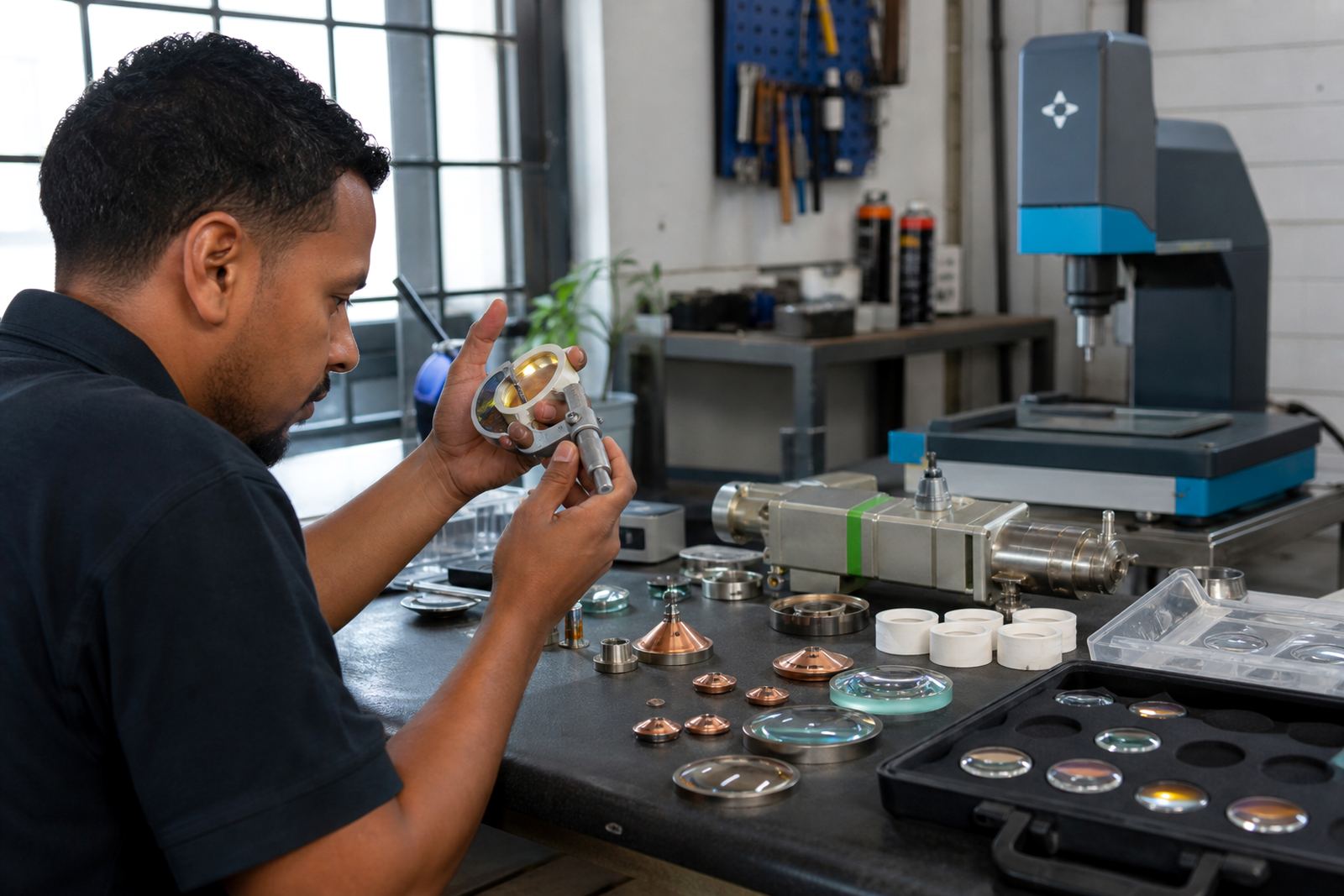
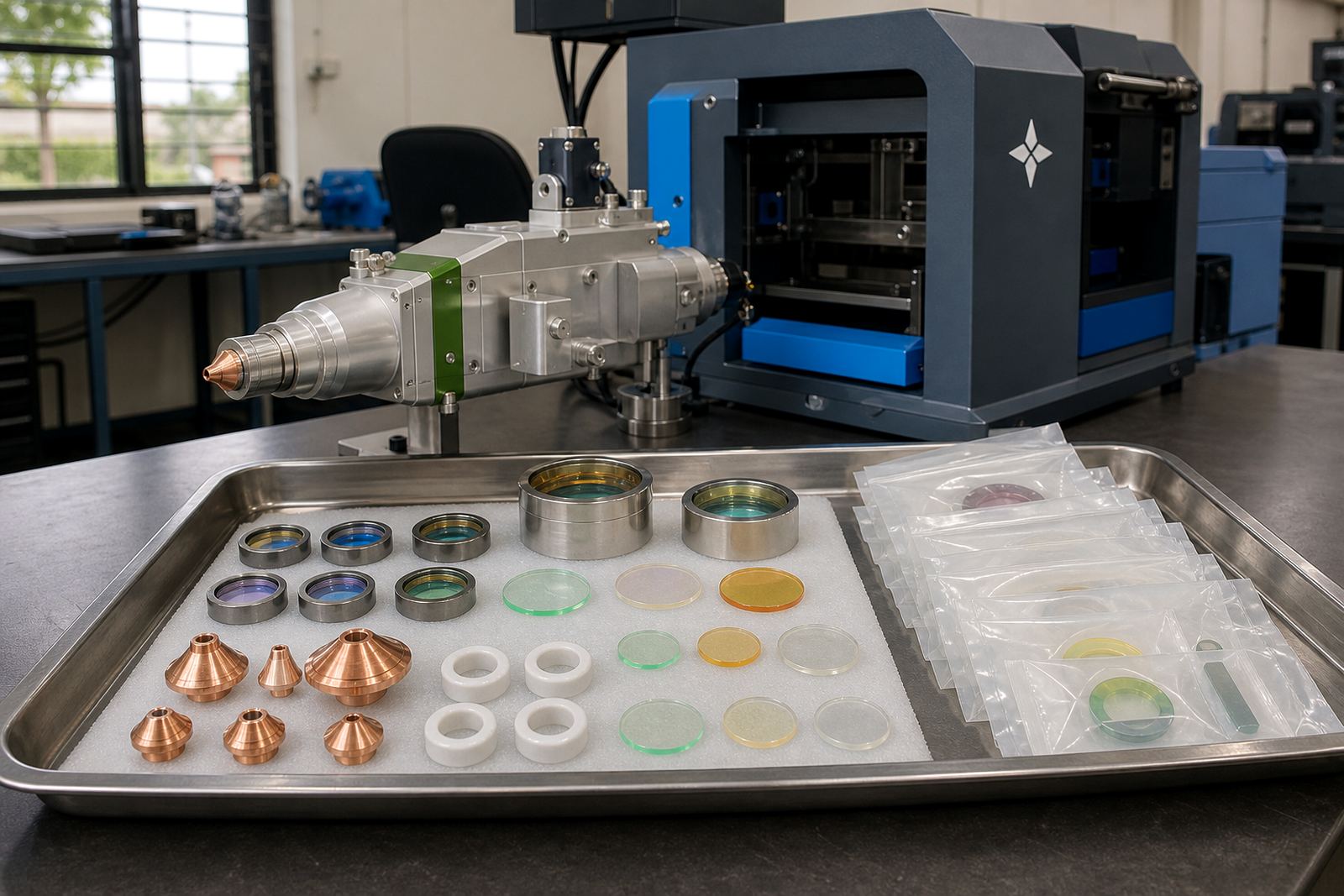
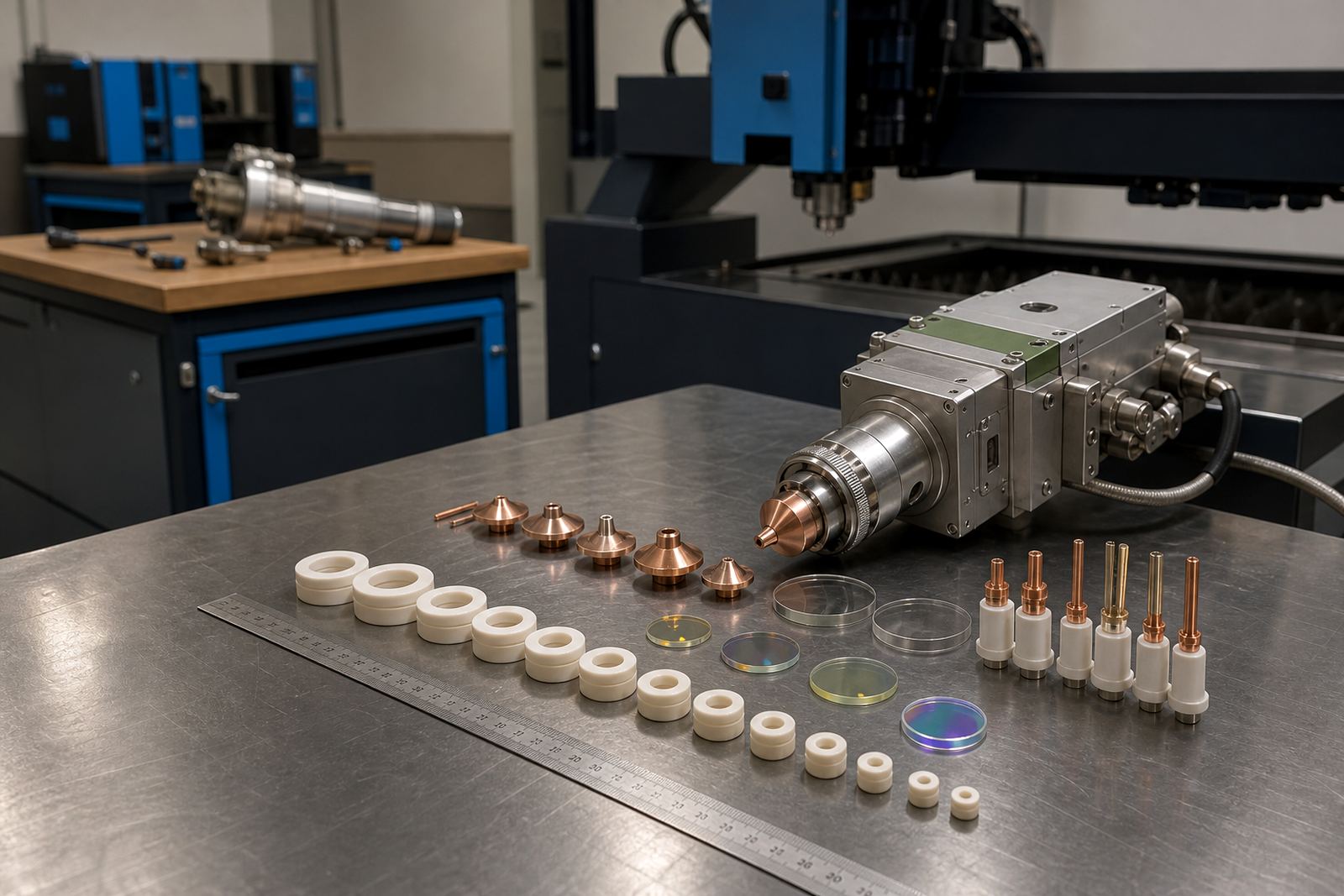
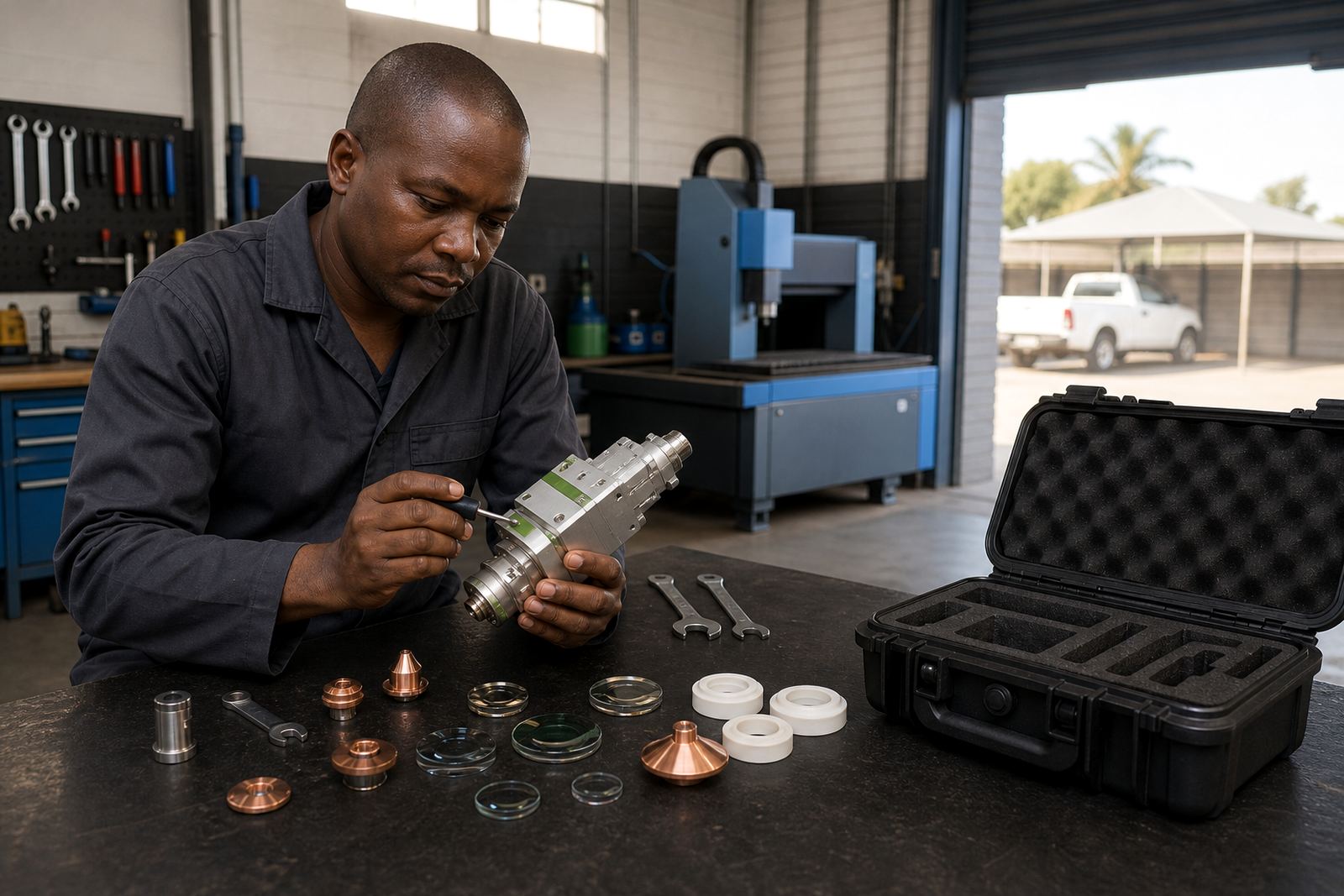
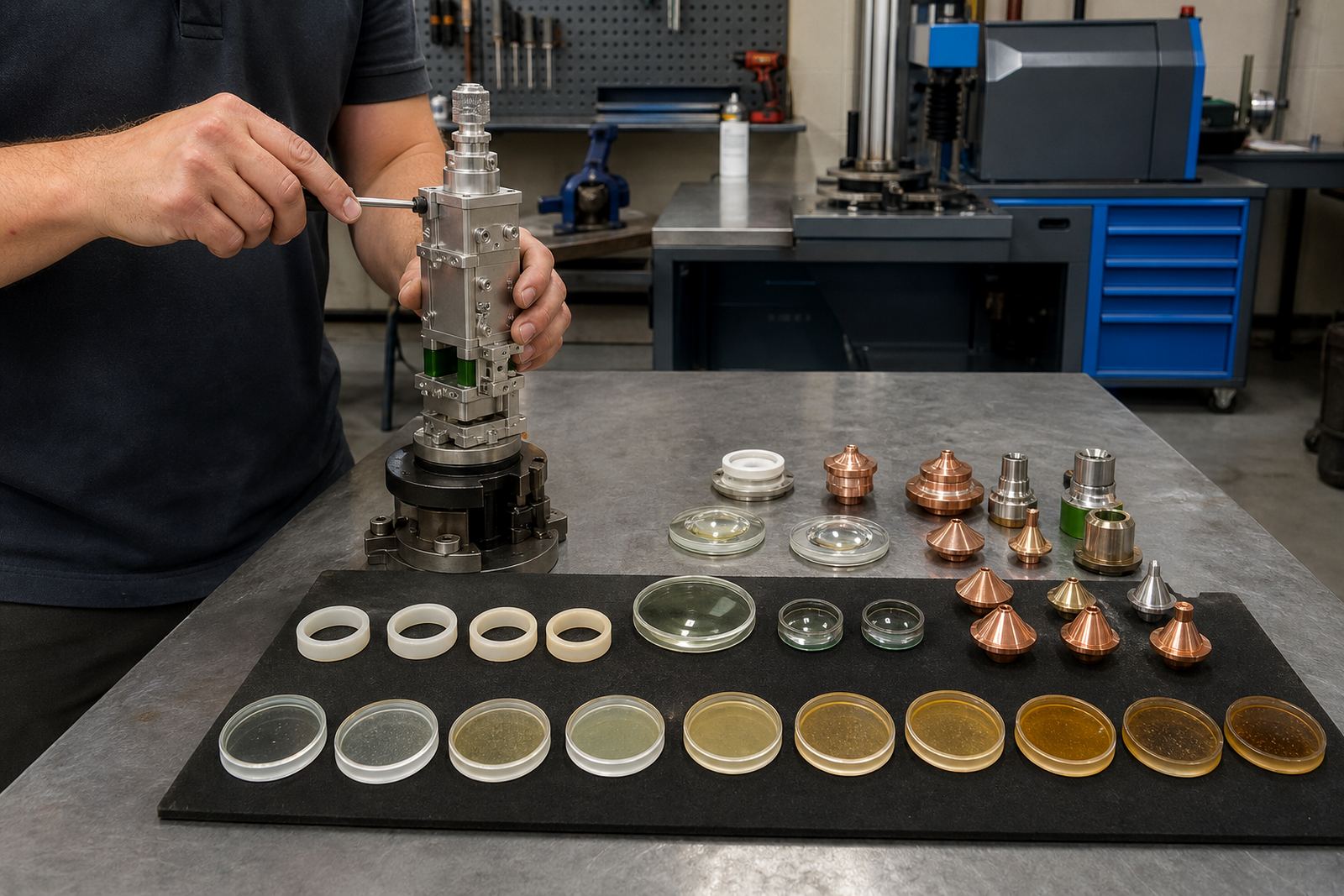
The guides cover the parts that usually set cut quality, head stability and wear rate on fibre laser machines. That includes cutting heads, single and double layer nozzles, focus and collimator lenses, protective windows, ceramic rings, capacitive sensing and the checks around gas flow and sealing.
For a shop in Spartan or the East Rand, the useful question is not only what fits the machine, but what fails first on your material mix. Thin galvanised sheet, oily mild steel and heavier plate all put different pressure on the head and its optics.
- Nozzle size changes assist with pierce control and edge finish.
- Lens care protects beam quality and reduces avoidable scatter.
- Sensor setup affects standoff control and cut consistency.
Picking parts for the sheet-metal mix on hand
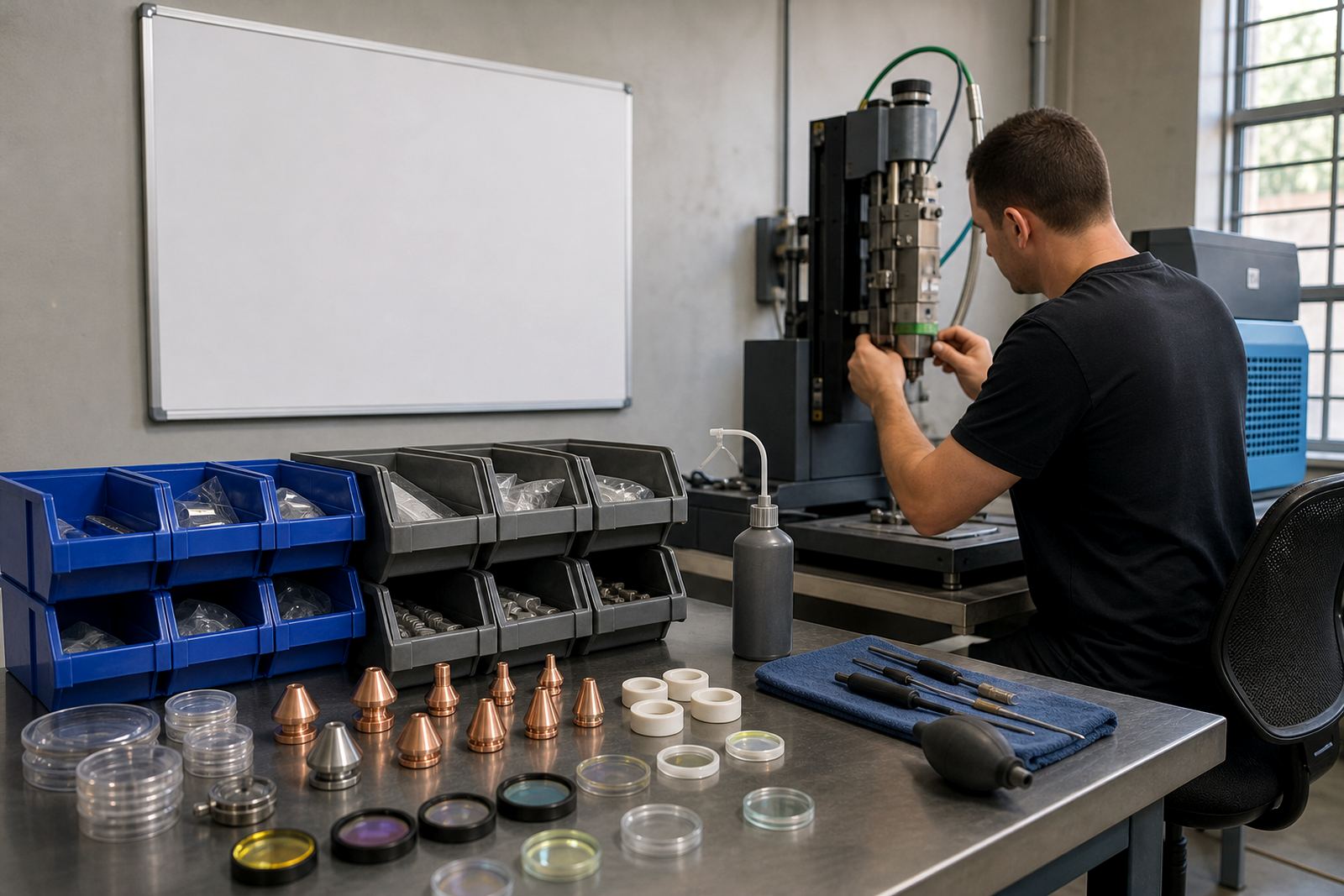
A practical parts list starts with the gauges you cut most often, the assist gas you use and the level of operator handling on the floor. Shops cutting mixed nests need a small, tidy stock of nozzles and windows rather than a crowded shelf full of slow movers.
Focus lenses and collimator lenses must suit the head design and beam path. A wrong match can leave the cut unstable, even when the machine parameters look correct on screen.
- Single layer nozzles suit many standard cutting jobs.
- Double layer nozzles help where airflow control matters more tightly.
- Protective windows should be kept clean and changed before marks build up.
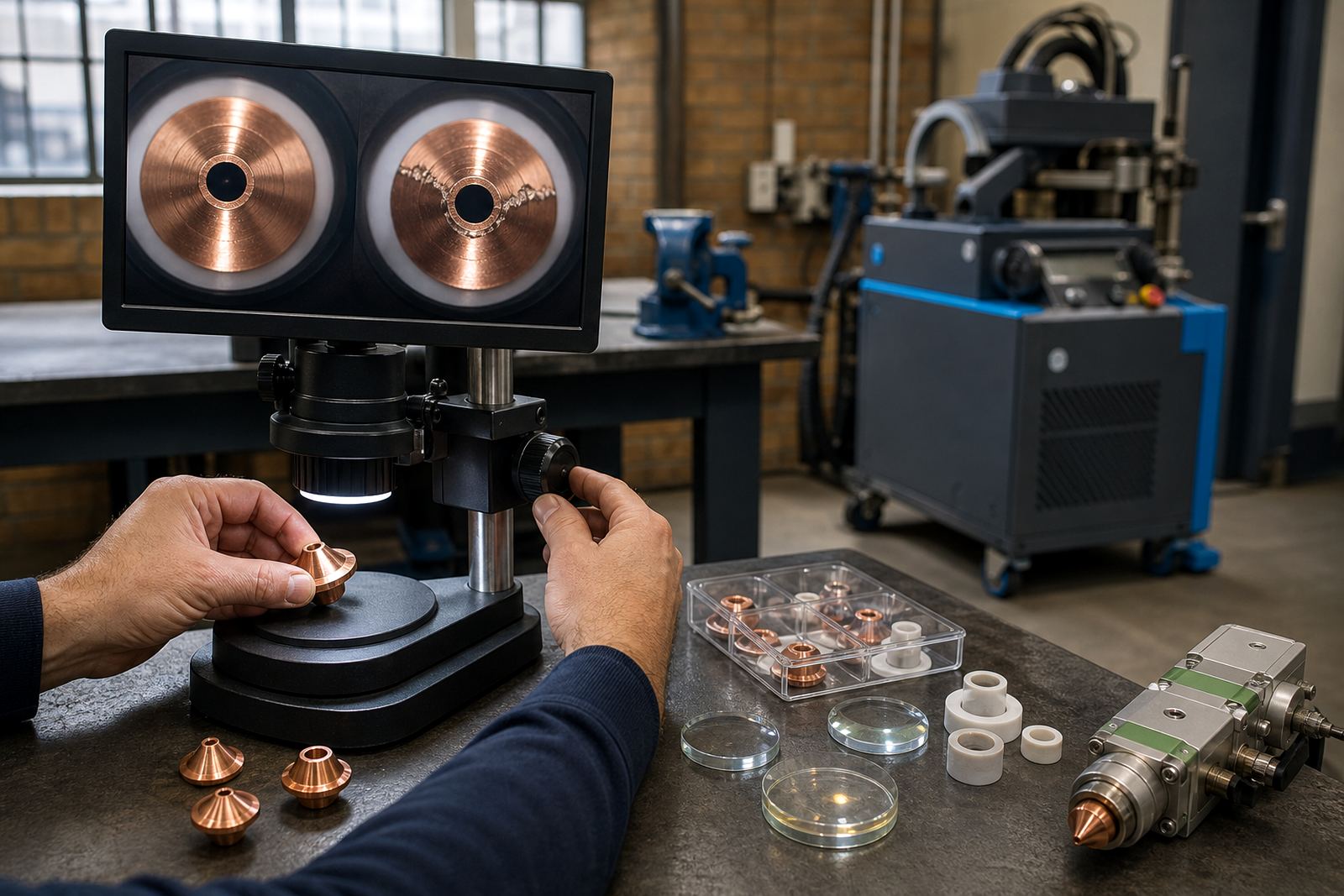
- Ceramic rings need inspection after crashes, heat exposure or poor centring.
Servicing decisions that save head parts
Head servicing is easier when the team watches the small warning signs. A drifting cut edge, repeated pierce spatter, or a nozzle that needs constant re-centring points to a deeper issue in the head, seal or sensor path.
Bench service suits parts that need careful inspection under controlled conditions. On-site alignment makes sense when the machine is in daily use and the issue sits in setup, centring or beam position rather than major damage.
- Clean optics with proper routine, never with rough cloths.
- Check focus settings after a head change or crash event.
- Inspect the gas path for dirt, oil or loose fittings.
- Replace damaged seals before contamination reaches the lens stack.
What operators should watch during a shift
Operators usually spot the first change before maintenance does. Small sparks near the head, rough hole starts, heat marks around the nozzle or a sudden shift in cut angle can all point to wear in the head assembly.
In Durban coastal humidity and in older plant rooms inland, moisture and dust both matter. A clean lens can still fail early if the head cavity, ceramic ring or protective window is left with residue after a busy run.
Bench work and field alignment in plain terms
Bench work is useful when the head needs careful stripping, cleaning, seal rebuild work or crash inspection. Field alignment suits machines that are otherwise running well but need nozzle centring, focus setting check, capacitive sensor check or a quick gas path inspection.
Spartan, Kempton Park is a practical base for parts handling and technical prep, while site work reaches Johannesburg, Pretoria, Durban, Cape Town and Rustenburg. That spread matters when a shop needs fewer delays around spares and set-up, especially where one machine carries the daily load.
How to use these guides before the next parts order
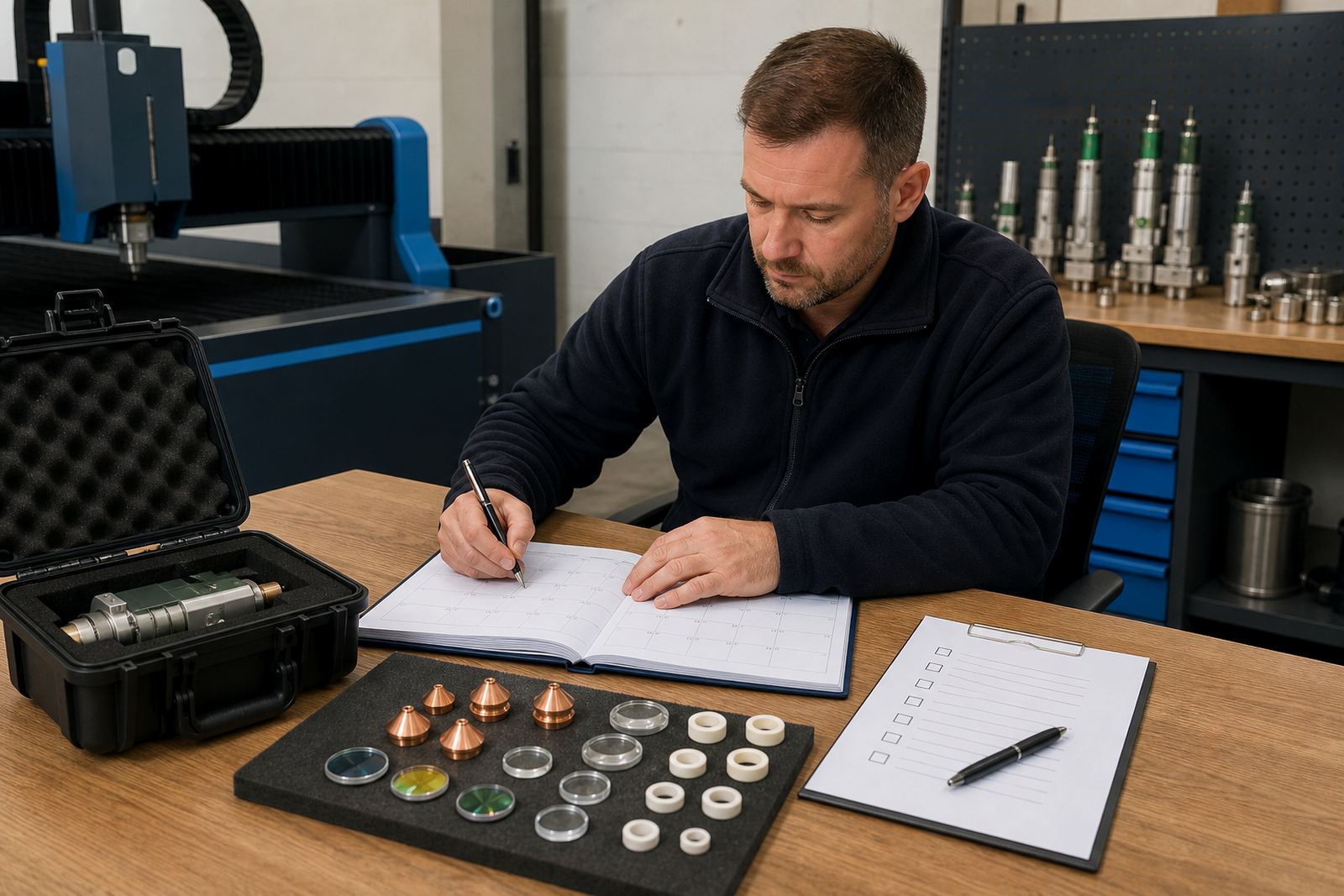
Use the guides to compare wear patterns, plan a spare set and match servicing to the actual job mix on the floor. A small stock of critical parts usually works better than a large shelf of items nobody can identify quickly.
For supervisors, the useful habit is to pair each part with the symptom it solves. That keeps the conversation grounded when a nozzle, lens or ceramic ring needs replacement and the machine must stay aligned for the next job.