What drifts into a laser head during a normal shift
A fibre laser cutting head works in a harsh area. Fine swarf, grinder dust, airborne oil and lint from cloths can move through the cutting zone and settle on nozzles, lenses and the ceramic ring. In a busy sheet-metal shop around Spartan or the East Rand, that build-up often starts small, then shows up as poor edge finish, more spatter and a cut that looks fine on one job and rough on the next.
Air quality around the machine matters because the head is built around very tight tolerances. A clean nozzle bore, a clear protective window and stable focus settings all depend on air that is dry enough, filtered properly and free of grime carried in from the floor or compressor line.
Optics do not forgive dirty air
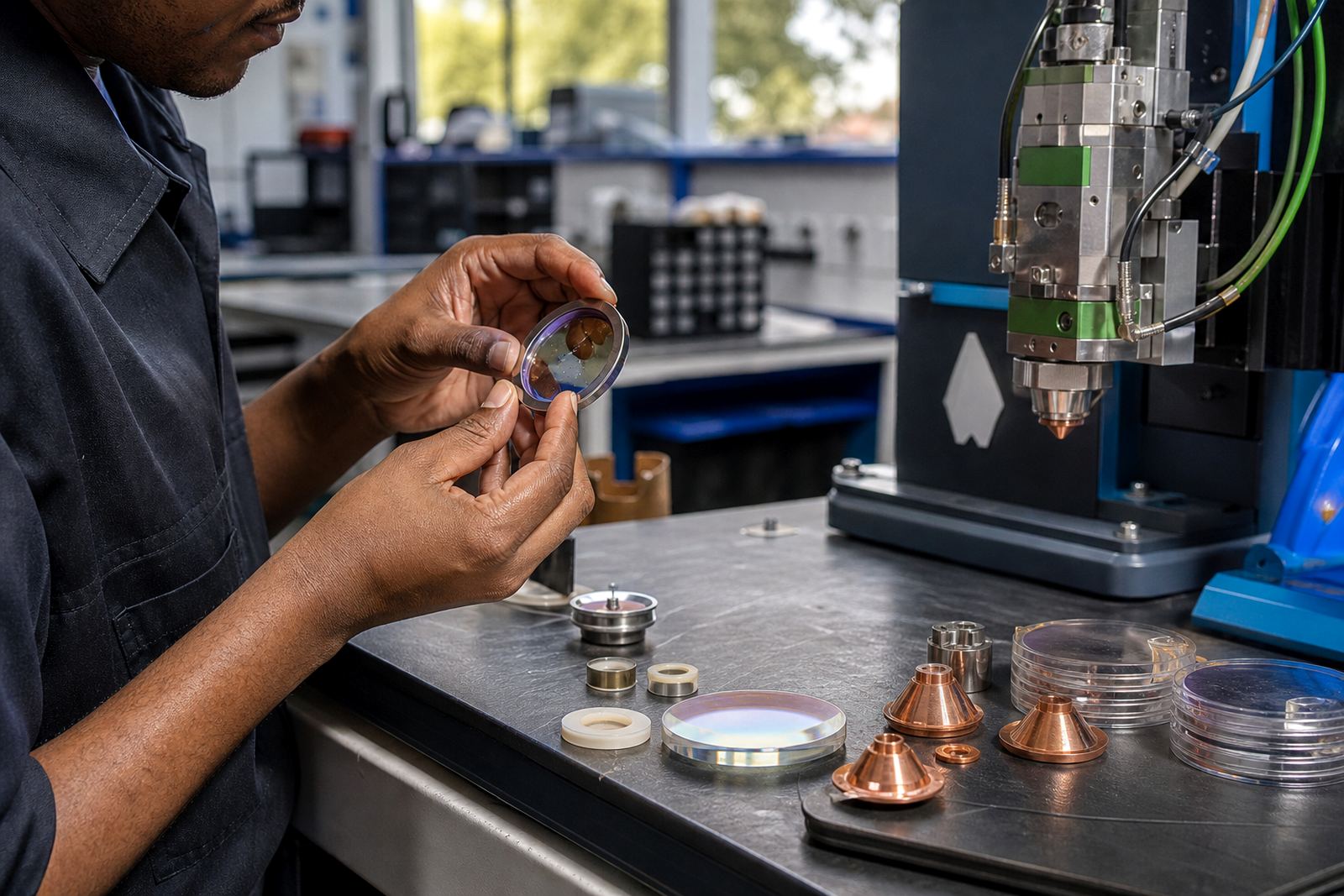
Protective windows take the first hit. If they cloud over from contamination, the cutting beam loses quality before it reaches the workpiece. A dirty window can also hide a deeper problem, such as poor gas sealing or a damaged ceramic ring. Focus and collimator lenses are even more sensitive, because once dust or residue sits on the surface, heat starts to mark the coating and the beam path changes.
That is why cleaning routines need to be steady and careful. Harsh wiping, the wrong cloth, or compressed air that carries oil back into the head can do more damage than the dirt you are trying to remove. In Durban, where humidity can hang in the air and salty conditions reach indoor workshops, optics need a tighter cleaning habit than many teams expect.
The small parts that keep the cut steady
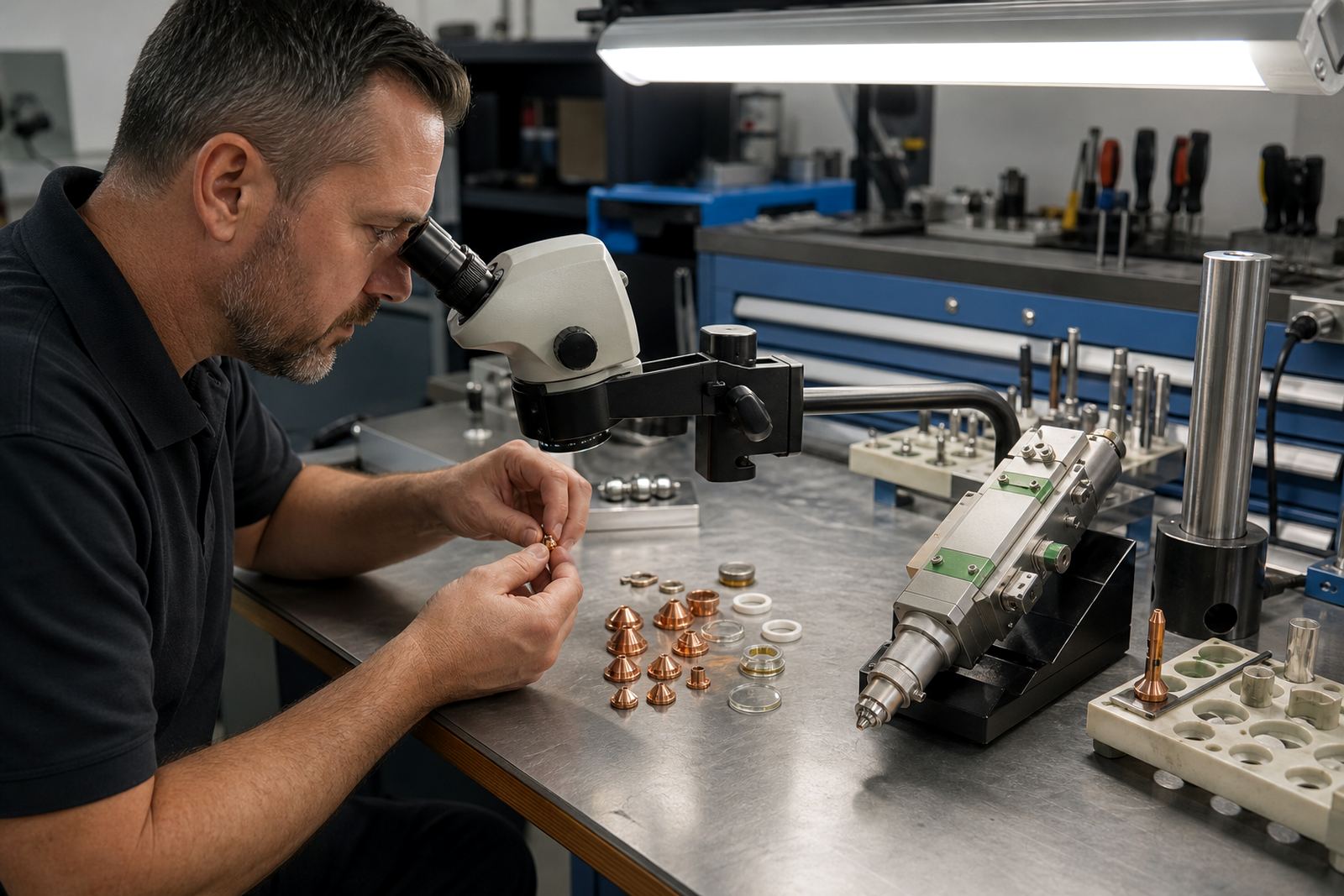
Nozzles, ceramic rings and capacitive sensing parts all depend on clean conditions. A nozzle with a blocked or damaged tip will throw off centring. A ceramic ring with carbon marks or cracks can upset height sensing and make the head read the plate unevenly. When the gap between nozzle and sheet changes without warning, the cut edge starts to show it.
- Single layer nozzles need a clean, even bore for stable gas flow.
- Double layer nozzles help in cutting conditions that need extra control of assist gas.
- Capacitive height sensing works best when the sensing path is clean and the ceramic ring is sound.
- Lens cleaning must be done with proper inspection, not rough handling.
A workshop that keeps these parts clean will usually spend less time chasing random quality faults and more time keeping the machine in its cutting range.
Air movement around the machine matters too
Clean air is not simply a matter of the compressor. The room around the machine counts as well. Open doors near a grinding area, piles of offcuts, oily rags and dust on nearby surfaces all increase the load on the head. Even a good extraction system can struggle if the workshop floor is allowed to carry fine powder and metal grit across the cutting bay.
In Pretoria and Rustenburg, where many sheet-metal shops run mixed fabrication work, it helps to keep cutting, grinding and welding areas separated where possible. That does not need a full rebuild. A clear routine for sweeping, filter checks and storage of spare heads, lenses and nozzles already makes a difference.
- Keep the cutting table area free of loose swarf and dust.
- Store lenses and windows in closed, clean containers.
- Check air supply dryness and filtration often.
- Avoid using oily cloths near optics or open head parts.
When cleaning routine slips, the cut tells on you
Most cutting head faults seldom show up as one sudden failure. They start with small signs. A cut edge that needs extra dressing. A little more dross than last week. A nozzle that keeps needing re-centring. A focus check that no longer holds the same setting across different plates. Those clues often point back to contamination, poor air quality or a cleaning routine that has become inconsistent.
Bench servicing can catch these issues before they turn into a crash or a full head strip-down. On site, alignment work helps when the machine is already in production and the symptoms are tied to the installed head, the air supply or the way the operator is setting up the job.
A real-world example from a coastal job shop
A sheet-metal shop in Durban was cutting mild steel and stainless through the same week, with good machine hours but uneven edge quality on thinner material. The first signs looked like parameter drift, yet the real trouble was a combination of humid intake air, dust around the cutting bay and a protective window that had been cleaned too late. After the head was serviced on the bench, the nozzle seating checked and the air path inspected, the workshop tightened its cleaning routine and moved spare optics into sealed storage.
The result was not magic. The cut simply became easier to hold because the head was no longer working against dirt and moisture. That is the real value of cleaner conditions. They protect the parts you can see and the ones you cannot, and they keep the beam path more predictable from one shift to the next.