


Mixed Jobbing Shops That Move From Mild Steel To Stainless
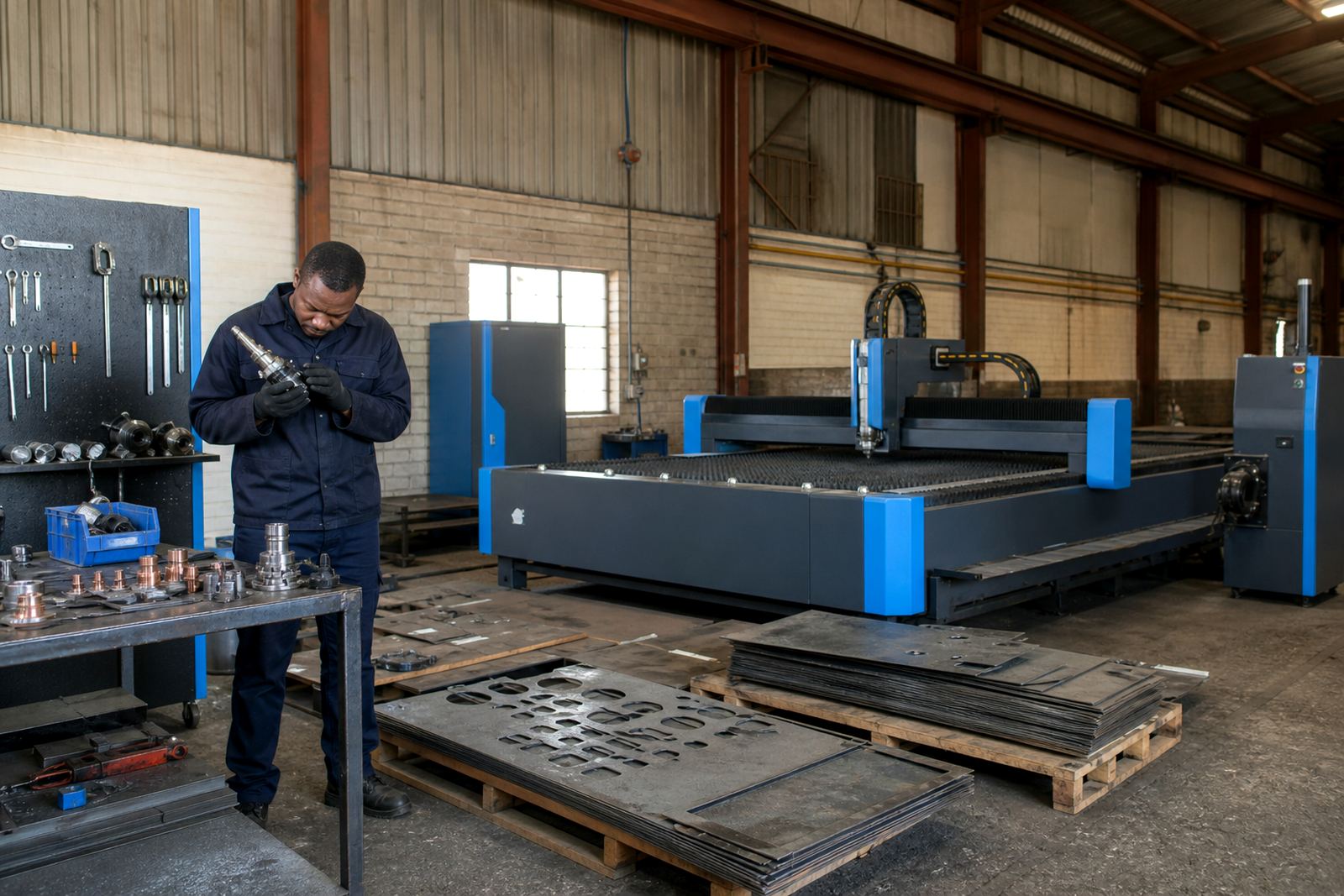
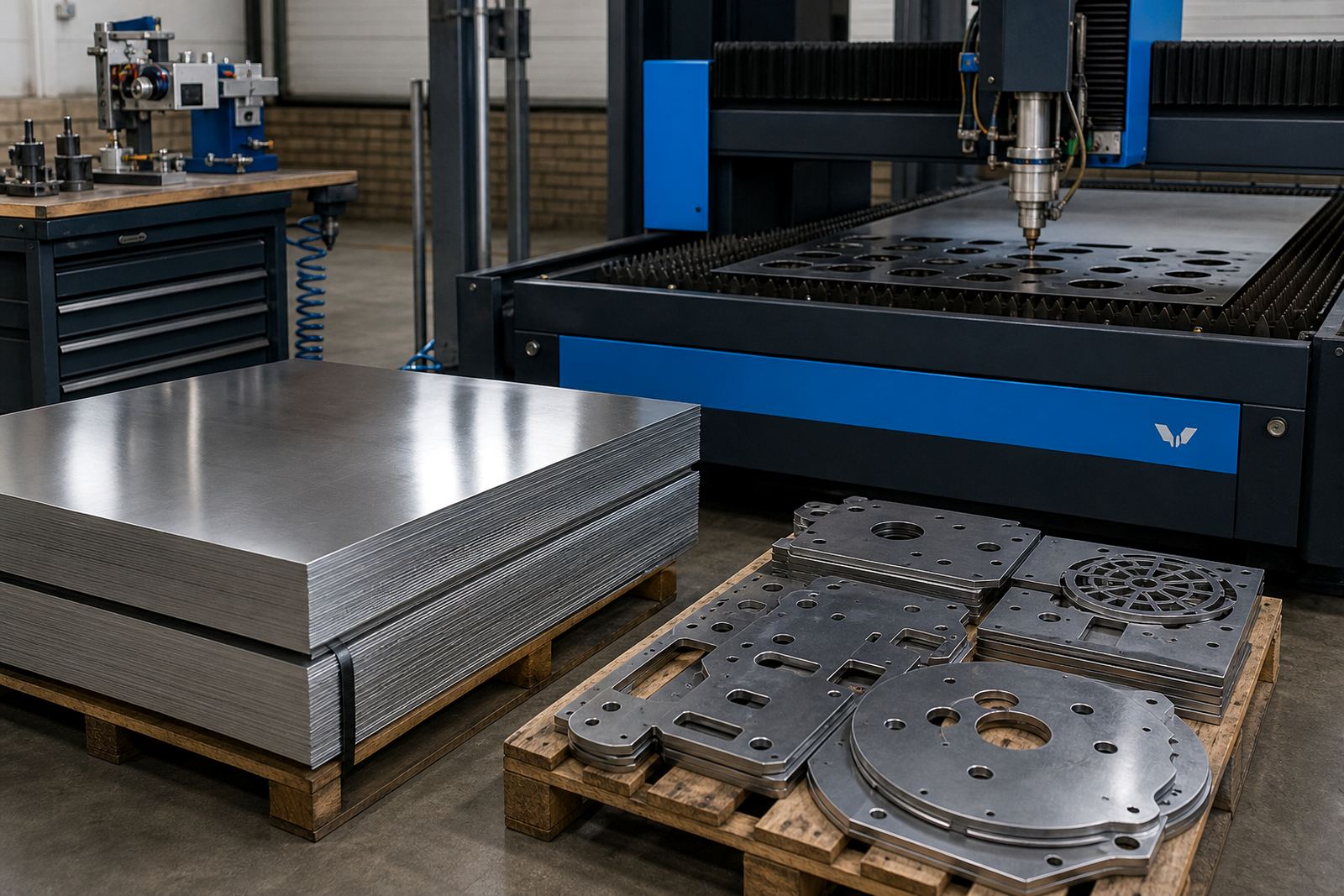
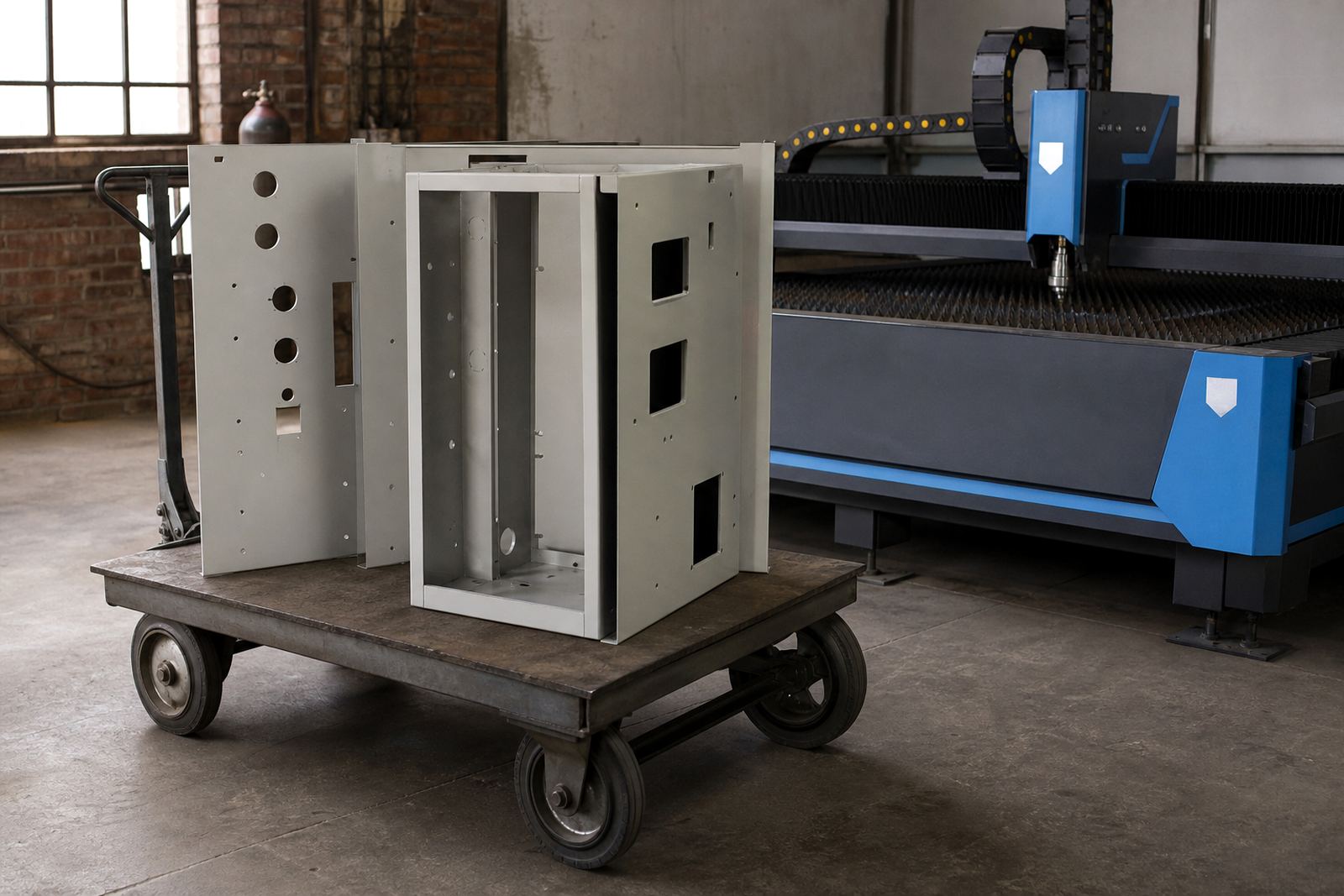
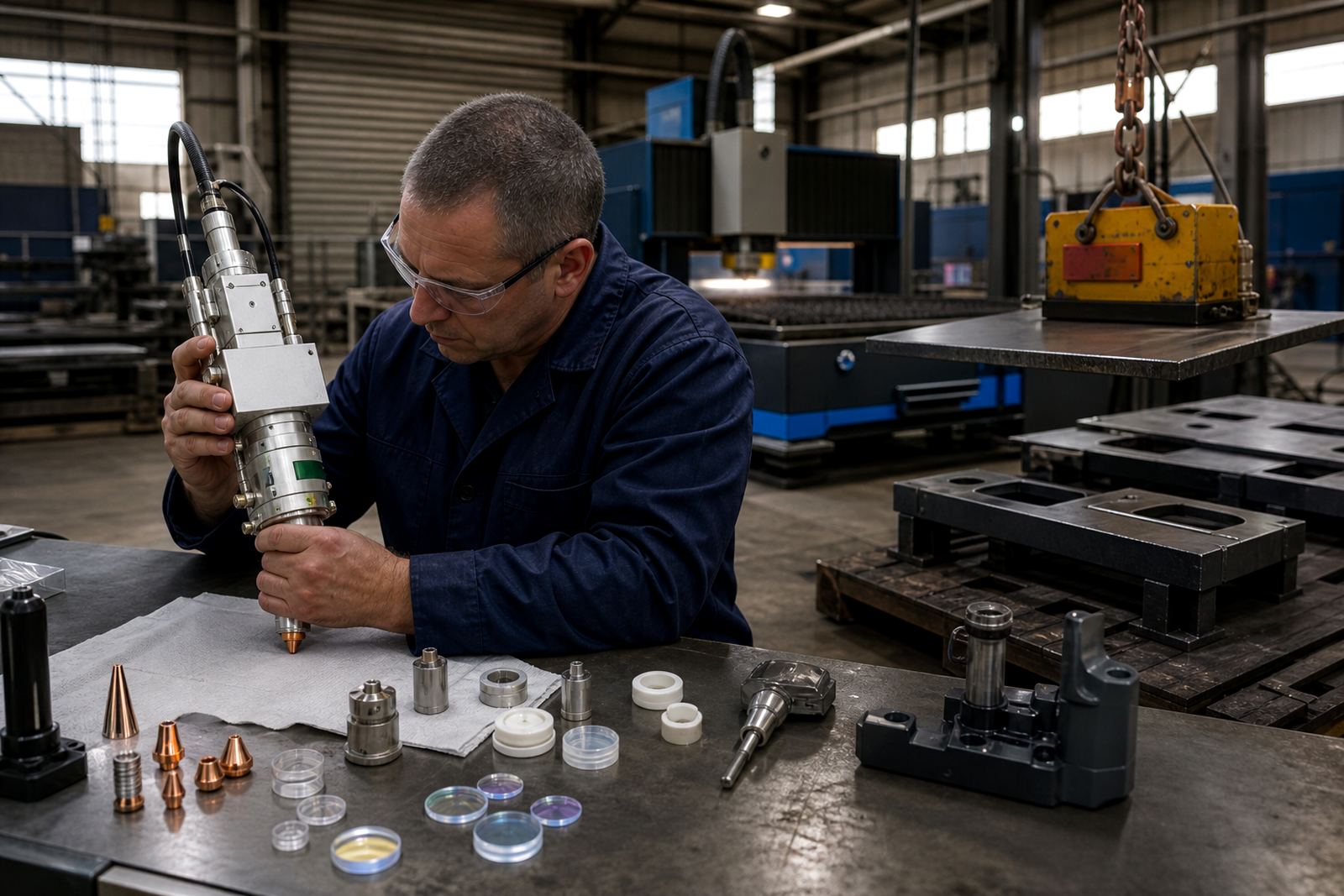
Jobbing shops often run short sheets, mixed gauges and frequent programme changes. That puts pressure on nozzle condition, focus position and the cleanliness of the protective window, especially where cut starts and piercing change from part to part.
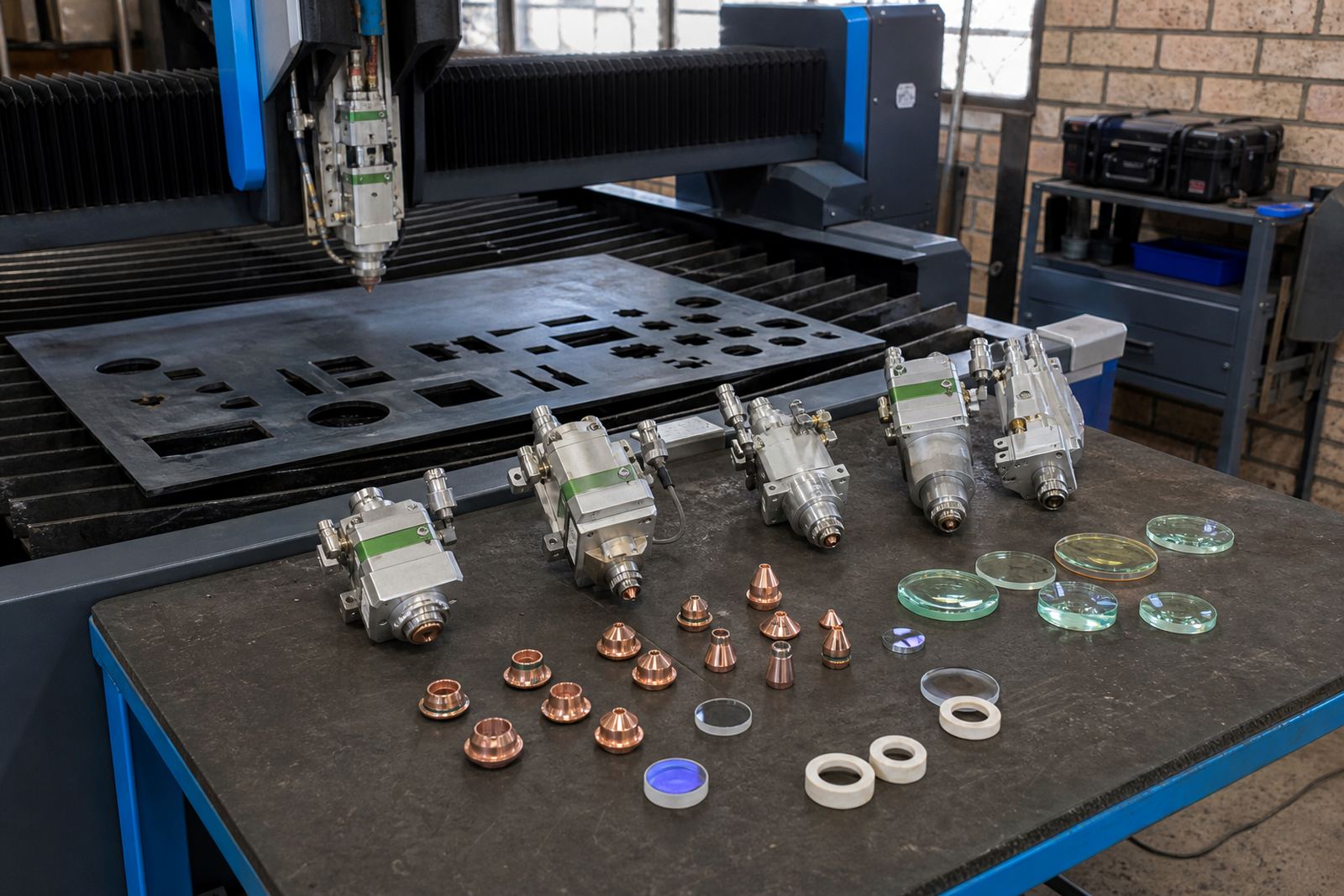
On these machines, a small nozzle wear pattern can show up as heavier dross, wider kerf or erratic pierce marks. The lens stack also needs checking when the machine sees a lot of start-stop work, because heat and fine dust can leave a mark on the cut edge.
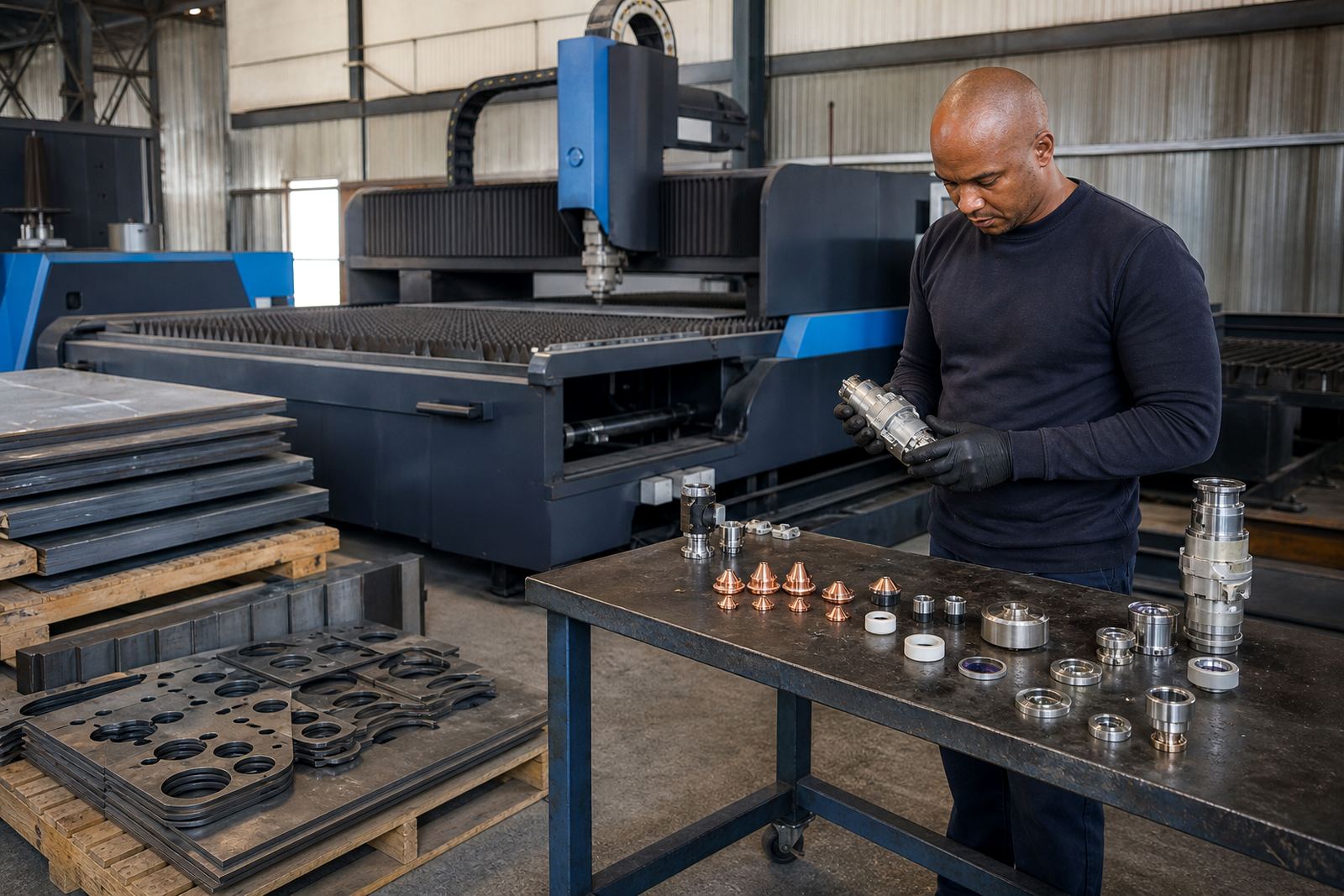
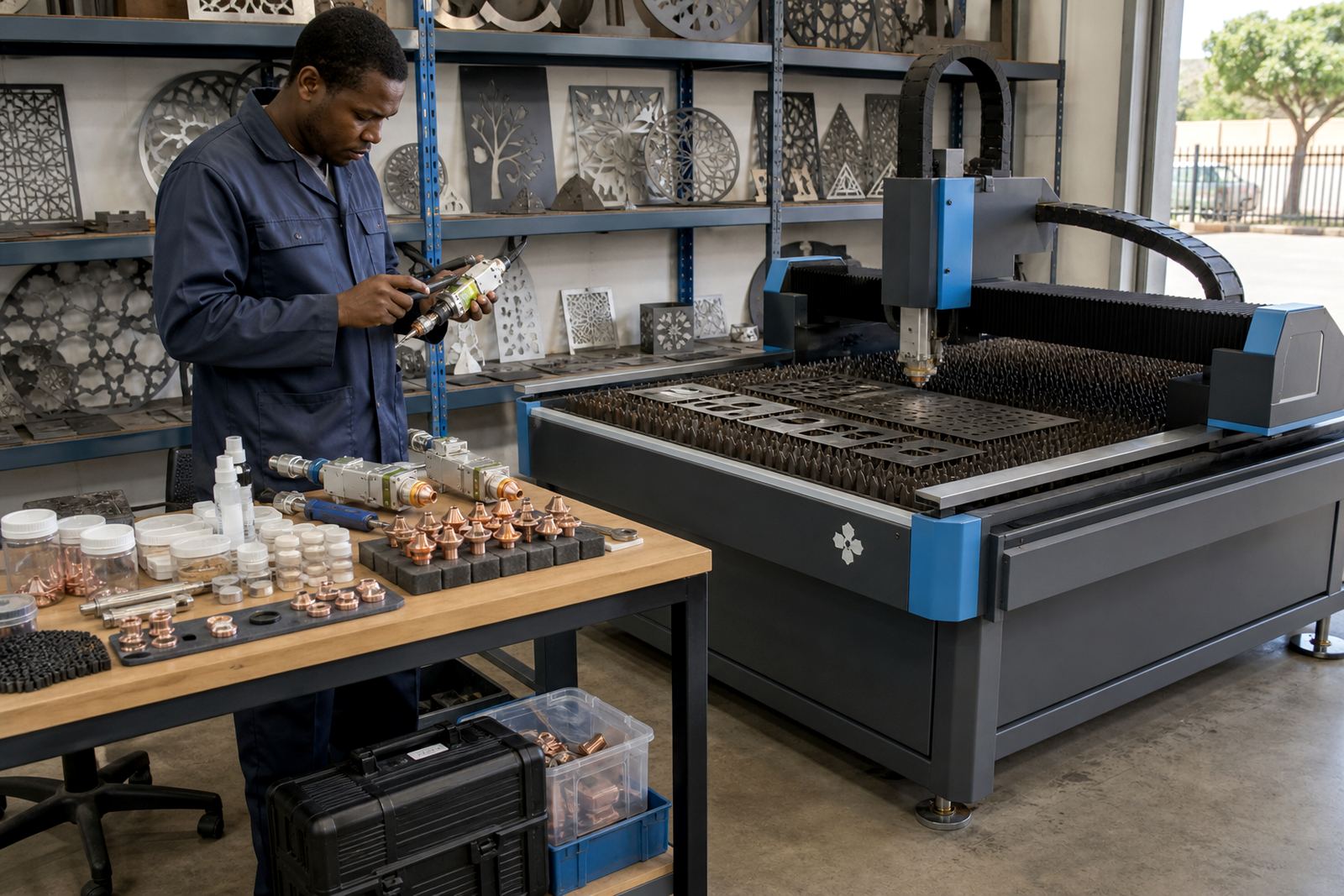
- Single and double layer nozzles for different assist gas setups
- Focus and collimator lenses for beam control and spot shape
- Protective windows where spatter and smoke are part of the day
- Capacitive height sensing checks when sheet flatness varies
High-Volume Production Lines That Need Steady Cut Quality
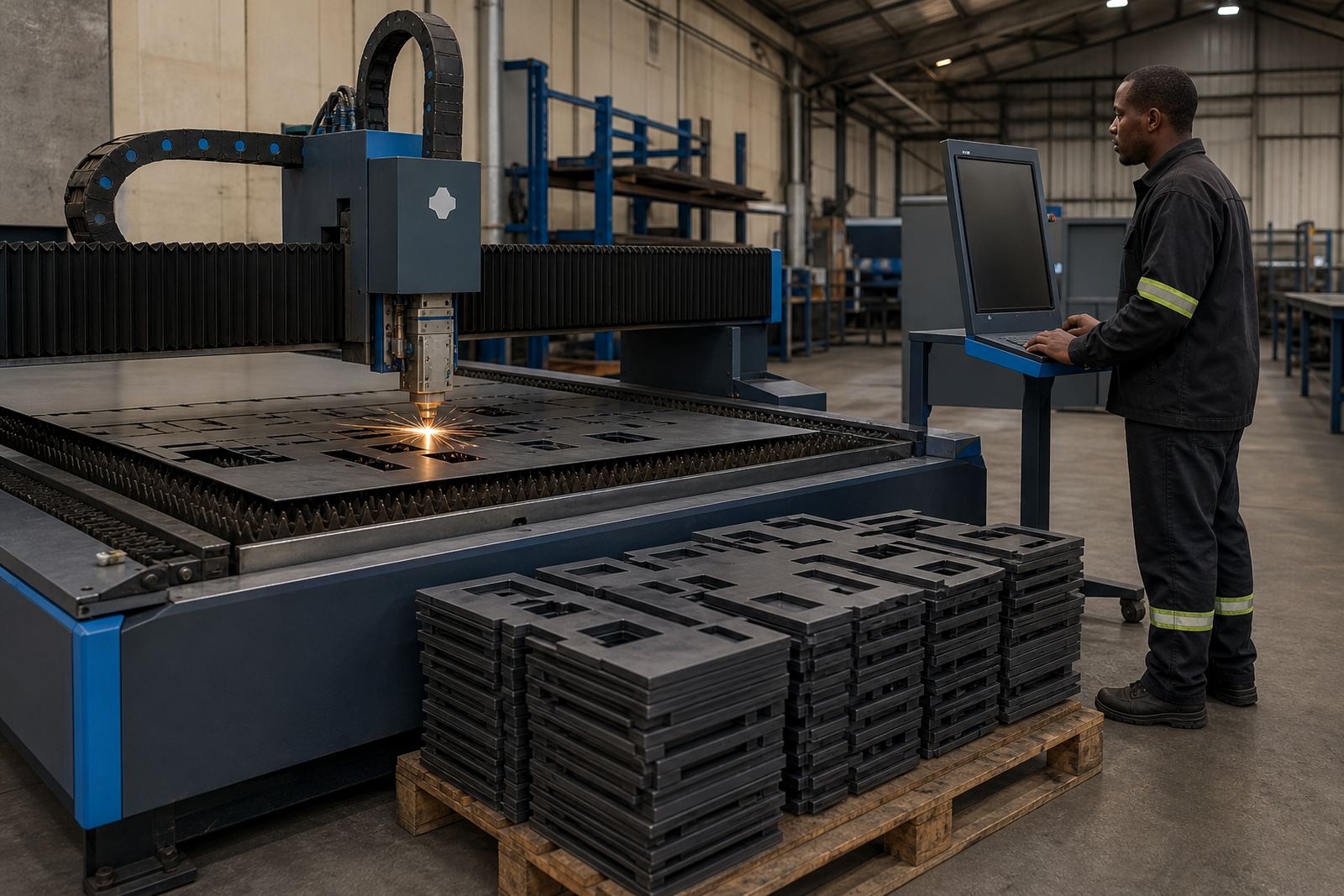
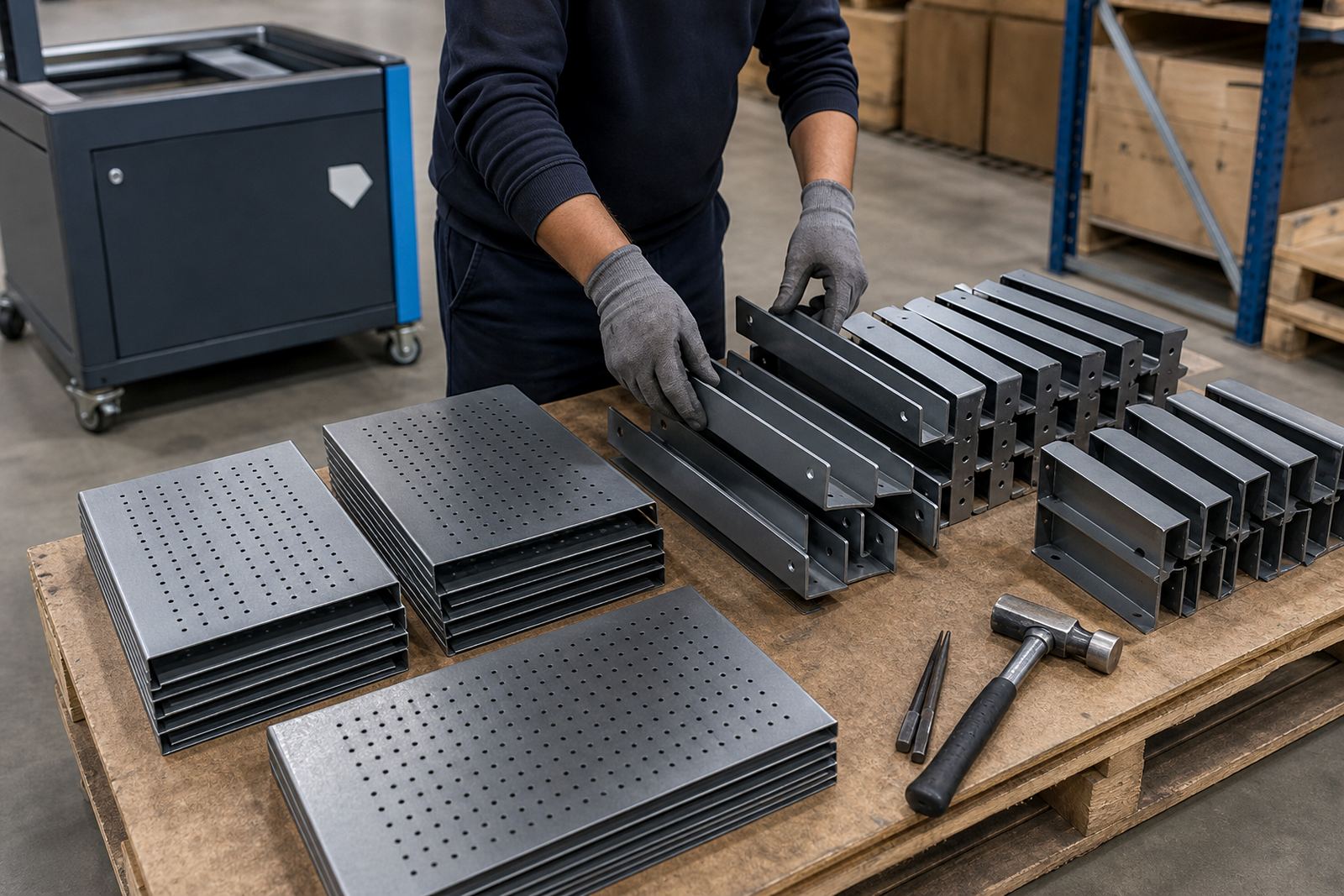
Production lines that cut the same part for long shifts need stable alignment more than anything else. A head that is slightly off centre can waste gas, shorten nozzle life and leave edge quality drifting across the run.
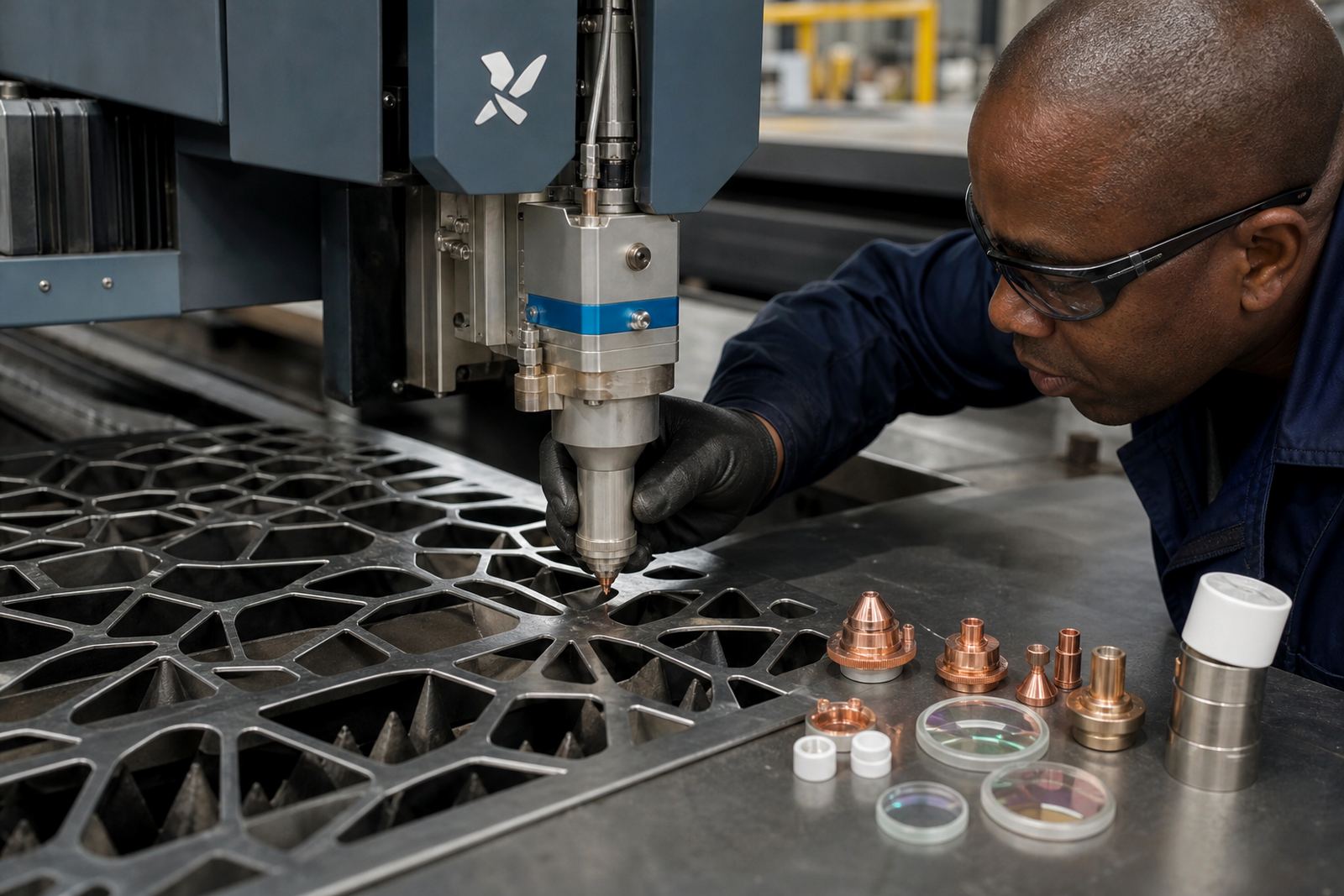
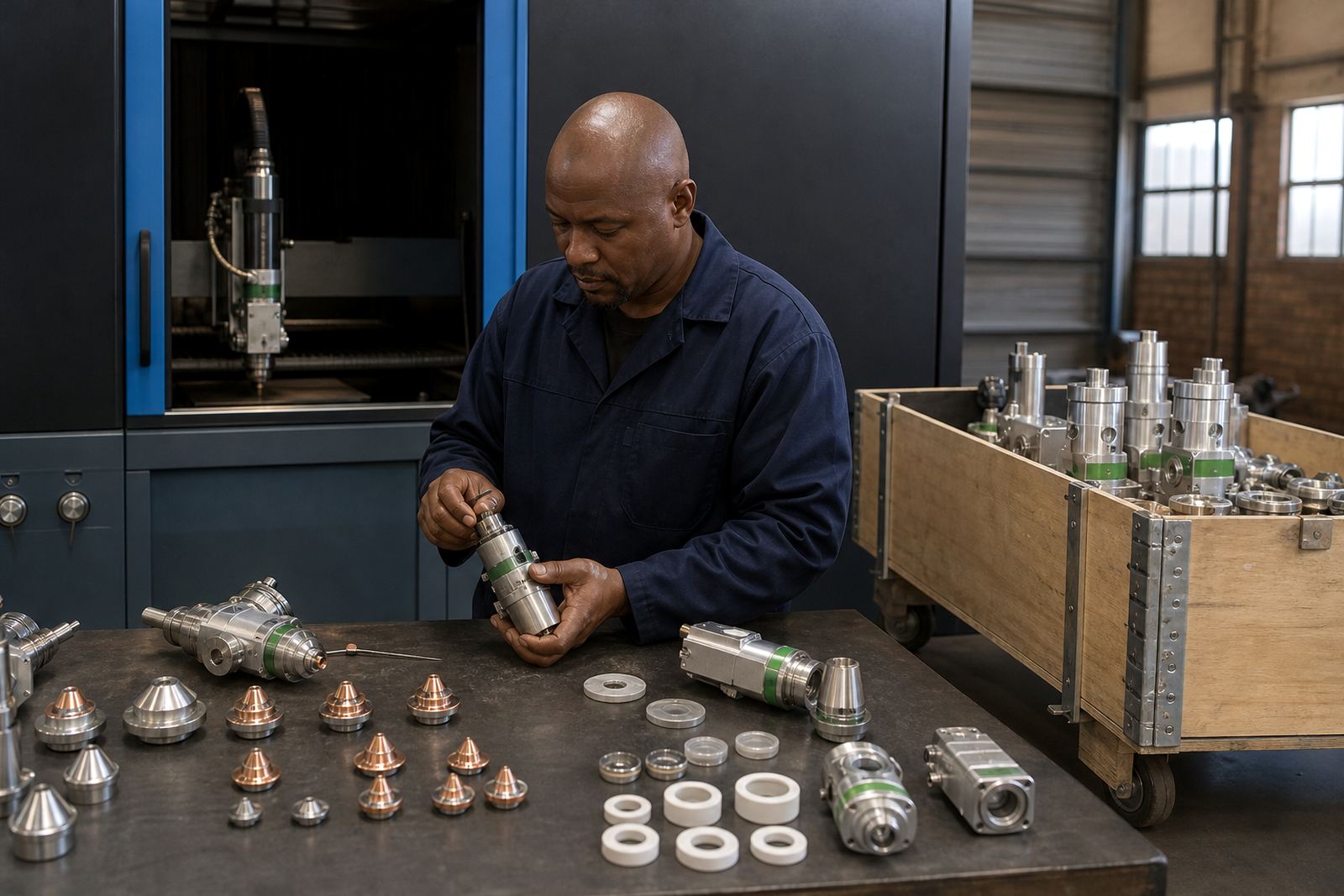
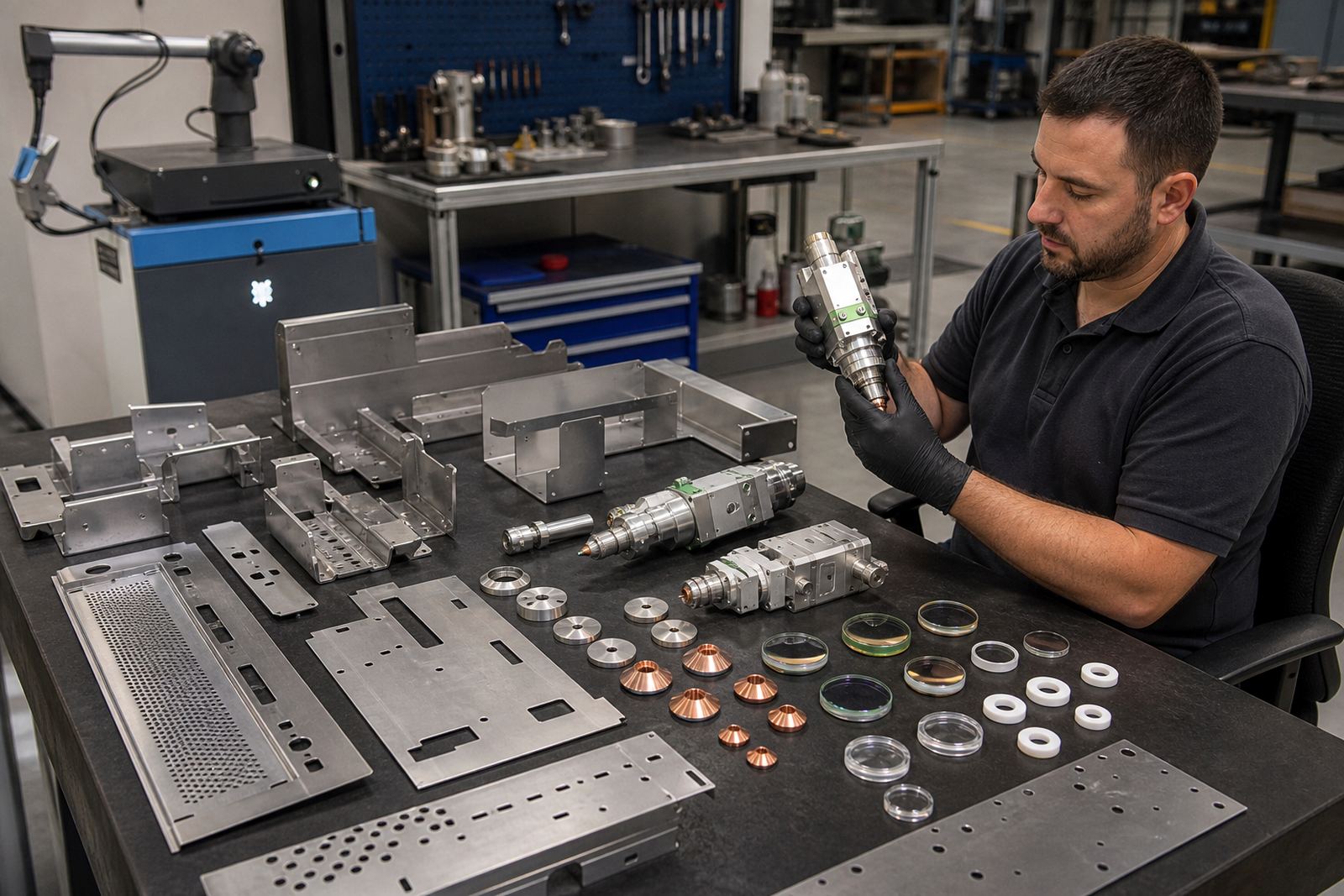
For these shops, our bench service often focuses on head alignment, gas path inspection and seal condition. Where a crash has shifted the optics path, the head may also need a careful strip, clean and rebuild before it goes back into service.
- Nozzle centring to keep the beam and gas stream in line
- Head seal rebuilds where dust gets past worn seals
- Crash damage inspection after a collision or pierce strike
- Spare head preparation for line changeovers and backups
Thick Plate Cutting Shops That Push The Assist Gas Hard
Thicker material asks more from the lens set, the nozzle bore and the focus setting. The cut zone gets hotter, so small changes in lens cleanliness or focus offset can show up quickly in the edge.
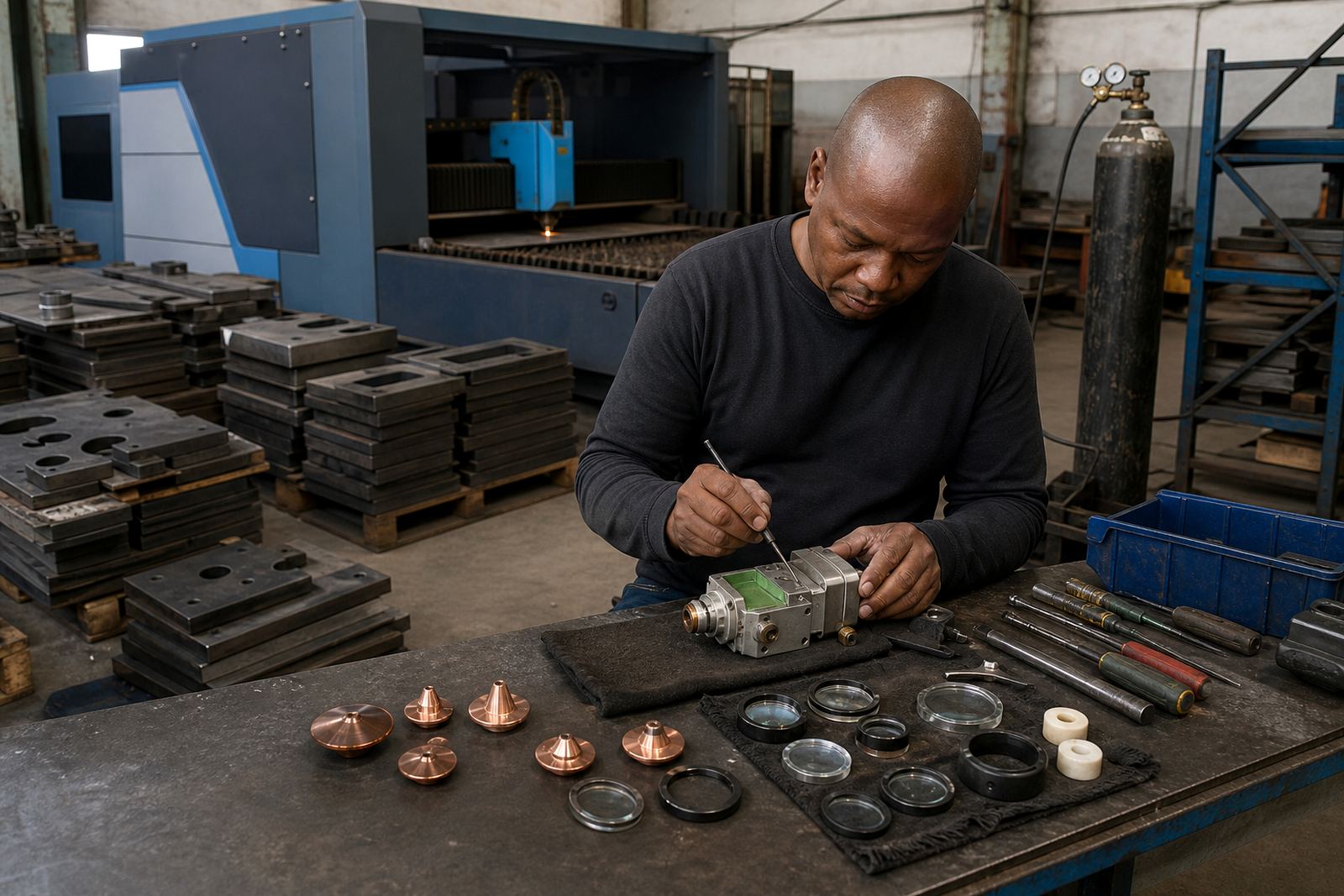
These shops also tend to watch ceramic rings closely, because heat and spatter can damage the seating around the head. Where cutting quality starts to wander, a focus setting check and a lens clean can save a lot of trial cuts on the machine floor.
- Focus setting checks for thicker gauges and tight kerf control
- Ceramic ring replacement where heat marks or cracks appear
- Lens cleaning to reduce haze, flare and poor beam shape
- Gas path inspection to catch leaks and poor gas delivery
Tube And Flatbed Shops Running Different Cut Demands
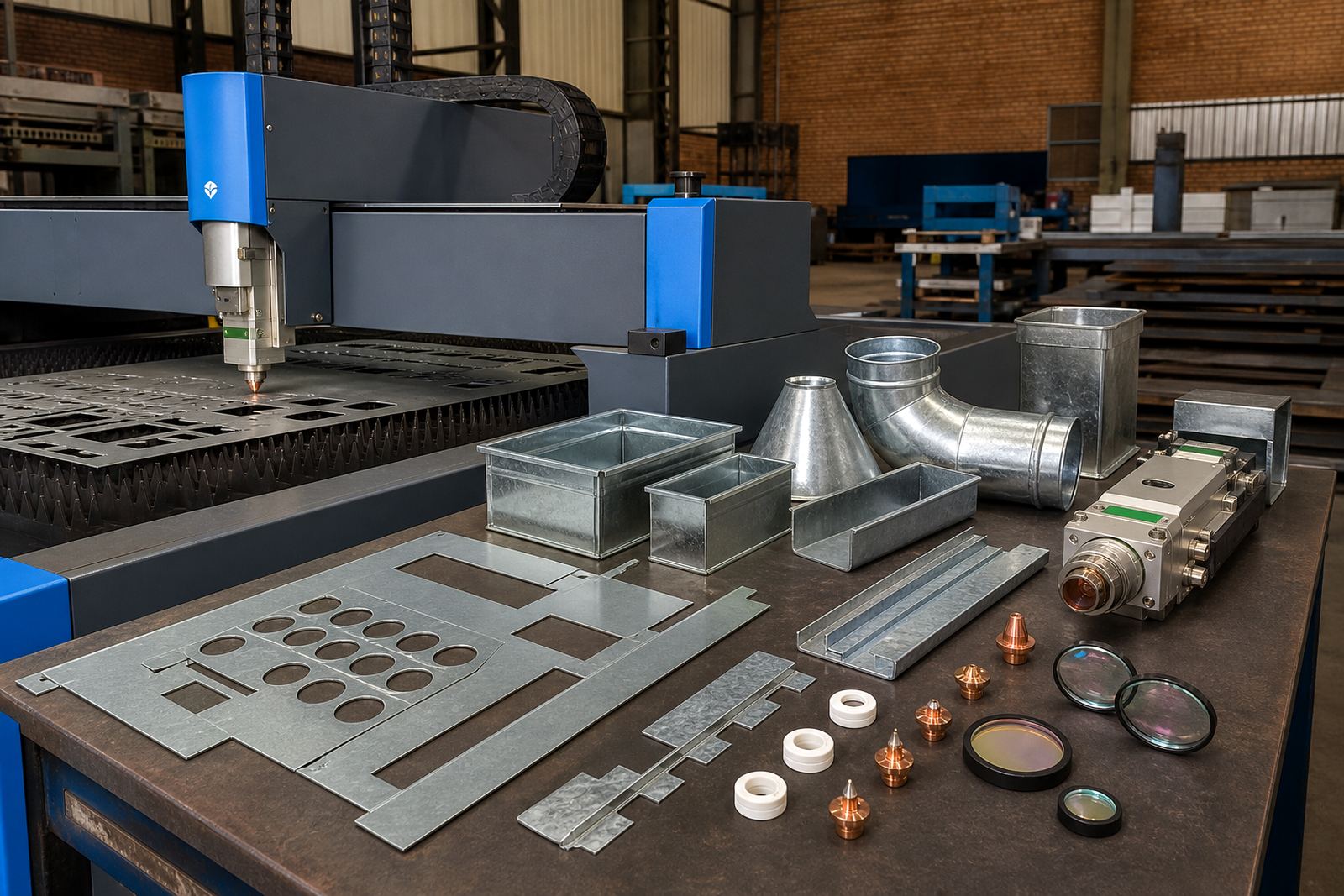
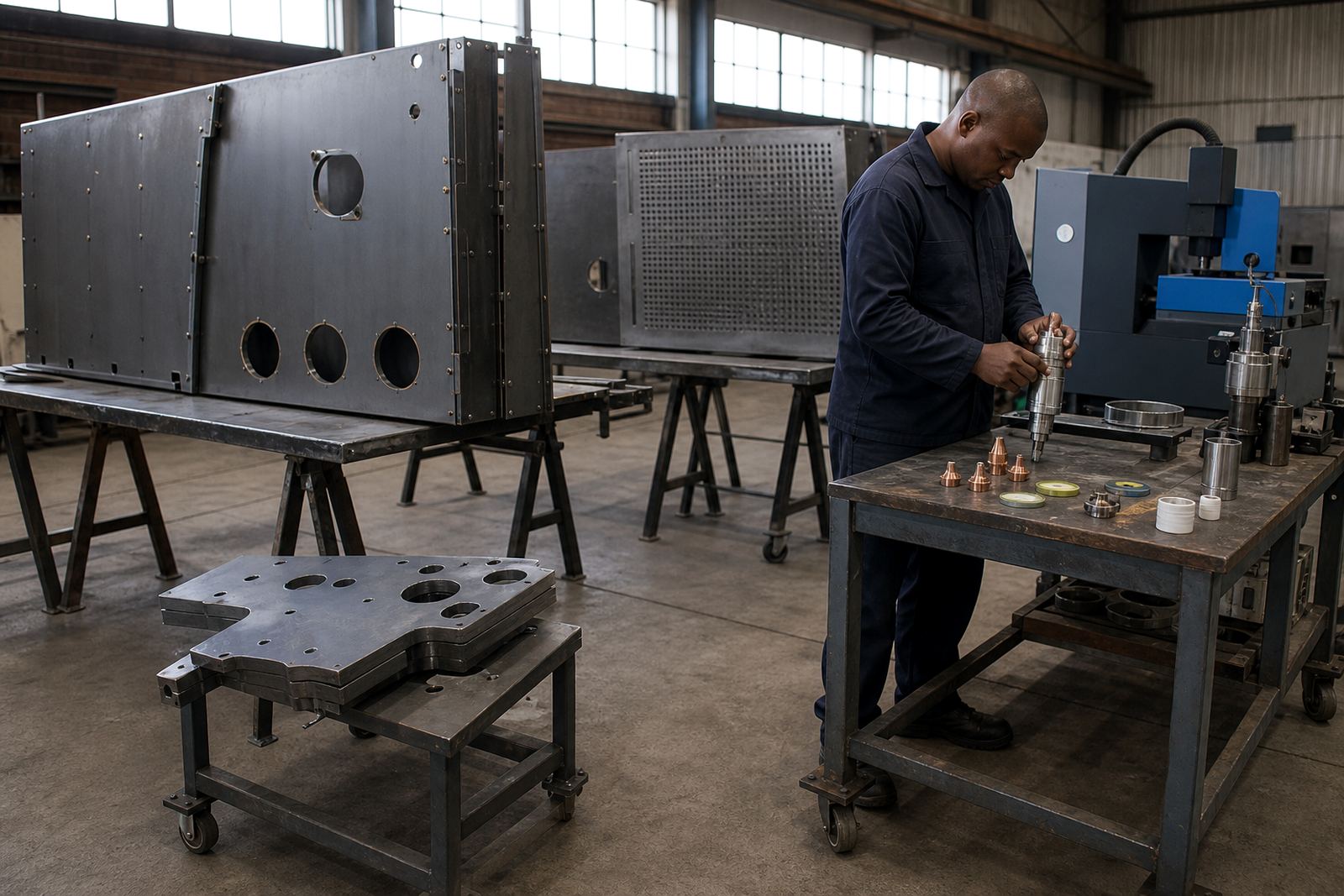
Some shops use one machine for flat plate and another for shaped work, so their service needs split across different head loads. A tube line may need more attention to alignment and sensor stability, while flatbed cutting may lean harder on nozzle wear and window condition.
Because the work changes, the service plan changes too. A careful bench check gives us the chance to inspect the optical stack, then set the head for the kind of cutting the shop does most often.
- Capacitive sensor checks for stable distance control
- Protective window replacement when contamination starts spreading
- Head service suited to the machine's normal duty cycle
- Cleaning routines that match the dust and fumes on site
Repair Shops And Installers Who Need A Spare Ready
Repair shops and installers often need a spare head prepared before the current one is removed. That way the machine can be returned to service with less disruption while the damaged head is assessed on the bench.
For these teams, we can prepare parts, check the beam path and set the head up so it is ready for fitment. The practical work is usually straightforward, but it still depends on clean optics, the correct nozzle choice and a proper centring check.
- Spare head preparation with the usual wear items fitted
- Nozzle selection for the cutting mix the machine sees most
- Bench checks on focus, seals and window condition
- On-site alignment when the machine frame or mount has shifted
How The Hub Helps You Compare Shop Types
It is meant to show where the parts, settings and service needs change from one sheet-metal shop to the next. A small workshop cutting mild steel all week will not need the same head attention as a mixed production line working stainless, aluminium and thicker plate.
Use the listing cards to narrow the fit by application, then match the parts and service notes to the machine's real job. Our team in Spartan, Kempton Park works with shops across Johannesburg, Pretoria, Durban, Cape Town, Rustenburg and the East Rand, with bench service and on-site head alignment where the job requires it.