

Start at the nozzle tip, not the screen
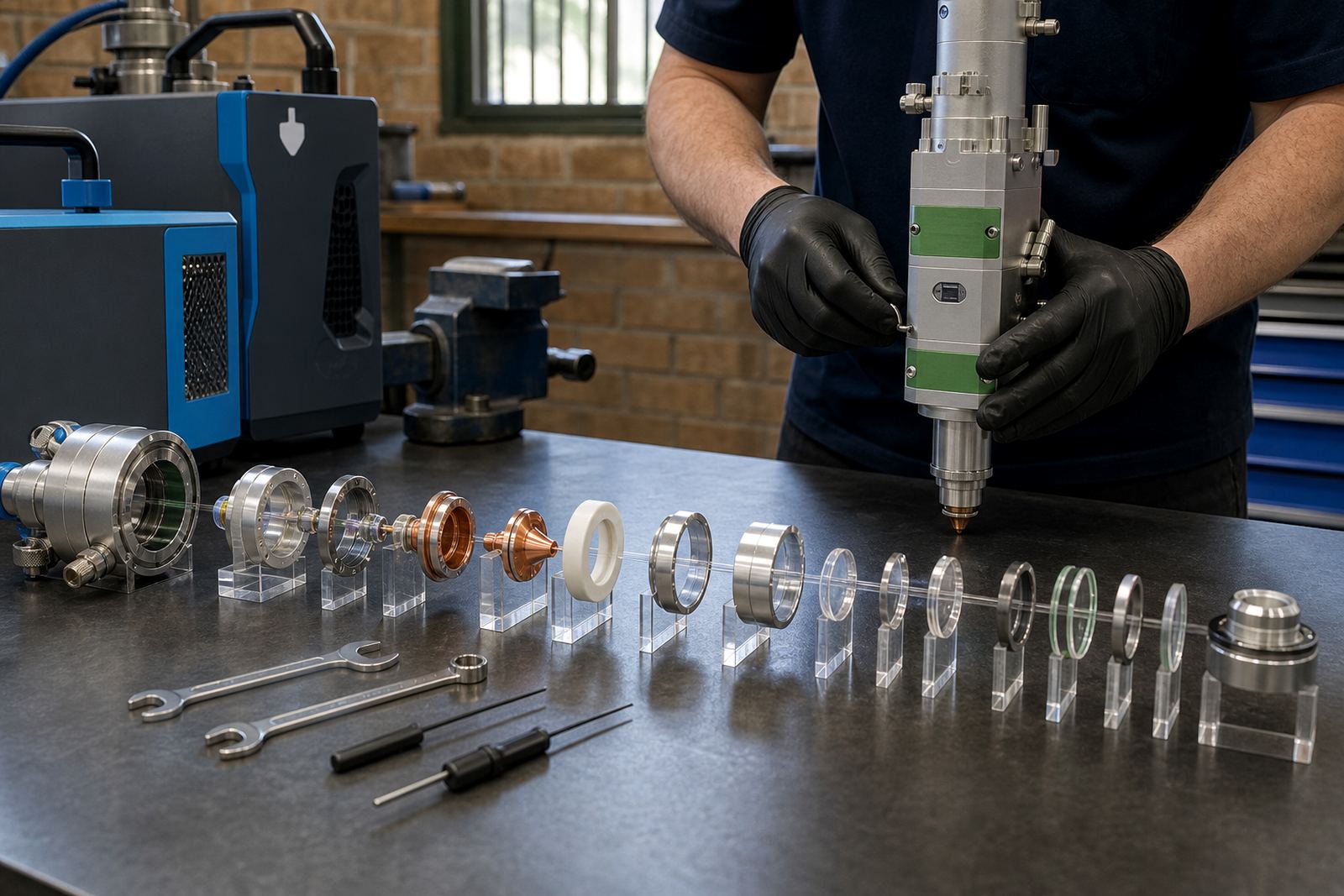
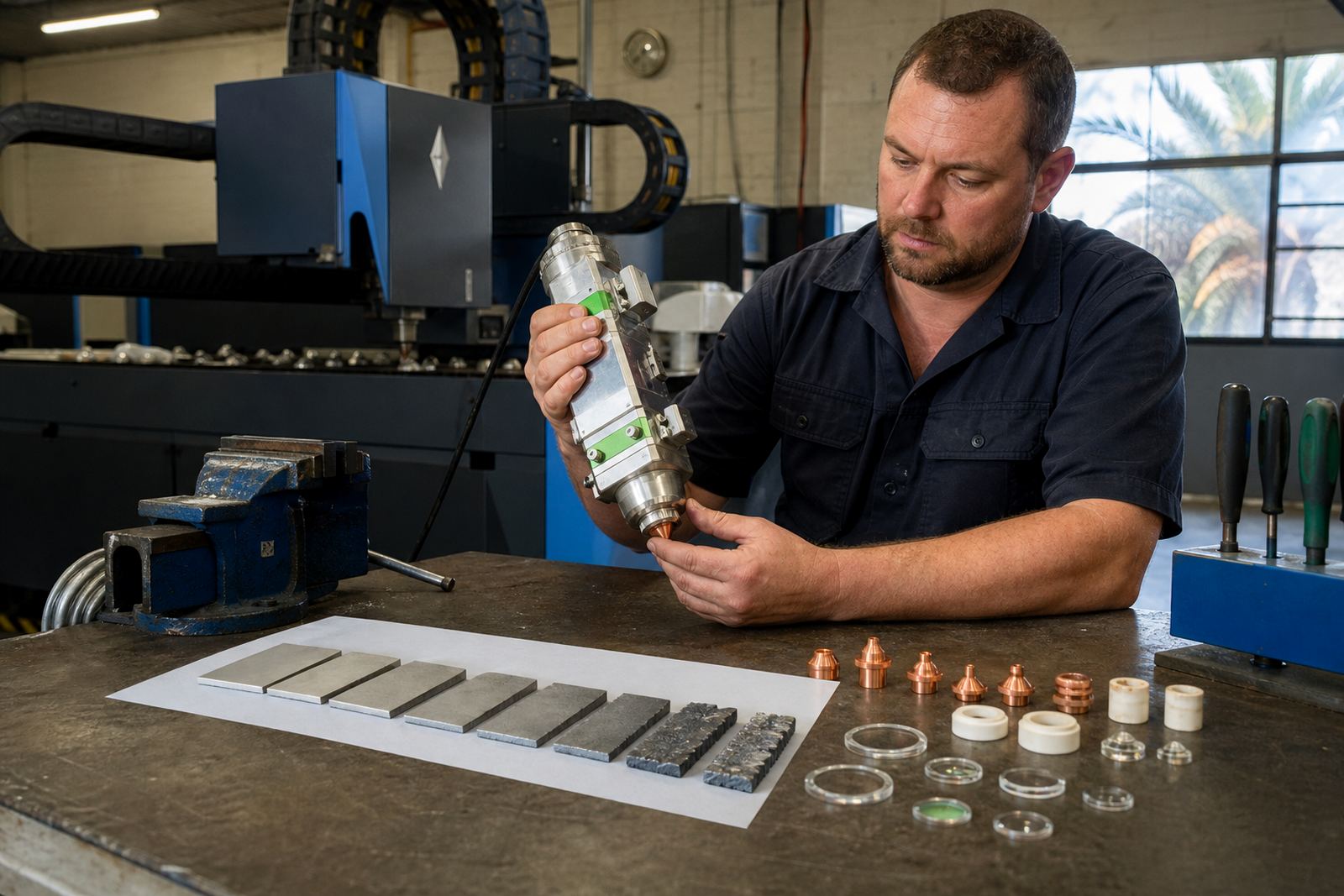
The quickest daily read starts at the nozzle. If the opening is chipped, oval or coated with spatter, the gas stream will not stay clean and the cut starts to wander. On sheet-metal work, a single layer nozzle is often used for certain cutting conditions, while a double layer nozzle is chosen for other materials and assist-gas settings. Either way, the tip should look round, clean and seated properly.
Operators in Spartan and across the East Rand often spot trouble before the first job by watching the pierce and the first few metres of cut line. A healthy nozzle gives a steady start, a neat edge and a stable kerf. A damaged one usually shows it early, even if the machine still runs.
- Check for blackening around the nozzle opening.
- Look for dents, burrs or heat marks on the tip.
- Confirm the nozzle is tightened correctly and centred.
- Replace nozzles that have taken a crash or show uneven wear.
Protective windows carry the first warning signs
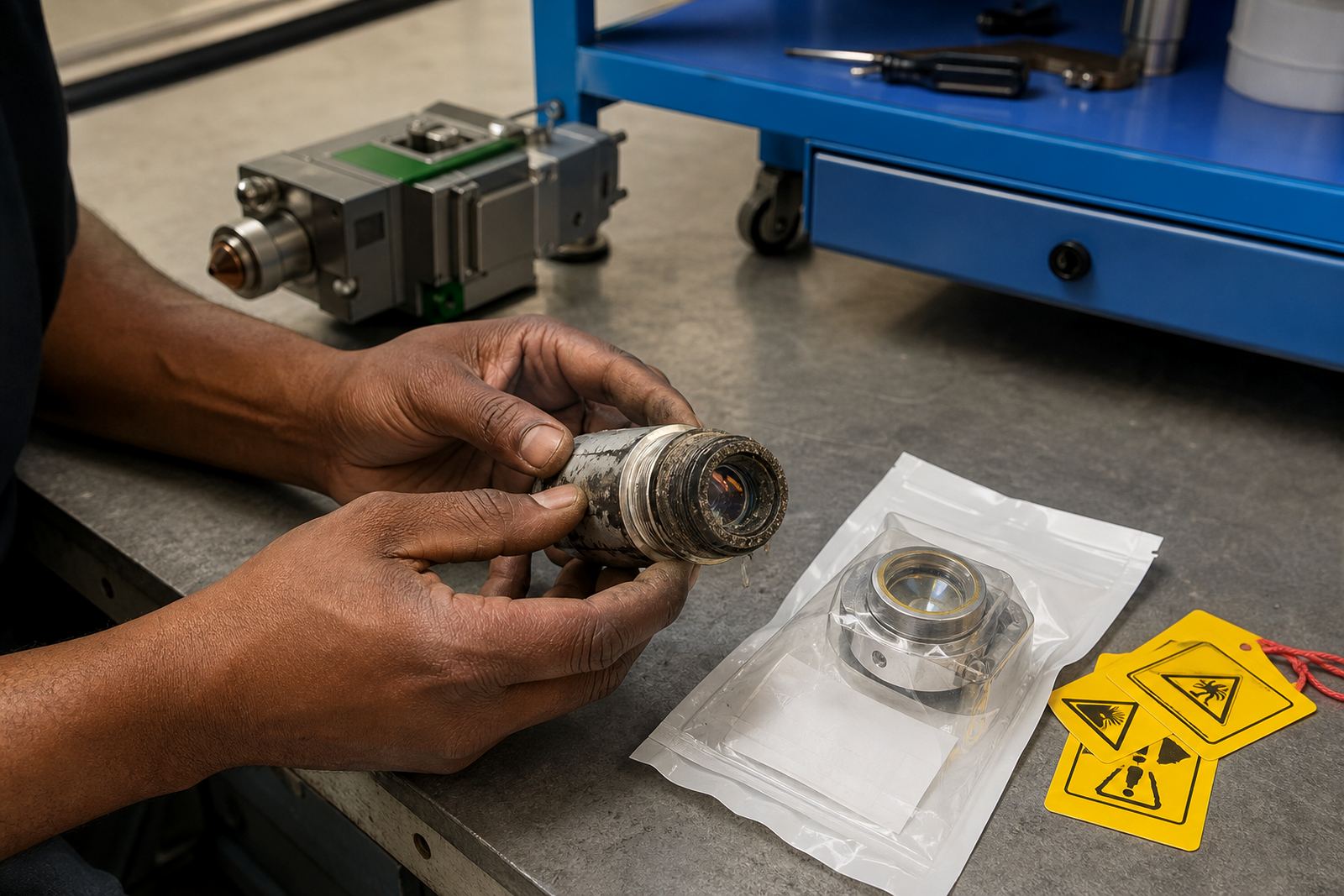
The protective window is the first lens surface most operators can inspect without stripping the head. If it shows haze, pinholes, smoke staining or metal dust, beam quality drops before the fault becomes obvious on the cut edge. On busy workshop floors, this is often the part that tells the truth first.
A clean window should look clear and even under light. When it starts to cloud, the cause is often a mix of poor sealing, a dirty gas path or a nozzle issue that sends debris back up the head. In Durban, where moisture and dust can sit in the air for long stretches, the window needs even more discipline during morning checks.
- Inspect the window for haze, spots and edge discolouration.
- Check the sealing surfaces for dust and fine metal particles.
- Keep spare windows packed clean and handled by the edges.
- Fit replacements with care so the seal sits flat.
Focus should be set for the metal on the table
Focus settings are not a once-off decision. Mild steel, stainless steel and aluminium all behave differently, and thickness changes the position that gives the cleanest cut. A daily check does not need a full calibration every morning, but it should confirm that the stored focus value still matches the work plan.
If the machine starts leaving dross, bevel or rough pierce holes, the focus setting is one of the first points to inspect. A head that was fine yesterday can drift after a hard stop, a lens change or a nozzle strike. That kind of drift is easy to miss if the operator only looks at the software and not the cut sample.
Focus checks work best when they are tied to a known material and thickness. Keep a small sample sheet marked with the usual settings for common jobs, then compare the actual cut against that reference before production moves ahead.
Cleaning routines are part of the morning routine
Cleaning is not cosmetic on a fibre laser head. Dust, metal smoke and oil mist settle on the lens stack, the ring seat and the sensor area, then the head starts running less predictably. A careful clean takes less time than sorting out a bad production batch later.
On the bench in Kempton Park, we often see heads that only needed proper cleaning and inspection before the fault became expensive. The trick is to keep the cleaning routine light, regular and clean. Rough cloths, loose swabs and cheap solvents can leave their own marks, so the materials used matter as much as the habit.
- Use lint-free materials only.
- Do not drag dust across a clear lens surface.
- Keep cleaning tools sealed and dry.
- Check that the seal surfaces are free of grit before reassembly.
What the capacitive sensor is trying to tell you
The capacitive height sensing system helps the head keep the right stand-off from the sheet. When it reads badly, the cut can become uneven even though the rest of the machine looks normal. A morning check should confirm that the sensor face is clean, the wiring is intact and the signal behaviour looks steady.
Operators should pay attention to sudden changes in cut height, unexpected scraping noises or a head that hunts on the surface. Those are usually not random. They point to dirt on the sensor, a damaged ceramic ring, or a head that needs alignment after a knock. On jobs in Pretoria and Rustenburg, where thick plate and mixed materials are common, a small sensor fault can show up fast.
If the head is moving up and down too much, the cut edge may show burn marks or inconsistent striations. That is the sort of clue worth catching before the first production pallet is cleared.
Ceramic rings and lens seats need a quick look
The ceramic ring sits close to the cutting zone and takes more abuse than many operators realise. Cracks, chips and heat marks can affect nozzle position and contact stability, which then shows up as poor edge quality. It is a small part, yet it carries heavy responsibility.
Lens seats matter just as much. If the seat is dirty or a seal has shifted, the protective window and lens stack do not sit cleanly. That can lead to contamination and unstable cutting. A head that has had a crash should always be checked beyond the obvious external damage, because a bent part inside the assembly can hide until the machine is back in production.
- Look for chips on the ceramic ring before the shift starts.
- Check the seat for debris, smoke marks and loose particles.
- Inspect after any nozzle strike or head crash.
- Replace worn seals before they start letting dust through.
A morning habit that saved a Pretoria batch
A sheet-metal shop in Pretoria called out a recurring problem on thin stainless jobs: the first part of the batch looked fine, then the edges started to show roughness and the pierces became less consistent. The operator was already checking gas pressure and program settings, but the daily head check had missed a dull nozzle and a lightly clouded protective window.
Once the nozzle was replaced, the window cleaned and the focus setting checked against the material, the cut returned to a cleaner edge. No drama, just a better start to the day. That is the value of the routine. It does not need a long report, only a disciplined look at the parts that carry the beam and shape the cut.
For workshops working across Johannesburg, Cape Town, Durban or the East Rand, a short head check before production can spare a lot of sorting later. If the signs point to deeper wear, our contact form is there for bench service, on-site alignment or a proper inspection of the full cutting head.