
A small lens carries much of the cut quality
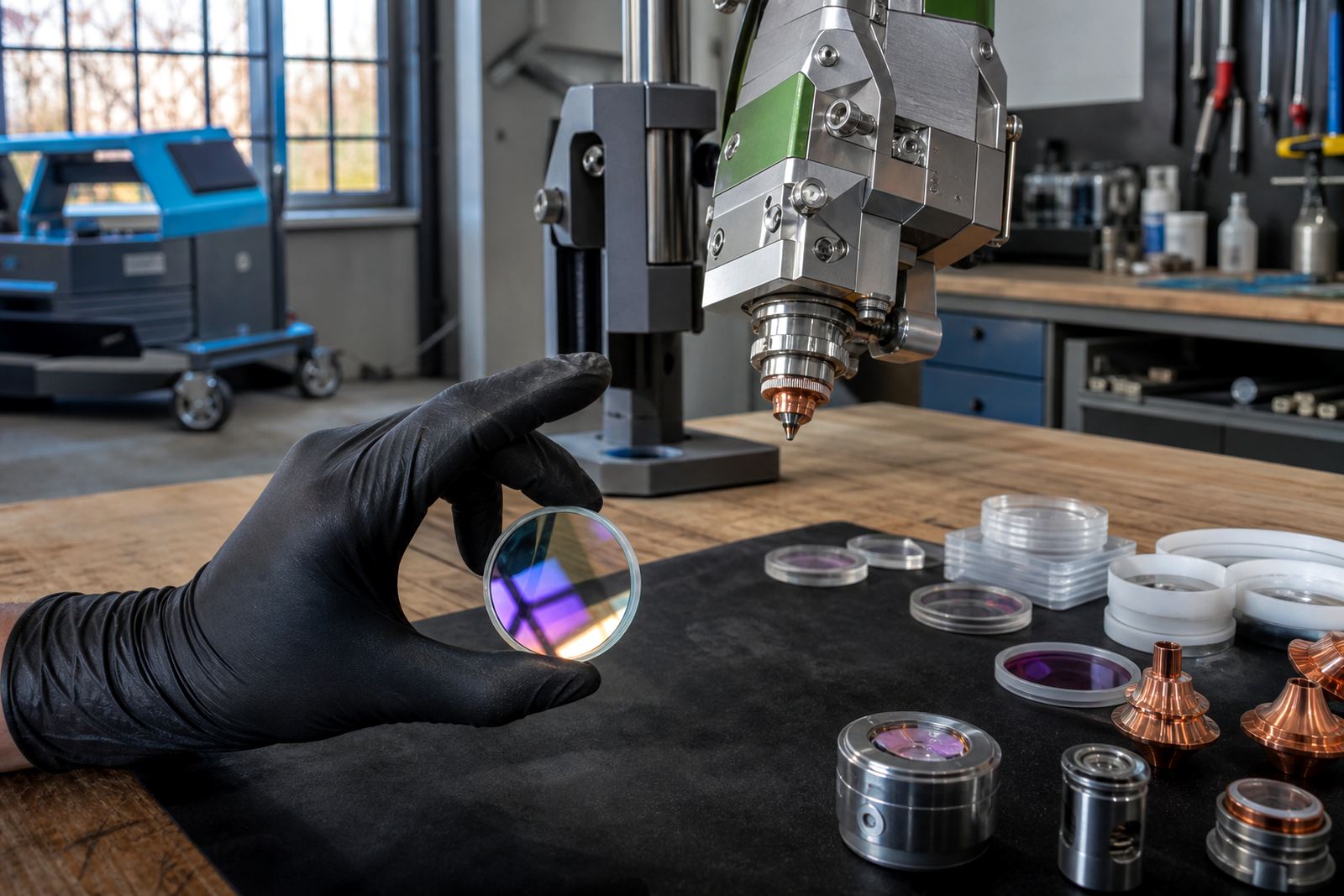
Inside a fibre laser cutting head, the focus lens takes the beam that has already been guided through the upper optics and forms it into the spot that does the actual work on sheet metal. That spot size is what helps the machine pierce, cut and finish material cleanly, whether the job is mild steel, stainless steel or aluminium. If the lens is marked, dirty or out of position, the beam no longer lands where the cut expects it.
In practical terms, the lens does not just influence edge appearance. It affects pierce behaviour, dross, kerf width and the way the head reacts when material thickness changes. On busy production lines in Spartan, East Rand or Pretoria, a small fault in the lower optical stage can show up as rough edges long before anyone opens the head.
What changes when the lens is not right
A focus lens usually shows warning signs before it fails. The cut may look uneven on one side, the pierce may leave excess splash, or the kerf may wander as if the head is chasing the line. Heat marks can spread wider than normal and the operator may keep adjusting focus settings to compensate, without getting back to a stable result.
- Lens contamination can scatter energy and weaken the cut face.
- A scratched surface can create hot spots and early wear on protective windows.
- Incorrect seating can shift focus and upset nozzle centring.
- Dust from poor cleaning routines can build up around the ceramic ring and lens chamber.
None of those faults need drama to create trouble. A light film of residue from cutting fumes or a tiny chip from a crash can be enough to change the way the head behaves on thin sheet and on heavier plate.
Condition checks that save time on the shop floor
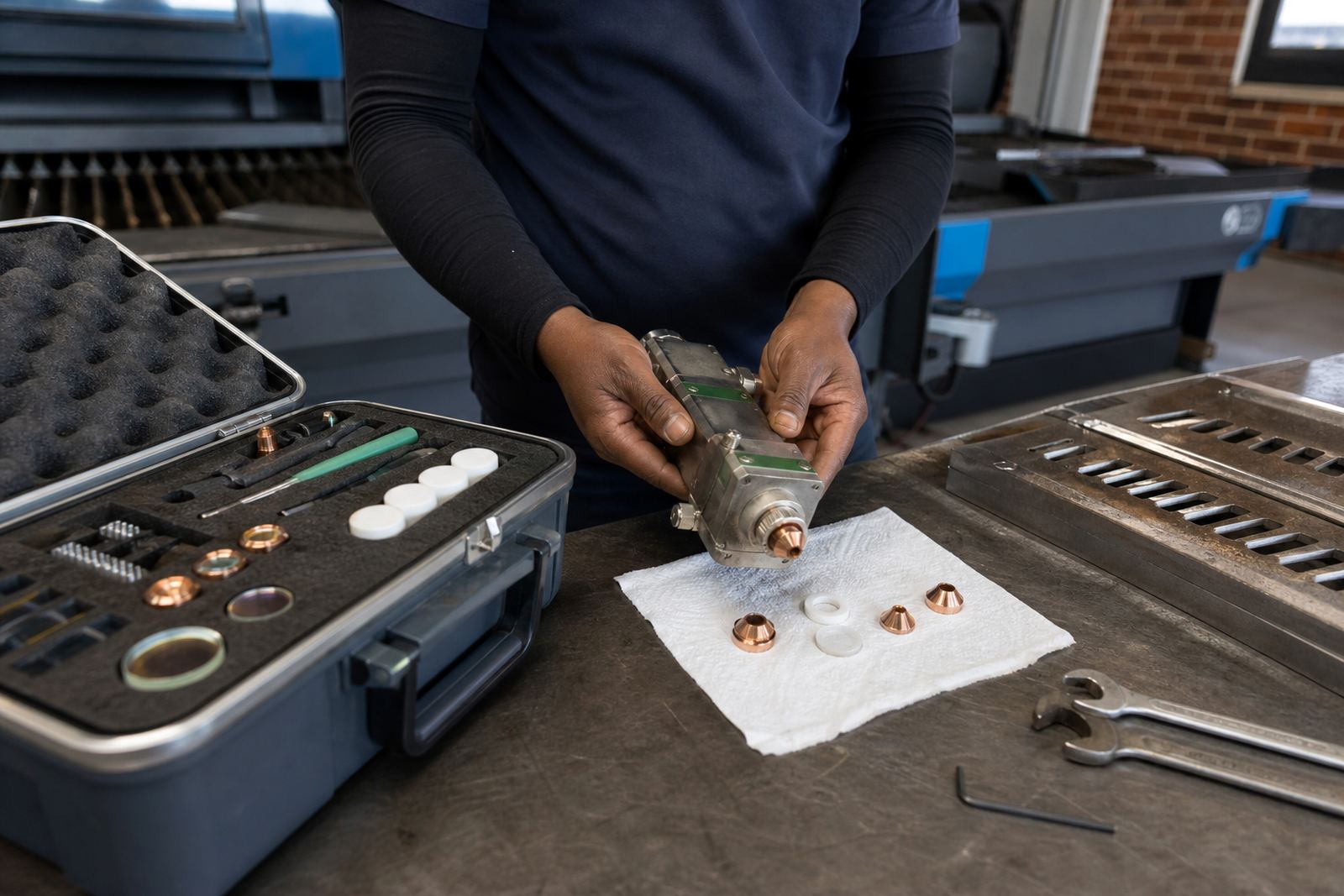
Most lens problems are found by a careful visual check, then confirmed by how the head behaves in cutting. That means looking for clouding, pitting, edge chips and any sign that the lens seat or retaining parts have been stressed. Clean hands matter here, but so does a clean bench and the right wipes, because a careless cleaning routine can leave more marks than it removes.
- Check the lens under strong light for haze, rings or spotting.
- Inspect the protective window before blaming the focus lens.
- Look at the ceramic ring for cracks or heat damage.
- Confirm the focus position before changing consumables too quickly.
- Watch for repeat faults after a nozzle change or crash event.
On a real job, the lens is rarely the only part involved. The head may also need a gas path inspection, nozzle centring or a capacitive sensor check, especially when the machine has been cutting hard for long runs in humid coastal conditions.
Focus setting is not guesswork
Focus settings are part optics and part process control. The right setting depends on material thickness, assist gas, nozzle choice and the cut result being chased. A focus lens that is sound but poorly set can still give poor edges, while a worn lens can hide behind a setting change for only so long.
That is why a focus setting check must sit next to the rest of the head service. If the lens plane is off, the cut can show it in a hurry. On thicker material the effect may look like drag or heavy dross, while on thin sheet it may show as a narrow, weak cut with rough striations. In both cases the lower optical stage is doing exactly what the condition of the lens allows it to do.
A Kempton Park sheet-metal shop example
A shop in the East Rand brought in a head after repeated edge roughness on 3 mm and 6 mm sheet. The nozzle had already been swapped, and the operator had adjusted settings several times, but the cut still looked inconsistent. Once the head was opened on the bench, the focus lens showed light contamination and the protective window had taken on a dull patch near the centre.
After lens cleaning, window replacement and a fresh focus setting check, the cut settled back into a more even line. The work itself was not dramatic, yet it showed the point clearly: a focus lens does not need visible breakage to affect the machine. A small optical fault can be enough to disrupt a full shift of cutting.
How Raytool handles the lower optical stage
Our bench work on fibre laser cutting heads covers the parts that live closest to the cut zone, where heat, dust and splash do the most damage. That includes focus lenses, collimator lenses, protective windows, ceramic rings and the checks that keep the optical path and head geometry in line. When the head is on site, the same eye for detail matters during alignment and inspection.
- Bench Head Service for optical cleaning and inspection.
- Protective Window Replacement when the window has clouded or chipped.
- Lens Cleaning for residue, dust and smoke film.
- Ceramic Ring Replacement after cracking or heat stress.
- Nozzle Centring and Focus Setting Check for better cut stability.
- On-site Head Alignment when the machine needs field correction.
Across Johannesburg, Pretoria, Durban, Cape Town and Rustenburg, the work is the same in principle even if the conditions differ. Coastal humidity can leave a different mark from dry inland dust, and both can shorten the useful life of the lower optics if cleaning routines are rushed.
A practical rule for the people running the machine
If the cut starts to drift, the focus lens should be on the list early, not at the end. The lens is part of the system that decides where the energy lands, and the cut quality tells the story before the part ever comes off the table. In sheet-metal work, that story is usually plain enough if the head is opened, checked and set with care.
For shops that run fibre laser cutting heads every day, the best habit is simple: inspect, clean, set and verify before the problem spreads into scrap. That keeps the lower optical stage honest and helps the machine cut the way the program expects.