A clean edge has a plain voice
On mild steel, stainless steel and aluminium, a neat fibre laser cut usually leaves a narrow kerf, even striations and little or no hanging dross. When that look changes, the edge often gives the first clue. A shop in Spartan may think the problem is the sheet, but the mark on the cut can point to the head, the nozzle or the assist gas path long before a full fault appears.
Look closely at the offcut and the part itself. If one side of the edge is heavier with scale or the cut face leans, the beam may not be sitting where it should. If the same job cuts well on one shift and poorly on another, the cause can sit in focus setting, nozzle condition or a gas flow change at the head.
Nozzle wear shows up faster than most people expect
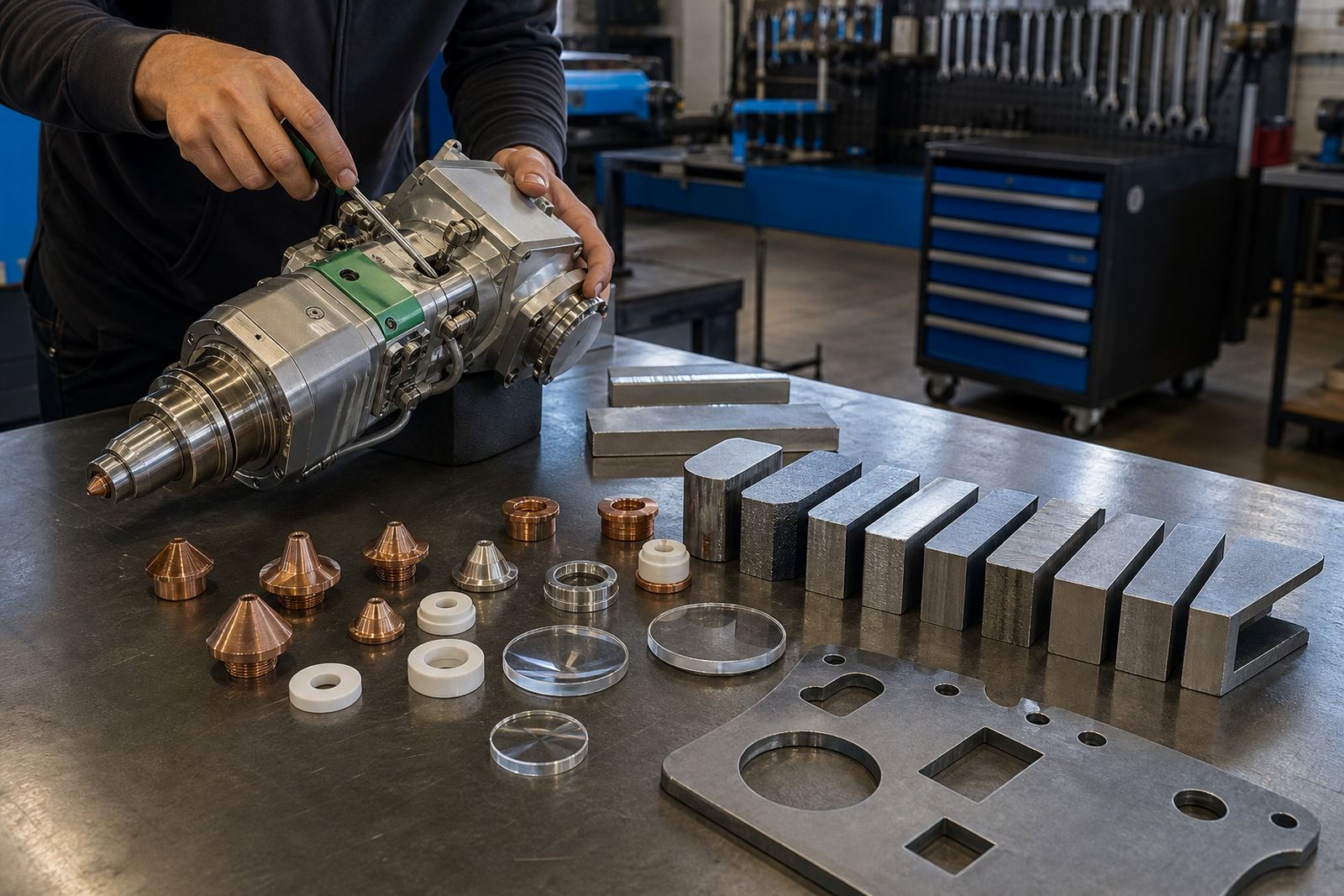
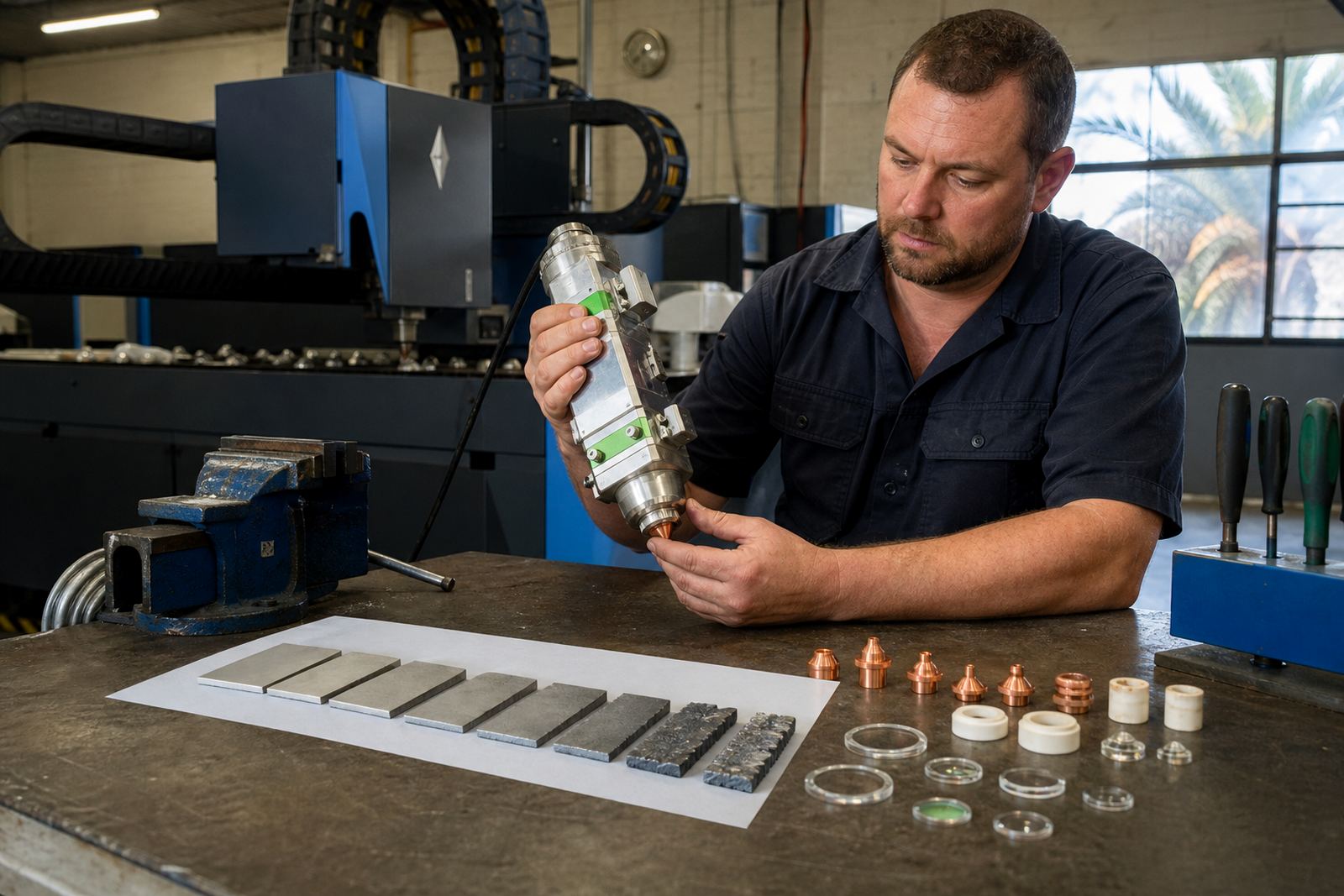
Nozzles work under heat, spatter and constant gas flow, so even a small nick can disturb the cut. A worn single layer nozzle can leave rough striations, while a double layer nozzle with damage or buildup may throw the assist gas off centre. That can show as extra dross, a wider kerf or a cut that needs more cleanup on one side.
- Round holes may look oval when the nozzle bore is damaged.
- Thin sheet can show local burning where the gas stream is uneven.
- Heavier plate may leave hard dross that hangs in beads under the edge.
- If the cut gets worse after a crash, check the nozzle first.
Cleaning helps, but cleaning cannot fix a distorted nozzle body. If the edge keeps changing after replacement and centring, the head may need a deeper bench check for gas path damage, ceramic ring wear or a shifted nozzle seat.
Focus drift leaves a different fingerprint
Focus settings affect where the beam meets the sheet and how the melt leaves the kerf. If focus sits too high or too low, the edge can show wider striations, a rough lower lip or a light taper through the part. On thicker plate, the wrong focus point can also leave slag that clings in one spot while the rest of the cut looks acceptable.
In practice, focus drift often follows lens contamination, loose head parts or an alignment issue after a crash. A focus and collimator lens set that is dirty or scratched changes beam quality, and the result is usually written on the cut edge before it is obvious anywhere else. That is why a focus setting check matters after nozzle change, lens cleaning or protective window replacement.
Gas faults leave scorch, burr and messy bottoms
Assist gas does more than blow melt out of the kerf. Pressure, purity and flow shape the edge finish. When gas supply is low, inconsistent or restricted inside the head, the bottom edge often shows heavy burr, oxide or a rough, grainy band. With stainless steel, poor gas support can turn a bright edge dull and leave heat tint where the cut should stay clean.
- Short gas pulses can leave patchy dross on repeated cuts.
- Blocked passages may cause one section of the plate to cut cleanly and the next to fail.
- A gas leak inside the head can mimic a focus fault.
- Moisture in the line can spoil the edge even when settings look correct.
In coastal towns, humidity can make this worse, especially if filters and seals are not being checked. A gas path inspection often finds small losses that are hard to hear but easy to see in the edge.
What the edge is already telling the technician
The trick is to read the whole cut, not just one mark. A rough top edge with a clean bottom may point to nozzle centring. A clean top with heavy bottom dross can lean toward gas or focus trouble. If the cut face shows regular waves, the machine may be tracking a setting issue rather than a material problem. If there are random marks across several jobs, the protective window may be dirty or cracked.
When a head is opened on the bench, the technician can check the ceramic ring, lens stack, seals and alignment in one pass. On site, the same clue reading helps when the job has to keep moving and the head needs a careful reset instead of a full strip.
A Pretoria job with a blunt edge and a better answer
A Pretoria sheet-metal shop brought in parts that showed heavy burr on the underside and dark marks on stainless edges. The operator had already adjusted gas pressure, but the cut still needed grinding. Once the head was checked, the nozzle was found slightly off centre and the protective window had a fine dust film. After nozzle centring, lens cleaning and a focus check, the edge settled into a much cleaner line.
The lesson was plain. Edge quality does not always point to one fault, and a tidy setting on the screen can hide a tired part inside the head. When the cut edge shifts, the machine is telling us something. Read them early and the repair stays smaller.
A short routine that protects the next cut
Good edge quality starts with a steady routine, not a rescue job after the part is already scrap. Keep the nozzle clean, inspect the ceramic ring for chips and watch for heat tint on the window. Check the focus setting after head work, and look at the gas path when burr or soot appears without warning.
- Inspect the first cut of each shift before production runs.
- Swap a damaged nozzle rather than polishing around it.
- Clean optics only with proper handling and a clean bench.
- Log edge changes by material, thickness and gas used.
For shops in Johannesburg, Durban, Cape Town, Rustenburg and the East Rand, that habit saves time when parts must leave the floor looking right. The edge is usually honest long before the fault becomes obvious at the machine.