
When soot is only the surface problem
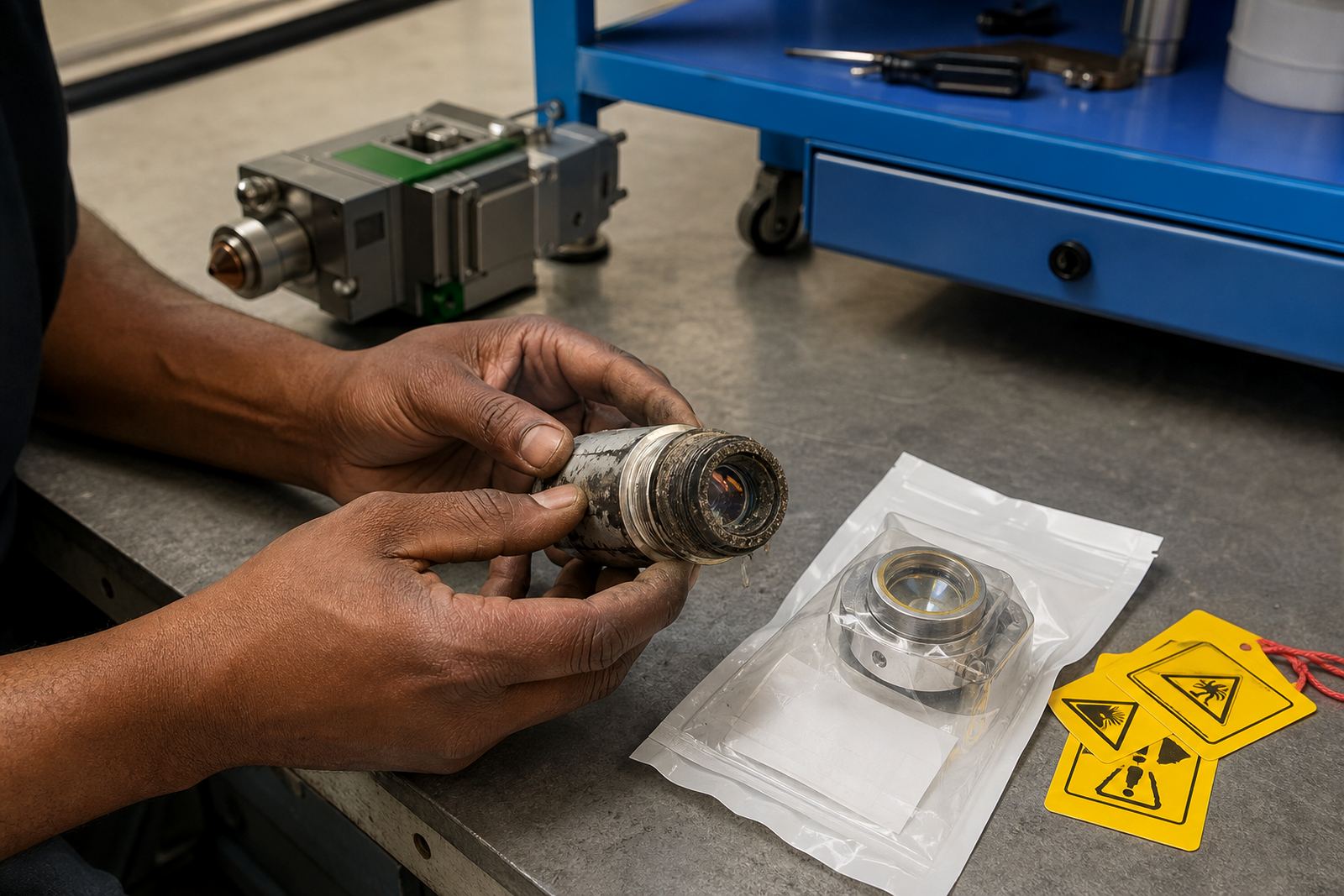
A dark film on a nozzle, lens or protective window does not always mean the part is fit for another clean. If there is pitting, a heat mark, a scratch across the optical path or a chip on the edge, the part has likely gone past safe reuse. On fibre laser cutting heads the heat load is concentrated and small defects can scatter the beam or disturb the gas stream, which then shows up as rough edges, burrs or a wider kerf.
Cleaning makes sense when contamination is light and the surface is still intact. It stops making sense when the surface has been attacked by spatter, a crash or repeated handling. A quick wipe may make the part look better but the cutting result tells the real story.
Nozzles that have already lost their shape
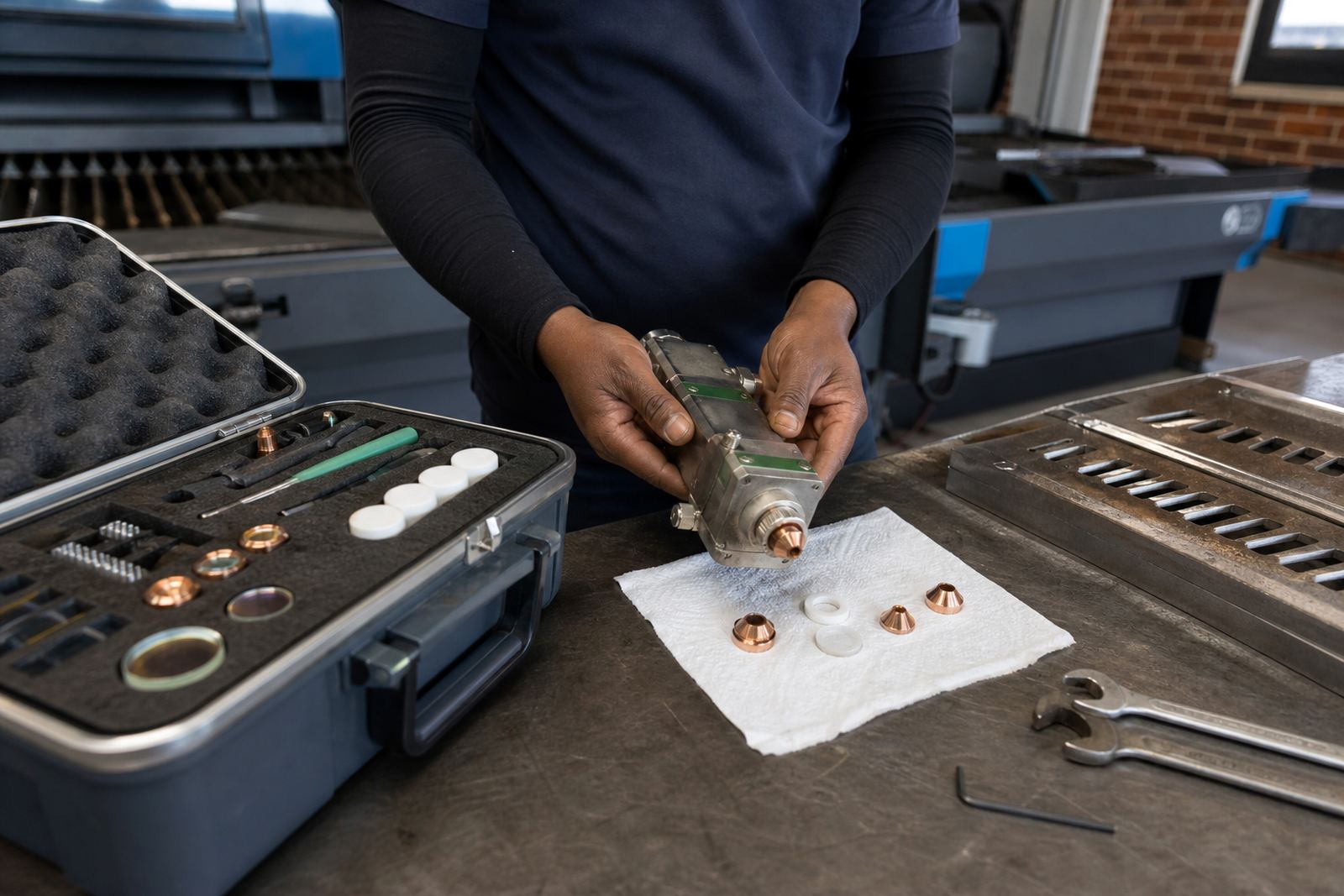
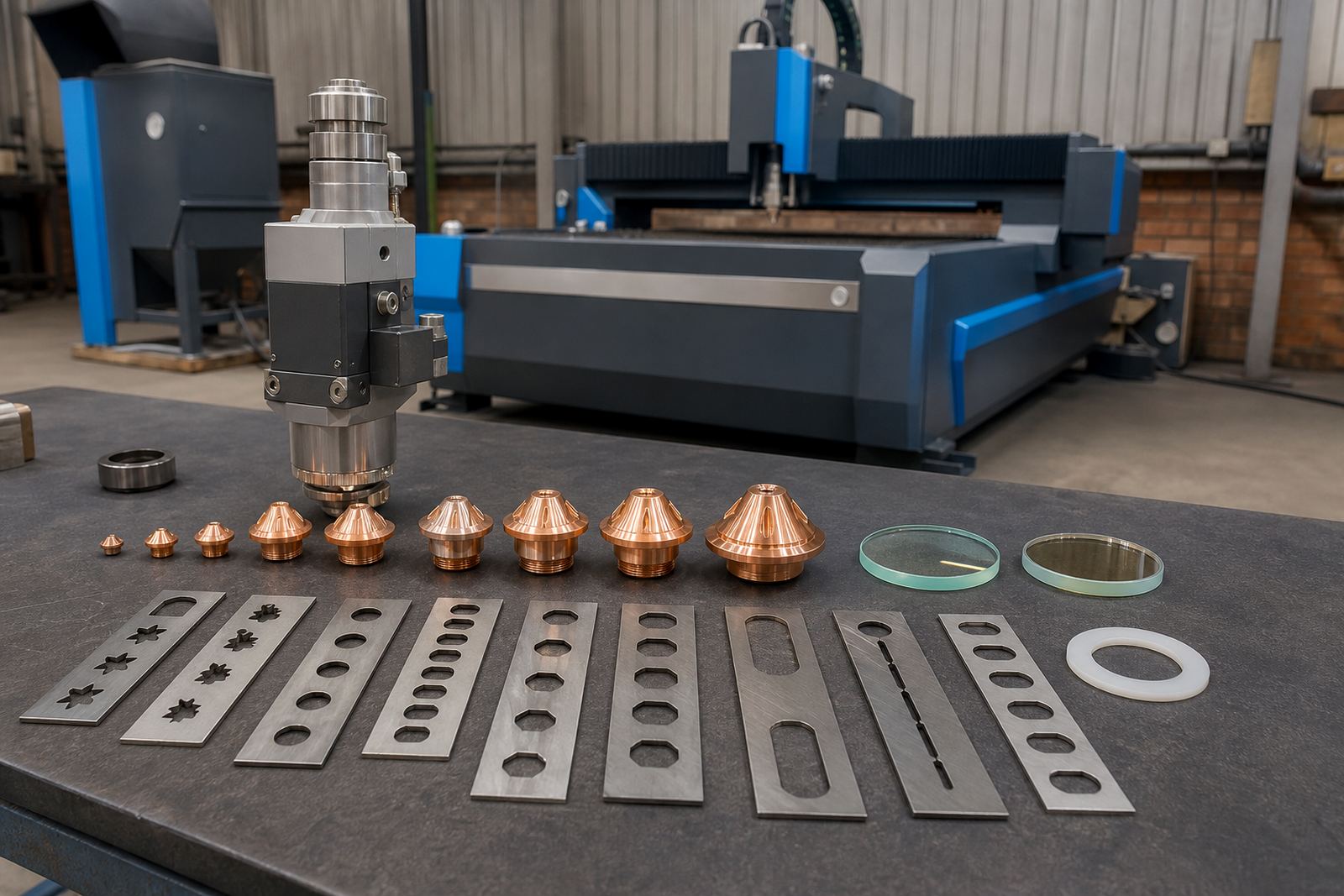
Single layer and double layer nozzles depend on a clean, even exit point for the assist gas. Once the orifice has gone oval, the tip is dented or the bore is damaged, polishing will not restore the original geometry. That is the point where replacement is safer than another attempt at cleaning.
- If the cut edge starts to flare even after centring, the nozzle may be worn.
- If the body shows impact marks, the gas stream can drift off centre.
- If the orifice has changed size from repeated use, the cut data becomes inconsistent.
- If the nozzle keeps picking up spatter after cleaning, the surface may already be compromised.
At that stage a fresh nozzle saves time and protects the rest of the head. It also reduces the chance of chasing a fault that is actually mechanical, not dirty.
Lenses and windows that should leave the bench
Focus and collimator lenses are not cleaning cloth practice pieces. A lens with a scratch, coating failure, cloudy patch or fine fracture should not stay in service just because it still looks mostly clear. Protective windows are easier to replace than to rescue, and once a window shows a burn mark or a ring of etched contamination, the safer move is usually a new one.
Some damage hides under normal light. That is why a bench check matters. Under magnification, a small pit or star crack can show up before the next cut sends heat into the rest of the stack. A window that has already been thermally stressed can fail fast, and that failure often takes the lens with it.
- Any crack line across the coating is reason enough to replace.
- A milky lens centre often means heat damage, not dust.
- Burn spots around the edge point to gas leakage or poor sealing.
- Repeated cleaning can strip coating where the surface is already weak.
When the fault keeps returning after a clean
If the same contamination keeps appearing, the real problem is usually upstream. A dirty gas path, a leaking seal, a tired ceramic ring or poor nozzle centring can put residue straight back onto the optics. In those cases more cleaning only treats the symptom and the part gets worn down for no gain.
Capacitive height sensing and focus settings also matter. If the head is tracking too close, or the focus is off, the nozzle and window see more spatter than they should. That shows up often on thicker plate and on jobs where the assist gas is working hard. Replacing a damaged part is sensible, but the fault source must still be checked or the new part will suffer the same fate.
Crash damage and heat marks are not cleaning jobs
After a head strike, a dropped head or a collision with sheet edge, cleaning is not the first answer. Bent nozzle seats, twisted ceramic rings, cracked windows and distorted seals need inspection before the head goes back on the machine. If the impact has shifted the alignment, a spotless part can still cut badly.
Heat marks tell a similar story. Discolouration around the seating face or visible distortion near the optic holder means the material has been pushed past normal service. In that situation a careful swap is safer than repeated scrubbing. On a job in Spartan one sheet-metal shop kept washing a marked window after a crash, then found the cut face getting worse on mild steel and stainless. The fault was not dirt. The lens stack had taken the shock and the window was only the messenger.
A practical shop floor rule
Use cleaning for light contamination and replacement for physical damage, shape loss or repeated failure. That rule keeps the head parts honest and avoids wasting time on a piece that cannot recover. Bench servicing helps here because the full assembly can be checked, not just the visible face.
- Clean if the part is intact and the residue is light.
- Replace if there is a scratch, crack, pit or heat mark.
- Replace the nozzle if the orifice has gone out of round.
- Inspect the seal, ceramic ring and gas path if dirt returns quickly.
- Check focus and alignment after any crash or abnormal cut.
That setup suits local cutting shops from Kempton Park to Johannesburg, Pretoria, Rustenburg, the East Rand, Durban and Cape Town. Coastal humidity near Durban can make contamination appear faster, while inland dust can work its way into seals and optics. Either way, the answer is not always another clean. Sometimes the part is simply done.