
Thin plate shows every small error
On 0.8 mm to 2.0 mm sheet, the cut path is less forgiving than on heavier plate. A slight change in standoff, nozzle centring or focus can move the melt stream enough to leave burrs on mild steel and a rough edge on stainless.
That is why thin sheet work needs clean consumables and a steady setup more often than people expect. The cutting head must keep the beam centred through the nozzle, the lens must stay clear, and the height sensing must read the sheet accurately without hunting.
- Small misalignment changes the kerf before the operator sees it.
- Worn nozzles disturb assist-gas flow and upset the cut face.
- Heat tint and fine spatter build up faster on light gauge work.
Nozzle condition is not a minor detail
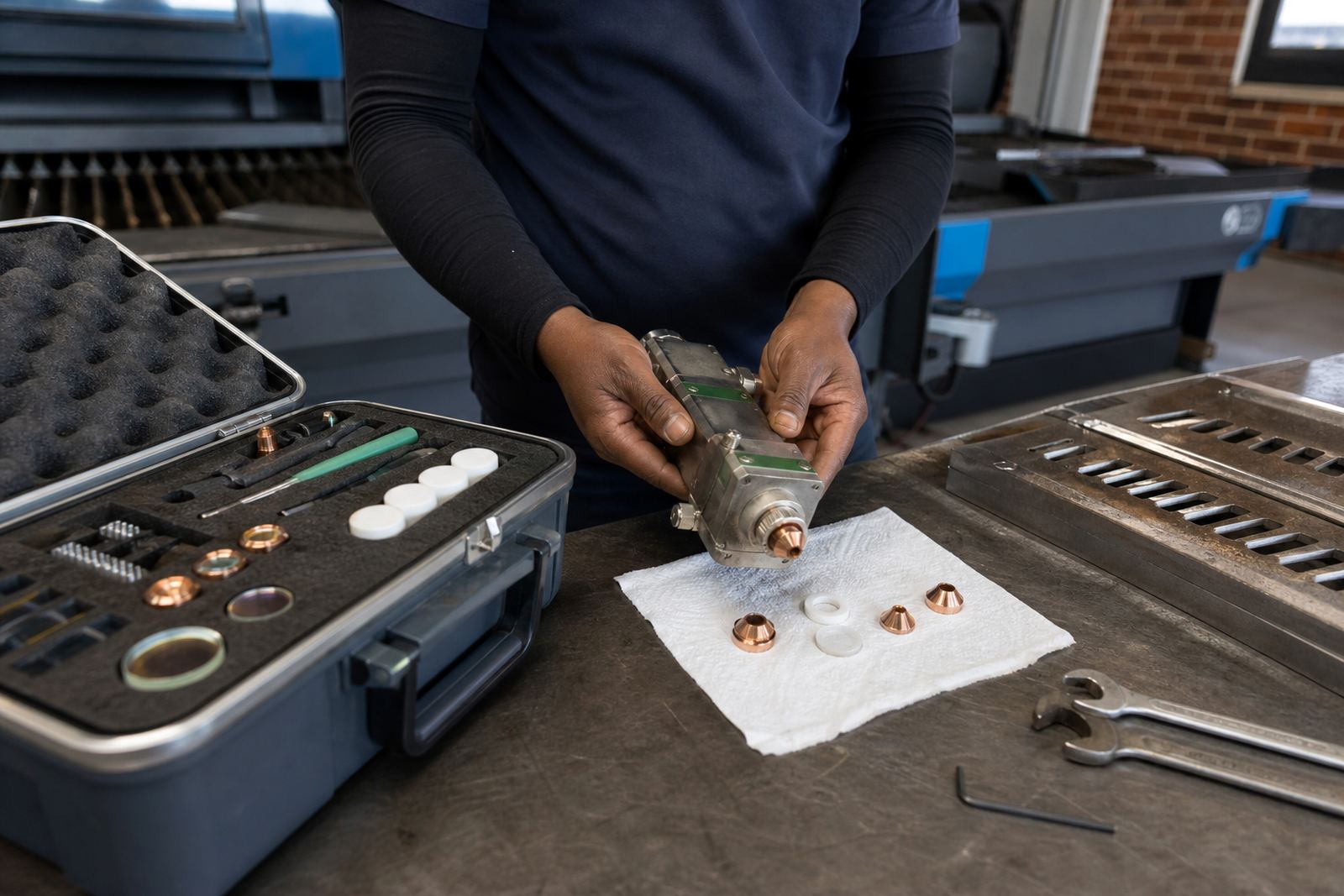
For thin sheet, the nozzle does more than guide gas. It shapes the jet, supports the pierce, and helps keep molten metal moving away from the cut line. A single layer nozzle can suit many jobs, while a double layer nozzle is often used where a steadier gas stream is needed. If the bore is damaged, ovalled or clogged, the cut edge usually tells the story.
Centred nozzles help reduce random dross and edge waviness. That matters on cabinets, guards, brackets and panels where parts are nested close together. A clean nozzle face also helps prevent tiny burn marks that spread across a full sheet run.
- Check the bore for wear before blaming the cutting table.
- Keep nozzle threads and seating faces free of dust and spatter.
- Match nozzle size to material thickness and assist-gas choice.
Focus setting changes the whole edge
Thin sheet often wants a tighter focus control than thicker material. If the focal point sits too high or too low, the beam waist changes and the edge quality follows. On stainless, the wrong focus can leave a sugary underside. On mild steel, it can pull more dross to the bottom edge than the operator wants.
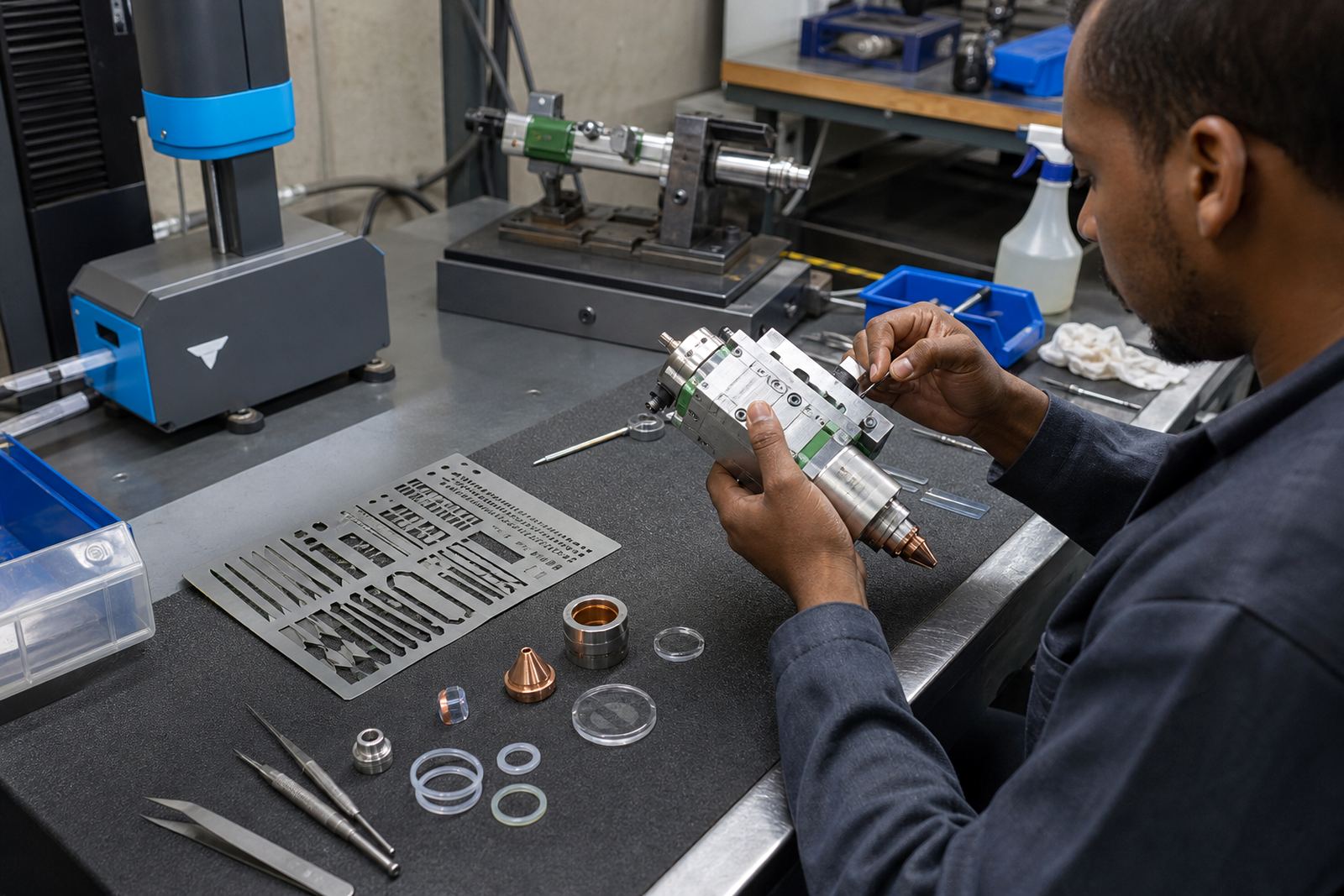
A proper focus setting check is not only about numbers on a screen. It is also about how the kerf behaves at corners, how the pierce opens, and whether the cut finishes cleanly on narrow parts. That is where a bench test helps, because the head can be checked for movement, contamination and lens seat condition before it goes back into service.
Clean optics carry the cut on light gauge work
Protective windows, focus lenses and collimator lenses all sit in the path of the beam, so even a light film of dust can change the cut. On thin sheet, the signs appear sooner because the process margin is smaller. A cloudy window can soften the beam and produce a wider heat-affected zone, while a dirty focus lens can make the cut look uneven from one corner to the next.
Cleaning routines need care. Wiping with the wrong cloth or handling lenses with bare fingers can leave marks that show up under power. In a humid coastal workshop, especially in Durban or Cape Town, optics can pick up grime faster than a dry inland shop and that makes regular inspection worth the effort.
- Inspect the protective window before every long cutting run.
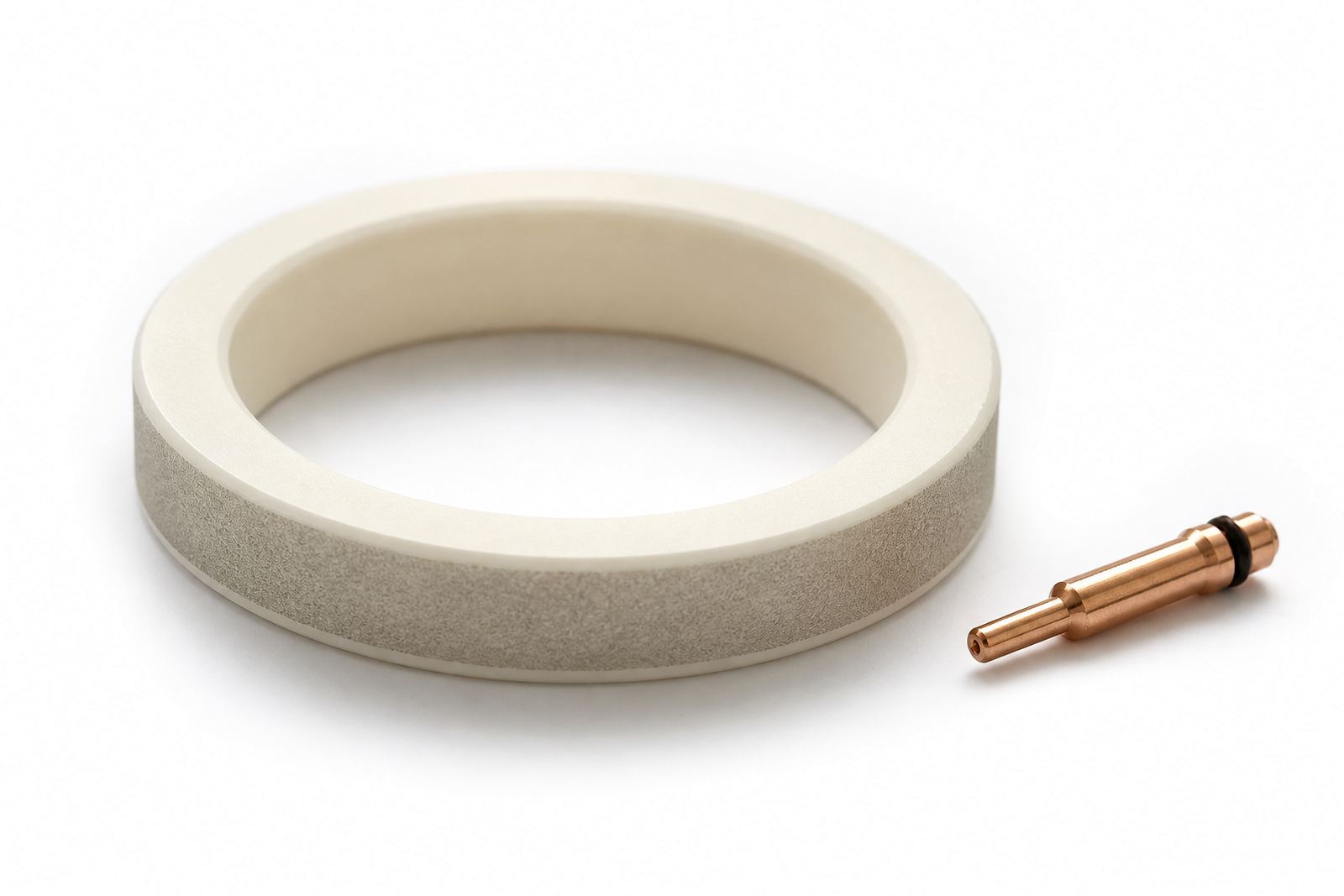
- Replace cracked ceramic rings before gas leakage starts.
- Keep lens storage dry and sealed against workshop dust.
Capacitive sensing has to stay honest
Thin sheet depends on stable height control. Capacitive sensing helps the head hold the right gap, but only if the sensor is reading cleanly and the machine is not chasing false signals. When the sheet is shiny, slightly warped or coated, the head can drift if the sensor is tired or the cable path is poor.
A capacitive sensor check is useful when the cut starts to show inconsistent standoff marks or when the nozzle leaves occasional witness marks on the surface. Pair that with a gas path inspection and you reduce the chance of a clean beam fighting dirty airflow.
On a busy sheet-metal shop in Spartan, the pattern is familiar: the machine cuts well on one batch, then leaves tiny burrs on the next. Often the fault sits in the head rather than the nesting file. A bench service and on-site alignment can reset the geometry so thin sheet cuts cleanly again.
A practical service rhythm for South African shops
Sheet-metal teams in Johannesburg, Pretoria, East Rand, Rustenburg, Durban and Cape Town do not all cut the same mix, but the maintenance pattern is familiar. Thin material asks for more frequent nozzle checks, more careful lens cleaning and a sharper eye on crash marks, seal wear and focus drift.
Our work covers bench head service, on-site head alignment, nozzle centring, focus setting checks, protective window replacement, lens cleaning, ceramic ring replacement, capacitive sensor checks, gas path inspection, head seal rebuilds, crash damage inspection and spare head preparation. The point is not to over-service a head, but to keep the optics and mechanics in step with the job in front of it.
- After a crash, inspect the head body, nozzle seat and ceramic ring together.
- If the edge quality drops on thin sheet, check optics before changing the program.
- Keep spare consumables ready for the materials you cut most often.