What manual focus is really doing on the cut path
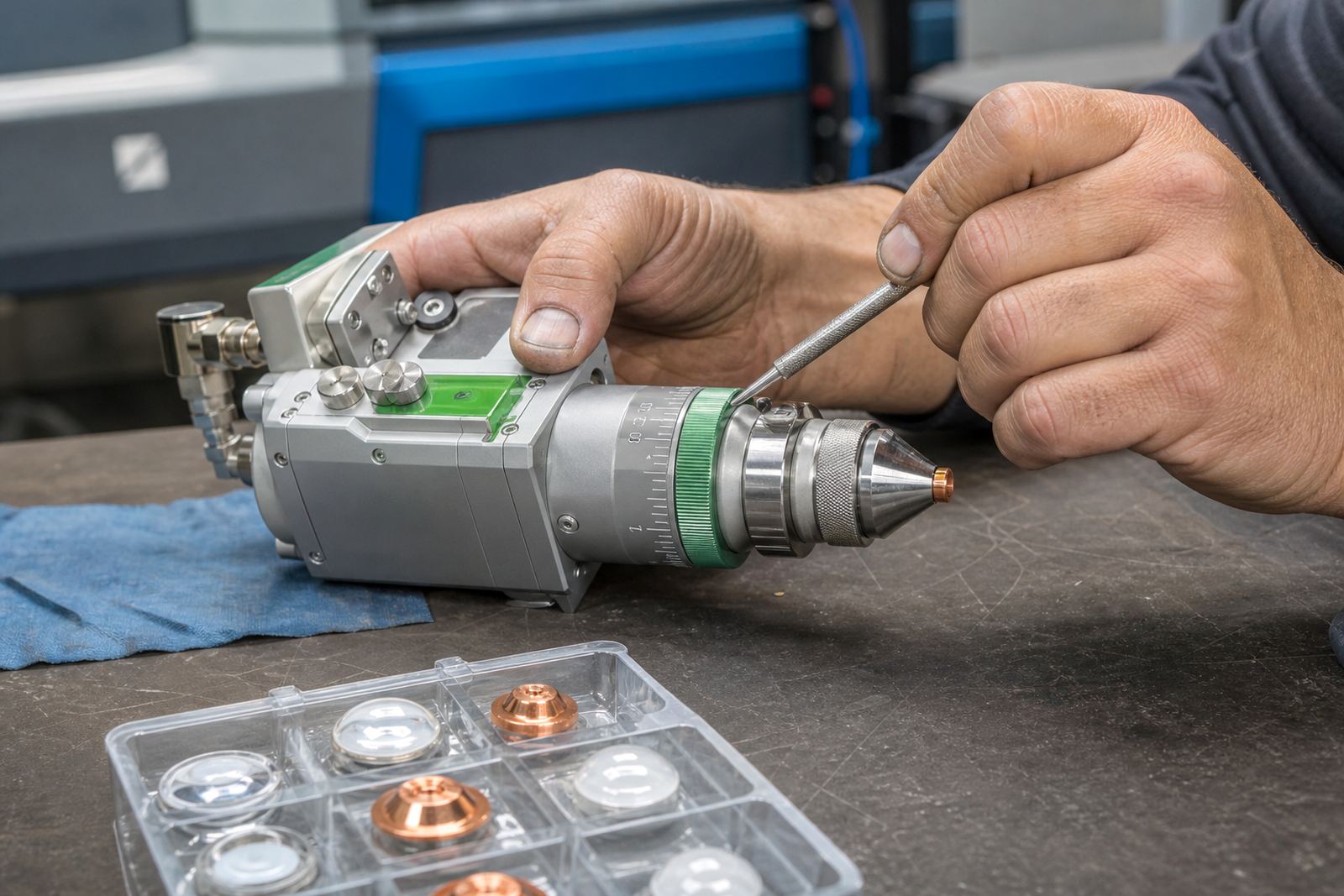
On a manual focus head, the operator sets the focal point by hand instead of leaving the job to a fully automatic system. That makes the lens stack, the nozzle position and the seating of the ceramic ring more sensitive to small changes in handling, dirt and wear.
When the focus setting drifts, the cut usually starts to show rough striations, a wider kerf or a stubborn dross line on the underside. A shop that cuts mild steel, stainless steel and aluminium on the same machine will notice the change faster when sheets vary in thickness and surface finish.
- Keep the focus scale readable and free of oil.
- Check that the lens stack sits flat in its holders.
- Watch for nozzle marks that suggest misalignment.
- Handle every lens by the edge, not the face.
Nozzle centring before the first cut
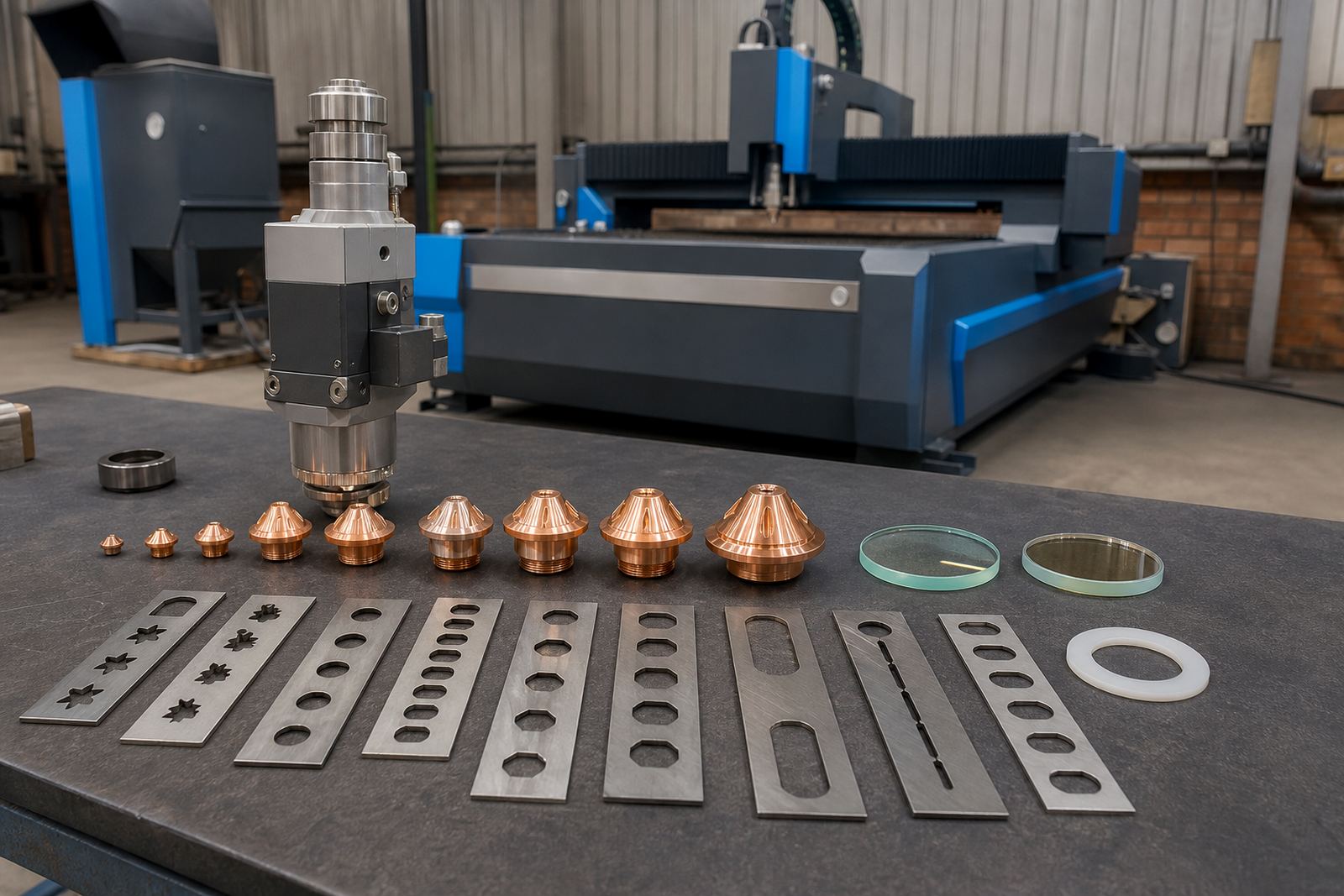
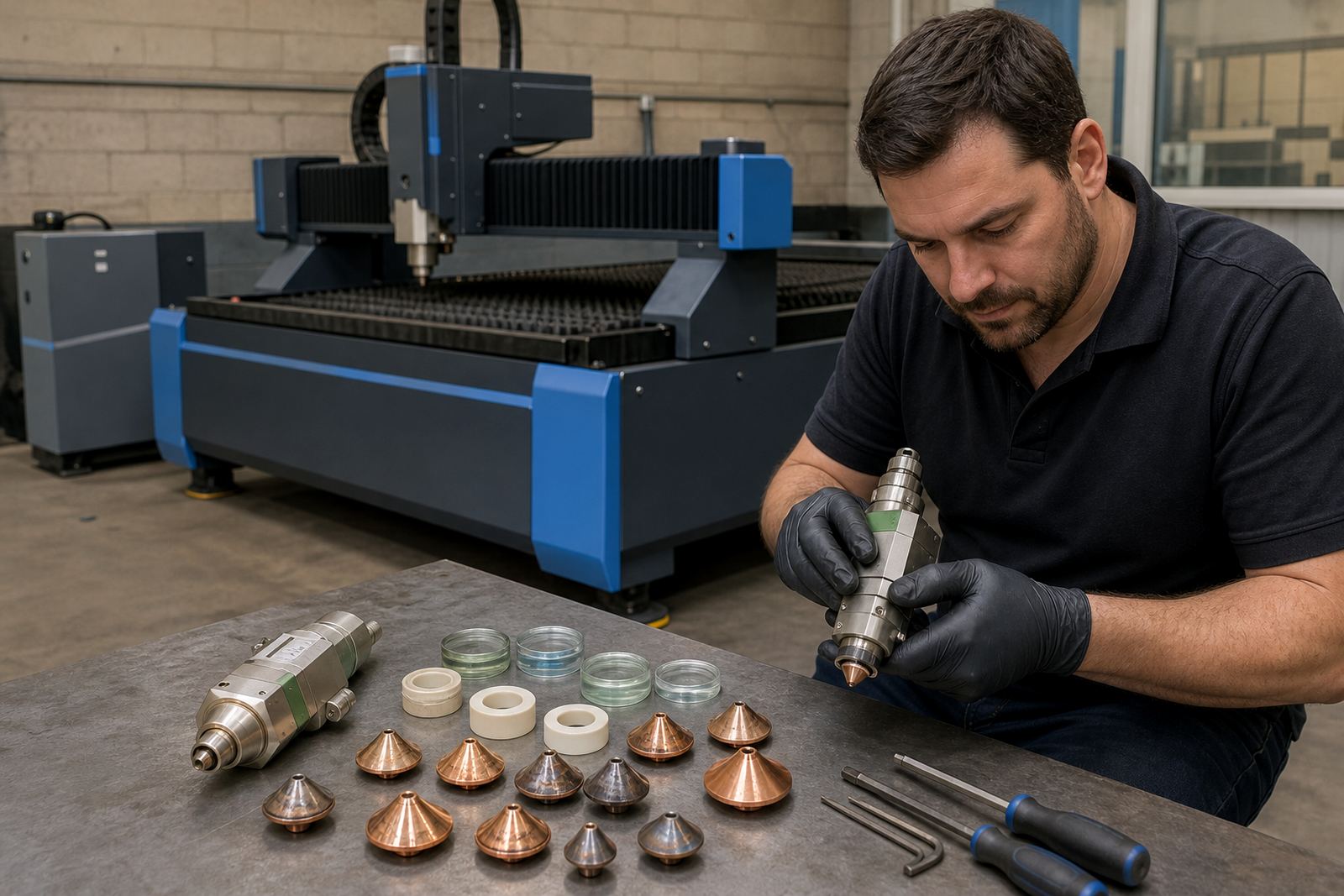
Nozzles do more than guide gas, they also shape the cut stream and help protect the lower end of the head. A single layer nozzle and a double layer nozzle behave differently, so the centring method and the cleaning routine should match the type fitted to the job.
If a nozzle is not centred over the beam, the cut can lean to one side and pierce quality drops off. On busy sheet-metal floors this often shows up after a rushed changeover, when the old nozzle is still warm and the ceramic ring has picked up fine dust from the bench.
- Check the nozzle orifice for burrs or a nick on the rim.
- Use a clean tool for removal, not pliers with worn jaws.
- Confirm the gap and centring after every crash or heavy pierce.
- Replace nozzles that have heat staining or repeated spatter marks.
Lens cleaning without leaving a fingerprint trail
Focus lenses and collimator lenses are meant to stay clean, dry and seated correctly. A protective window often takes the first hit of contamination, which helps, but it should never be treated as a fix for poor housekeeping around the head.
Lens cleaning works best when the area around the head is tidy and the operator does not rush the wipe. Coastal air in Durban can carry more moisture and airborne grime, while a dusty week in Johannesburg or Rustenburg can leave fine particles on exposed surfaces if the head cover stays open too long.
- Use lint-free wipes and a proper optical cleaner.
- Inspect the lens under a light before and after cleaning.
- Keep the coated face away from bare fingers.
- Fit the protective window squarely so dust does not creep round the edge.
Ceramic rings and the signs that they are tired
The ceramic ring supports the nozzle area and helps keep the electrical and mechanical side of the head stable. A cracked ring or a ring with carbon tracks can cause unreliable sensing, uneven nozzle seating and extra wear on the lower parts of the head.
For a shop doing repeat work on 2 mm to 10 mm sheet, a tired ring often looks harmless at first. The first sign may be a small change in cut start height or a buzzing feel when the head checks the sheet surface through capacitive sensing.
Replace a damaged ring before it starts taking other parts with it. That is cheaper than chasing the same fault through the nozzle, the seal and the window stack.
Capacitive sensing and focus setting on real jobs
Capacitive height sensing depends on a stable relationship between the head, the sheet surface and the programmed stand-off. If the sensor path is dirty or the nozzle is worn, the head can misread height and the focus point lands where it should not.
Focus setting checks matter most when a job moves between thin sheet and heavier plate, or when the machine has been idle and then put into use after a long weekend. A small shift can change piercing behaviour, edge smoothness and the heat left along the cut line.
- Run a sensing check after nozzle changes and head knocks.
- Keep the sheet table clear of offcuts that catch the beam path.
- Review the focus position when cut quality changes without a clear cause.
- Inspect the gas path if the head starts leaving rough tails on corners.
A Spartan workshop habit that saves a field call
A Kempton Park sheet-metal shop that cuts brackets, cover plates and machine panels every day can save time by building one short routine around the head. Clean the optics, check the nozzle, confirm focus and inspect the ceramic ring before the first sheet goes on the table.
That routine matters even more before a machine leaves for work in Pretoria, Cape Town or Durban, because travel vibration and hurried packing can shift parts that looked fine on the bench. One local fabricator in the East Rand learnt that a head can pass a quick visual check and still fail a cut start once it gets onto a thicker job.
Bench service and on-site alignment are both useful when the same head shows repeated drift. A proper look at seals, alignment, sensor height and lens cleanliness usually finds the fault faster than swapping parts at random.