The stainless routine that started knocking the head out
The workshop runs stainless sheet through long daily shifts, with cut paths that need clean pierce points and tight nozzle clearance. After a run of small crashes, the team saw more drag marks at the cut edge, occasional misfires on the pierce and a nozzle tip that was no longer sitting true under the head.
The brief was straightforward: inspect the cutting head on site, check whether the optical path and ceramic ring were still sound, then correct the alignment without pulling the machine out of the production space. The shop works close to other fabricators in the East Rand and the machine had to stay in the day plan, instead of being taken out for a long strip-down.
- Work type: fibre laser cutting head alignment and inspection
- Job setting: stainless sheet cutting in an Isando workshop
- Main fault pattern: repeated nozzle strikes and drifting cut quality
What the bench check showed before we touched the gantry
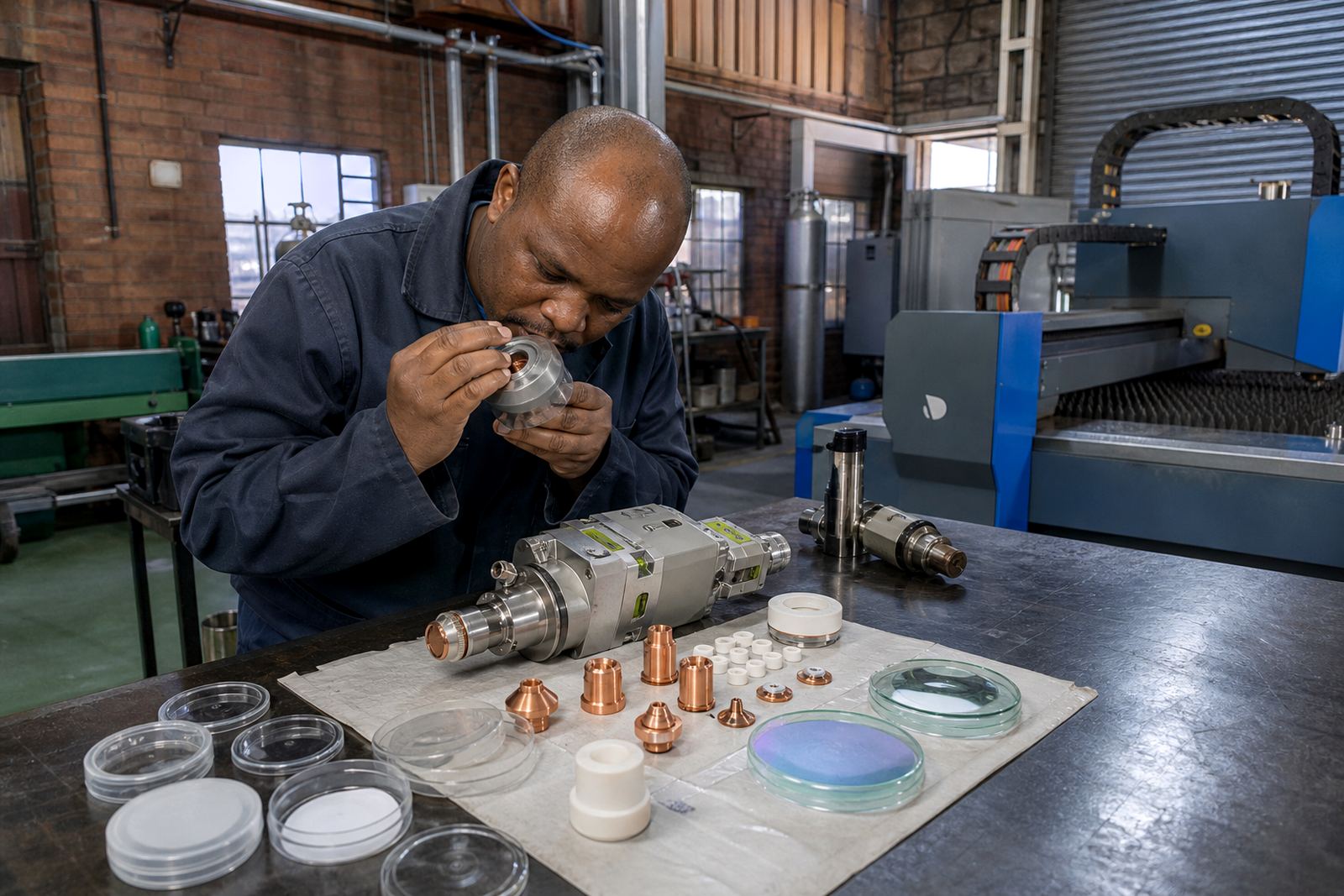
We started with a bench service check on the cutting head assembly and the wear parts that usually move first after a light crash. The nozzle seat had a slight shift, the protective window needed replacement, and the ceramic ring showed heat marking around the contact face. Those signs do not always stop a machine, but they do affect focus stability and gas flow through the cut.
We also checked the capacitive height sensing path, because a faulty sensing signal can make the head hunt for sheet surface and pick up small height errors. Focus settings were measured against the stainless routine the shop was running, then the lens stack was inspected for dust and fine debris that often sits in the head after repeated pierce work. Clean glass matters on a fibre unit, especially when the workload is stainless and the air around the machine carries fine oxide.
- Parts inspected: nozzle, focus lens, collimator lens, protective window and ceramic ring
- Systems checked: capacitive height sensing, gas path and head seal condition
- Common cause: small strikes that do not stop production straight away
On-site alignment work in the machine bay
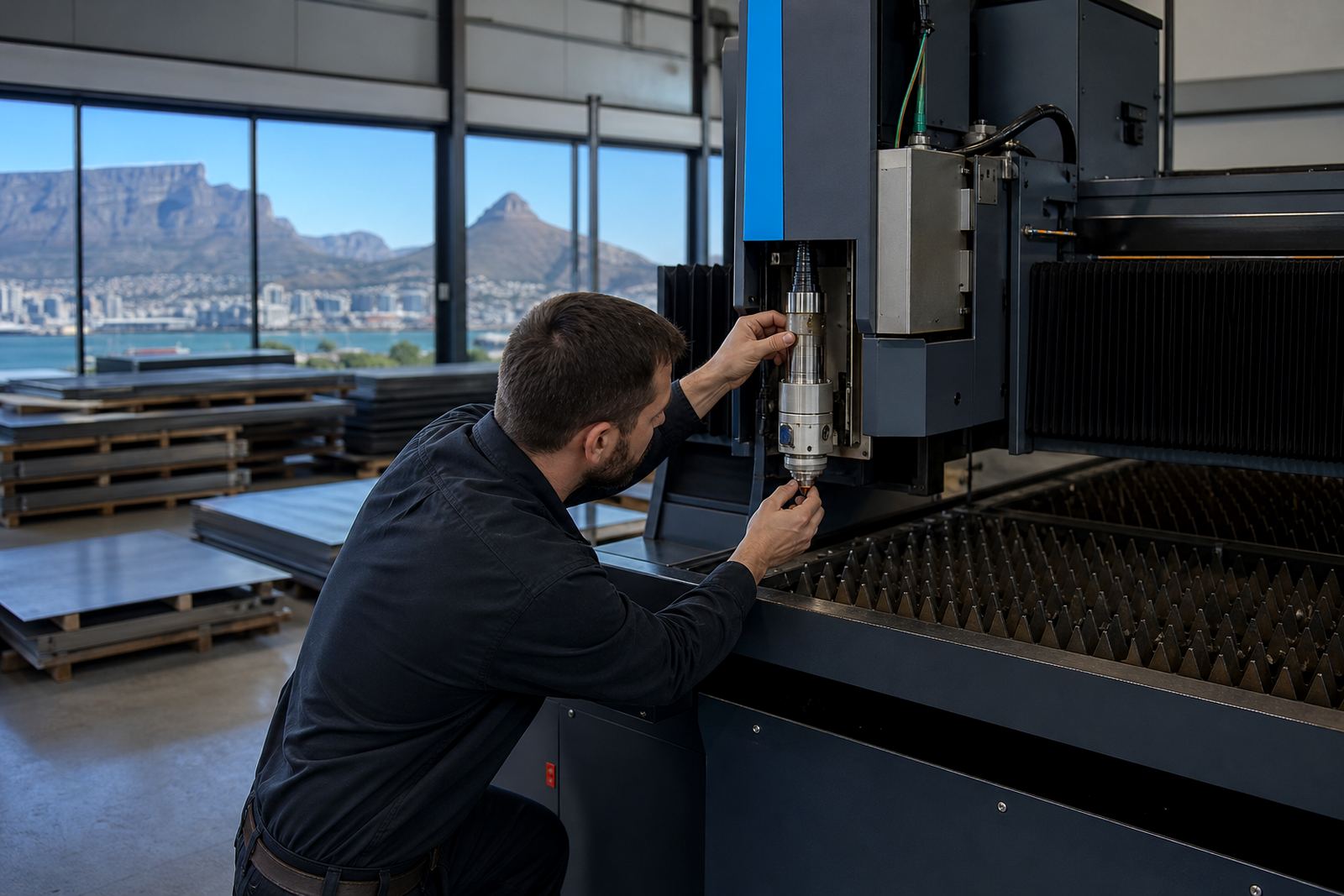
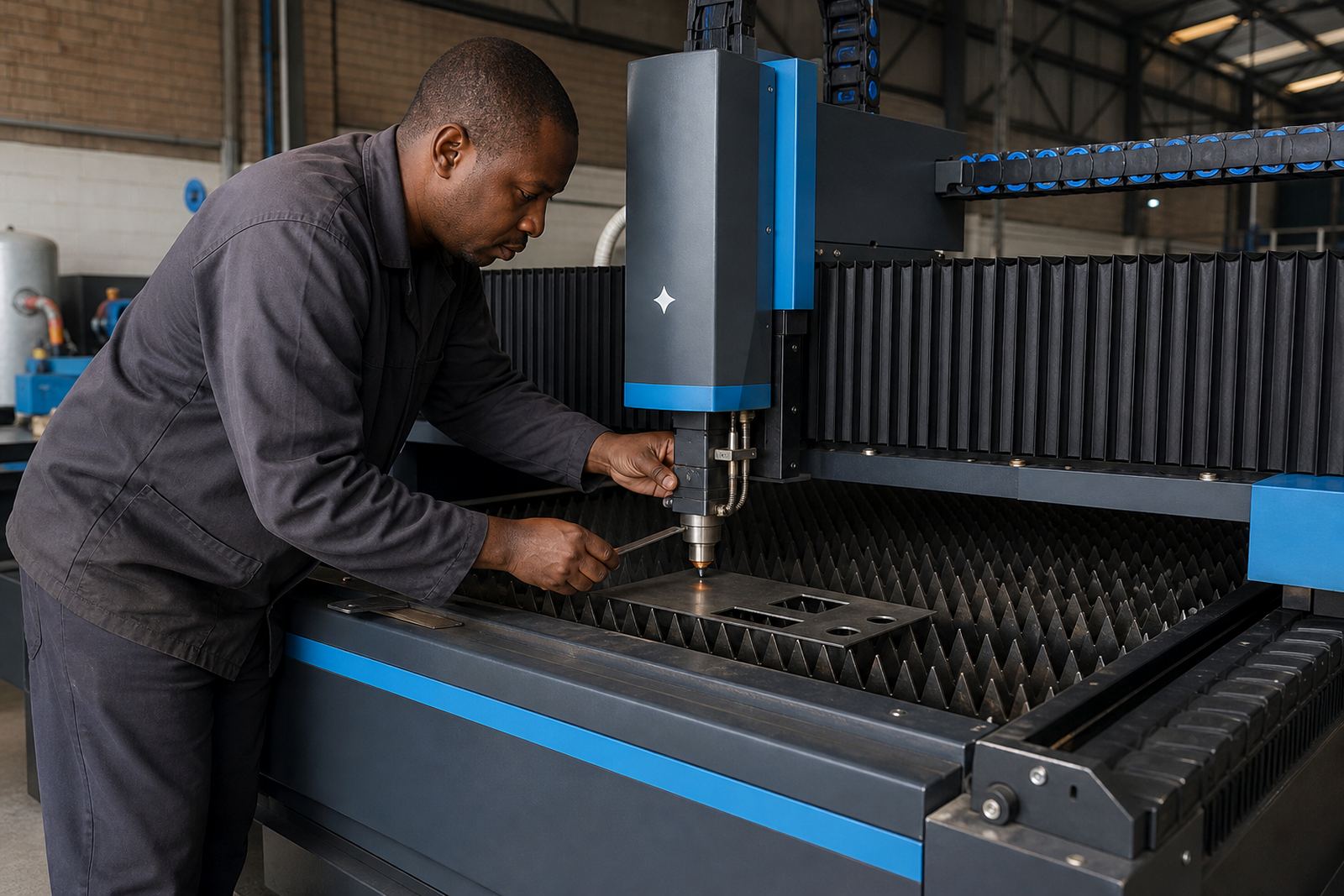
The main alignment work took place at the shop floor in Isando so the operator could keep the machine in view and see the settings shift in real time. We corrected nozzle centring, rechecked the focus position and confirmed the lens stack was seated properly after cleaning. Once the head sat true, the beam path and gas stream were easier to hold during short stainless cuts and narrow contour work.
Because the shop had already seen repeat strikes, we spent extra time on the contact points that protect the head during daily use. That included the ceramic ring fit, the sealing faces and the zone around the protective window holder. A head that looks fine from the outside can still drift after a minor crash, so the final pass was done with test cuts and a close look at the edge finish.
The machine bay was busy, so the work had to fit around other sheet jobs and aisle movement. We kept the tooling compact and the notes practical, with each setting written down for the team that runs the machine between coil and sheet changeovers.
Parts supplied for the service visit
We supplied the wear items that matched the fault pattern and the service work carried out on site. The shop needed parts that could restore the head without forcing a full machine strip, so we prepared a focused set of consumables and optical items for the job.
- Single layer and double layer nozzles for stainless cutting
- Protective windows for the head assembly
- Focus lens and collimator lens inspection and replacement where needed
- Ceramic rings for the head seat and sensor side checks
- Cleaning materials suited to fibre optics and lens handling
We also verified the gas path and the nozzle centring after fitting, because new parts alone do not solve a head that has drifted. The better result comes when the optical stack, the sensing path and the physical seat all work together.
Three weeks of follow-through on the shop floor
The first week covered the inspection, bench service and the on-site alignment visit. In the second week the operator ran the head through the same stainless routines that had triggered the strikes, with attention on pierce height, edge finish and any sign of misalignment at the nozzle. The third week was used for a final review of cut stability and a last look at the protective window and ceramic ring before they settled into regular use.
That three-week window gave enough time to see whether the adjustment held under ordinary production pressure, not just during a test sheet. The head kept a steadier cut line, the pierce marks became more even and the operator had less need to stop and reset after a minor bump. The result was not a brand-new machine, only a more stable one that could keep cutting stainless without the same repeated fault pattern.
- Week 1: bench service, parts check and on-site alignment
- Week 2: stainless production monitoring and setting checks
- Week 3: final review of cut quality and wear parts
Key facts
| Client type | Sheet-metal workshop |
|---|---|
| Town | Isando, Kempton Park |
| Service | On-site head alignment and bench service |
| Machine focus | Fibre laser cutting head |
| Parts involved | Nozzles, lenses, protective windows, ceramic rings |
| Scope | Johannesburg, Pretoria, Durban, Cape Town, Rustenburg |
| Project length | 3 weeks |