

What the Springs shop needed sorted
The job came from a sheet-metal workshop in Springs that runs fibre laser cutting on regular production sheets, with thin material one shift and heavier plate the next. Their main complaint was a rise in scrap marks and uneven edge quality, plus a steady build-up of dust on the protective window and around the nozzle area.
The brief was not only to replace the contaminated windows. The team wanted the cutting head checked on the bench, the focus path reviewed, and the daily cleaning method tightened up so the same mess did not settle back into the head after a few shifts. That meant working through the optics, the ceramic ring, and the gas path in one pass rather than treating each part on its own.
- Client type: sheet-metal fabrication shop
- Town: Springs, Gauteng
- Work type: bench service and maintenance review
- Main issue: contaminated protective windows and drifting cut quality
Bench work on the cutting head and optics
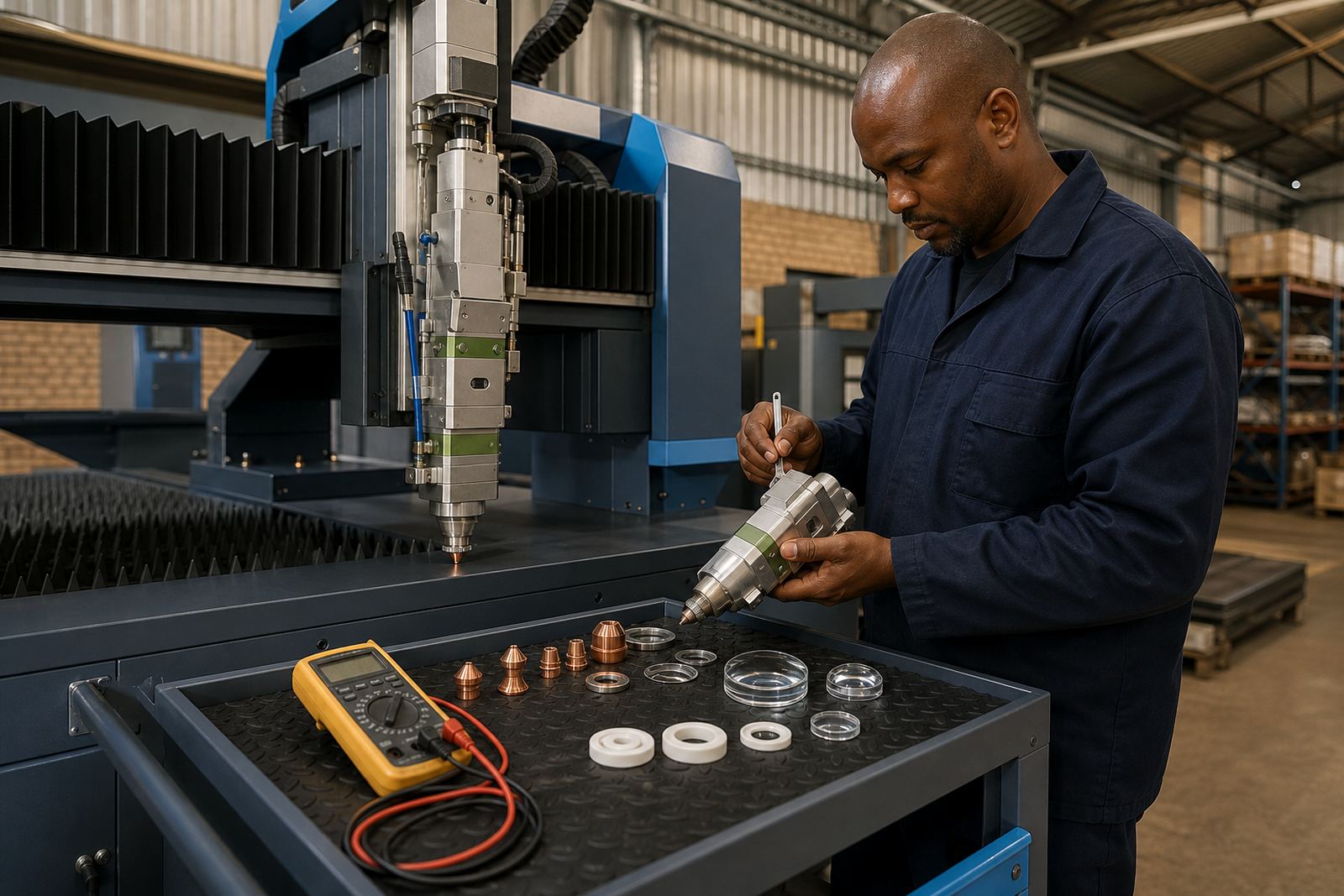
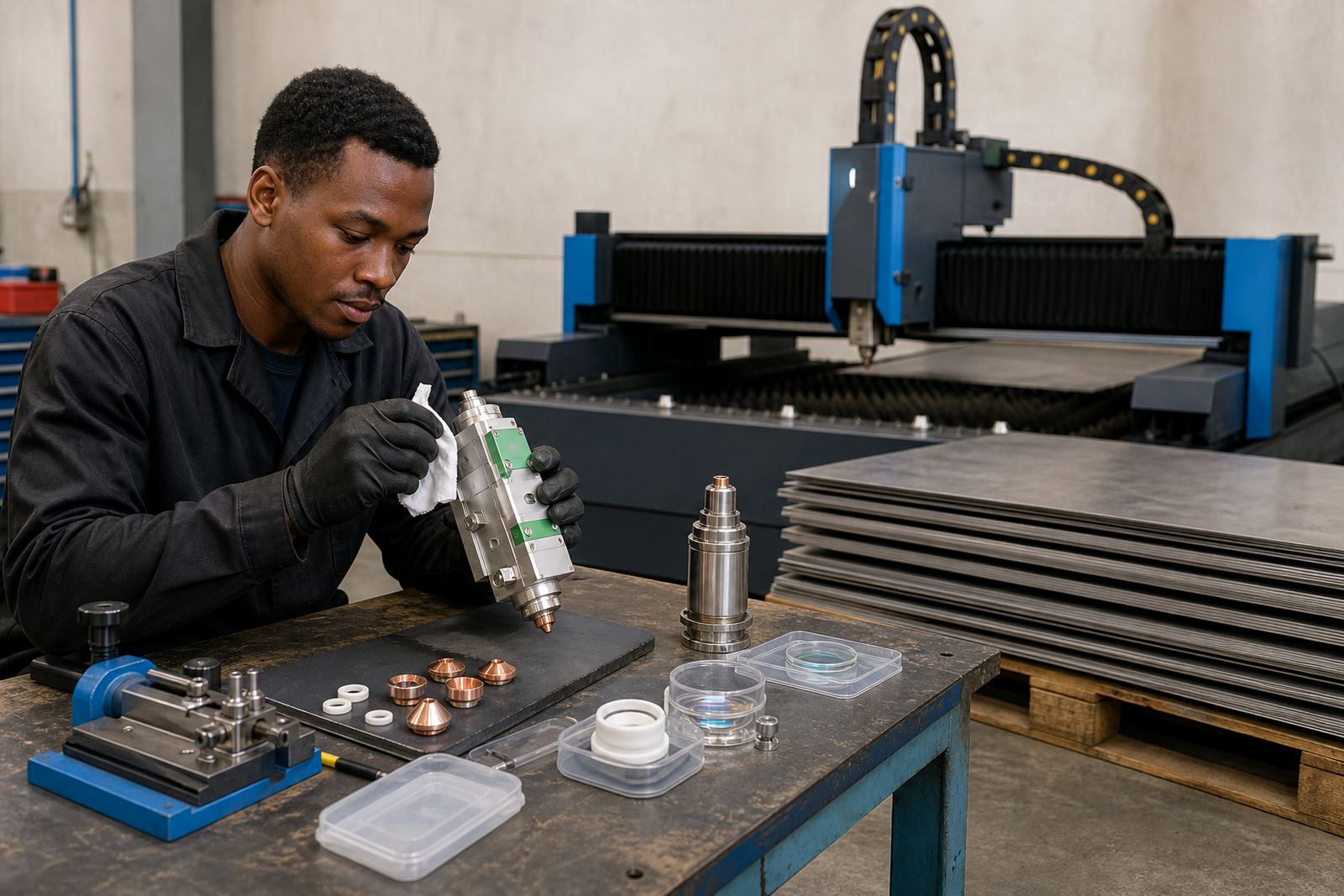
We removed the head from production and worked on the bench so the optics could be handled in a clean, controlled space. The protective window was replaced, the focus lens and collimator path were inspected for dust trails, and the ceramic ring was checked for wear and heat marks. Even a small nick on the ring can upset nozzle centring and create a rougher cut edge.
After cleaning, we checked the focus setting and the nozzle height relationship, then ran through the capacitive height sensing points to see whether the signal stayed steady through the full travel. The gas path was checked for debris, since a clean optical set means little if the assist gas is not flowing properly through the head. A quick wipe is useful, but it does not replace a proper strip and check when the window has already taken contamination.
- Protective window replacement
- Lens cleaning and visual inspection
- Ceramic ring replacement where needed
- Capacitive sensor check
- Nozzle centring and focus setting check
On-site alignment once the head went back
Once the head was ready, we went on site to align it back into the machine and confirm the working position against the shop’s normal sheet mix. The on-site part matters when a head has been handled off the machine, because the final alignment can drift a little after refitting if the bracket, seals or mounting faces are not sitting right.
We checked the head seal, watched the sensor response, and tested the nozzle to lens line-up under the shop’s own cutting routine. The operators also wanted the wipe-down routine reviewed, because coastal air is not the only issue in Gauteng workshops. Fine metal dust, oil mist and finger marks build up fast on a head that is opened for cleaning without a proper habit behind it.
- On-site head alignment at the machine
- Head seal inspection
- Gas path inspection
- Review of daily wipe-down steps
- Operator walk-through on handling discipline
Timing across the two-week job
The work ran across two weeks. The first stage covered bench servicing, optical cleaning, replacement parts and internal inspection. The second stage covered refit, alignment, and a check on how the head behaved during normal production cutting. That split let the shop keep track of the machine without guessing whether the fault was in the optics, the sensor line, or the way the head was being cleaned each day.
It also gave the floor team time to reset their own habits. We kept the cleaning steps practical: open only what needs opening, use clean cloths, keep the nozzle area free of loose dust, and avoid dragging grime back over the window when the head is being checked. Those points sound minor, but they are usually where the trouble starts.
- Week 1: bench service and parts replacement
- Week 2: refit, alignment and production checks
- Follow-up focus: handling and cleaning habits
What changed after the service stop
After the service stop, the shop had a cleaner cutting head, steadier nozzle centring, and a better read on when the protective window should be checked instead of left in place too long. The immediate benefit was less visual contamination in the optical path and a more consistent cut across the sheets they were running that week.
They also had a clearer maintenance rhythm for their operators. That matters because a fibre laser head does not usually fail in one dramatic moment, it drifts through dirt, poor cleaning, a worn ceramic ring, or a sensor that is left unchecked for too long. Sorting those points early keeps the machine from chewing through spares and time.
- Cleaner optical path
- More stable cutting behaviour
- Better operator routine for wipe-downs
- Less unnecessary wear on consumables
For another sheet-metal job, we would apply the same approach again
On another Springs job like this, we would still start on the bench and not rush the head straight back into production. The protected optic stack needs a proper clean, the ceramic ring should be measured against the nozzle condition, and the focus setting has to be checked with the shop’s own material range in mind rather than treated as a fixed number for every sheet.
We would also keep the cleaning routine brief and precise. A workshop crew does not need a long lecture, it needs a method that fits the shift pattern and the dust load in the room. For a mixed-metal shop, that usually means regular visual checks, careful nozzle handling, and a stricter line on window contamination before it starts affecting cut quality.
- Bench first, machine second
- Check the optics together, not one piece at a time
- Keep the cleaning routine short and repeatable
- Match the focus setting to the real sheet range
Key facts
| Client type | Sheet-metal fabrication shop |
|---|---|
| Town | Springs, Gauteng |
| Project scope | Bench head service and on-site alignment |
| Parts handled | Protective windows, nozzles, ceramic ring, lenses |
| Service checks | Capacitive sensing, gas path, focus setting, nozzle centring |
| Timeline | Two weeks |
| Base | Spartan, Kempton Park |