Crash damage came in with a wobble and a question mark
The job came from a sheet-metal shop in Jet Park, Boksburg, where the cutting head had taken a knock during production. The machine was still running, but the cut edge had started to show erratic behaviour and the nozzle stack was no longer sitting as cleanly as it should.
The brief was direct: inspect the nozzle holder thread, check for hidden damage around the ceramic ring seat, and confirm whether the optical path and height sensing parts were still usable. The team also wanted a complete alignment check, because a crash on a fibre head often leaves more than one setting off by a fraction.
- Client type: sheet-metal cutting workshop
- Area: Jet Park, Boksburg
- Issue: crash event with suspected nozzle holder thread damage
- Scope: bench inspection and alignment review
Strip-down notes from the bench
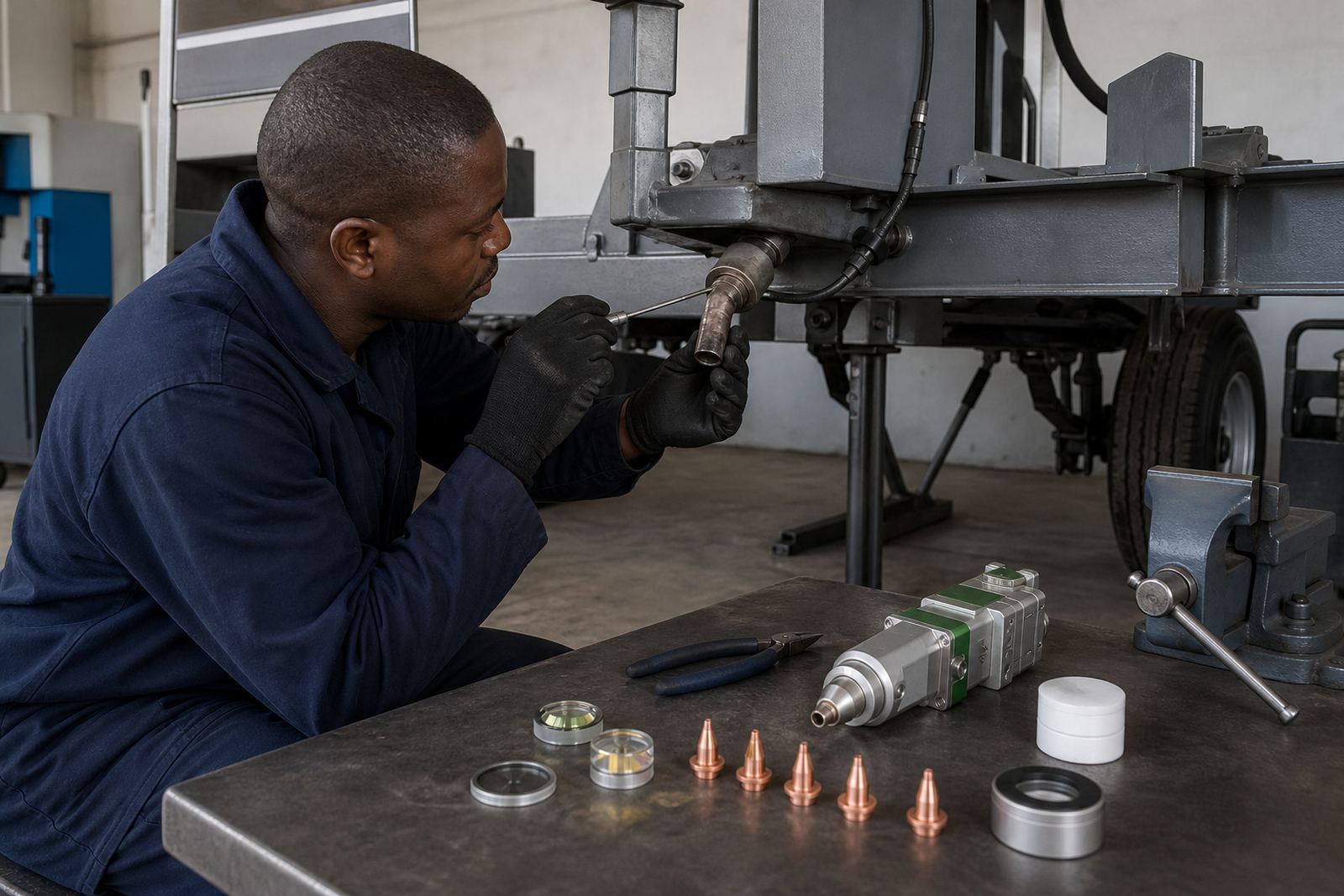
Once the head came into the shop, Jaco carried out a bench strip-down and cleaned the exposed parts before any judgement was made. That step matters, because soot, metallic dust and worn seal material can hide the real fault. The nozzle holder thread was measured and checked for cross-threading, burrs and uneven bite on the first turns.
We also checked the focus lens and collimator lens for chips or haze, then inspected the protective window and ceramic ring for heat marks. On a head that has taken a hit, even a small mark can influence beam quality and gas flow. The capacitive height sensing face was tested for consistency, and the head seal was examined where the crash force could have shifted the seating.
- Nozzle holder thread assessment
- Lens inspection and cleaning
- Protective window and ceramic ring check
- Capacitive sensor and seal inspection
Alignment work after the impact
With the damaged areas identified, Lerato handled the alignment sequence and set the head back through the practical checks used on a fibre laser unit. The work covered nozzle centring, focus setting verification and a straight run through the beam path so that the head would track properly on sheet-metal cutting duties.
Where a crash has twisted the relationship between the nozzle and the internal optics, the results can show up as taper, dross or inconsistent pierce behaviour. That is why the adjustment was not treated as a single job. The nozzle, lens stack and sensing parts were checked together, then rechecked after cleaning so the readings were not being skewed by residue.
- Nozzle centring reset
- Focus setting check
- Beam path and gas path inspection
- Cleaning routine across exposed components
What went out from Spartan to keep the head serviceable
From our Spartan, Kempton Park base, we supplied the consumables and service parts needed to finish the repair properly. That included a replacement nozzle holder where the thread damage was beyond practical reuse, plus the matching consumable items that sit around the cutting head and keep it stable in daily work.
For this type of machine, the small parts matter as much as the main housing. A worn ceramic ring can let the head sit unevenly. A scratched protective window can cloud the cut. A dirty lens can throw the focus off just enough to cause trouble at the edge of the sheet. The service was built around those realities, not around guesswork.
- Fibre laser cutting head consumables
- Nozzle and ceramic ring replacement parts
- Protective window and lens handling
- Head seal rebuild materials where needed
The working window was measured in weeks, not noise
The workshop kept the machine activity moving around the repair window, and the inspection, parts matching and bench service were handled in stages over two weeks. That allowed for a proper assessment before the alignment work was locked in. The final check was done only after the head passed cleaning, optical inspection and sensor testing together.
The result was a cutting head that settled into a stable position, with the nozzle thread repaired or replaced as required, and the alignment restored to a usable range for sheet-metal work. The shop could run cleaner cuts, more predictable pierces and a steadier height response on the material it handles every day.
- Repair window: two weeks
- Outcome: restored alignment and usable thread condition
- Cut quality: improved edge consistency after reset
- Application: fibre laser sheet-metal cutting
For another crash repair job, we would use the same approach again
The same order of work would apply on a similar head damage case: inspect the thread first, clean the parts before judging them, then align the head only after the sensor, optics and nozzle stack are all read together. Rushing the process usually means the fault shifts from one part to another.
For shops in Johannesburg, Pretoria, Durban, Cape Town or Rustenburg, a crash on a fibre head often looks small at first and turns expensive if the nozzle, lens seat or ceramic ring are left unchecked. A tidy strip, careful measurement and a full alignment review keep the repair honest and the machine easier to live with.
- Thread check before reassembly
- Lens, window and ceramic ring inspection together
- Sensor test before final alignment
- Bench service preferred before field fitting
Key facts
| Project | Jet Park Steel Shop |
|---|---|
| Town | Jet Park, Boksburg |
| Service type | Bench head service and crash alignment check |
| Fault | Nozzle holder thread damage after a crash event |
| Scope | Nozzle centring, focus check, lens and window inspection |
| Service window | 2 weeks |