Panel work that was drifting off line
The job came from a sheet-metal shop in Bellville cutting enclosure panels from mild steel with a fibre laser machine fitted with a manual focus head. Their main complaint was not a full breakdown, just a pattern of small shifts in cut quality that showed up after the same job had been run more than once. The edge finish varied, pierce marks looked less even, and the nozzle height needed more attention than usual.
The brief was practical. Set the cutting head into a cleaner working range, inspect the parts that carry the beam and assist stream, and reset the head so repeat panel work was less sensitive to small variation. Because the machine was still in production, the shop needed the head handled carefully and kept close to factory type dimensions on the wear parts.
- Client type: Bellville sheet-metal and enclosure shop
- Machine use: repeat panel cutting on fibre laser equipment
- Problem: inconsistent repeat cuts and drifting focus behaviour
- Constraint: keep downtime tight and avoid unnecessary part changes
What we checked on the bench
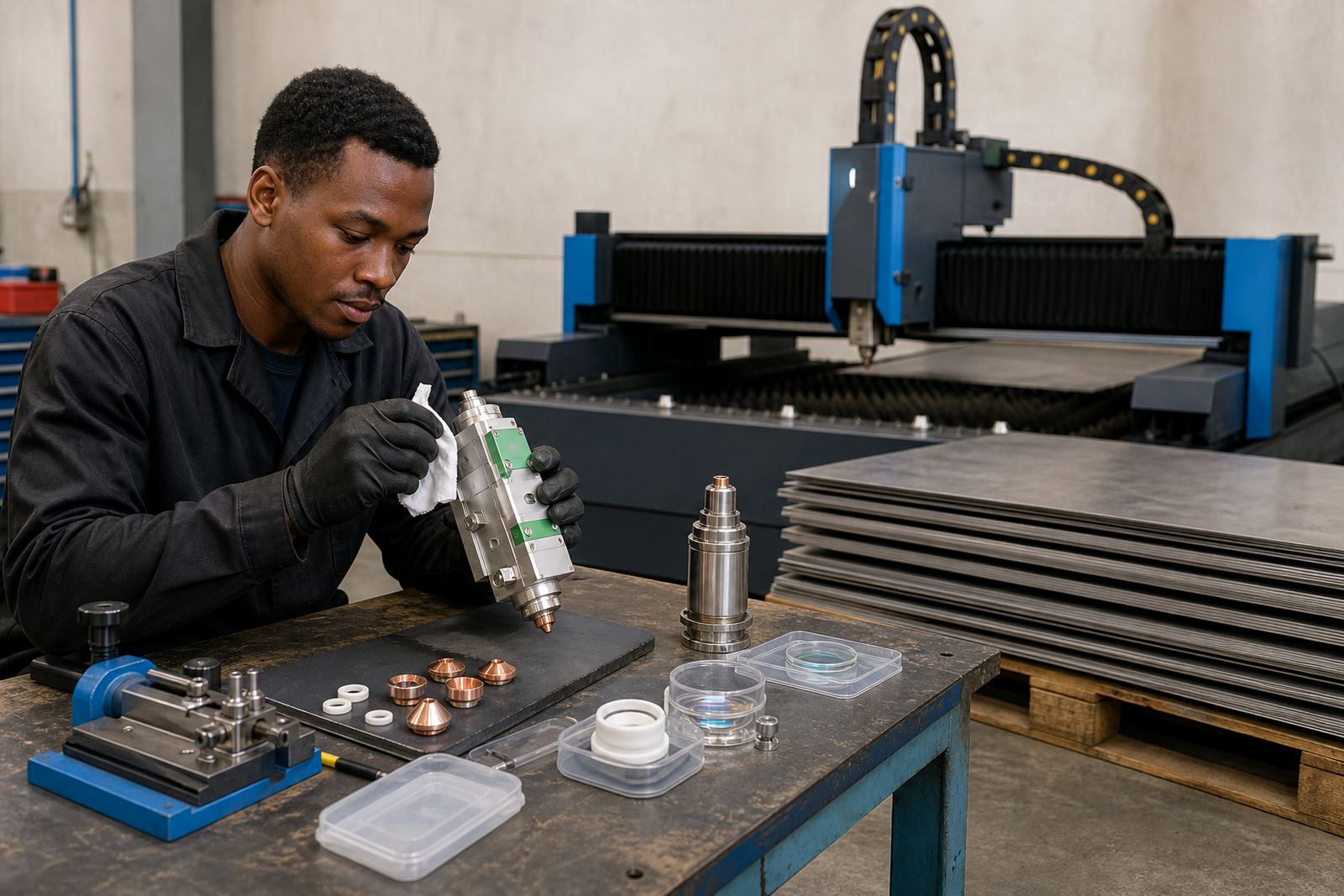
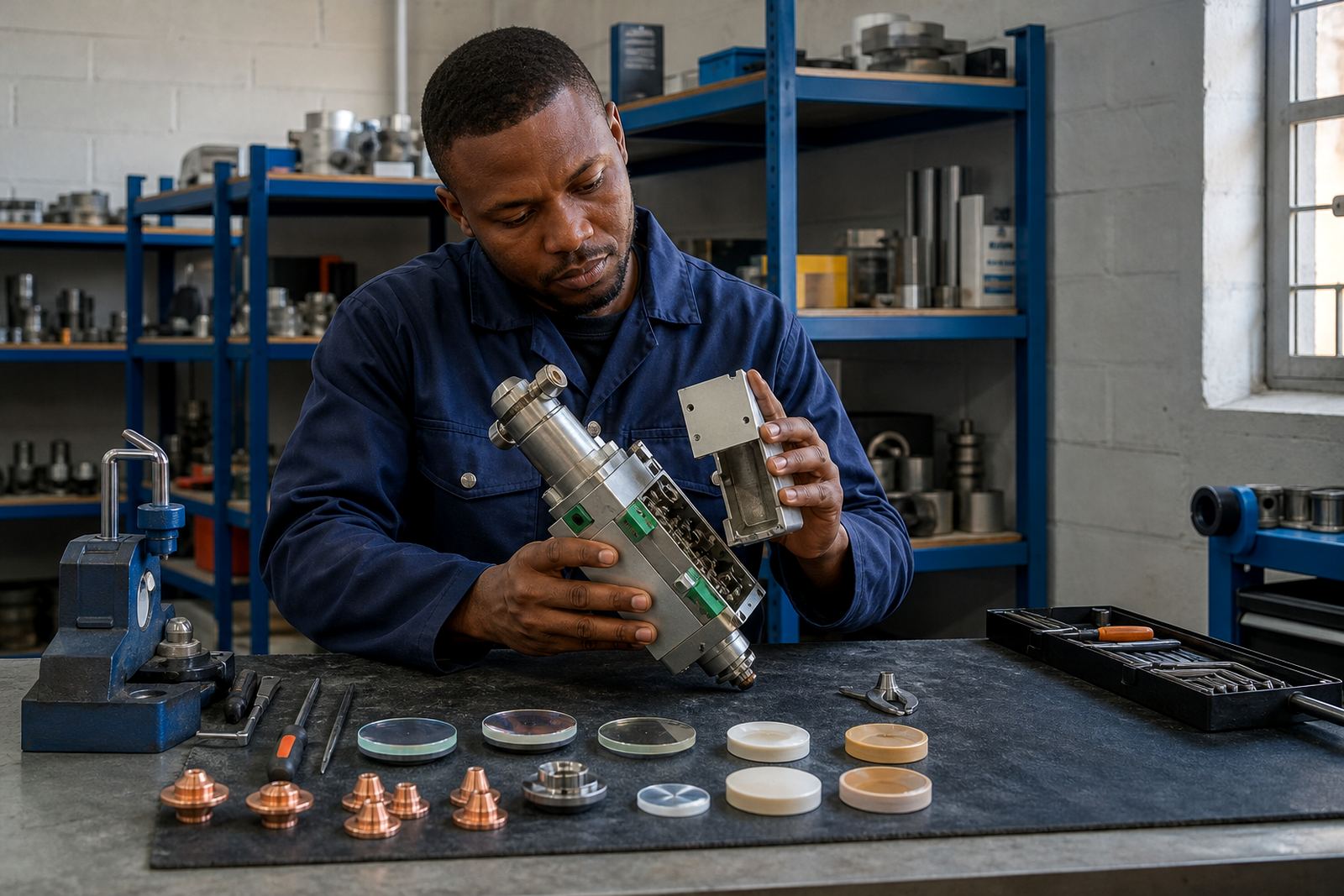
We stripped the head to a service level that allowed proper inspection of the nozzle seat, ceramic ring, focus lens area and protective window stack. The lens surfaces were cleaned where contamination had built up, and the gas path was checked for carbon, dust and burrs that can disturb assist gas flow. The centring of the nozzle was tested carefully because even a small offset can throw off piercing and edge quality on sheet work.
The focus setting was measured and reset rather than left near a worn setting. On manual focus heads, the hand adjustment can drift if the lockup is tired or if the head has seen a few hard stops, so that part needed proper attention. We also checked the capacitive height sensing contact points and the ceramic ring condition, since both play a part in stable cutting and safe standoff control.
- Protective window inspection and replacement where needed
- Focus lens and collimator lens cleaning
- Nozzle centring and seating check
- Ceramic ring condition and electrical contact check
- Capacitive sensor check with gas path inspection
The service work carried out
The head was serviced on the bench first, then reassembled with fresh parts where wear showed up. We fitted a new protective window, replaced the ceramic ring, and cleaned the optical path so the beam entry stayed clear. The nozzle was refitted and centred to a tighter tolerance, with the single and double layer nozzle style kept matched to the material thickness and the cut duty on the machine.
Once the head was back together, the focus setting was reset for the panel programme the shop was running. That included a careful check of the focal position, the sealing surfaces and the way the head sat under the machine carriage. A short cleaning routine was also discussed with the operator, because dust and fine splash from sheet cutting can build up fast in a busy shop and then the cuts start to wander again.
- Bench Head Service completed
- Protective Window Replacement completed
- Lens Cleaning completed
- Ceramic Ring Replacement completed
- Nozzle Centring and Focus Setting Check completed
Two weeks from intake to reset production
The service ran over two weeks from collection to final fit-up and alignment. The first part of that period went into inspection, strip down and bench servicing, with the second part used for head alignment on site and a final check on the machine after reinstallation. The job needed this split because the machine was already tied to repeat enclosure work and the shop wanted the head back in a state they could trust for ongoing production.
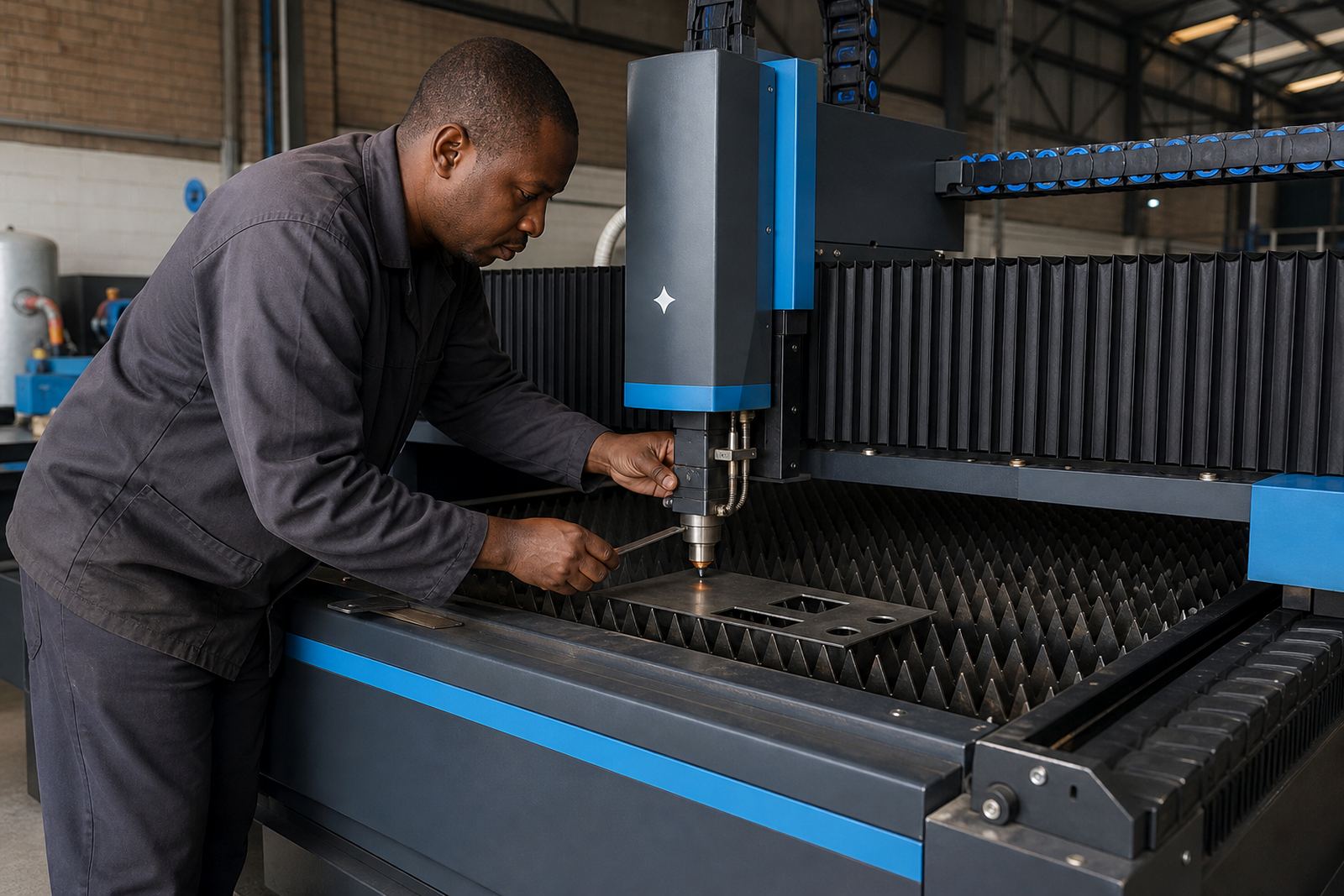
On site, we aligned the head to the machine axis, checked the nozzle height response and confirmed the focus position against the material test pattern the shop was using. The alignment was not treated as a one-off twist and walk away job. The machine had to be stable on the specific panel sizes being cut, and that meant watching the head under real running conditions while the operator ran the same type of parts they use every week.
What changed on the enclosure panels
After the service, the cut line settled down and the repeated panel runs were easier to hold to the same result. The shop reported cleaner edge behaviour and less fiddling at the head between jobs, which matters when a line is running several enclosure variants in a shift. Pierce consistency improved, and the machine no longer needed the same level of small corrections after each batch.
The result was not just a neater cut face. The operator also had a clearer routine for cleaning, checking nozzle condition and watching for window contamination before it turned into a bigger fault. That kind of maintenance habit makes a difference on fibre laser machines cutting sheet metal in dusty shop conditions, especially where the same head is expected to handle repeat work without constant resetting.
- More stable repeat cutting on enclosure panels
- Cleaner pierce behaviour and more even edge finish
- Less frequent head adjustment between batches
- Clearer maintenance routine for nozzle and window care
What we would repeat on a similar laser cutting head service job
On a similar panel shop job, we would start with the same bench service and not skip the optical and gas path checks. That is where many repeat problems hide. We would also keep the focus setting test tied to the actual panel programme, not just a bench mark, because real cutting tells you more than a loose fit-up ever will.
For shops in Bellville, the East Rand, Pretoria or Durban, the pattern is much the same: keep the head clean, use the correct nozzle style for the material, and replace the protective window before contamination spreads across the lens path. A sound service on the cutting head gives the machine a fair shot at holding its cut, and that saves time on the floor when enclosure work has to stay moving.
Key facts
| Project | Bellville Panel Shop |
|---|---|
| Town | Bellville |
| Machine type | Fibre laser cutting machine with manual focus head |
| Service type | Bench Head Service and On-site Head Alignment |
| Parts handled | Nozzle, focus lens, collimator lens, protective window, ceramic ring |
| Lead time | 2 weeks |