A spare head kept the cutting table moving
The shop works with thin and medium plate for local fabrication, so a damaged head could not sit out of service while parts were being checked. We took in the main cutting head at our Spartan, Kempton Park bench, supplied a prepared spare head for the machine, and kept the damaged unit aside for inspection and cleaning.
The brief was plain. Restore a clean cut path, check the nozzle seat, confirm the focus setting and make sure the protective window and ceramic ring were not carrying contamination that could throw the beam path off. The operator wanted the machine back to steady cutting on common sheet sizes, not a dramatic rewrite of the setup.
What the Durban workshop was dealing with
The machine had started showing signs that the head was not reading the cut zone cleanly. Edge finish was drifting, the nozzle was taking wear faster than normal and the operator could see slag build-up on a few runs. On this type of work, a small fault in centring or sensor reading can disturb the whole cut pattern.
- Main head removed for bench service and cleaning
- Spare head prepared so the machine could keep working
- Focus position checked against the cutting programme
- Capacitive height sensing inspected for stable reference
- Gas path opened and checked for dirt or restriction
Coastal air around Durban can add its own layer of nuisance, especially where heads stand in a shop with open doors and mixed dust from grinding and cutting. Moisture and fine grit do not need much encouragement to settle on lenses, windows and ceramic parts.
Bench work on the cutting head assembly
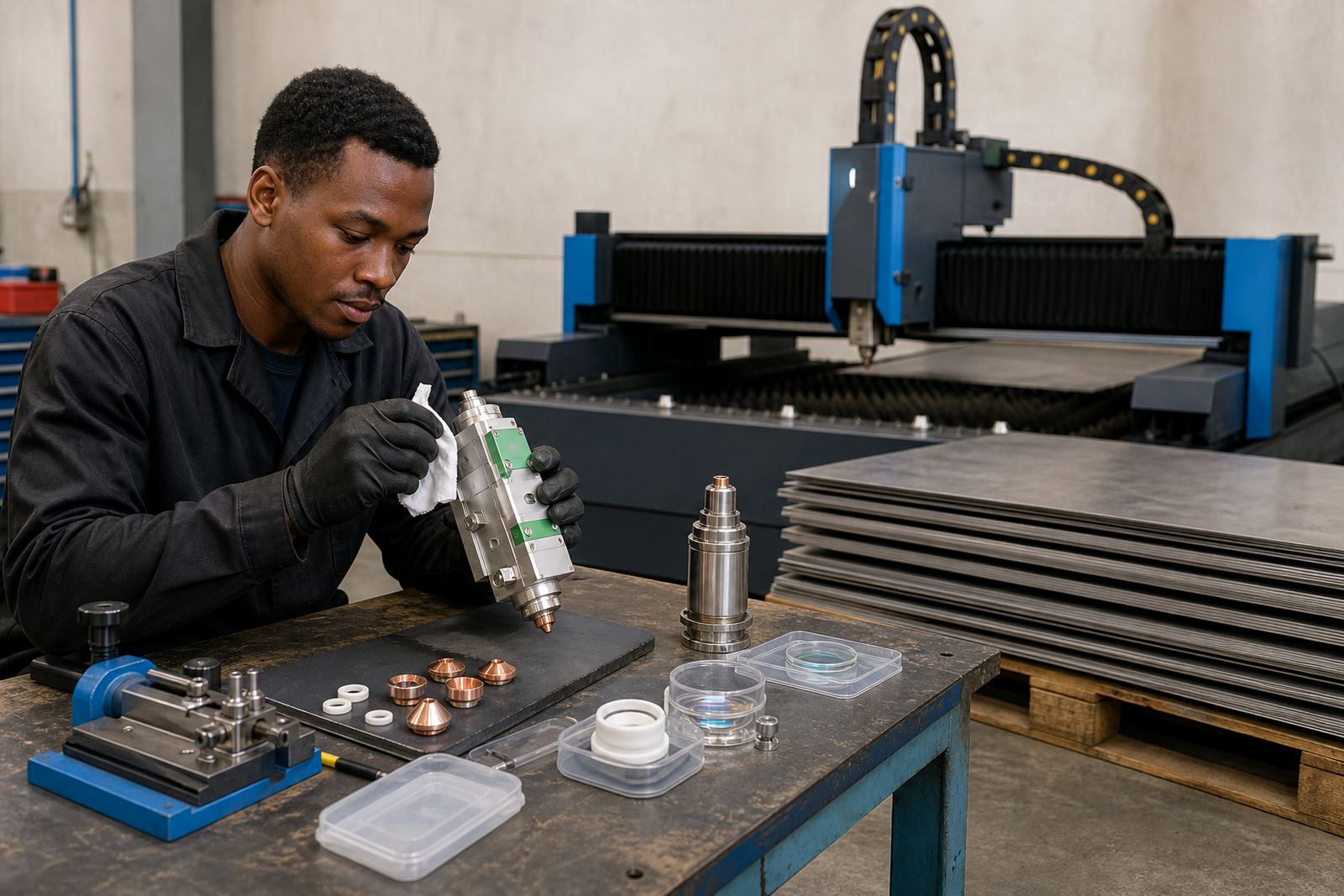
At the bench, Jaco stripped the head down far enough to inspect the nozzle seat, lens condition and the ceramic ring. The focus and collimator lenses were checked for marks, and the protective window was replaced because the surface showed heat tint and fine contamination that would have kept affecting cut quality.
The cleaning routine was not rushed. Optical parts were handled in sequence, the internal passages were cleared, and the head seal was checked for wear. Where the sensor stack depends on a clear reference surface, a dirty ring or window can change the reading even when the machine settings look correct on screen.
- Single layer and double layer nozzles sorted by condition
- Focus lens and collimator lens checked for clarity
- Protective window replaced before reassembly
- Ceramic ring renewed where seating had worn
- Head seal inspected for air leakage and dust entry
Why the spare head was important on this job
The Durban team needed continuity. A spare fibre laser cutting head was prepared so the machine would not wait on a full rebuild before taking on work again. That spare unit was matched to the machine’s cutting style, with focus setting checked, nozzle centring verified and the sensor path confirmed before dispatch.
For shops that cut daily, a prepared head is more than a backup box on a shelf. It gives the operator a clean changeover point when the working head needs attention, and it removes the pressure that comes with trying to keep a contaminated head alive for one more shift.
We also checked the gas path and made sure the head could sit properly on the machine mount. A slightly off centre nose, or a ring that does not seat flat, can send the beam off line and leave the operator chasing a cut fault that looks like a settings issue.
On-site alignment after the bench service
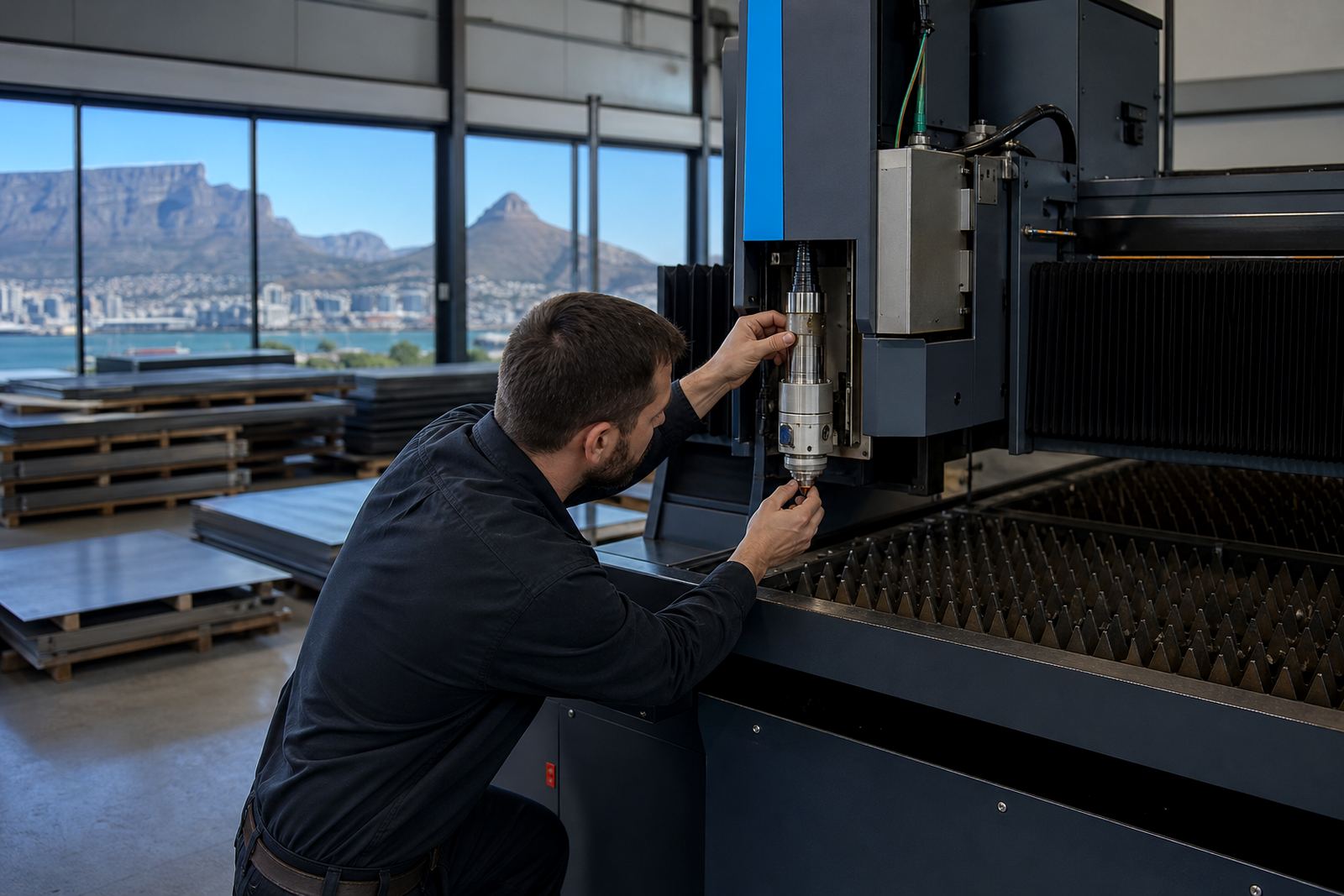
Lerato handled the on-site alignment in Durban after the bench work was complete. The fitted head was brought into line, then the nozzle centring and sensing were verified on the machine. That step matters when the machine is working through varied plate thicknesses, because the head must keep its reference while the table moves and the cut height shifts.
- Head alignment checked on the machine frame
- Capacitive sensor behaviour tested under cutting conditions
- Focus setting confirmed against the job mix
- Nozzle seating checked after installation
- Protective window area inspected for dust entry
The site visit also gave us a chance to look at the shop’s handling routine. If a head is fitted, removed and stored without care, dust finds its way into the wrong places. In a coastal city that makes the difference between a head that stays clean and one that keeps drawing attention.
The result on the cut floor
Once the spare head was in place and the serviced unit had been reworked, the shop was able to continue cutting without waiting for a major rebuild. Edge quality steadied up, the nozzle stayed centred and the focus position held better through repeated jobs. The operator also had a cleaner starting point for future maintenance, because the optical parts and sensing path were back in known condition.
What mattered most was not a single flashy test cut. It was that the machine settled into a usable pattern again and the Durban workshop could keep its normal sheet-metal flow moving. On mixed plate work, that kind of consistency saves time, reduces scrap and cuts down on the stop-start habit that creeps into a busy shop when a head is not behaving.
How we would set it up the same way on a similar job
We would still split the work between bench service and on-site alignment, because that sequence gives the cleanest result on a fibre laser head that has picked up contamination or alignment drift. We would also prepare a spare head before the machine is left exposed, so the shop is not forced into a gap while the main unit is being cleaned.
For a similar Durban job, the critical points would stay the same: clean optical parts in order, replace worn consumables before re-fit, verify the capacitive sensing path, and make sure the nozzle is centred after installation. That is the practical side of head work, and it is the part that keeps the cut stable when the shop is under pressure.
Key facts
| Client type | Durban sheet-metal shop |
|---|---|
| Work carried out | Bench head service, spare head preparation, on-site alignment |
| Parts handled | Nozzles, focus lens, collimator lens, protective window, ceramic ring |
| Technical checks | Nozzle centring, focus setting check, capacitive sensor check, gas path inspection |
| Service base | Spartan, Kempton Park |
| Project coverage | Durban with support across South Africa |