

The Alrode head that needed more than a quick clean
The machine was still cutting, but the shop had started seeing rougher edge quality, more dross on certain jobs and a touchy height response near the start of a cut. That usually points to a mix of wear, contamination and small alignment drift rather than one single fault. On this head the body had seen hard work, and the seal surfaces were no longer holding out fine dust the way they should.
The brief was to strip the head on the bench, inspect the optical path, replace worn sealing parts and check the sensing side before the head went back into daily use. The client needed a practical fix for a busy Alrode jobbing environment where short runs, mixed material thicknesses and repeat clamping changes can shake out weak spots fast.
- Client type: sheet-metal jobbing shop
- Town: Alrode, Gauteng
- Work type: fibre laser cutting head bench service
- Main fault pattern: wear, contamination and seal loss
What we stripped down and checked on the bench
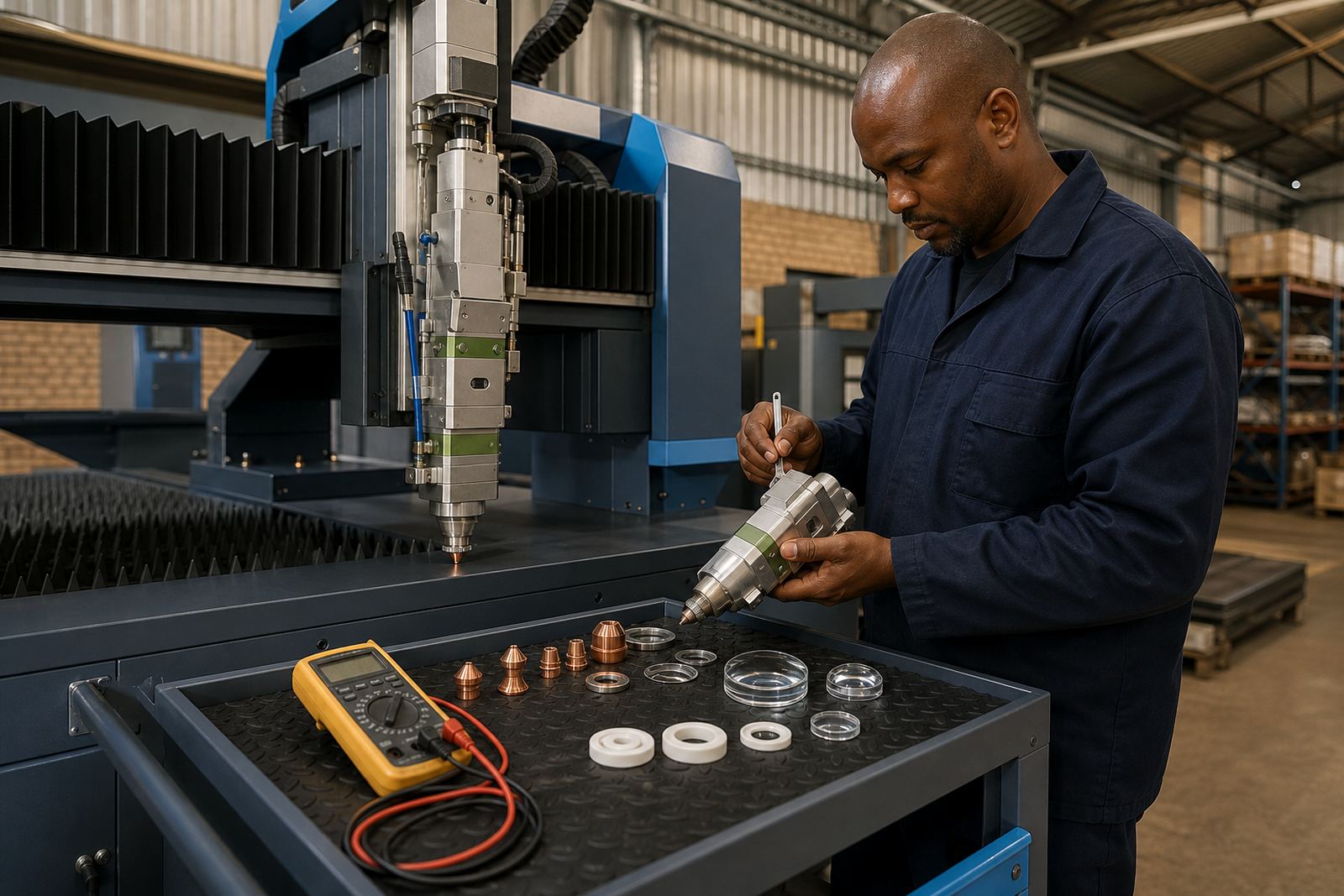
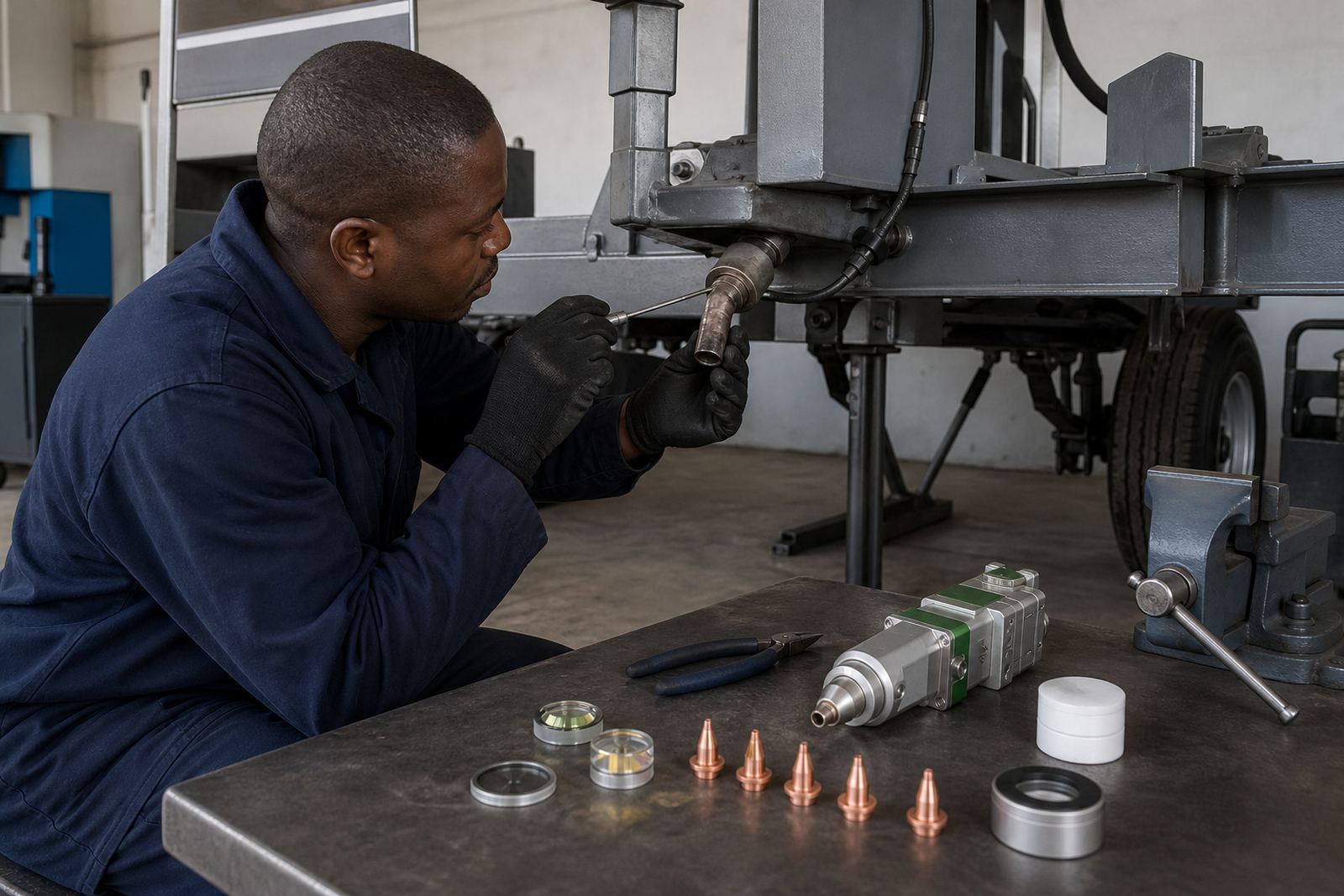
The head came apart in a controlled bench service so each part could be inspected without the pressure of the machine sitting idle in the shop. We cleaned the body, checked the seating faces, tested the optical stack and looked for heat marks, scoring and dust paths that would point to leakage or repeated poor handling. The ceramic ring also needed attention because the arc start zone showed signs of wear.
Focus and collimator lenses were inspected for surface haze and edge contamination. Protective windows were checked for clouding and tiny pitting that can build up from spatter and poor gas control. Where parts were still serviceable, they were cleaned properly and set aside. Where wear was too far along, they were replaced rather than pushed back into the head for another cycle of trouble.
- Bench stripdown and inspection
- Seal replacement on the worn body
- Optical path cleaning and lens review
- Ceramic ring replacement
Seal work, optical path checks and the small parts people miss
Small parts matter in these heads. A tired seal can let fine grime creep into places that are hard to clean later, and once that happens the cut quality slips in ways that look random on the shop floor. We replaced the seal set and checked the internal routing so the body could hold steady again under normal cutting conditions.
The optical path was inspected for cleanliness and alignment marks, then the lenses and window position were checked against the head geometry. Nozzle condition also matters, because a damaged or poorly centred nozzle can throw off the gas stream and make the cut behave unevenly. We reviewed the nozzle stack, the ceramic interface and the contact surfaces so the head would be ready for proper centring back on the machine.
- Seal faces cleaned and rebuilt
- Protective window condition checked
- Nozzle centring reviewed
- Gas path inspected for dust and restriction
Height sensing and focus checks for mixed material jobs
Alrode jobbing work usually means a mix of sheet sizes, offcuts and short production bursts. That puts pressure on capacitive height sensing and on the focus setting, especially where the operator is changing material thickness during the day. We checked the sensor response and made sure the head was reading the surface in a stable way rather than hunting around the set point.
Focus settings were verified against the expected cutting range for the shop’s work. If focus is off, even by a small amount, the head can produce wider kerf, extra edge burr or uneven piercing. Cleaning routines were also discussed with the shop team so the lens window, nozzle and exposed head faces could be kept in better condition between services. A little regular care saves a lot of nuisance faults later, especially in dusty bays.
- Capacitive sensor check
- Focus setting check
- Cleaning routine guidance for operators
- Review of the head seal points
Project pace and the handover back into production
This job took two weeks from receiving the order to final handover. The first stage was strip, inspection and parts selection. The second stage covered rebuild, cleaning and final setup checks before the head went back to the client. There was no guesswork in the sequence, because the worn body needed proper attention before it could be trusted on repeat cutting.
Once the head was reassembled, the service notes covered the parts replaced, the visible wear points and the areas the shop should watch during normal use. The result was a cleaner optical path, steadier sensing and a head that was ready for regular work without the dirt paths and loose sealing that had been causing trouble before. The machine room benefited too, because a well-sealed head tends to stay cleaner longer.
- Timeline: 2 weeks
- Scope: bench service and rebuild
- Outcome: cleaner path and steadier head operation
- Follow-up: practical care notes for the shop team
What we would repeat on a comparable Alrode job
On a similar job we would still start with a full bench strip, because the external symptoms rarely tell the whole story. A worn head body, tired seals and dirty optics can sit behind the same cut faults, and only a careful inspection shows what really needs replacing. The best results came from treating the head as a set of linked parts, not as one isolated fault.
For jobbing shops, the useful habit is to check the nozzle, protective window and ceramic ring before small wear turns into expensive downtime. It also helps to keep the cleaning routine practical and short, because a busy floor will follow a routine that fits the day. That matters in Alrode and across Gauteng, where mixed work and fast changeovers put pressure on laser heads all the time.
- Start with a complete bench inspection
- Replace seals before contamination spreads
- Check focus and sensor stability together
- Keep the cleaning routine short and repeatable
Key facts
| Project | Alrode Jobbing Shop |
|---|---|
| Location | Alrode, Gauteng |
| Service type | Bench Head Service |
| Scope | Seal replacement and optical path inspection |
| Timeline | 2 weeks |
| Key parts | Seals, protective window, ceramic ring, nozzle, lenses |