When the nesting table never sits empty
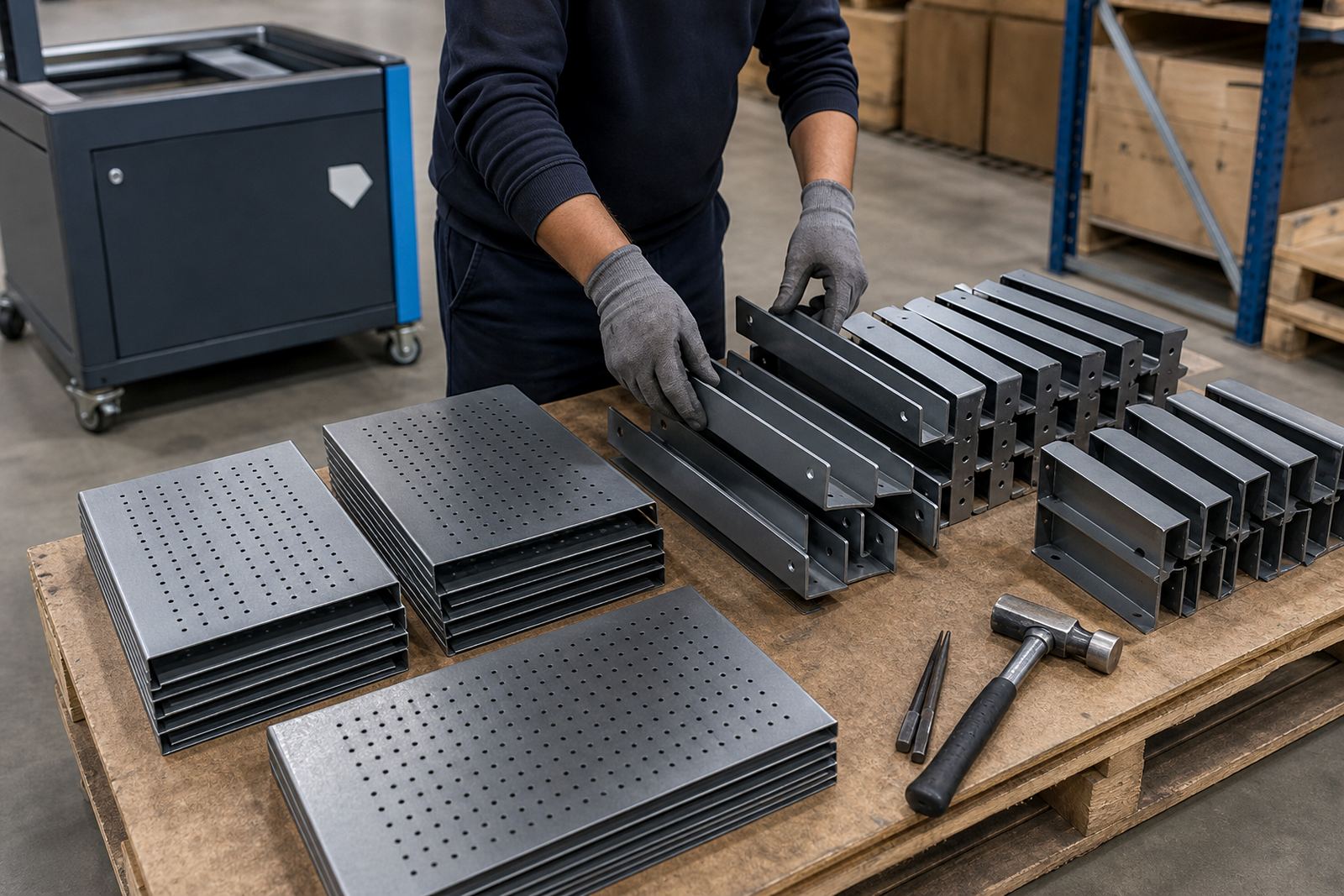
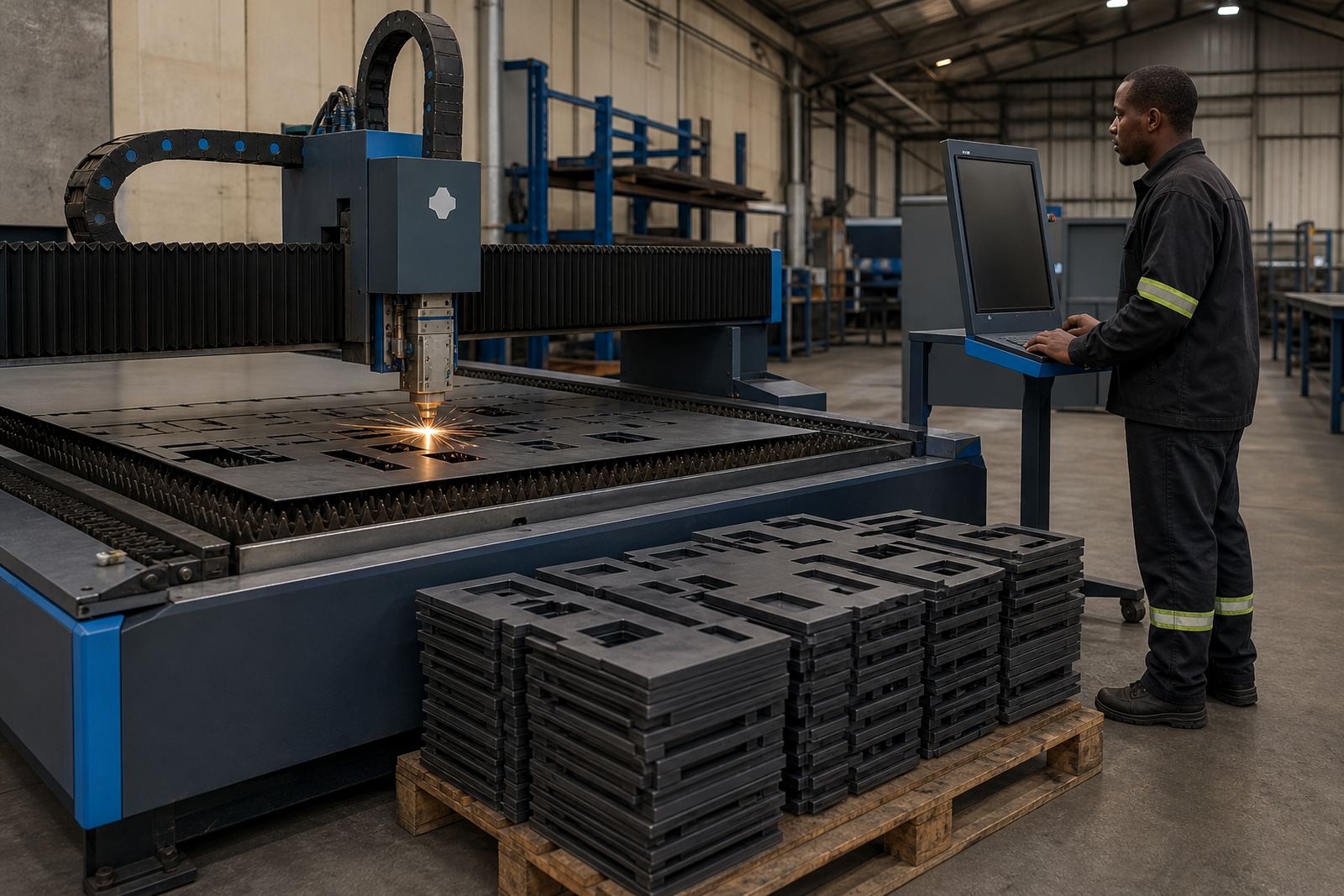
Production nesting shops live on throughput. Sheets are loaded in tight packs, parts are cut in long runs, and every stop for a damaged nozzle or dirty window costs time across the whole batch. The usual picture is a fibre laser cutting machine working with a cutting head, capacitive height sensing, focus control, a gas path that must stay clear, and consumables that need regular attention. When those pieces drift out of spec the cut edge tells the story fast: dross builds up, corners round off, piercing becomes uneven and small parts start moving before the cut closes.
For this kind of shop, the useful plan is not about buying more parts than you need. It is about holding the right spares, setting a clean routine for lens checks, and keeping head alignment correct after a crash or a rough changeover. That is where bench servicing and on-site alignment matter, especially when the machine runs long hours on nested sheet programmes.
What a busy sheet-metal line usually carries
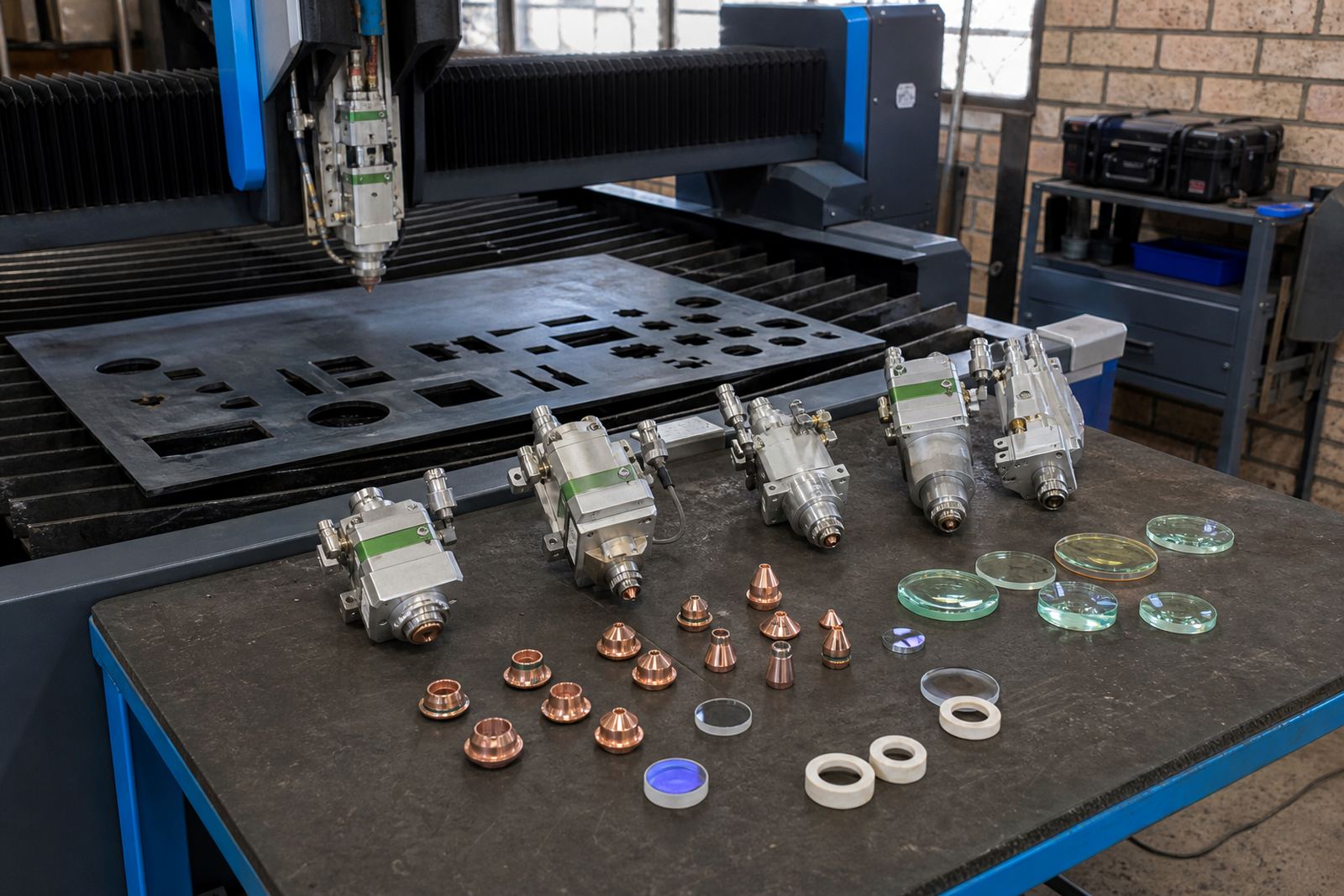
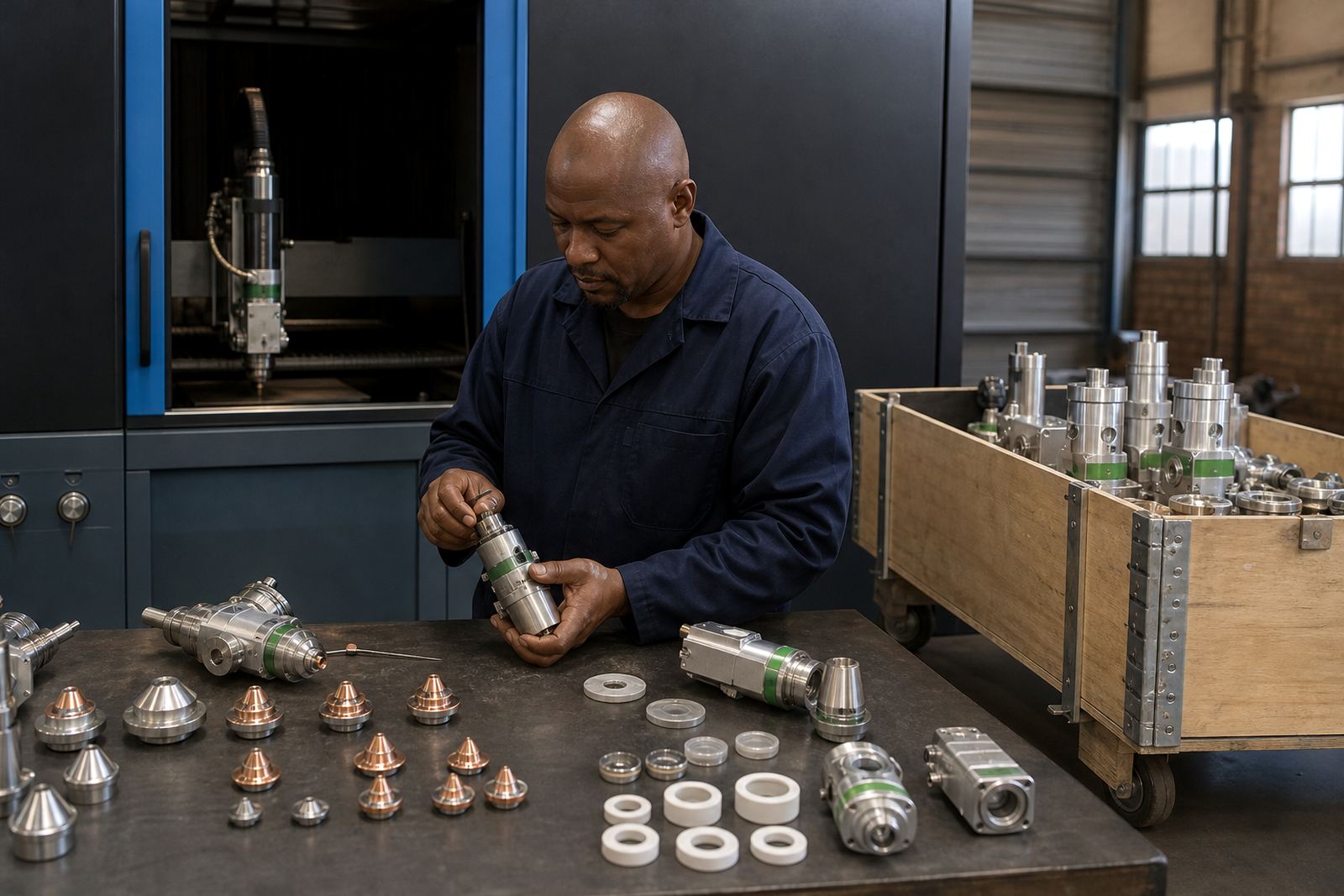
Most nesting shops that run fibre lasers keep a narrow set of working parts close to the machine. The items change with thickness, gas choice and the cutting schedule, but the pattern is familiar. A good consumable drawer usually holds nozzles in more than one size, ceramic rings, protective windows, and the lenses that sit in the optical path. The cutting head itself must stay clean and true, because even a slight offset can show up on small features and shared lead-ins.
- Single layer nozzles for cleaner thin-sheet cutting and fine detail
- Double layer nozzles where the cut profile and gas flow need extra control
- Focus and collimator lenses matched to the machine setup
- Protective windows that help shield the optics from spatter and smoke
- Ceramic rings for stable head mounting and repeatable sensing
- Capacitive sensing parts for height follow and sheet variation control
When the stock is organised by diameter, lens type and machine position, the changeover crew spends less time guessing. That matters on night shifts and weekend runs when the nesting queue is already lined up.
Focus, centring and the edge you ship
In production nesting, the detail that saves a batch is often small. Nozzle centring affects how the assist gas leaves the head. Focus setting changes the cut width and the balance between speed and edge finish. A protective window that has picked up haze can scatter the beam and make the cut less stable, while a dirty ceramic ring can disturb sensing and height tracking. The result is usually seen first on thin gauge sheets or on compact parts packed close together.
A proper check does not need drama. It needs a clean workbench, correct handling of lenses, and a steady cleaning routine that respects the coating on optical parts. When the head has taken a minor crash, or the cut face begins to vary across the bed, a bench service can save the machine from carrying a problem into the next production lot. On-site alignment is useful when the head position, beam path or sensor reading has shifted and the machine should stay in service.
Layout advice for a shop that nests hard
The right shop layout helps the machine more than people think. Keep the consumable rack close enough to the laser area that operators do not walk across the shop for every nozzle change, but separate the clean optics from grinding dust and general tool traffic. Store protective windows and lenses in sealed, labelled containers. Put the ceramic rings and nozzles where the team can reach them without opening mixed boxes or handling them with oily hands.
- Keep the clean parts cupboard away from cutting dust and oil mist
- Label nozzle sizes by job type and material thickness
- Separate optics for each head if the shop runs more than one machine
- Keep a check sheet for focus setting, centring and window condition
- Inspect the gas path after long nested runs or a head bump
In coastal towns such as Durban and Cape Town, humidity can make storage more demanding. A covered, dry cabinet for optics is a practical move. In inland shops, dust from sheet handling and grinding is the bigger enemy. Either way, the aim is the same: fewer surprises when the next nest starts.
Common mistakes that slow a production week
One of the most common errors is pushing a nozzle past the point where the bore has worn or picked up damage. Another is treating every cutting problem as a software issue when the real cause is contamination in the head or a shifted focus setting. Some shops also mix consumables across machines and assume they are close enough. On a busy floor, that habit can waste an hour before anyone notices the fit is wrong.
Other problems show up after a crash. A bent part may still cut for a while, but the head can sit off-centre and the sensor may misread the sheet height. If the team keeps cutting without checking the alignment, the same fault can spread through an entire batch. For nesting shops, it is usually cheaper to inspect early than to carry a small fault through a full plate stack.
Budget ranges that make sense in Rand
The cost of keeping a nested cutting line steady depends on head condition, consumable wear and how much work is needed on the optical side. A basic nozzle and ceramic ring top-up is usually a small spend compared with a full head service. Protective windows and lenses sit higher in the budget because they protect the cut quality and the machine optics. A bench service or alignment visit is a separate line, and crash damage or seal rebuild work can move the figure up depending on what the inspection finds.
As a working guide, many production shops budget in bands rather than chasing a single number. Smaller consumable top-ups may sit in the low hundreds of Rand, while a fuller set of nozzles, windows and rings can run into the low thousands. Lens replacement, head servicing and on-site alignment naturally move into a higher bracket. The right number depends on the machine model, the number of heads in use, and how hard the nesting schedule runs the equipment.
For shops in Johannesburg, Pretoria, East Rand, Rustenburg, Durban and Cape Town, it helps to plan around scheduled maintenance rather than waiting for a failed part to stop the line. That keeps spare heads, windows and sensing parts ready for the next run, and it makes workshop planning less noisy when orders stack up.