When thin sheet starts showing every fault
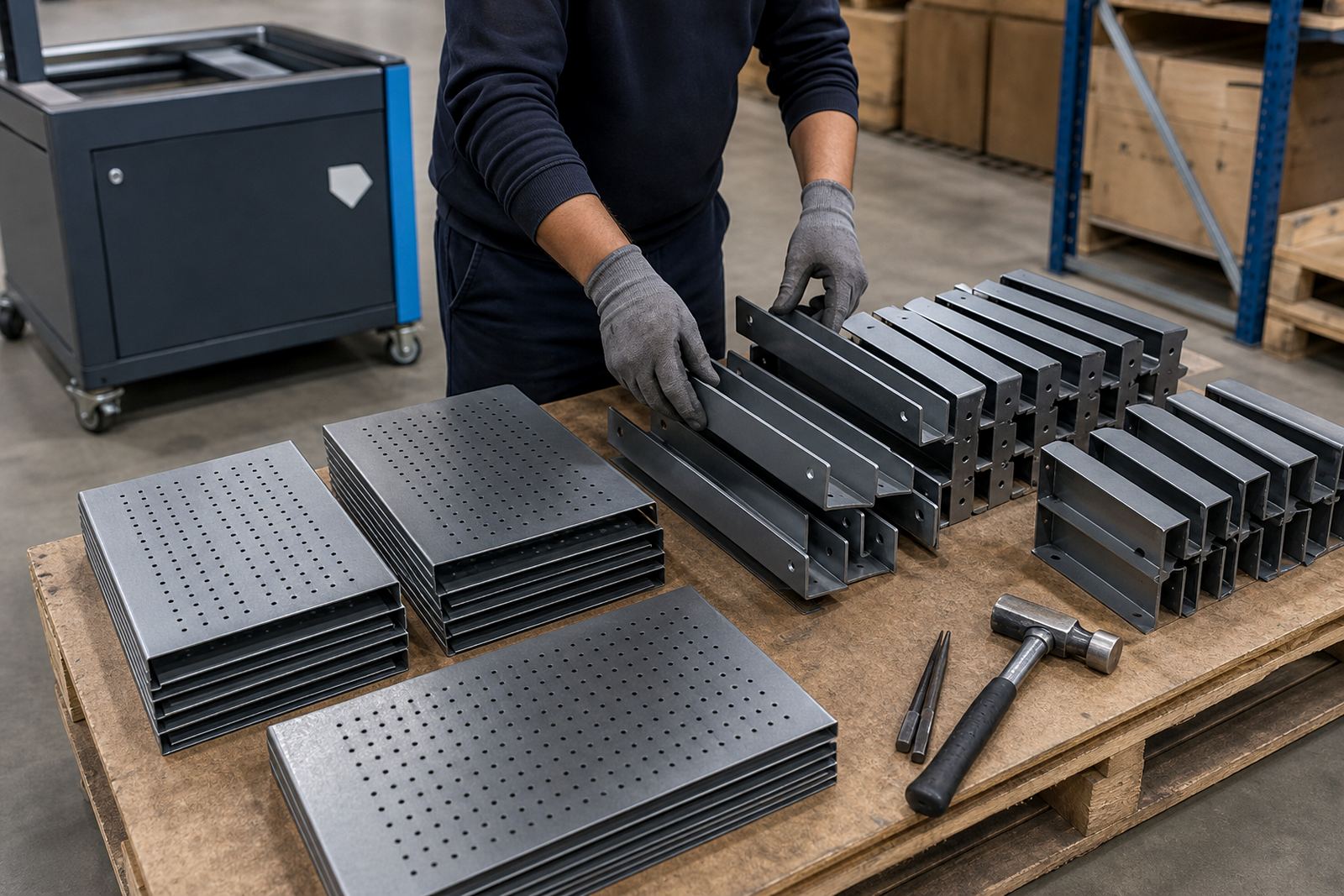
Jobs on 0.8 mm, 1.0 mm and 1.6 mm sheet can look perfect in programming and still give trouble at the machine. A nozzle that is fractionally off-centre, a worn ceramic ring, or a dirty protective window will usually show up first on light-gauge work because the kerf is narrow and the heat affected zone is unforgiving.
In shops around Spartan, Kempton Park and the East Rand, the same pattern appears on mild steel, stainless steel and aluminium. The cut may start clean then leave tiny burrs, rounded corners or intermittent slag on short internal features. On thin sheet, a small shift in focus or gas flow is enough to change the result.
Head set-up that suits fine gauge cutting
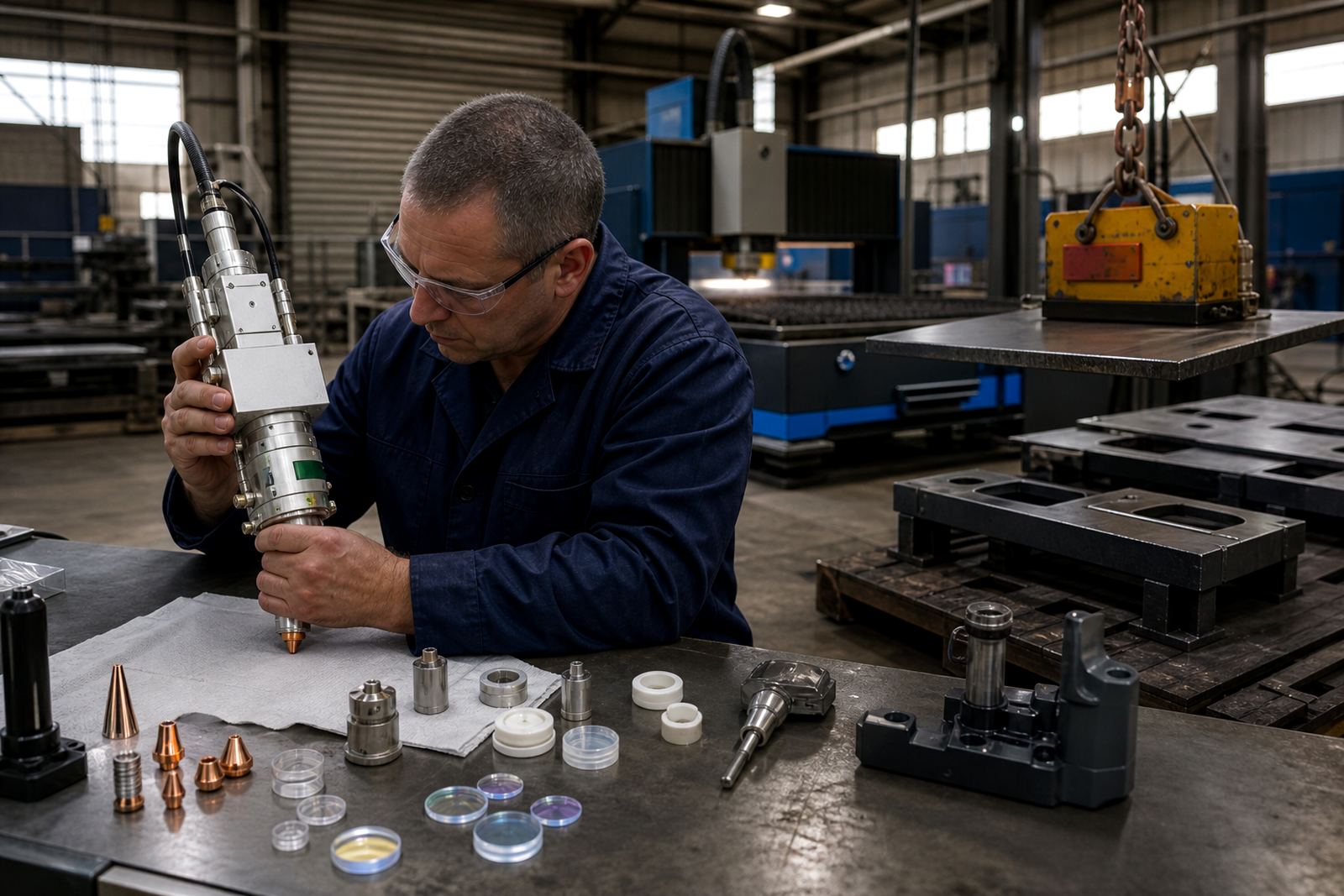
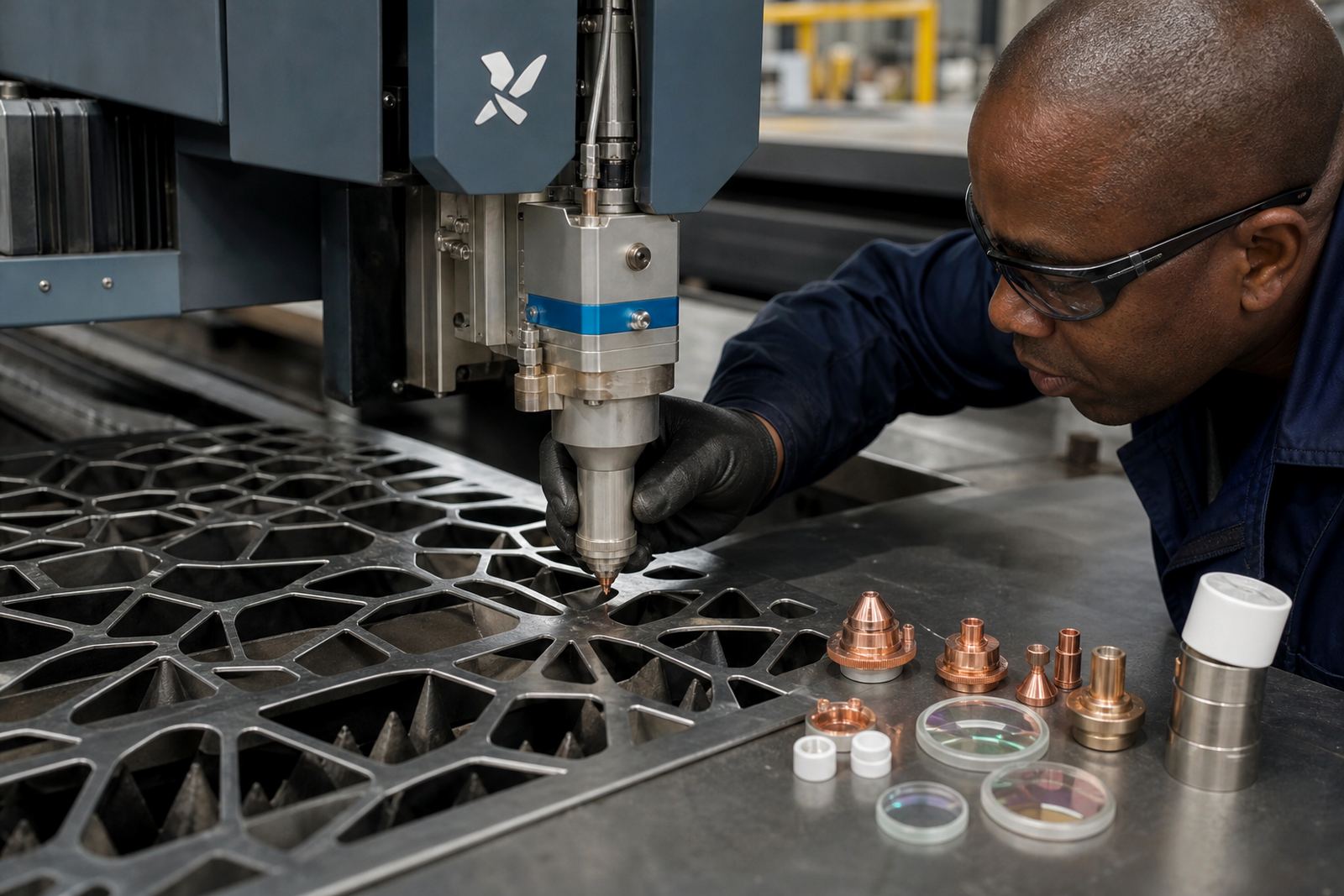
The typical equipment set for this work includes a fibre laser cutting head, single layer or double layer nozzles, focus lenses, collimator lenses, protective windows and ceramic rings. Capacitive height sensing must stay steady because even a small tracking error can move the head too close to the sheet and mark the edge.
- Single layer nozzles are often used where the gas stream must stay tight and stable.
- Double layer nozzles can help where airflow control and resistance to spatter matter more.
- Focus and collimator lenses need clean faces and correct seating.
- The protective window should be checked for haze, pitting and heat spots.
- The ceramic ring must hold the nozzle square and free of cracks.
Bench checks help isolate wear that is harder to see on the machine, especially after a head contact or a messy pierce cycle.
Planning around the sheet size and the nest
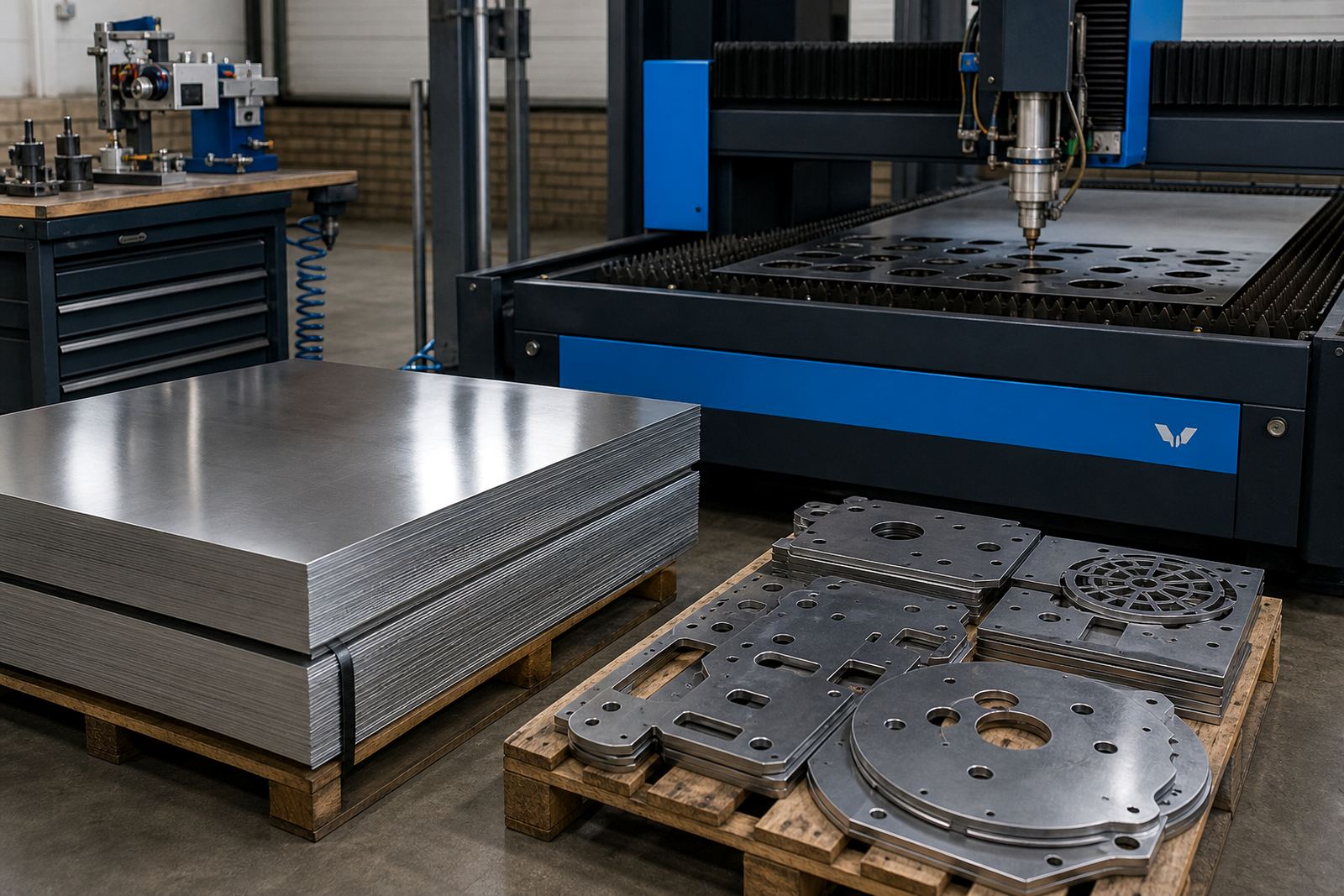
Thin sheet work is usually decided before the first cut starts. Nesting should leave enough bridge strength to stop small parts from lifting, while also keeping pierce points away from tight corners and visible edges. If the sheet bows slightly, the head must follow that movement without letting the standoff wander.
In a busy sheet-metal shop, the layout team often has to balance speed against edge quality. Long straight runs may cut well, then a cluster of tiny parts can pull heat into one area and change the behaviour of the cut. That is why focus setting checks and gas path inspection matter before a run of fine features.
- Leave sensible lead-in distances on visible edges.
- Group similar gauges together where possible.
- Keep small parts away from heavy heat build-up zones.
- Check whether the machine is using the right nozzle size for the gas and material.
Common mistakes that cost time on light-gauge jobs
The same faults keep turning up on thin sheet. Nozzle centring is often the first issue, because a nozzle can look sound to the eye and still push the stream off line. Dirty focus lenses and protective windows also slip through, especially when the machine has been running mixed material for days.
Another common mistake is changing focus without checking the rest of the head. A focus setting that worked on 3 mm plate may not suit 1 mm sheet, and the cut quality will drift if the operator keeps chasing the problem at the control screen. If the capacitive sensor has a poor reading, the head can track inconsistently and leave marks that look like a programming fault.
- Do not treat a slight burr as a minor issue on thin sheet.
- Do not ignore a noisy sensor signal or unstable standoff.
- Do not keep a damaged nozzle in service after a crash.
- Do not clean optics with rough cloths or dry workshop dust.
Bench servicing and on-site alignment for active production lines
Some jobs are best handled on the bench, especially when the cutting head needs a full clean, seal rebuild or inspection after a head strike. Others call for on-site head alignment so the machine can be checked in its working position, with the actual gantry movement and cable path in play. Both options suit fine sheet work because the tolerances are tight and the machine must behave the same from one shift to the next.
For thin sheet production, the practical service sequence often starts with nozzle centring, then lens cleaning, protective window replacement if needed, ceramic ring inspection and a check of the gas path. If the head has been bumped, a full crash damage inspection is worth doing before more stock goes through the table.
Budget ranges that make sense for thin sheet support
Work on fine sheet usually costs less to correct early than after a full run has gone wrong. A straightforward nozzle centring or focus setting check may sit in the low hundreds of Rand, while cleaning and inspection work on the head can sit higher once the machine has to be stripped and reset. Protective window replacement, lens work and ceramic ring replacement are usually priced separately because the parts and handling differ.
For broader support, such as bench head service, gas path inspection, head seal rebuild or on-site head alignment across Johannesburg, Pretoria, Durban, Cape Town or Rustenburg, the budget can move into the low thousands of Rand depending on access, travel and the condition of the head. Spare head preparation is also useful where a shop wants a unit ready for a fast swap instead of waiting on a damaged one to be sorted on the machine.
Spartan, Kempton Park is a sensible base for this work because many sheet-metal shops need parts and service that suit a production floor, not a laboratory bench.