Cut parts that fit under a store fit-out schedule
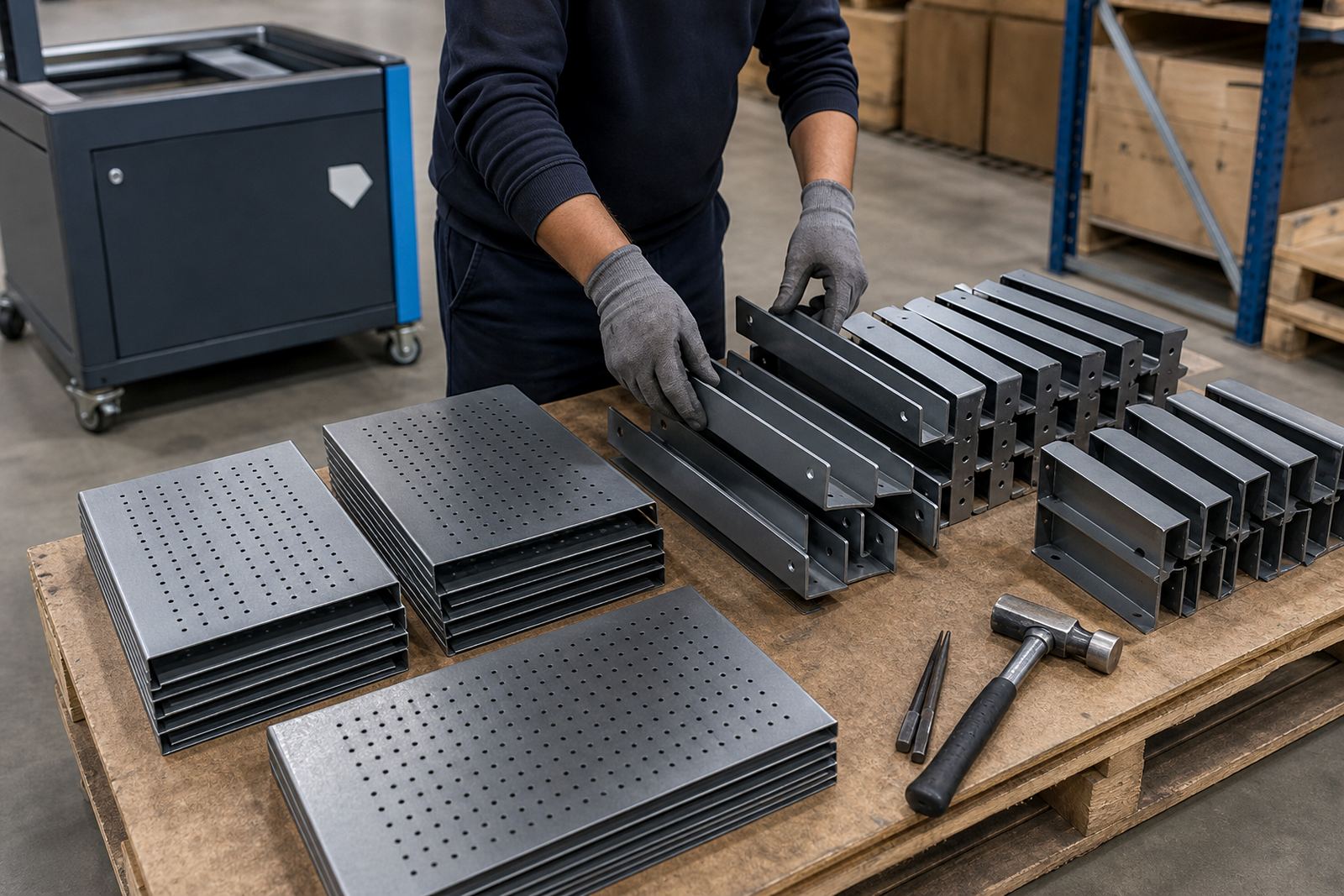
A display fixture shop usually lives on short runs and mixed sheet sizes. One day it is gondola brackets, the next it is shelf uprights, slotted plates or frame parts for a shopfront display. When the machine starts leaving burrs, light tapers or repeat size drift, the fit-up time on the bench rises fast.
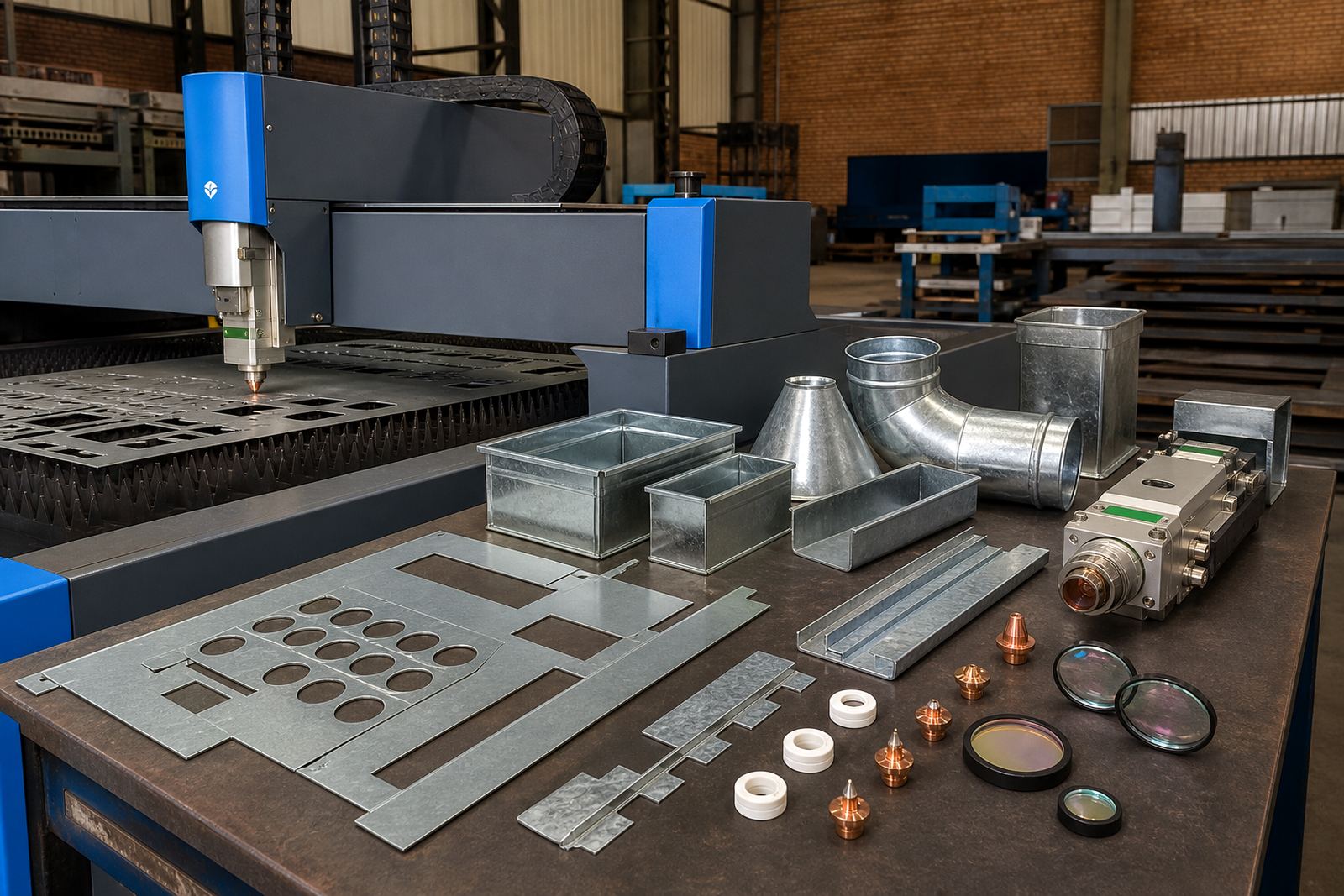
That is where the cutting head matters. Nozzle centring, focus setting, protective window condition and ceramic ring wear all affect edge quality. If the focus point shifts or the gas stream is disturbed, the cut face can go rough and small holes may need rework. On mild steel and stainless sheet, a clean beam path and steady head alignment make the difference between parts that slot together and parts that need filing.
For shops in Spartan, Kempton Park and the East Rand, the work is often a mix of small details and larger display frames. The same machine may cut 1.0 mm shelf clips in the morning and 6 mm brackets later in the day, so the head needs a sensible routine rather than guesswork.
Typical equipment set in a fixture workshop
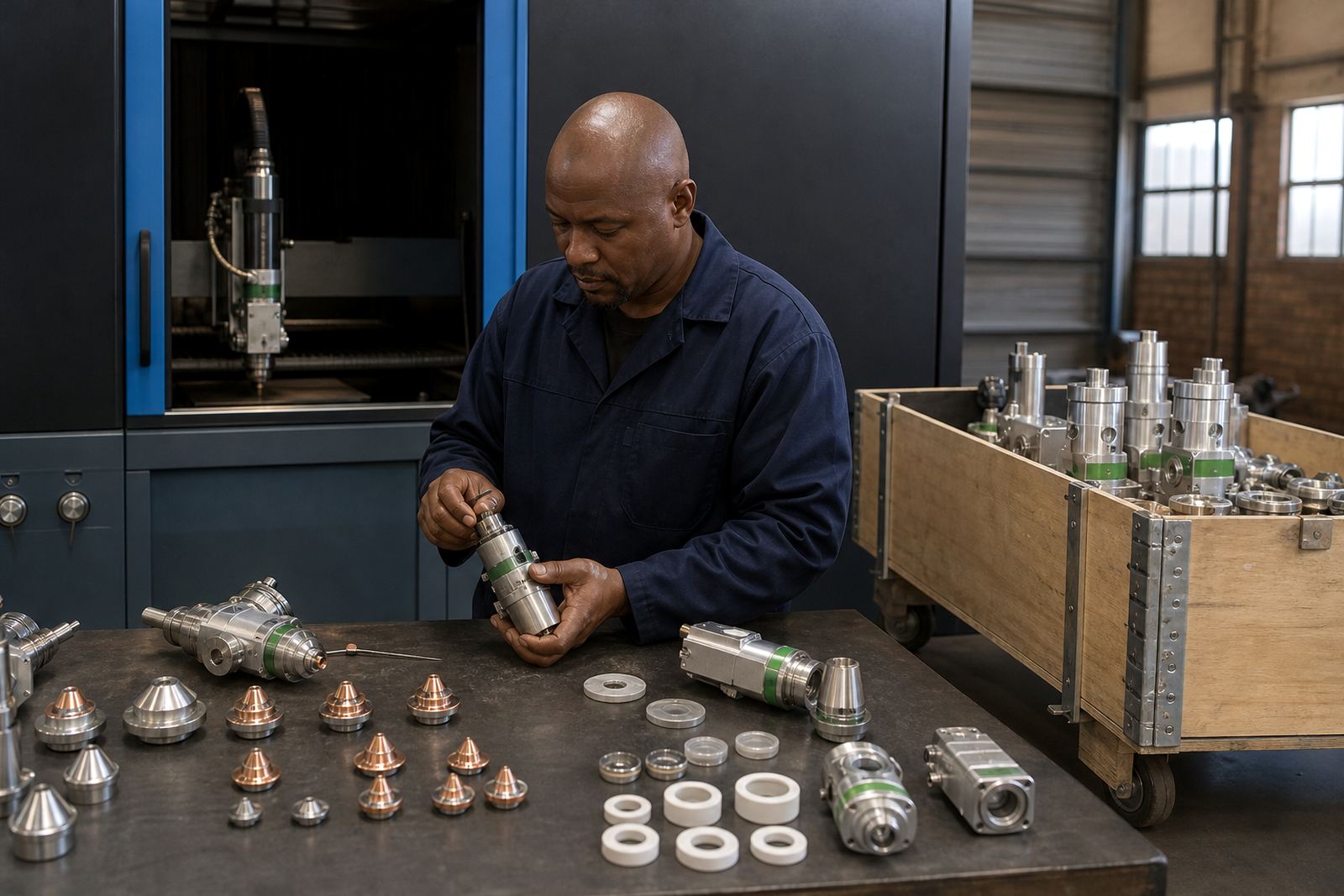
Most fixture shops use fibre laser cutting on sheet-metal parts that end up in shelving, wall displays, hanging rails and support frames. The head package usually includes a fibre laser cutting head, single layer or double layer nozzles, focus and collimator lenses, a protective window, a ceramic ring and capacitive height sensing. Each part has a job, and wear on any one of them shows up in the cut.
- Single layer nozzles suit many standard cutting tasks where the assist gas flow is steady and the edge must stay clean.
- Double layer nozzles can help with gas control on certain materials and thicknesses, especially where the cut face needs tighter control.
- Focus and collimator lenses need careful handling, because dust, heat marks and tiny chips can change the beam shape.
- Protective windows stop spatter and fumes reaching the expensive optics inside the head.
- Ceramic rings help maintain insulation and stable head contact in normal machine operation.
Capacitive sensing also needs attention. If the sensor signal drifts, the head can ride too high or too low, and both situations can leave marks on the sheet. A quick check during service saves a lot of scrap later on.
Layout habits that make the cut room behave
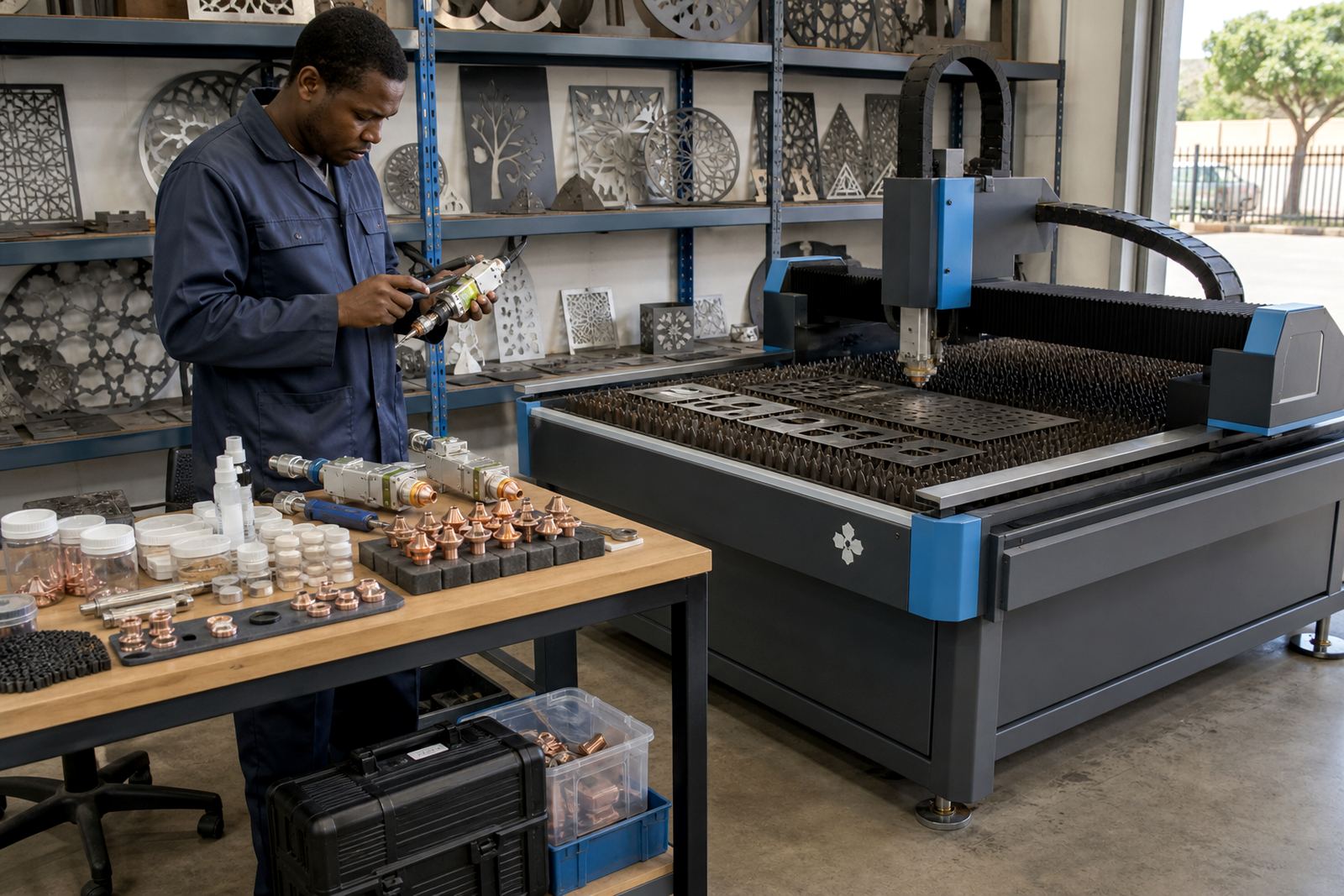
Display fixture work is rarely tidy on paper, but the shop floor can still be ordered. Keep the nozzle sets sorted by thickness range, and keep the optical parts sealed in clean containers. Dust from cardboard, MDF offcuts and grinding work finds its way into heads quickly, especially in warmer inland areas like Johannesburg and Pretoria.
Near the coast, Durban and Cape Town bring more humidity into the room, so clean storage matters even more. Protective windows should be inspected before a long run begins, not after the first poor cut. A small mark on the window can look harmless yet it scatters light and gives a rough edge on fine parts.
Plan the job sequence so the machine is not bouncing between very thin and thick sheet without a sensible setup check. For a shop making display frames, brackets and shelf hardware, that means grouping similar material where possible and checking focus when the material thickness changes sharply.
- Keep spare nozzles close to the machine, but wrapped and clean.
- Use a proper cleaning routine for lenses, not a cloth from the workbench.
- Check the gas path for dust, oil mist and loose contamination.
- Mark service dates on the head so wear trends are visible.
Bench service when the head needs a proper reset
Some heads need more than a quick wipe. Bench Head Service is useful when the optics need inspection, the seal stack is tired or the nozzle seat is no longer concentric. A bench service lets the technician inspect the head body, clean internal parts, check focus travel and look for crash damage without the pressure of a live shift.
In a fixture shop, that is often the better answer after repeated nozzle strikes or when the machine keeps losing edge quality on small cut-outs. On-site Head Alignment is the other side of the work. If the machine is already installed and the shop cannot spare the downtime for removal, alignment can be checked in place and the head returned to a workable setting.
We also look at the gas path and the sensor behaviour, because a clean nozzle alone will not fix a blocked line or a drifting capacitive reading. When the focus setting, sensor check and nozzle centring all line up, the machine behaves more predictably on repetitive parts.
Common mistakes that hold back a fixture shop
The errors are usually practical, not dramatic. People fit a new nozzle but leave debris on the seat. They replace a window yet skip the lens inspection. They change material thickness but forget to check focus. Those small misses can show up as dross, poor pierce quality or a slight angle on the edge.
Another frequent mistake is matching the wrong laser process to the job. A display fixture shop may have a neat drawing pack, but the machine still needs a reality check on cutting speed, nozzle choice and gas pressure. If the ceramic ring is worn or the seal stack has shifted, the head may start behaving badly long before the operator notices a visible fault.
Crash Damage Inspection is worth doing early after a head strike. A crash can bend internal alignment, nick the optics or upset the sensor path. Spare Head Preparation also helps when a shop cannot afford to wait around with a line of brackets still to cut.
Budgets that make sense for this kind of work
Most display fixture shops want the machine back into steady production without paying for parts they do not need. In Rand terms, a basic nozzle set and consumable change might sit in the lower thousands, while a fuller service with lenses, windows, ceramic parts and alignment work moves into a broader range. The final figure depends on the head type, wear level and whether the work is bench-based or done on site.
For planning, we break it into layers. A minor service with nozzle centring and inspection is one level. Lens cleaning, window replacement and sensor checks add another layer. If the head needs seal rebuild work, focus correction or crash recovery, the budget rises with the labour and the parts involved.
That approach suits sheet-metal shops in Rustenburg, the East Rand and the larger metro areas too. It keeps the decision tied to what the head actually needs, rather than replacing everything at once. The aim is a clean cut, stable focus and a machine that keeps pace with the work order list.