Trailer shops that cut all week feel head wear first
Trailer body work puts a cutting head under a mixed load. One shift may run 2 mm skin panels, then move to 6 mm chassis plates, then cut gussets with long pierce cycles and short lead-ins. That mix shows up in nozzle wear, focus drift and damaged protective windows faster than in light production.
In a trailer shop, a poor cut edge is not only a cosmetic issue. Burrs on mounting plates, heat tint on hinge parts and slag on weld prep all add hand finishing later. When the head is clean and the nozzle is centred, the machine keeps kerf width steadier and the fitter spends less time grinding.
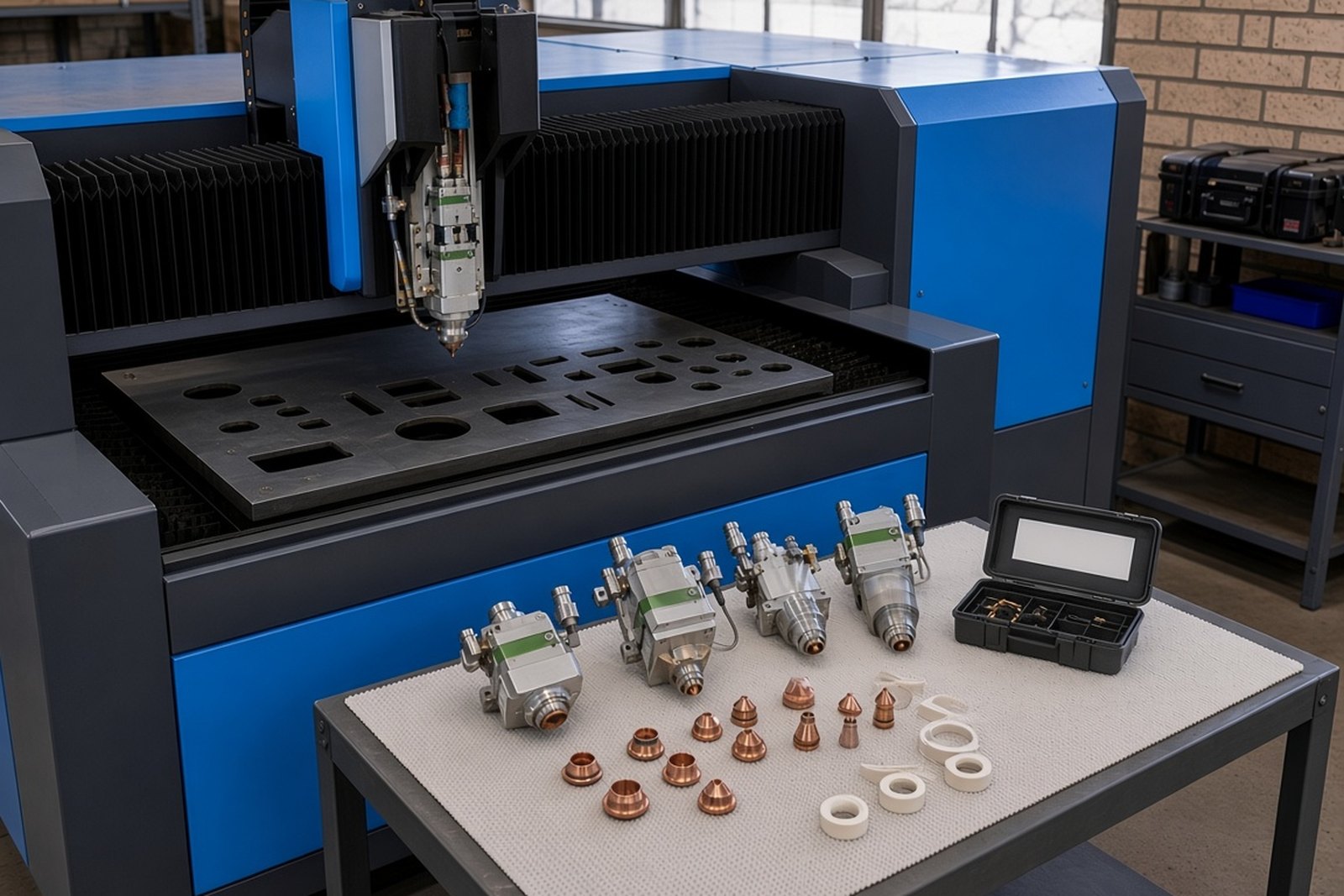
We work with the practical parts that matter on these jobs: fibre laser cutting heads, single and double layer nozzles, focus and collimator lenses, protective windows, ceramic rings and capacitive height sensing components. The aim is plain enough, keep the beam path clean and the head reading true when the table is busy.
Trailer builders in Spartan, Kempton Park often deal with mixed sheet sizes, quick changeovers and steel that arrives with mill scale, oil or a bit of surface rust. Those conditions call for a tidy head, correct standoff and a sensible cleaning routine at the machine.
Typical trailer cutting kit and where it needs attention
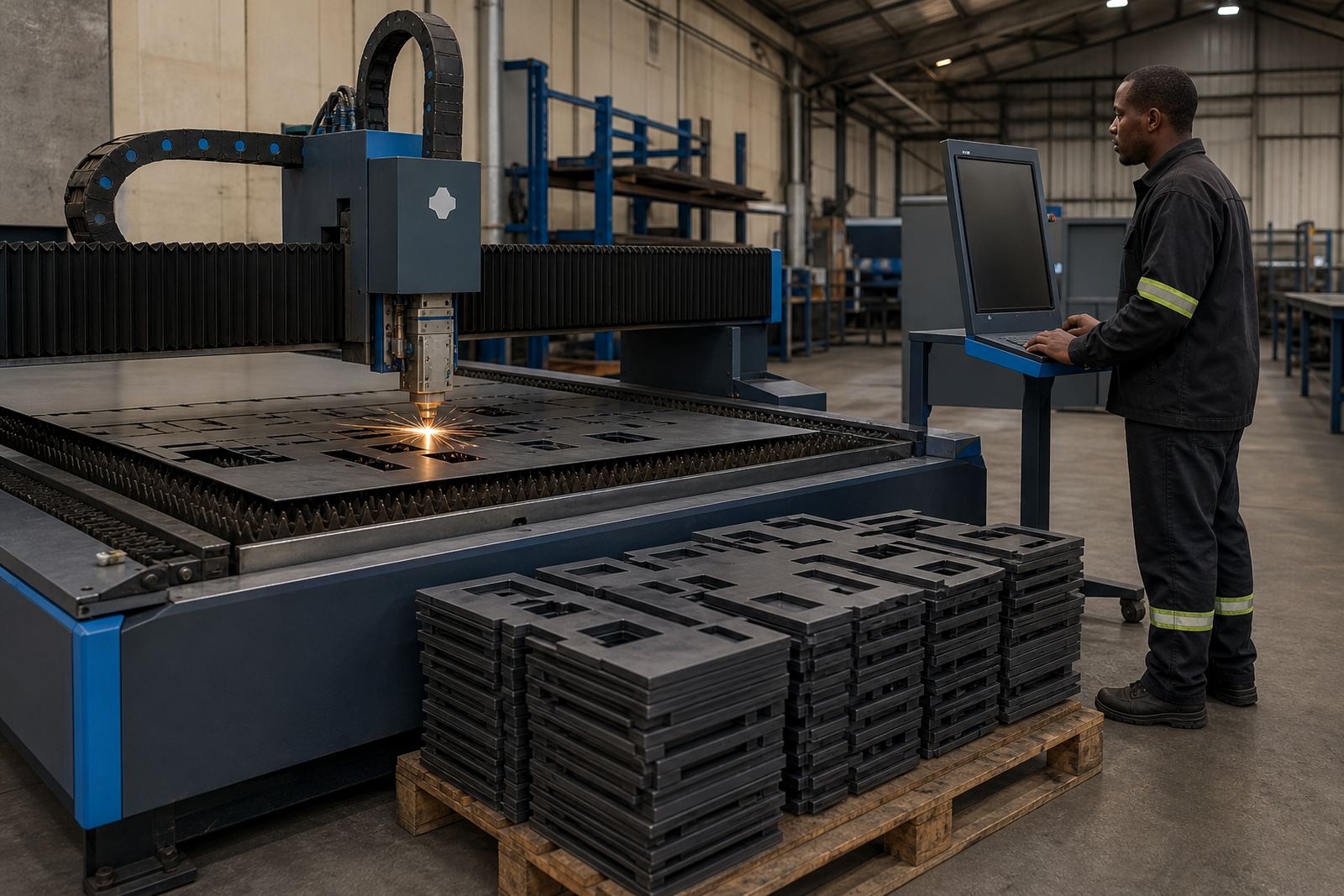
Most trailer body shops run a fibre laser flatbed for sheet parts and brackets, with cutting heads set up for stable pierce control and fine edge work. The nozzle, focus lens, collimator lens and protective window all sit in the same chain, so one dirty part can affect the rest.
We see a few repeat items on trailer work:
- Single layer nozzles for cleaner, narrower cuts on thinner sheet
- Double layer nozzles where process stability and assist gas control need a bit more tolerance
- Focus lenses that need cleaning or replacement after contamination
- Protective windows that pick up spatter, dust and smoke haze
- Ceramic rings that crack after knocks, poor fitment or a small crash
- Capacitive sensing parts that need a proper check when height control starts wandering
On trailer parts, the machine often cuts small brackets beside large panels. That means the head needs repeatable focus settings and a clean gas path. If the nozzle bore opens up or the ring runs off centre, the cut may still happen but edge quality starts to shift. On a busy floor, that becomes a batch problem very quickly.
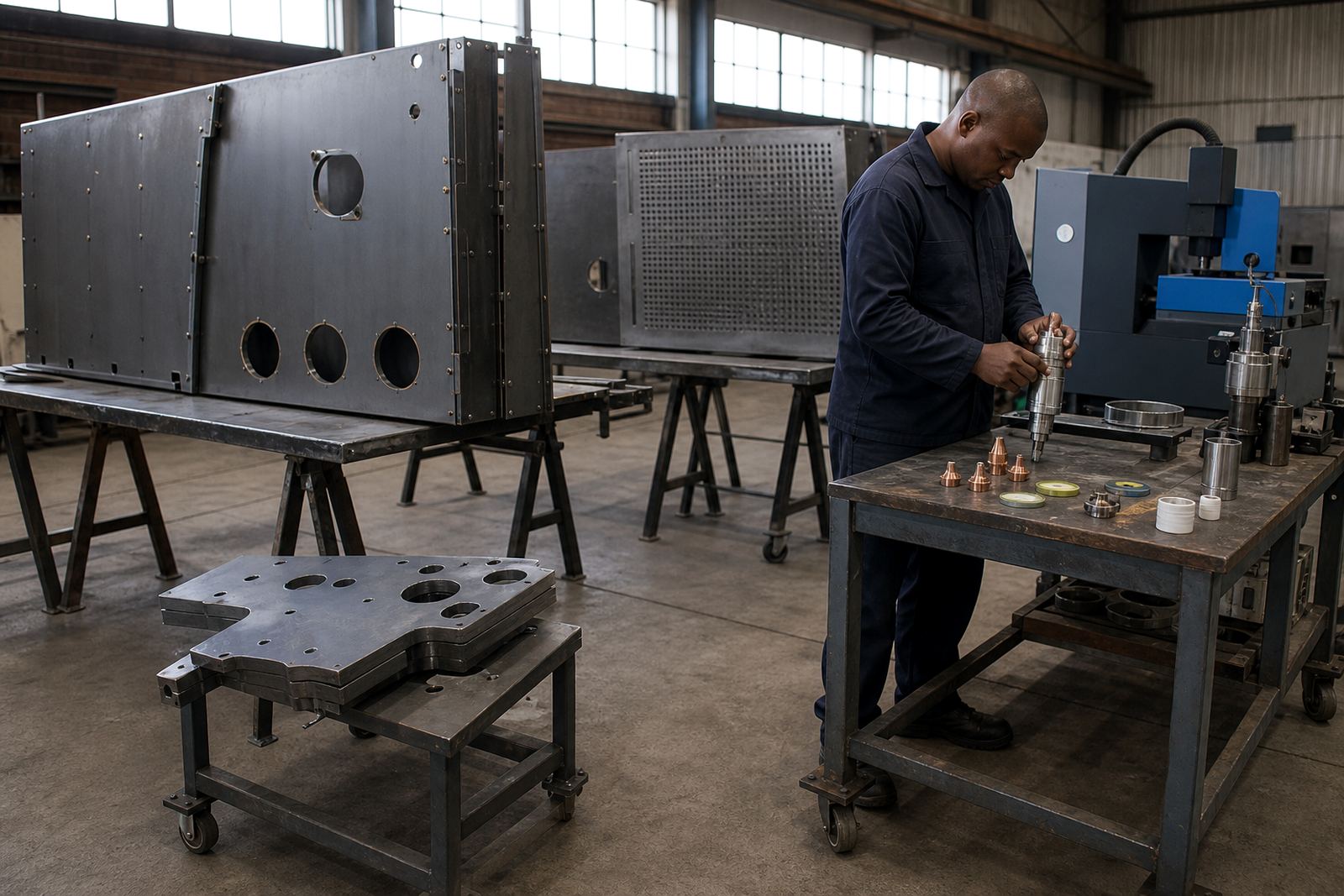
Our bench service covers head cleaning, seal checks, lens cleaning, nozzle centring and spare head preparation. Where the head cannot leave the shop, we do on-site head alignment and basic inspection at the machine, then set the work up so the operator can keep going with less drift.
Layout and planning notes for trailer body cutting bays
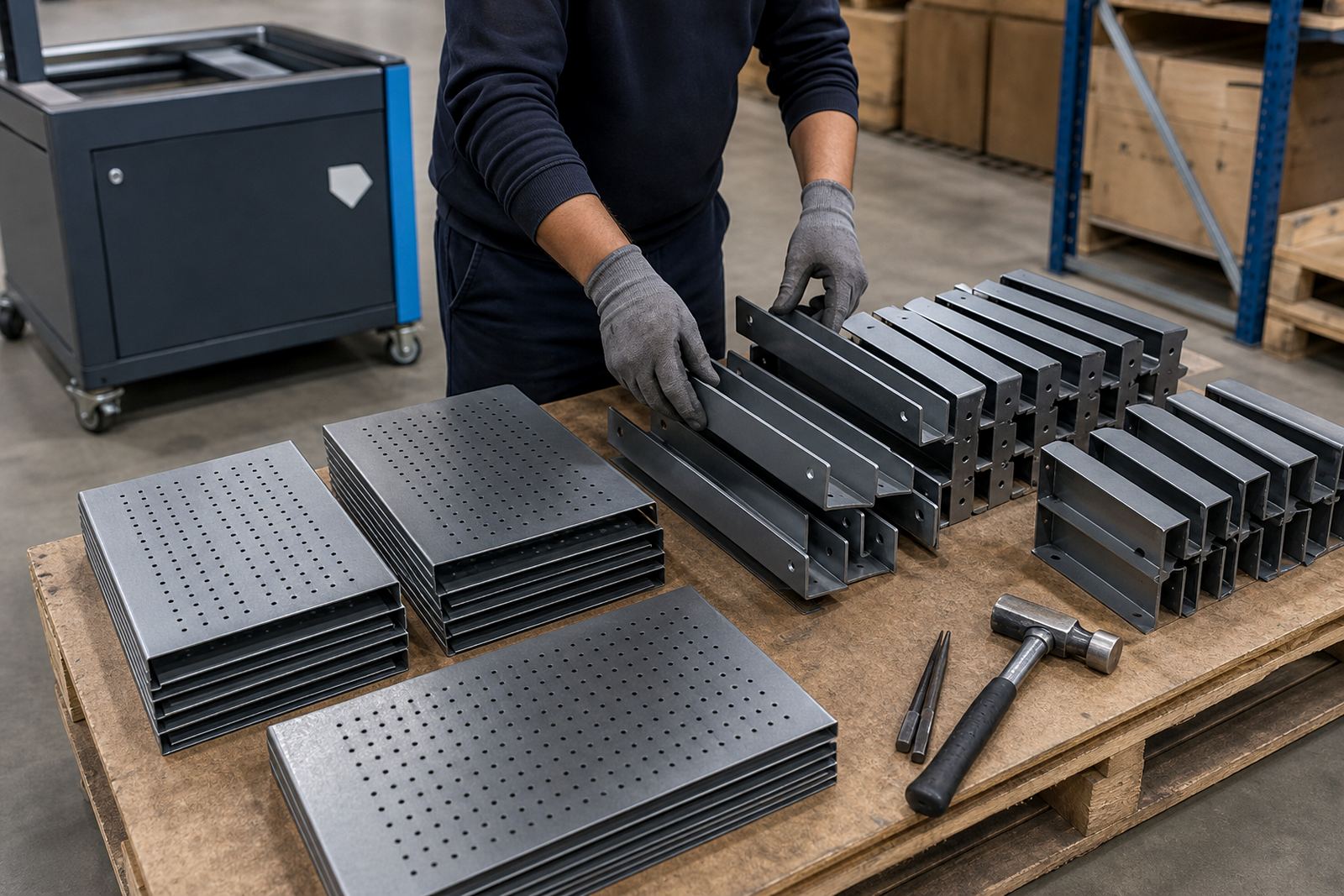
Trailer shops do better when the cutting room is arranged around part flow. Sheet loading, nesting, offcut stacking and finished part sorting should not force the operator to walk back and forth with hot or sharp parts. A neat cutting bay also helps keep dust away from the head station and the optics bench.
For body panels and chassis parts, the machine area needs enough room for sheet handling and a safe space for nozzle changes and lens work. If the floor collects grinding dust or welding smoke nearby, the protective window and ceramic ring tend to take more punishment than they should. Clean air around the head is essential for proper operation.
A few planning points matter on trailer work:
- Keep consumables close to the machine, but sealed against dust
- Separate bench service from cutting traffic where possible
- Store nozzles and windows in clean trays, not loose on a metal shelf
- Use one set of focus settings for known material packs and record the values
- Inspect the height sensor when cut quality changes on multiple parts at once
Johannesburg and Pretoria shops often run heavier production blocks, while coastal work in Durban and Cape Town can bring humidity into storage and lens handling. Rustenburg and East Rand jobs may see more dust or shop-floor grit. The conditions are different, but the fix is the same, clean storage and steady inspection.
Common mistakes on trailer jobs that wear the head out
The biggest mistake is running on a nozzle that has already gone oval or scratched at the bore. Trailer parts need repeated cuts, and a damaged nozzle can leave rough edges on flat bar, bracket tabs and hinge plates. A second mistake is wiping optics with the wrong cloth or too much pressure, which leaves haze on the protective window or marks the lens surface.
Other trouble spots show up often:
- Skipping nozzle centring after a crash or hard contact
- Ignoring a ceramic ring that has a hairline crack
- Using focus settings from a different thickness without checking results
- Letting slag or dust sit in the gas path
- Running long after the first sign of height sensing drift
When a trailer shop starts to see tapered cuts, rough pierce points or part edges that need extra clean-up, the issue is often in the head rather than the program. That is where a bench inspection helps. We can check the head seal, clean the optical path, inspect the ceramic ring and set the nozzle back to centre before the machine burns more material.
For shops that cut both body panels and structural parts, a spare head can save time on a heavy day. Spare head preparation means the replacement unit is set up, inspected and ready to slot in without a scramble through boxes and loose parts.
Budget bands for trailer shops in Rand
Trailer builders usually budget in three parts: consumables, service work and emergency repairs after a crash or bad pierce. The Rand figure depends on the head type, the size of the lens set and how much alignment work the machine needs.
For planning purposes, smaller consumable change items such as nozzles, ceramic rings and protective windows sit in the lower band. Lens cleaning, focus setting checks and nozzle centring move into a mid band because they need bench time and inspection. On-site head alignment, gas path inspection and seal rebuild work sit higher when travel and machine downtime are part of the job.
Trailer shops that cut daily should plan for recurring spend rather than one large once-off repair. A shop doing light body panels will usually spend less on optics wear than a yard cutting thick chassis plate, but both still need regular checking. A crash damage inspection can shift the budget quickly if the head, ring or lens carrier has taken a hit.
We support the practical side of the budget with parts supply, bench service and alignment work across South Africa. The right plan is usually a mix of spare nozzles, windows, rings and a set interval for head inspection before quality slips.
The parts trailer builders ask for most often
On trailer body work, the common request is not for a fancy upgrade. It is for the right consumable on the shelf and a head that cuts cleanly on the next sheet. That usually means nozzles in the correct sizes, protective windows that are kept clean, and lenses that are checked before they cloud over.
Our team in Spartan, Kempton Park handles parts sales, bench service and field alignment work for shops in Johannesburg, Pretoria, Rustenburg, the East Rand, Durban and Cape Town. Marius Johannes van der Merwe leads the business, with support from Thandiwe Rapetswa, Jaco Essop, Lerato Tau, Anele Daniels and Willem Pretorius. The work is practical and the parts list is short enough to keep under control when the shop is busy.
If your trailer shop is cutting chassis plates today and body skins tomorrow, the head setup has to hold steady through both jobs. That is where cleaned optics, correct focus and a straight nozzle make the difference between tidy edges and a pile of rework.