When ducting work starts to chew through parts
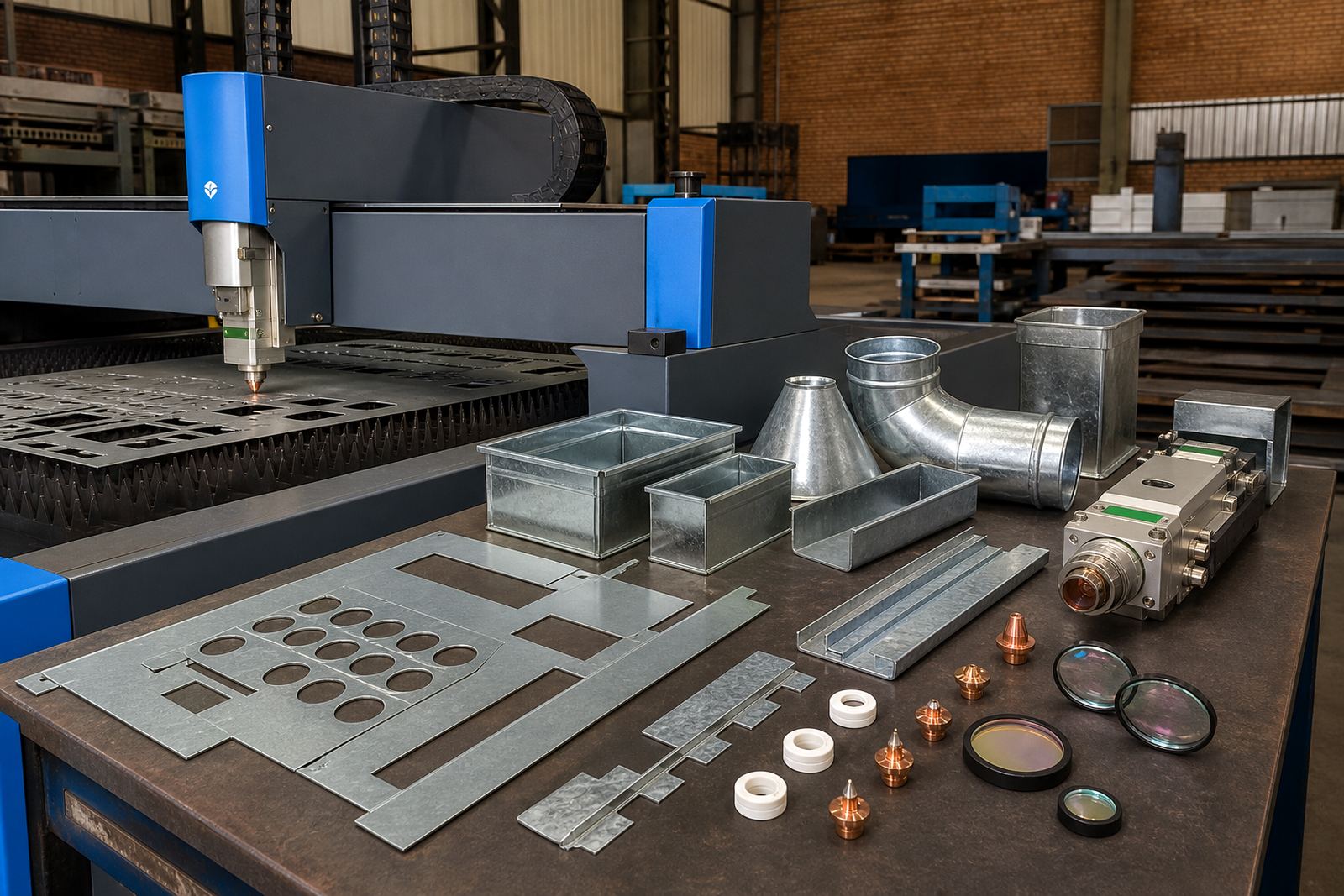
Ducting shops often run short parts, long straight sections, offset collars, reducers, elbows and plenum pieces from mild steel or galvanised sheet. The work looks repetitive, but the machine sees a lot of starts, stops and pierce points, so the cutting head takes a beating. A nozzle that is slightly out of centre can leave dross, a dirty protective window can shift the beam path and a tired focus setup can turn a clean edge into a rough one.
In this kind of workshop the machine usually has to handle thin material at speed, with a fair amount of nesting and repeat cutting. That means the head, optics and gas path need more attention than a once-off job shop. When the cut edge starts to feather or the pierce marks widen, the problem is often in the head before it is in the sheet.
The parts that matter on repeat light-gauge cutting
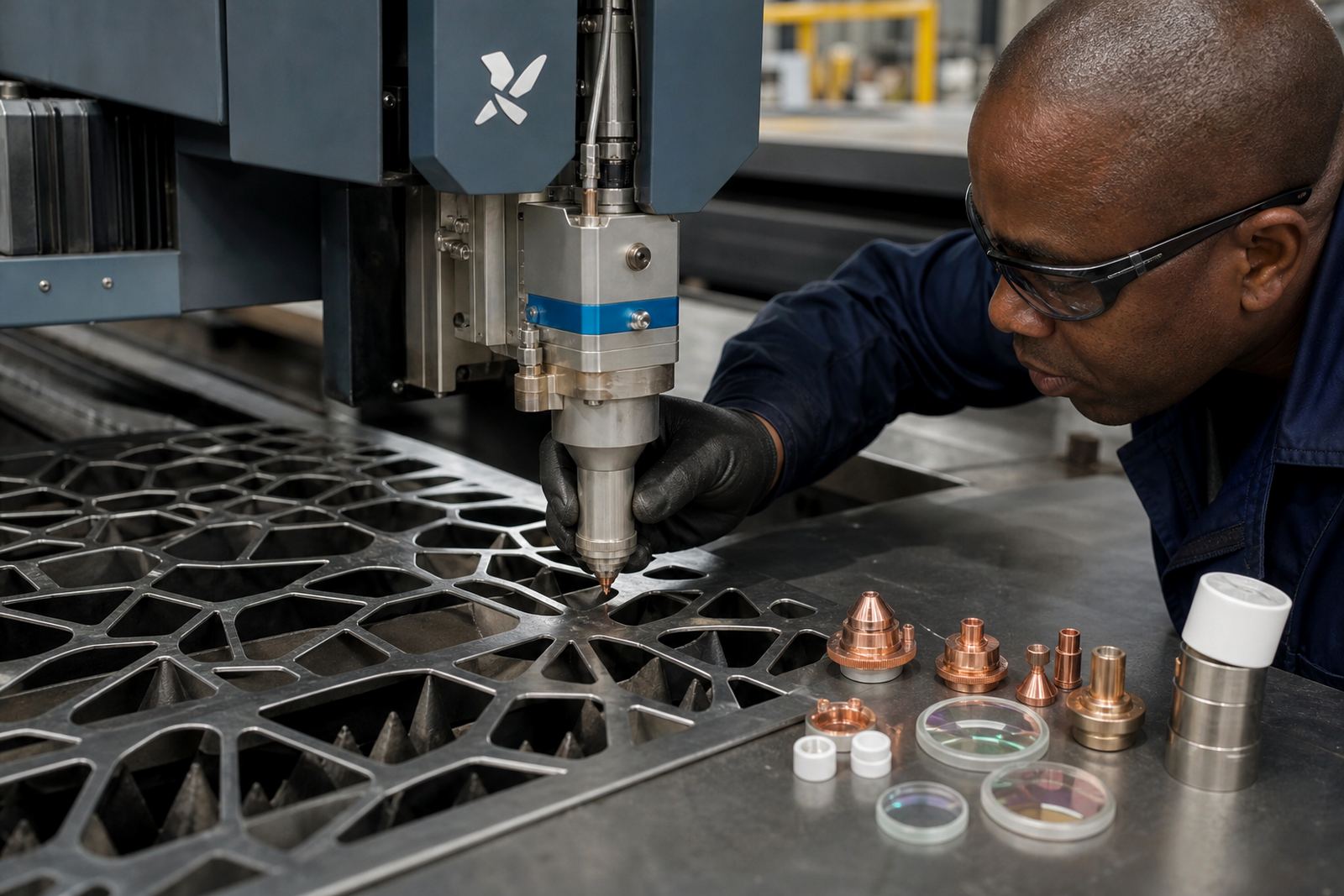
Raytool supplies fibre laser cutting heads and the consumables around them for sheet-metal work. For ducting production, the usual list includes single and double layer nozzles, focus lenses, collimator lenses, protective windows and ceramic rings. Each part has a specific job and they work together when the beam stays centred, the standoff is stable and the lens stack stays clean.
- Single layer nozzles suit many general cutting jobs on thinner sheet.
- Double layer nozzles help with gas control where the cut face needs steadier flow.
- Focus lenses and collimator lenses must match the head set-up and be kept clean.
- Protective windows take the first hit from dust, fumes and back-spatter.
- Ceramic rings support the electrical and mechanical interface around the head.
A workshop cutting galvanised ducting parts should also keep an eye on contamination. Zinc dust, fine slag and oil film all shorten lens life. A small build-up on the window can cause power loss that looks like a settings problem when it is really a cleaning problem.
How a ducting line should be laid out
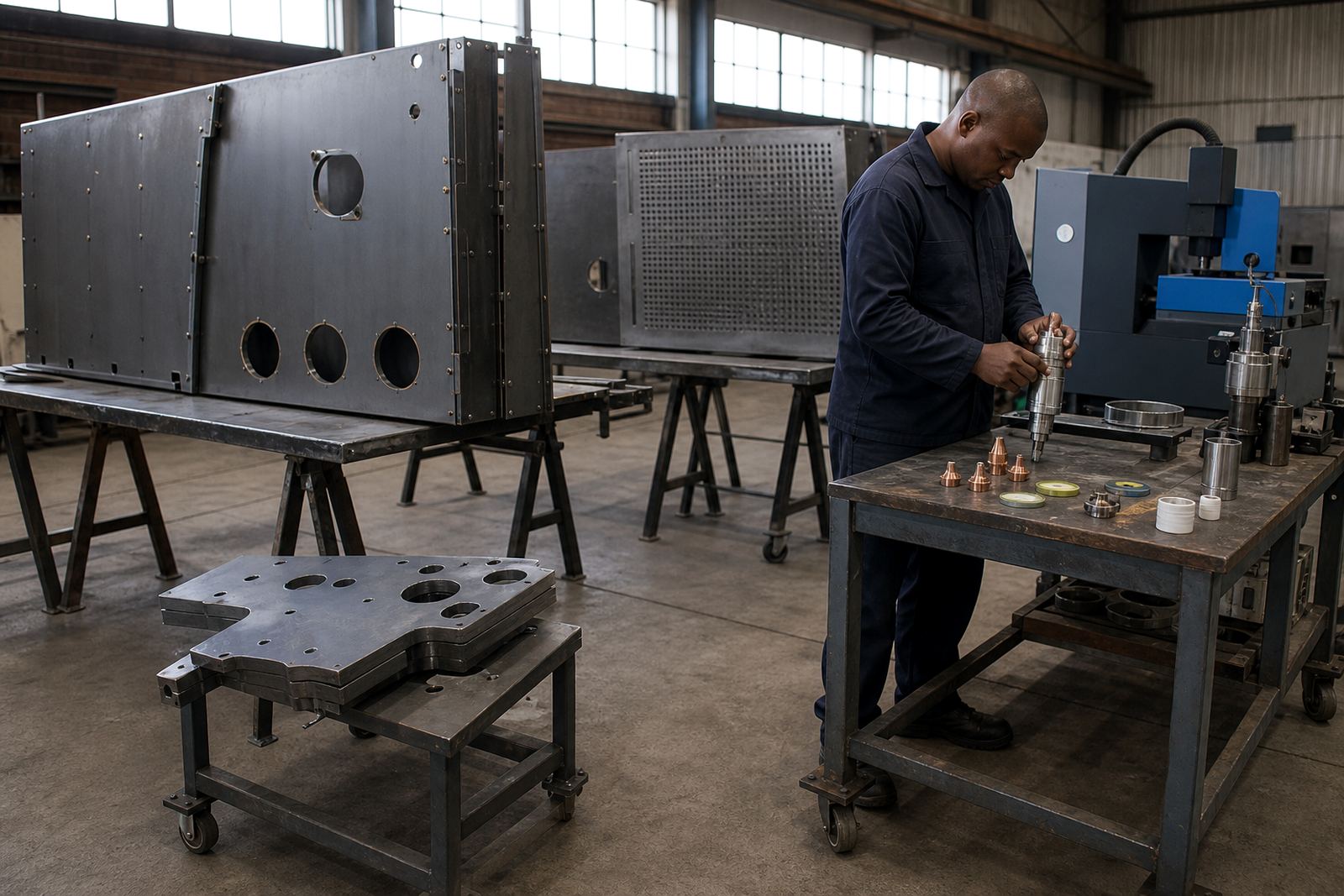
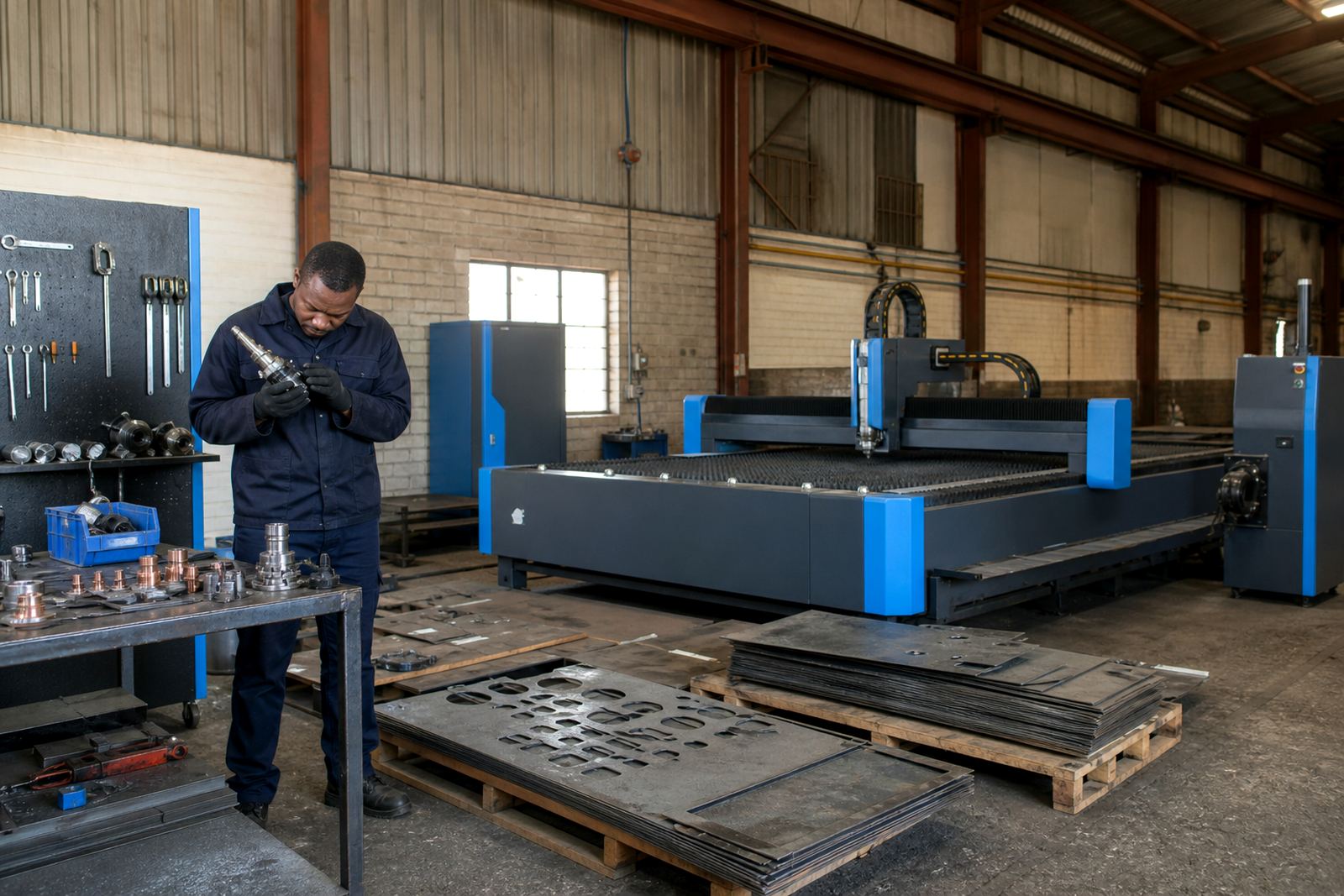
A good cutting area for ducting work keeps sheet handling simple and the head safe from accidental knocks. The machine needs clear loading space for flat packs of light-gauge sheet, a clean bench for head parts and room to separate new consumables from worn ones. In many Spartan and East Rand shops, the worst damage comes from rushed handling, not from the machine itself.
Plan the flow so that the operator can inspect the nozzle, check the ceramic ring and confirm the focus setting before a run starts. Keep spare protective windows sealed and away from grinding dust. It also helps to mark which heads are for thin-gauge cutting and which are reserved for heavier sheet, because mixed use often leads to poor settings being copied from one job to the next.
- Keep a clean shelf for lenses and windows in closed containers.
- Store nozzles by size and layer type, not in loose trays.
- Separate crash-damaged parts from serviceable spares.
Common mistakes that cost a ducting workshop
Many shops keep cutting with a nozzle that has already lost its shape. On ducting parts, that can leave a wider kerf and a ragged edge that makes folding harder later on. Another common miss is cleaning the lens too aggressively. A scratched protective window or a fibre mark on the lens can ruin a part faster than the dirt ever did.
People also overlook capacitive height sensing. If the sensing is off, the head can run too close to the sheet and pick up spatter, or too far away and waste cut quality. Focus setting errors are just as common. A setting copied from one thickness to another may still pierce, but the edge on thin fittings usually tells the truth. On galvanised material, even a small mismatch in focus or gas path shows up quickly at corners and bridge sections.
Crash damage is another quiet problem. A slight knock can leave the head looking fine from the outside while the alignment is no longer true. That is where bench inspection saves time, because the problem can be found before it spreads to more parts.
Bench service and on-site alignment for busy shops
Raytool services and aligns cutting heads on the bench or on site, which suits workshops that cannot leave a machine down for long. Bench service is useful when a head needs a fuller strip, cleaning, seal checks, lens inspection or a proper rebuild after a crash. On-site alignment helps when the machine is mechanically sound but the beam path, centring or height sensing needs attention where it stands.
For ducting work, the service usually focuses on nozzle centring, focus setting check, protective window replacement, lens cleaning, ceramic ring replacement, capacitive sensor check, gas path inspection, head seal rebuild, crash damage inspection and spare head preparation. That mix is practical for shops running repetitive light-gauge work, because most problems show up in the same few places.
- Bench work suits dirty, damaged or inconsistent heads.
- On-site alignment suits a head that needs accurate setup on the machine.
- Spare head preparation helps if your workshop carries changeover parts.
- Gas path inspection matters when cut quality varies across the sheet.
Budget ranges in Rand for workshop planning
For budgeting, a ducting workshop should think in layers rather than one flat cost. Small consumables like nozzles, rings and windows add up over a month of production, especially where the same head runs all day. A starter set of consumables can cost a few thousand Rand, while a larger kit of lenses, seals and related spares can rise into the mid thousands, depending on the head type and how many extras are kept nearby.
Bench servicing and alignment work cost more than simple parts replacement because the work involves inspection, cleaning and setup. A routine service budget often starts in the low to mid thousands of Rand for a single head, while crash repair or a more involved rebuild can move higher once lenses, seals and damaged components are included. Workshops that cut daily usually save money by keeping one clean spare set ready rather than waiting for a full failure.
For ducting shops in Johannesburg, Pretoria, Rustenburg, the East Rand, Durban and Cape Town, it makes sense to budget for both running parts and service calls. That makes the monthly spend easier to manage when the machine starts cutting rough or a head needs more than a quick wipe.
What the team handles at Spartan, Kempton Park
Our Spartan, Kempton Park team works with sheet-metal shops that cut ducting blanks and fittings on fibre laser machines. Marius Johannes van der Merwe leads the branch, with Thandiwe Rapetswa coordinating operations, Jaco Essop handling bench service, Lerato Tau on field alignment, Anele Daniels on parts supply and Willem Pretorius supporting technical checks. The setup suits workshops that want parts, inspection and head alignment from one place.
Clients use our contact form to ask about heads, nozzles, lenses, windows, ceramic rings and service work for ducting production. The work is practical and the parts need to match the machine, the material and the way the shop cuts. When the beam path, height sensing and focus are kept in order, the ducting line stays steadier and the scrap bin stays lighter.