A week of mixed plate, tight corners and changing material
A jobbing shop rarely gets the same sheet twice in a row. Mild steel, stainless and aluminium can all land on the table in one week, with sheet thickness changing from thin gauge work to heavier plate. That mix puts pressure on nozzle choice, focus position, ceramic rings and the state of the protective window. If the head is clean and aligned, the cut edge stays more consistent and the pierce is less likely to wander.
Fabricators in Johannesburg, Pretoria and the East Rand often balance short production runs with repair work, prototyping and small repeat batches. In Durban and Cape Town, humidity can leave residue on optics and fittings faster than a dry inland shop. Rustenburg shops see abrasive dust and workshop vibration from tough day-to-day handling. Those conditions are not dramatic, they are just normal factory life, and they call for parts planning that is practical not optimistic.
Parts that belong on the shelf before the next changeover
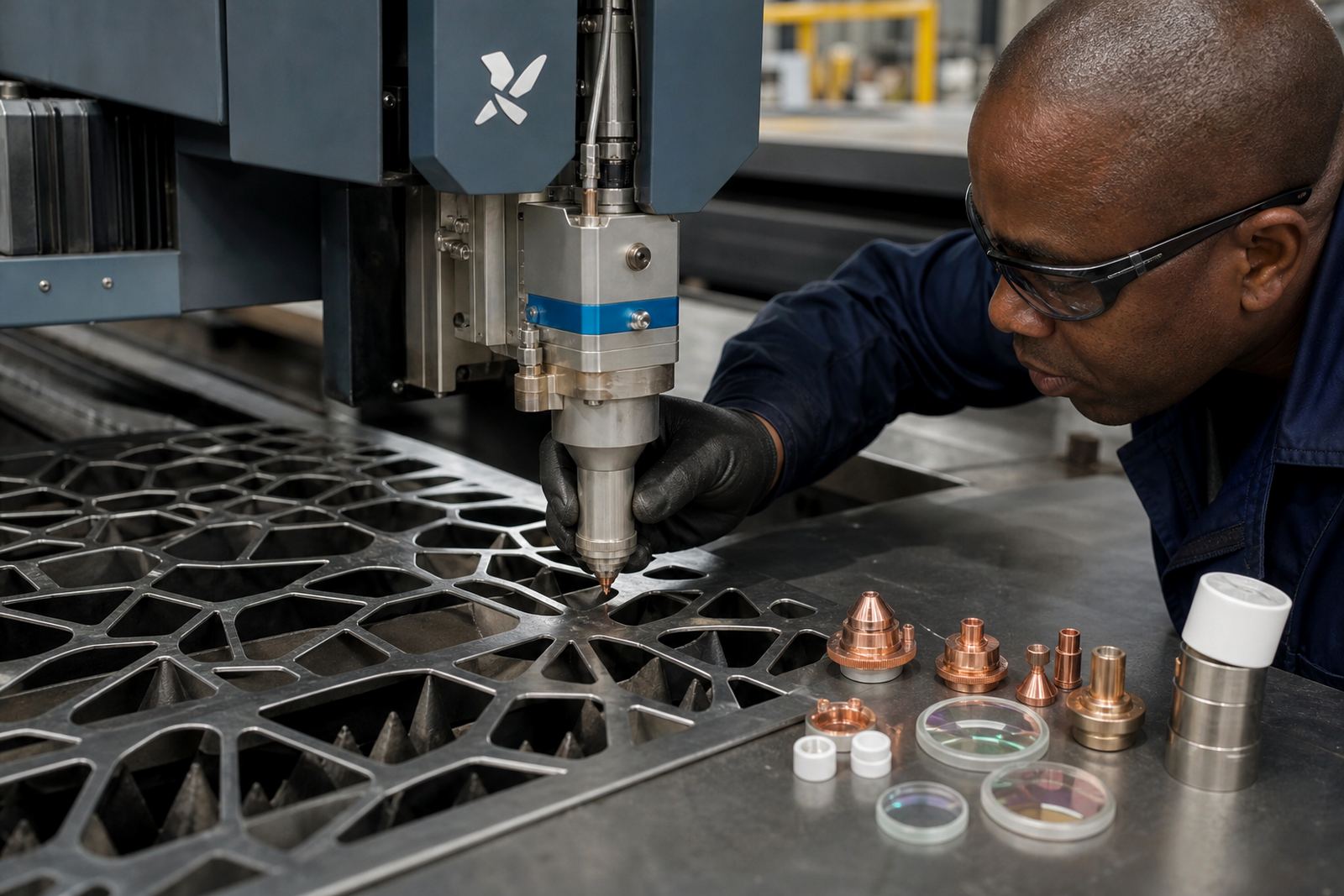
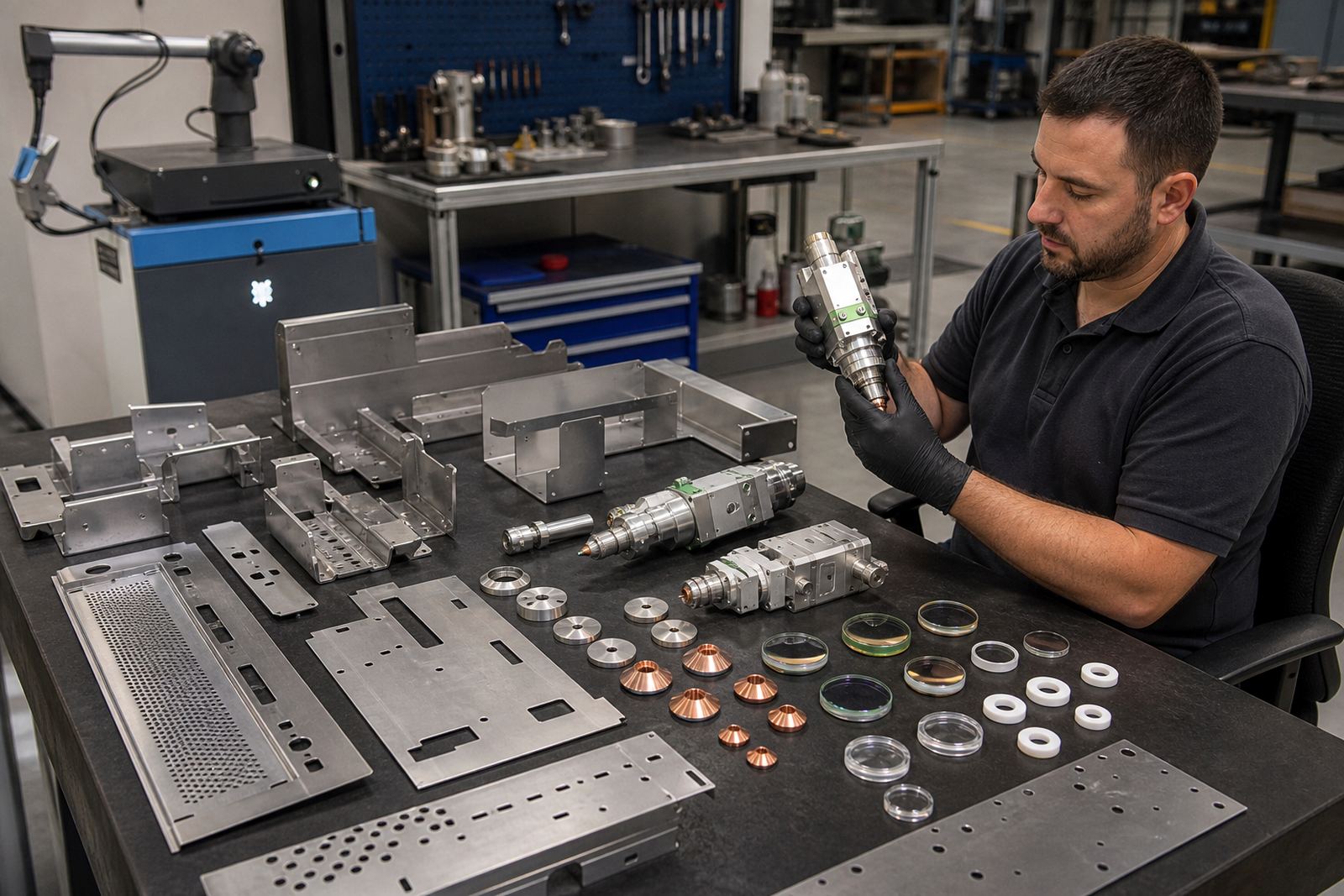
A well-run laser bay keeps the common wear items close at hand. The cutting head is only as steady as the consumables fitted to it, and a rushed change can spoil a good setup. Single layer nozzles suit many standard cuts, while double layer nozzles are often used where gas control and heat balance need more discipline. Focus lenses and collimator lenses must be handled with care because fine marking or contamination can shift the beam path.
- Single layer and double layer nozzles for different cut duties
- Focus lenses and collimator lenses for optical maintenance
- Protective windows for smoke and spatter control
- Ceramic rings for stable head seating and electrical isolation
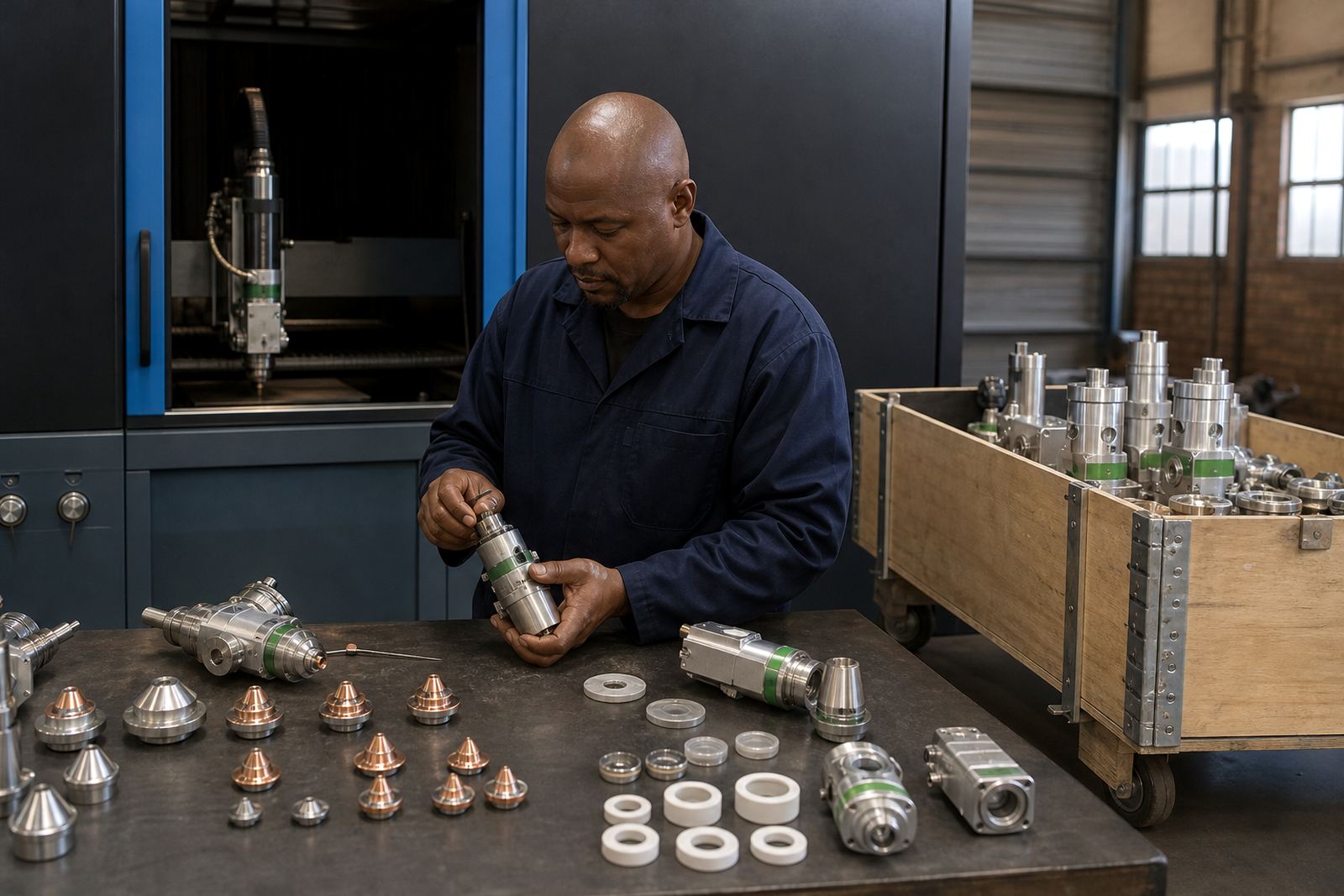
- Spare heads prepared for shops that cannot pause a busy week
Protective windows, ceramic rings and seals are the items that tend to be forgotten until the cut quality changes. Keeping a small shelf stock avoids a scramble when a nozzle is damaged by a crash or when the window clouds after a rough job. A few carefully chosen spares cost far less than a day spent chasing an uneven edge.
Bench service that suits a shop with work on the table
Bench servicing works well when the head needs a proper strip, clean and check. We handle cleaning routines, head seal rebuilds, gas path inspection, nozzle centring and focus setting checks on the bench. That lets the technician inspect wear marks, seating faces and small alignment faults without the pressure of a live production line.
On a busy floor, the usual mistakes are plain enough. A nozzle can be fitted with a slight burr on the seat. A lens can be cleaned with the wrong cloth and leave a smear. A ceramic ring can be reused after a crash even though the fit has been disturbed. Any one of those faults can show up as dross, taper or a pierce that looks fine on the first sheet and worse on the next.
- Keep a clean parts tray for optics and rings
- Mark the focus setting before changing material or thickness
- Inspect the nozzle seat after every crash or near miss
- Replace protective windows before staining becomes a pattern
- Check the gas path where cut quality starts to drift
On-site alignment for machines that cannot leave the floor
Some heads need field attention because the machine cannot sit idle while a full strip-down happens elsewhere. On-site head alignment helps when the beam needs re-checking after transport, after a collision or after a new consumable set goes in. Capacitive height sensing also needs a steady hand because poor sensing can cause ugly starts, inconsistent standoff and unnecessary wear on the nozzle.
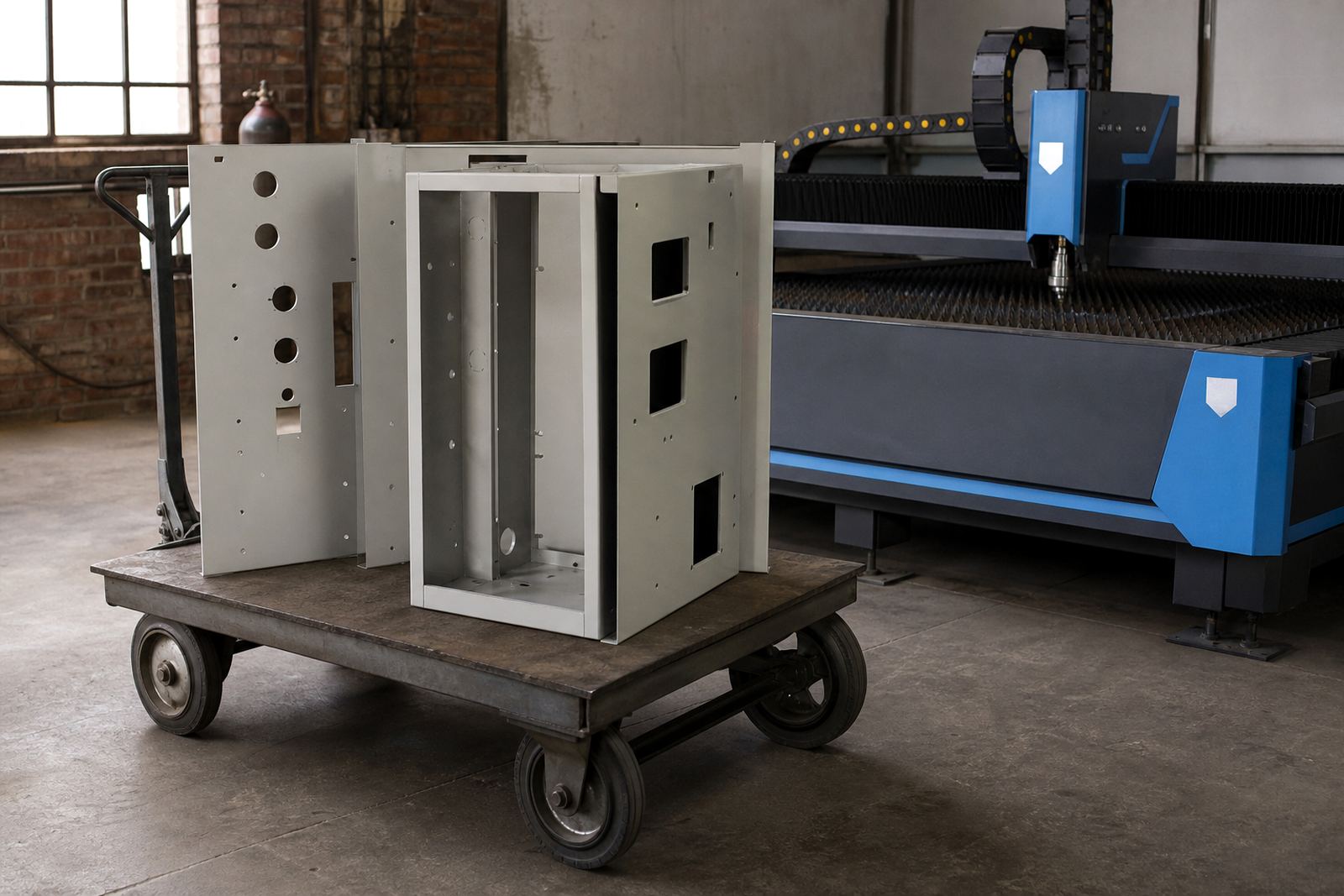
In a real fabricator’s shop, the machine table is often shared with fresh sheet, offcuts and clamping gear. That makes good access planning worth more than tidy theory. Leave a clear route to the head, keep the spare nozzles sealed until they are needed, and store optical parts in a dry cabinet rather than an open drawer near grinding dust. If the shop is near the coast, moisture control matters even more because a clean lens can still pick up haze from air movement and handling.
Our field alignment work covers Johannesburg, Pretoria, Durban, Cape Town, Rustenburg and nearby industrial areas across South Africa. The aim is to get the head seated, sensing and cutting in line with the machine’s normal working range, not to overcomplicate a basic setup.
Typical budgets that make sense in rand terms
Jobbing shops usually plan by risk, not by vanity. A single nozzle is a small spend, while a set of nozzles, a protective window and a ceramic ring gives better cover for a week of mixed jobs. A lens replacement or full head service sits at a higher level because the work is more precise and the inspection takes longer. If crash damage has moved beyond the consumable layer, the cost rises again because seals, seating and alignment may all need attention.
As a working guide, a basic consumable top-up might sit in the hundreds of Rand, while a fuller batch of nozzles, windows and rings can move into the low thousands. Bench service, alignment and deeper repair work normally run higher, depending on the head condition and what needs stripping. No serious shop treats that as guesswork. The right plan is to keep a spare set for common wear, then budget separately for service work when the machine starts showing drift or burn marks.
- Small consumable top-up: hundreds of Rand
- Mixed spare set for regular use: low thousands of Rand
- Bench service and alignment: priced higher by condition and scope
- Crash inspection and rebuild work: varies with the damaged parts
Getting the right set together for mixed-metal work
Jobbing fabricators do best with a parts list that matches their real jobs, not a broad catalogue of everything. A shop cutting thin stainless all morning and heavier mild steel after lunch needs a different pattern of nozzles, focus settings and window checks than a shop doing repair work on odd brackets. The same is true for capacitive sensing, because a machine that tracks well on one sheet can still struggle when the next sheet is slightly warped.
Practical planning starts with the machine model, the head type, the usual material thickness and the kind of defects that keep showing up. From there it becomes easier to decide whether the need is for spare heads, lens cleaning, centring checks or a more complete service cycle. We work from Spartan, Kempton Park and support sheet-metal shops that need straight parts advice, bench service and on-site alignment without adding noise to an already busy floor.
Contact form: our contact form