Stainless jobs that keep a kitchen shop busy
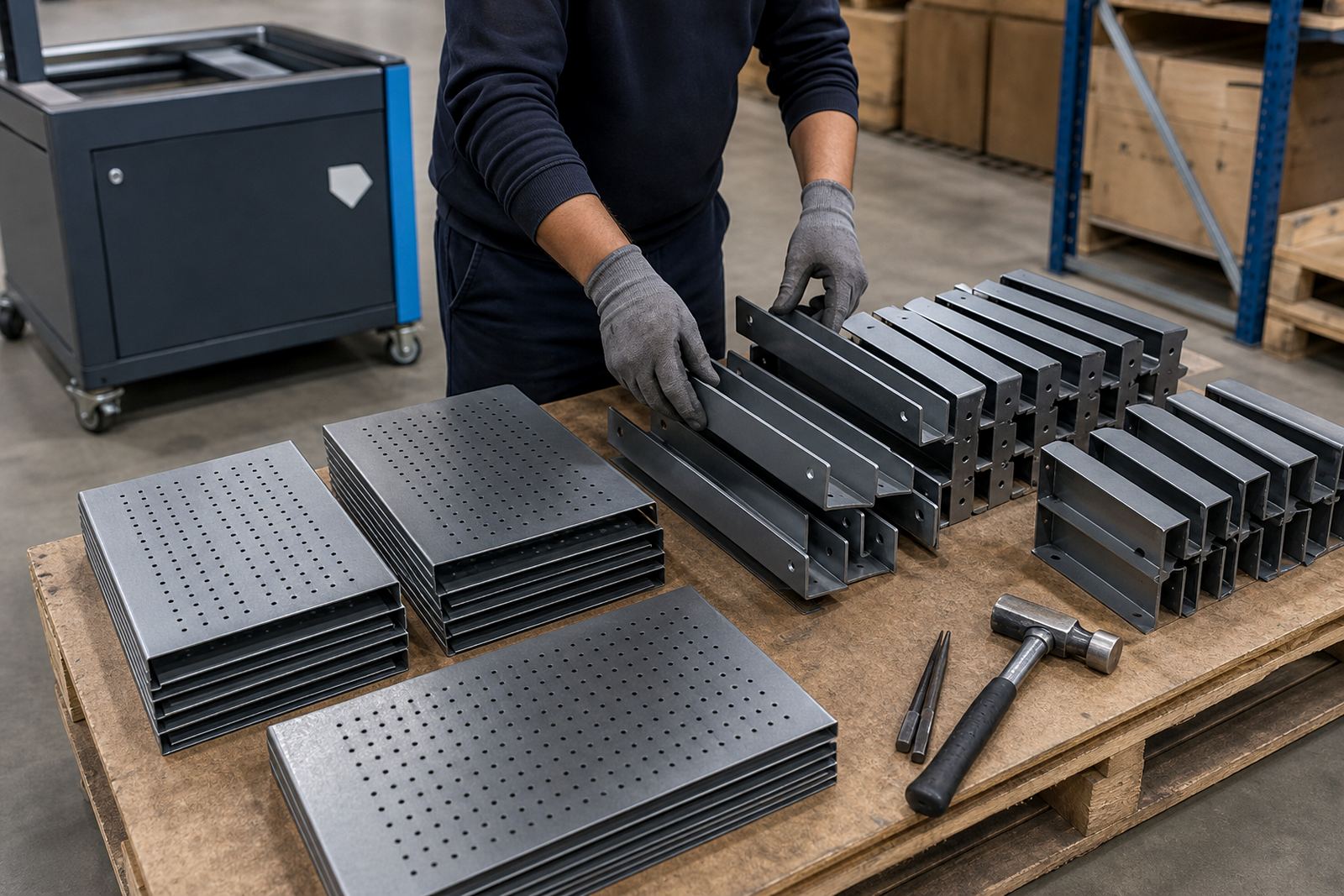
Most kitchen equipment shops work through a steady mix of sinks, splashbacks, shelves, extractor panels, worktops and cabinet skins. Stainless steel is unforgiving when a nozzle is worn, a lens is hazy or the cutting head is slightly out of line, because the edge starts to show burrs, heat marks and flare on corners. The right consumables matter as much as the machine settings in keeping our laser cutting heads performing well.
Food-service fabrication also brings frequent grade changes, short runs and nested sheets with many pierces. Shops in Johannesburg, Pretoria, Durban, Cape Town and Rustenburg often want parts that can keep the head stable through repeated cutting of 0.8 mm to 3 mm stainless, with clean kerf control and less rework on formed parts. Coastal humidity in Durban and Cape Town can also punish storage habits, so protective windows and ceramic rings need sensible handling from day one.
- Cutting heads must hold focus consistently through long sheets.
- Nozzles need the right bore and a centred gas stream.
- Protective windows should stay clean, dry and properly seated.
- Ceramic rings must stay free of cracks and carbon build-up.
A typical shop set-up and the parts it leans on
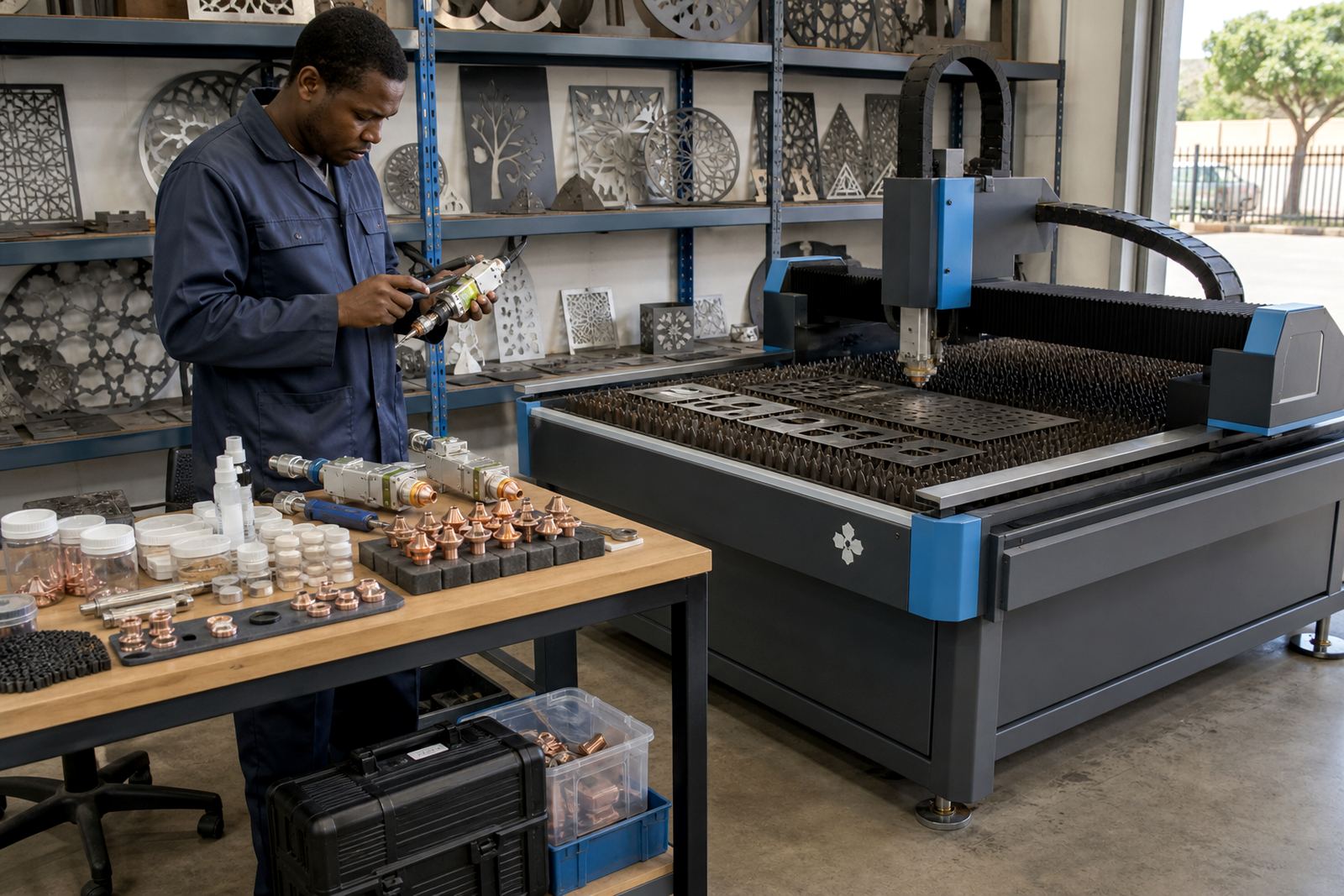
Kitchen equipment fabrication usually pairs a fibre laser cutter with a bench area for consumables, a small tool rack, inspection lights and cleaning kits. The machine may handle stainless, mild steel and sometimes aluminium, but stainless work for sinks and prep units needs the most care around focus settings and the gas path. A cutting head that is left slightly out of alignment can burn through consumables faster than the shop expects.
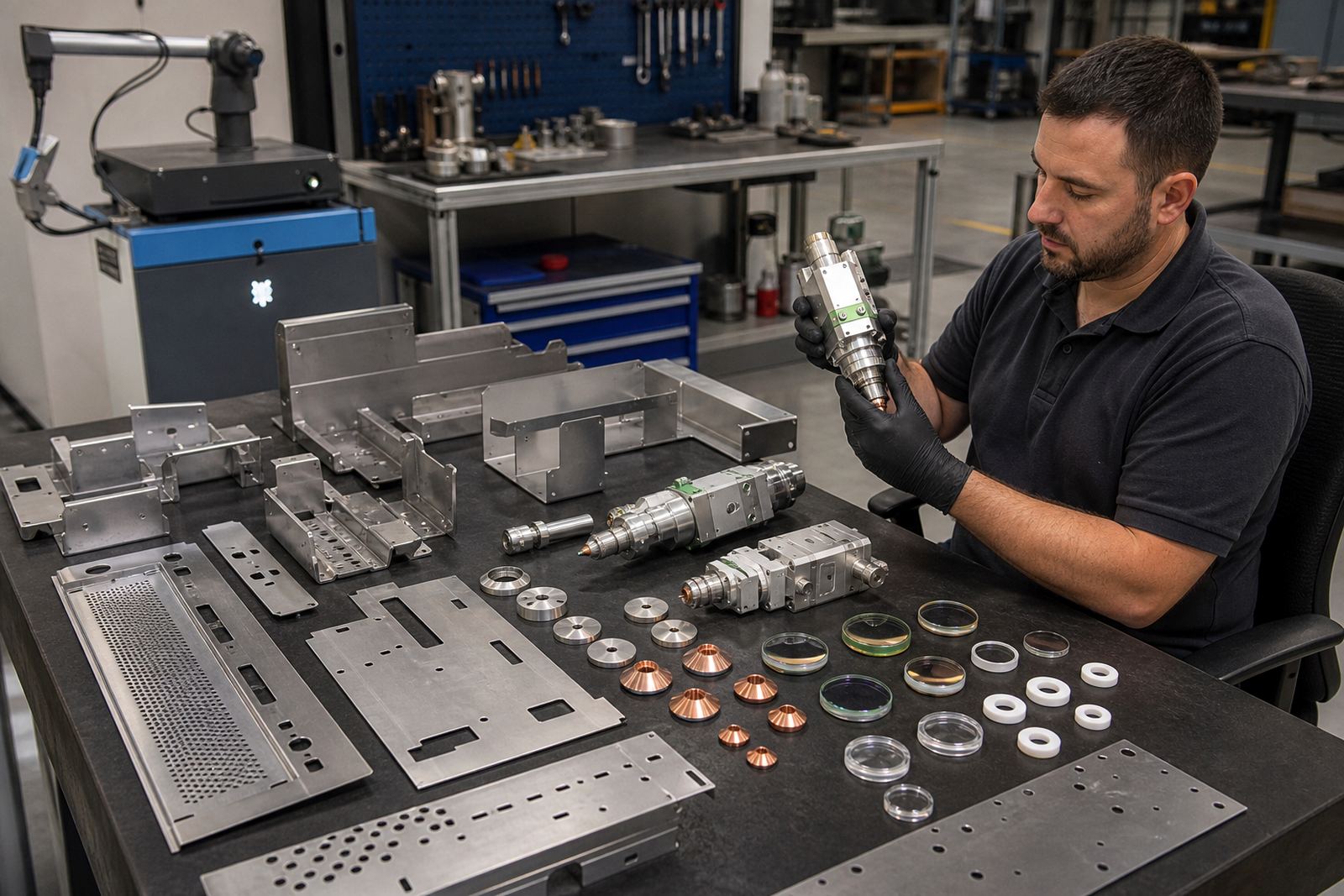
Common parts in regular use include single layer nozzles for lighter sheet work, double layer nozzles where the cut needs more stable gas control, focus lenses, collimator lenses, protective windows and ceramic rings. Capacitive height sensing also deserves attention, because the head has to read sheet level correctly when a plate arrives slightly bowed or a nest sits close to a cut edge. If the sensor signal drifts, the cut quality changes fast and the operator starts chasing the problem at the machine screen instead of the head itself.
- Single layer nozzles suit many standard stainless cutting jobs.
- Double layer nozzles can help where gas flow needs tighter control.
- Focus and collimator lenses must stay clean and free from residue.
- Capacitive sensing checks help keep the head at the right height.
Planning the bench around stainless production
A sensible bench layout makes maintenance easier on busy shop floors. Keep spare nozzles in sealed containers, separate clean optics from used parts, and give protective windows their own dry storage. A small contamination mistake can affect a full day’s cutting, especially where stainless parts need a bright edge for visible kitchen fittings.
Bench servicing is useful when the head has drifted, the lens cavity needs cleaning or the ceramic ring shows signs of heat stress. On-site head alignment works better when the machine is otherwise in good condition but the cut pattern has started to wander. For shops turning out extractor covers, curved trims and cabinet panels, a quick focus setting check can save a lot of scrap if the cut begins to taper or the pierce marks widen.
- Store optics in dry, closed containers away from grinding dust.
- Mark used nozzles so worn parts do not return to the rack.
- Keep the machine bed clear of offcuts that strike the head.
- Schedule cleaning before residue starts to cloud the protective window.
Where problems usually start on kitchen fabrication work
Many faults on food-service jobs begin with small handling errors. A nozzle that is not centred properly can leave a rough edge on small holes and tabs. A dirty protective window can scatter the beam and make the cut unstable, while a scratched focus lens may cause a weak, uneven pierce. Shops sometimes keep cutting after the edge quality slips, then find the head needs more than a quick adjustment.
Another common issue is using the wrong focus setting for the material thickness or the wrong gas path arrangement for the job. Stainless sheet for kitchen fabrication often looks simple, but cut quality changes when the sheet has mill scale, oil marks or a slight bow. If capacitive height sensing is not checked, the head can ride too high or too low and leave dross on the underside. A small crack in a ceramic ring may seem harmless until the head starts losing stability during a long nest.
- Rough pierced holes often point to nozzle wear or poor centring.
- Clouded optics usually show up as heat marks and unstable cuts.
- Unexpected dross can trace back to height sensing or focus drift.
- Visible burn marks near corners often mean the settings need review.
Bench service, on-site alignment and spare head preparation
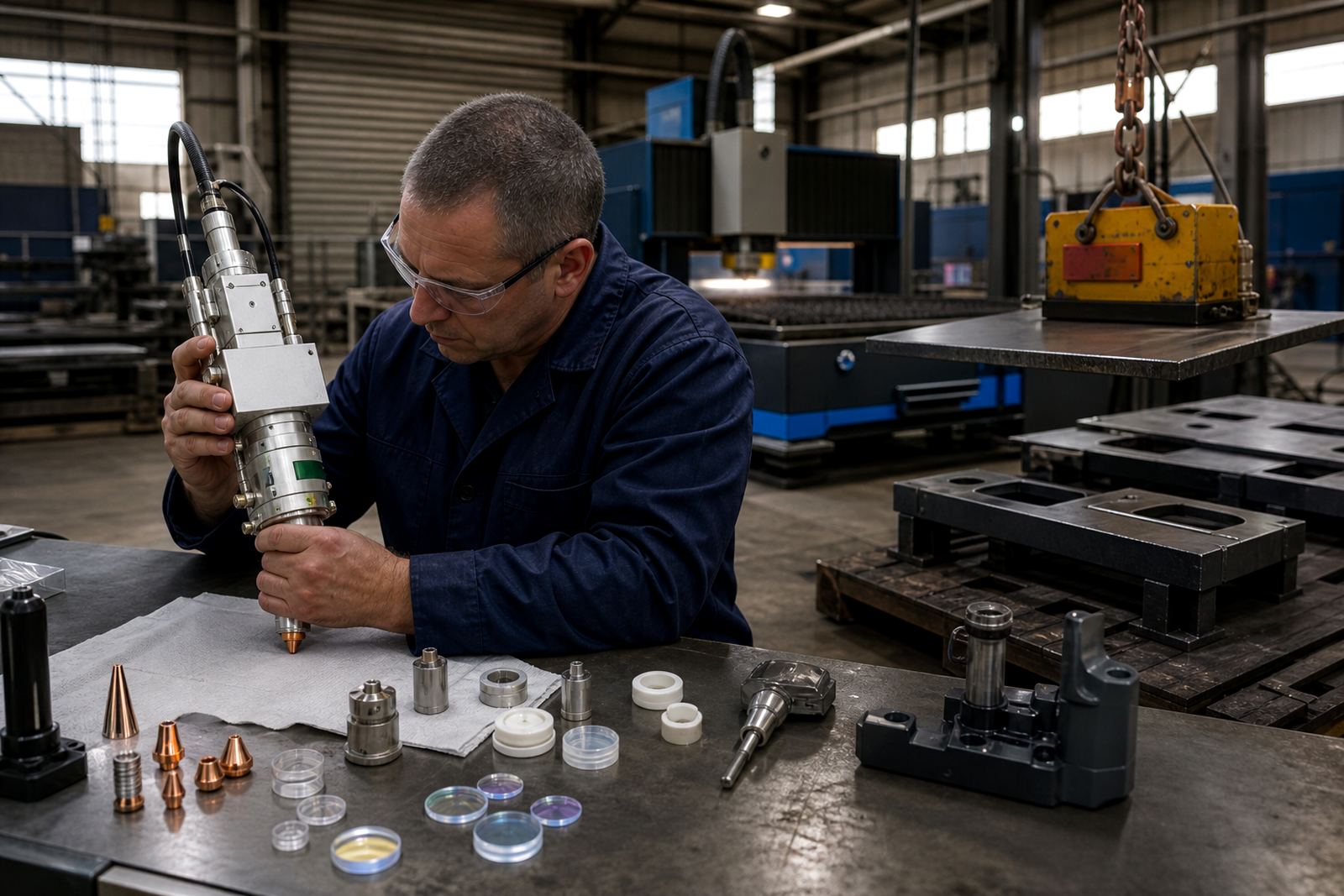
Some heads are better stripped and checked on the bench, especially after a crash, a seal issue or repeated optical contamination. Bench head service can include nozzle centring, lens cleaning, protective window replacement, ceramic ring replacement, gas path inspection and a head seal rebuild where required. That work helps restore the head before the shop pushes it back into stainless production.
On-site head alignment suits machines that are mechanically sound but not cutting to the usual finish. Field work can include a focus setting check, a capacitive sensor check and a practical inspection of the cutting path. Spare head preparation is useful for shops with busy order books, because a prepared unit can reduce disruption when an active head needs stripping. Kitchen equipment work rarely waits for a perfect moment, so having a ready unit on the shelf can help keep the nesting plan moving.
- Bench service suits contamination, wear and crash damage.
- On-site alignment suits drift, uneven cuts and sensing issues.
- Spare head preparation helps if the main head needs deeper work.
- Gas path inspection can reveal leaks, dirt and weak flow points.
Budget ranges for a kitchen equipment shop
Budgets vary with the machine model, how often the head runs, and whether the shop only wants consumables or a full service visit. For a kitchen equipment shop, a basic consumables order for nozzles, a protective window and a ceramic ring can start around R1 500 to R4 000, depending on the quantities and sizes needed. A fuller optics set with focus and collimator lenses will usually sit higher, often around R4 500 to R12 000 when the shop wants spare parts on hand.
Bench service and alignment work depends on what the head needs after inspection. A normal service, cleaning and setting check can range from about R2 500 to R6 500, while a more involved job with seal replacement, head preparation and damaged parts can go past that. Shops cutting food-service equipment for hotels, canteens and restaurant fit-outs often prefer to budget for spare nozzles and windows first, then keep a service allowance aside for crash damage or optical wear.
- Consumables are usually the smallest line item, but the most frequent.
- Optics cost more, yet they protect cut quality and consistency.
- Alignment and service costs rise when crash damage is involved.
- Keeping spares on hand reduces stoppages when a part fails mid-run.