
Panels, doors and brackets do not forgive a tired head
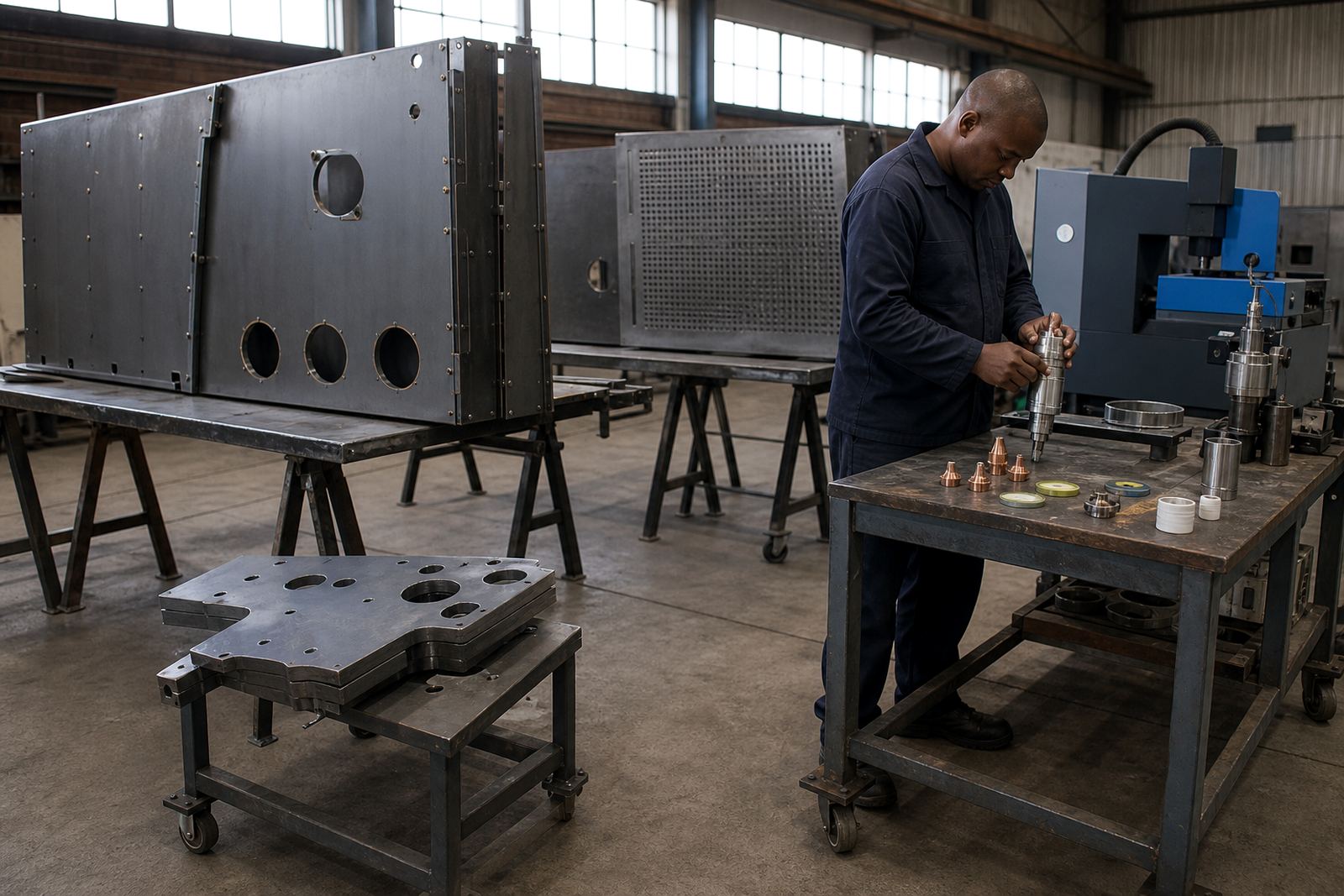
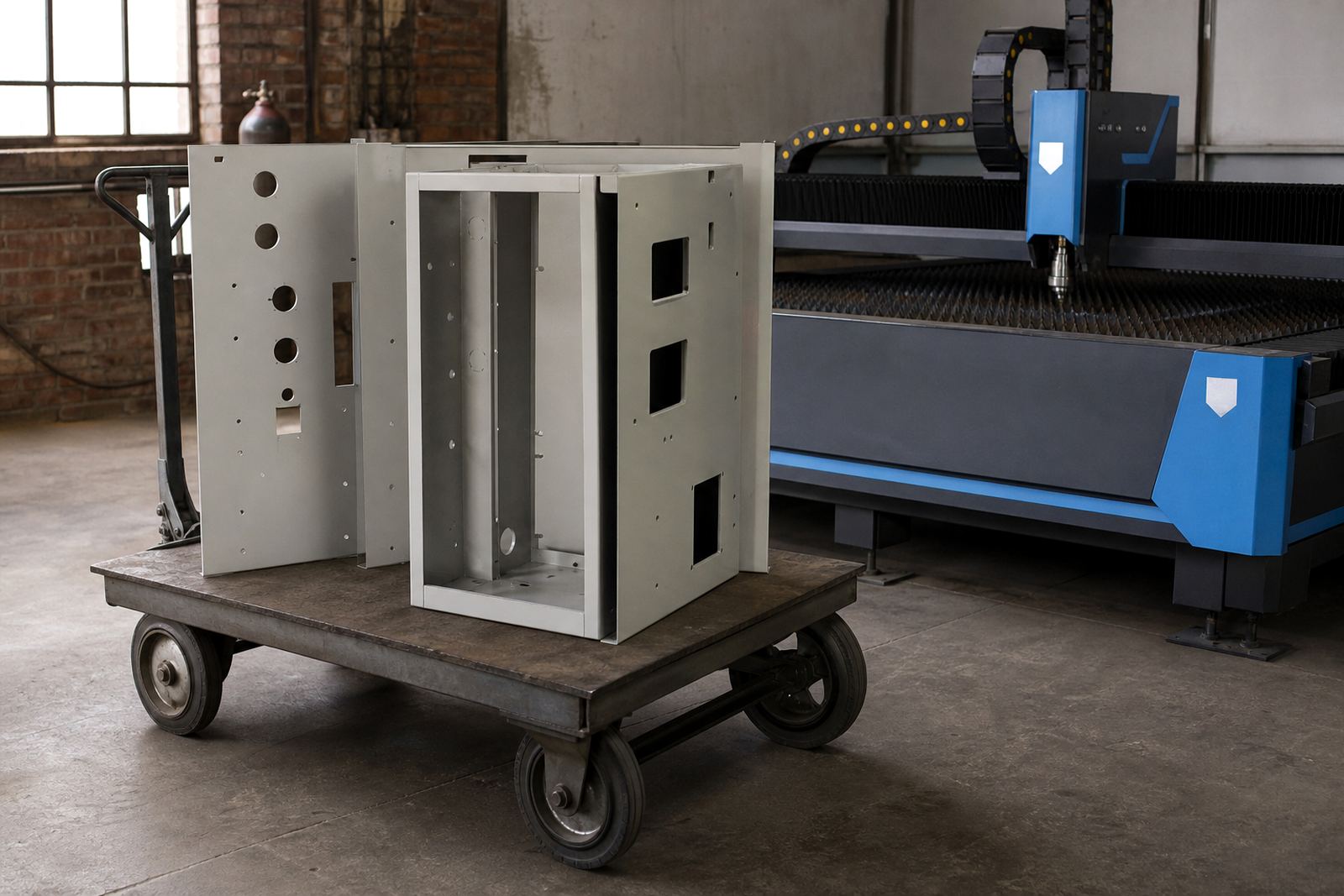
Enclosure work puts the laser on mixed duty all day. One hour it is mild steel panel blanks, then powder-coat door cut-outs, mounting plates, cable entries and small formed parts that need clean edges. A worn nozzle or a shifted focus setting shows up fast as dross, taper, burrs or holes that lose their location.
That is where cutting head condition matters. Capacitive height sensing must stay stable, the nozzle has to centre properly and the protective window must stay clear. When spatter builds up or a crash nudges the head, cut quality falls off long before the machine stops completely.
What enclosure shops usually run on the machine table
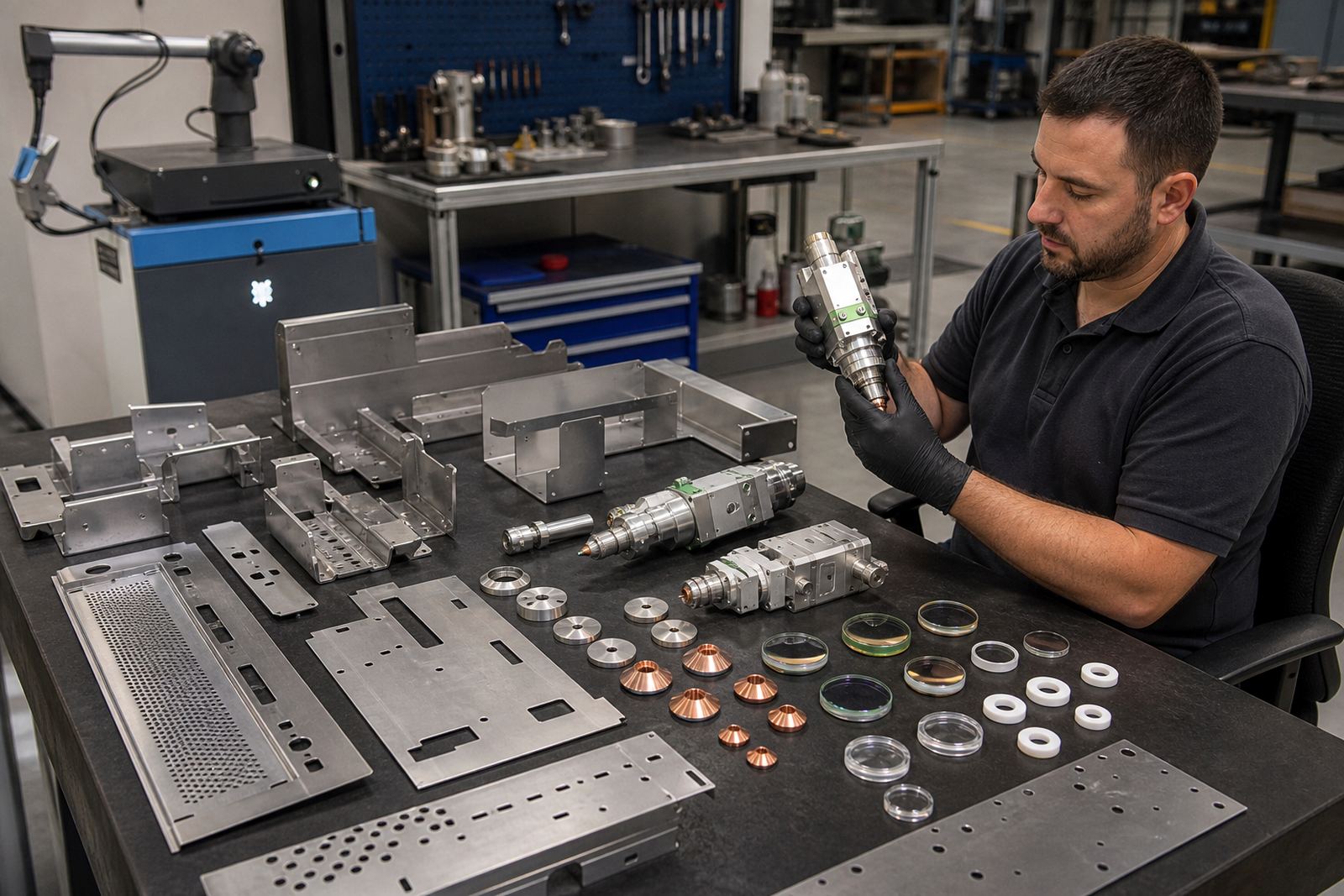
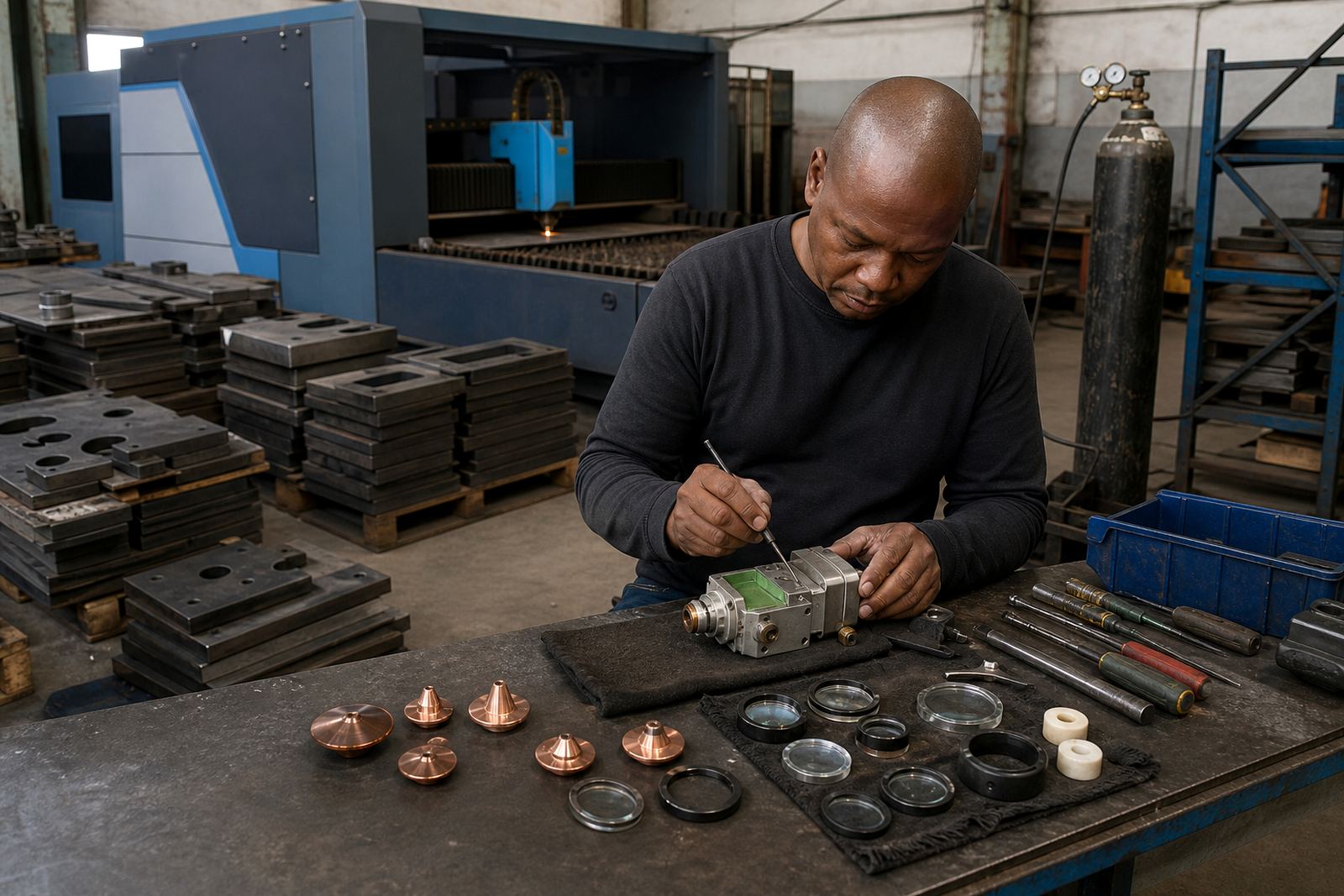
The set-up is usually practical rather than fancy. A fibre laser cutting head carries the nozzle, focus lens, collimator lens and protective window in a stack that works only when each part is seated cleanly. Ceramic rings keep the assembly steady and help protect the head body from heat and splash.
- Single layer nozzles for general sheet cutting and standard plate work
- Double layer nozzles for better gas control on thicker or more sensitive cuts
- Focus lenses for stable beam placement on the sheet surface
- Collimator lenses that help keep the beam path consistent through the head
- Protective windows to shield the optics from dust, fumes and spatter
- Ceramic rings, seals and consumables that wear with daily use
For enclosure shops, the small parts matter as much as the machine frame. If the gas path is dirty or the nozzle bore is damaged, the cut will wander and the edges will need extra finishing.
Planning the cut room around real sheet-metal work
Panel shops often batch work by thickness and finish. That means the head setup needs to match the common material set, not only the heaviest sheet on the floor. Focus setting checks are worth doing when changing between mild steel, stainless steel and aluminium, because each one behaves differently at the cut face.
Cleaning routines also need structure. A lens that stays spotless on Monday can pick up residue by Friday if the operator is clearing slag too close to the nozzle or storing consumables in a dusty bay. Keep spare nozzles, windows and ceramic rings in sealed packs, away from grinding dust and moisture, especially in coastal towns like Durban where humidity creeps into storage space.
- Store optics in dry cupboards, not near the cutting bed
- Separate used nozzles from fresh stock during shift changes
- Check the focus position after a crash or heavy piercing run
- Inspect the gas path before blaming the nesting programme
Bench service for heads that need a proper reset
Some heads only need consumables. Others need bench service, internal cleaning and a careful alignment check. A bench visit suits heads with heat marks, unstable sensing, repeated nozzle strikes or windows that cloud too quickly. During that work we check seating, inspect seals, clean optical paths where appropriate and look for wear that affects repeatability.
When a head has taken a knock, a spare head preparation exercise can save time on the shop floor. The replacement unit can be fitted with the correct consumables and checked for alignment before it goes back onto production. That is often easier than trying to coax a damaged head through another busy week.
On-site alignment when the machine stays busy
Not every shop can lift a head out and send it away. On-site head alignment is useful when production cannot pause for long or when the problem sits in the machine, the rail set-up or the sensing behaviour rather than only in the optics. We work on site across Johannesburg, Pretoria, East Rand, Rustenburg, Durban and Cape Town for shops that need the head checked in place.
Field work usually covers nozzle centring, focus setting check, capacitive sensor check, gas path inspection and crash damage inspection. If the machine has been cutting with a slight angle or a slow drift in height control, the symptom may look small but the scrap pile tells a different story.
Budget bands that make sense for enclosure makers
Budgeting for laser head support is easier when the job is broken into parts. Single consumables are modest Rand items, while a full service visit or a damaged optical stack sits in a higher band. Many enclosure shops plan monthly spend for nozzles, protective windows, ceramic rings and cleaning items, then hold a separate allowance for service work.
- Consumables such as nozzles, ceramic rings and protective windows: low hundreds to a few thousand Rand depending on size and quantity
- Lens-related work and optical inspection: usually a mid-range spend when the optics are still serviceable
- Bench head service and internal cleaning: a larger maintenance cost than simple replacement parts
- On-site alignment and fault tracing: best budgeted as a project line, especially when more than one head needs attention
For enclosure work, the cheaper option is not always the cheaper outcome. A small misalignment can turn into extra grinding, rework and wasted sheet, which is where the real cost starts to show.