Heavy plate work leaves little room for guesswork
In mining fabrication, the machine is often cutting parts that must fit repair frames, chute sections, guard plates and structural assemblies without a second pass. The sheet metal shop may be handling mixed plate thicknesses, abrasive dust and repeated starts after a shift change, so the cutting head has to stay clean and correctly set. A nozzle that is out of centre or a lens with light contamination can show up as burrs, flare marks, taper or a rough edge that slows fit-up downstream.
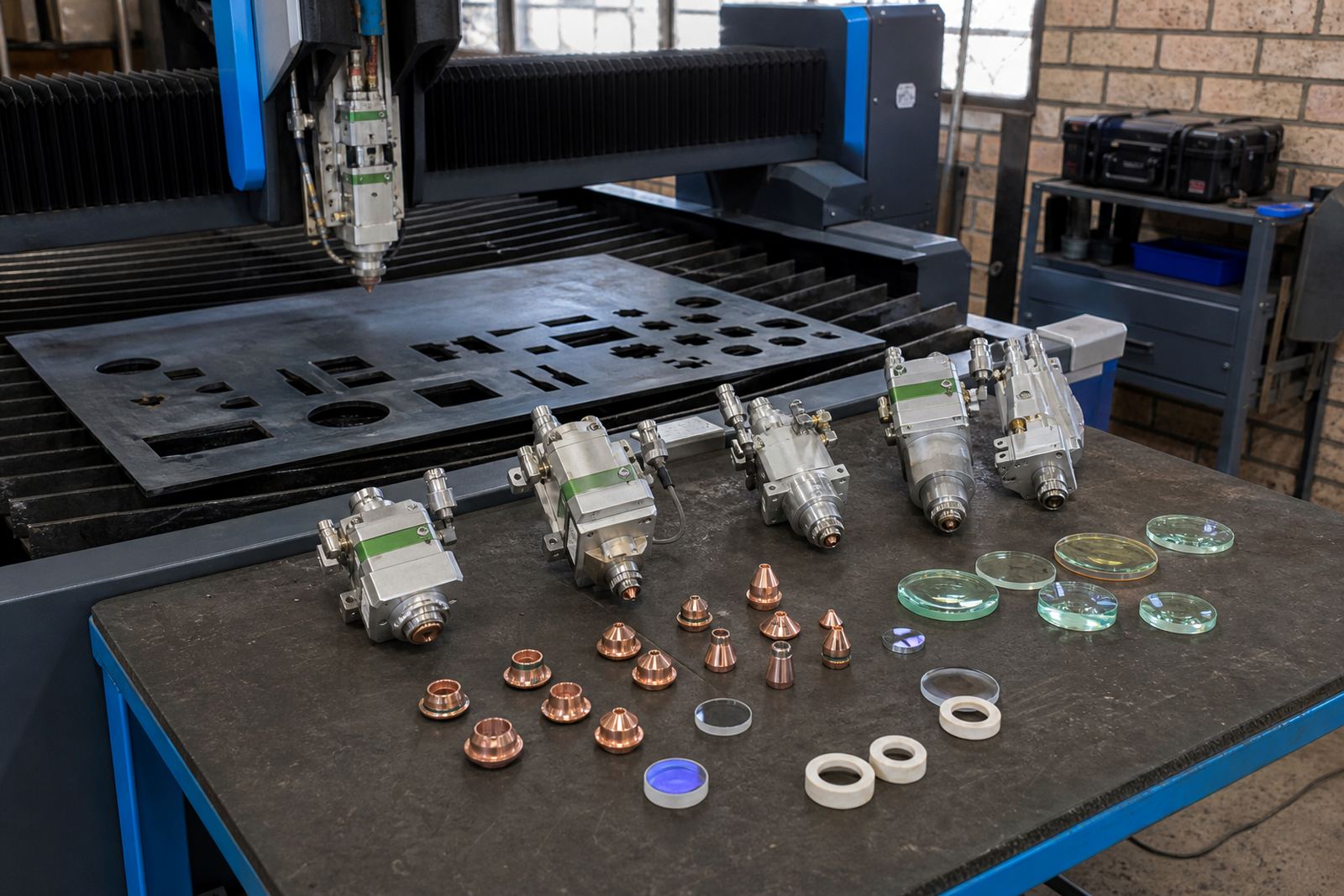
We support fibre laser cutting heads used on industrial cutting tables where the focus point, gas path and height sensing all matter together. That includes nozzle centring, focus setting checks, lens cleaning, protective window replacement and ceramic ring replacement when heat or crash damage has left marks on the head. In mine-linked work, a small fault at the head becomes a bigger waste issue very quickly.
Typical set-up in a mine support workshop
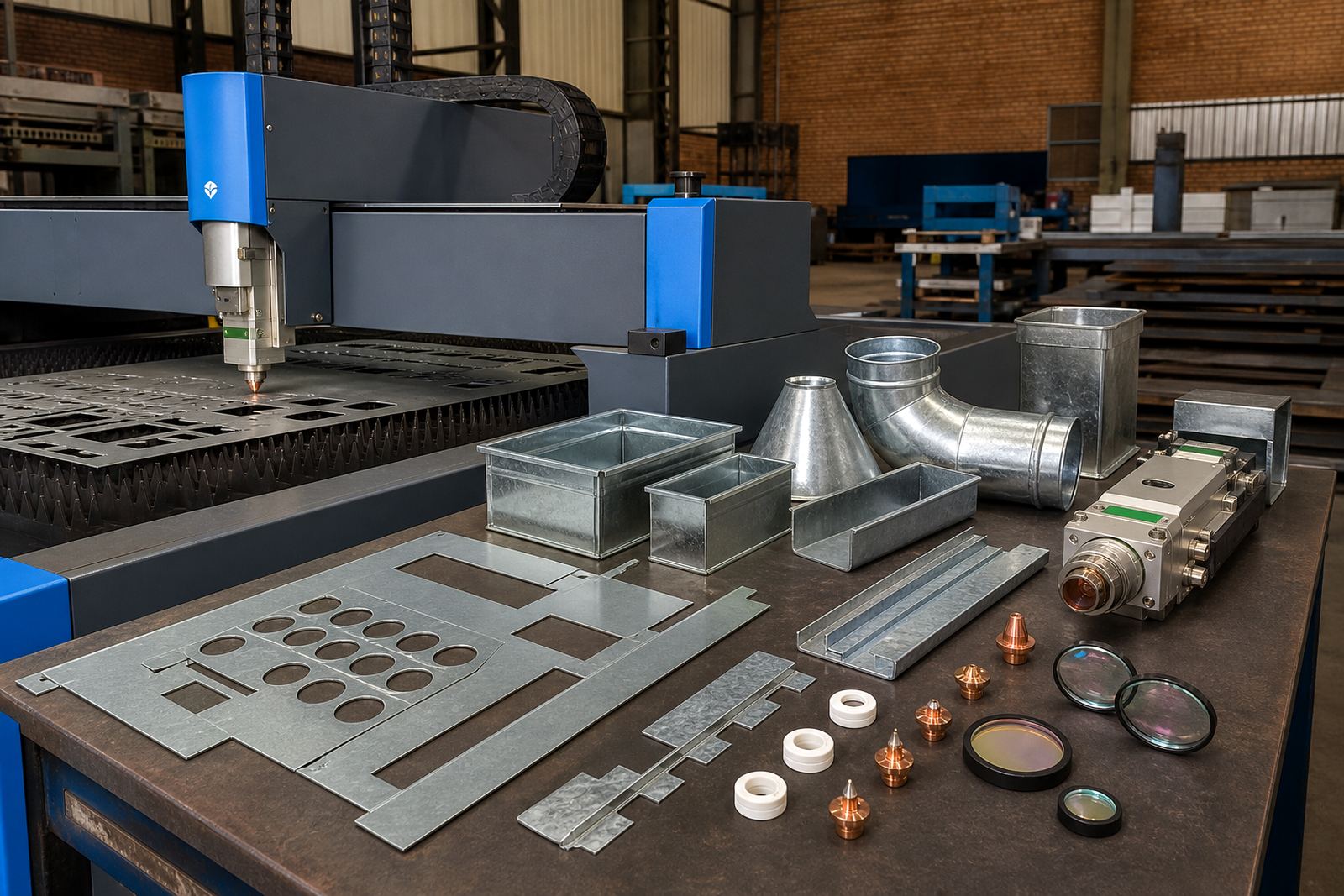
Most shops in this space are running sheet-metal cutting machines beside plate bending, welding, drilling and repair work. The laser table may be cutting mild steel, stainless steel or wear plate in different batches, with operators swapping consumables as the day changes. A spare head on the shelf is useful, but only if the service parts are packed and checked properly before the machine needs them.
- Fibre laser cutting head with focus and collimator lens path
- Single layer and double layer nozzles for different cutting jobs
- Protective windows to guard the internal optics
- Ceramic rings, seals and related head parts
- Capacitive sensing components for height control
On these jobs, the cutting head does not work alone. Gas pressure, pierce settings, focus position and nozzle condition all affect the cut. A shop that services mine maintenance parts often benefits from a short inventory of the right consumables rather than a crowded shelf of mixed spares.
Layout choices that save plate and time
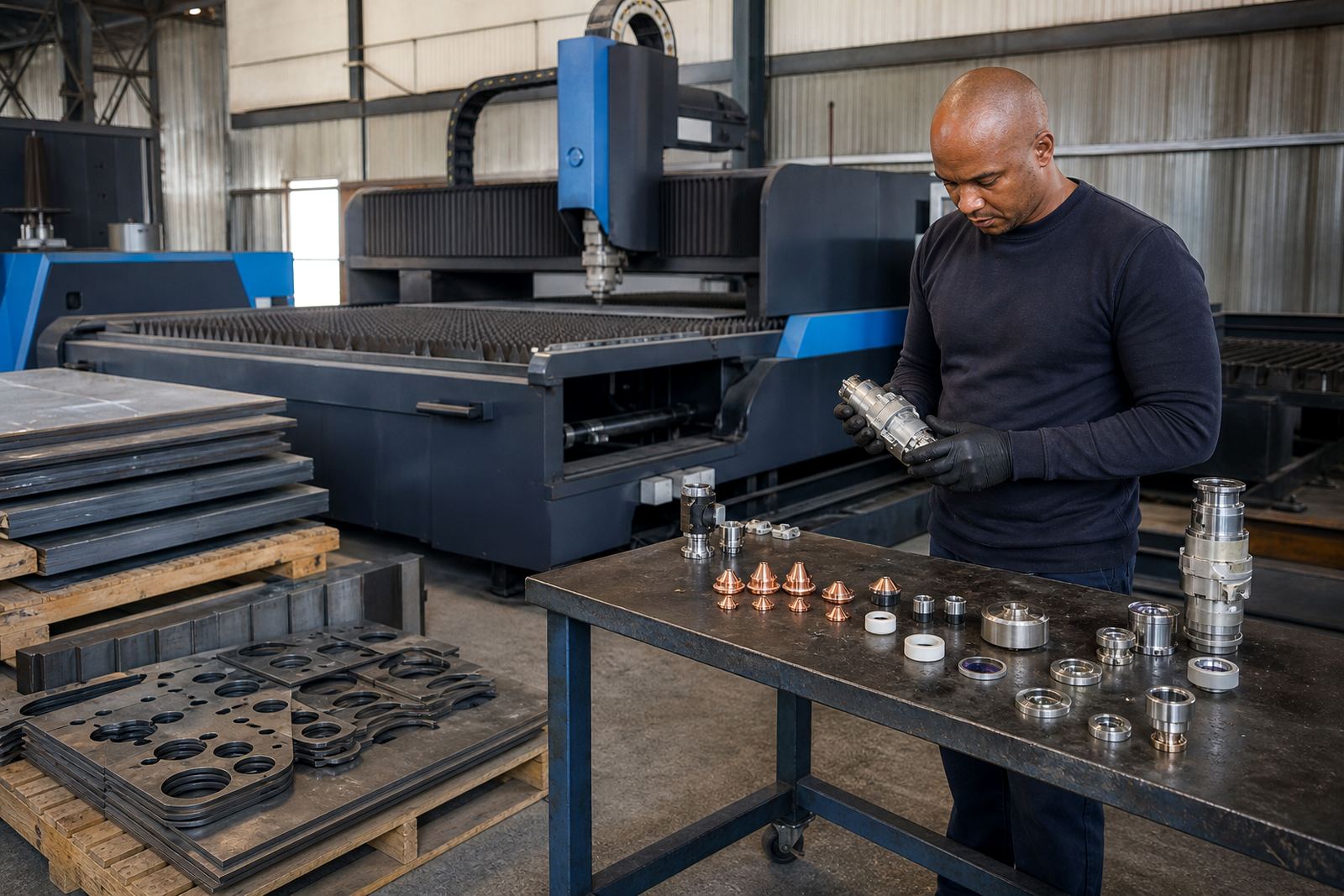
For fabrication teams serving mines and plant maintenance, the machine bay should allow clean movement around the cutting table and enough bench space for head work. Dust, grinding residue and oil from adjacent jobs can travel further than people expect, so the service area needs a separate surface for optics and nozzles. If the room is cramped, the staff end up carrying a head across the floor where dust and vibration increase the chance of trouble.
We often look at whether the machine room has a proper bench for head stripping, a clean cabinet for lenses and nozzles, and a fixed place for checking a head after alignment. Where the job involves frequent field work, it helps to keep a spare head prepared for emergency swaps, especially for shops supporting shutdown teams or maintenance crews. In humid coastal conditions or in a workshop with open doors, protective windows and lens storage need a bit more care than people expect.
- Keep optics sealed and off bare steel benches
- Separate used nozzles from clean stock
- Leave clear access around the head for alignment work
- Store service parts away from grinding dust and moisture
- Mark focus settings before the machine is stripped or moved
The faults that show up first
The first signs are usually practical ones. An operator notices a wider kerf, more dross on the underside, a cut that starts clean then wanders, or a head that sounds different during piercing. In a mining support shop, those signs often trace back to nozzle wear, a dirty protective window, a lens that needs cleaning, or a height sensing problem that keeps the head too close or too far from the plate.
Crash damage is another regular issue. A tipped plate, a warped scrap offcut or a height error can mark the ceramic ring and throw the head out of line. After that, a simple nozzle change will not solve much. The head may need bench servicing, seal inspection, gas path inspection and a fresh alignment check before it is safe to send back into production.
Common mistakes include using the wrong nozzle type for the cut, letting the focus drift over time, and treating a dirty window as a small issue. That sort of shortcut can waste plate quickly, especially where the job includes costly wear material or thick sections for plant maintenance.
Bench service and on-site alignment for mixed plant work
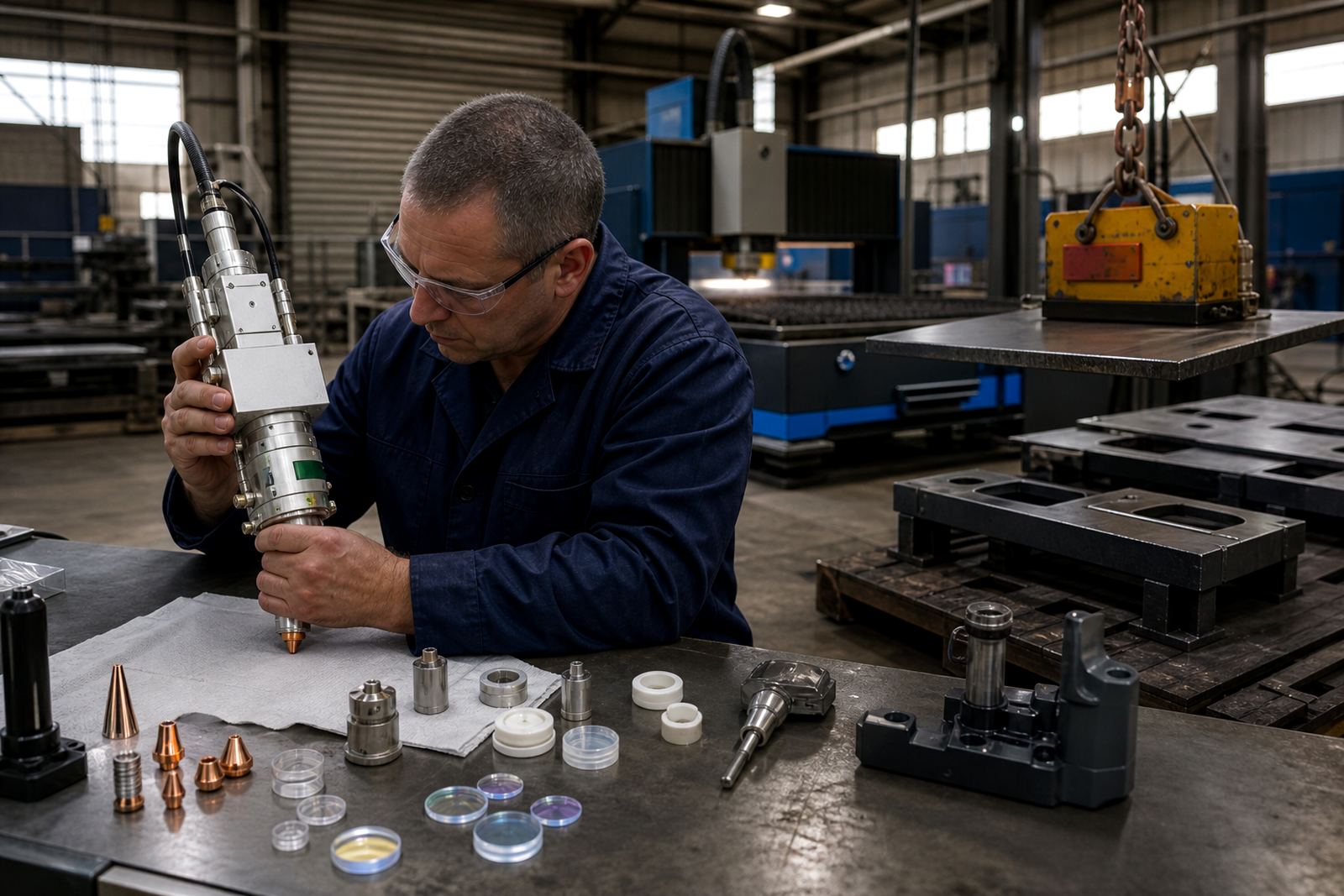
Some cutting heads are best handled on the bench, where the internal parts can be stripped, cleaned and checked under good light. Others are better adjusted on site when the problem sits in the machine setup, the beam alignment or the height sensing rather than inside the head itself. We cover both, which matters when a plant maintenance programme has more than one machine or when the workshop cannot afford a long stop.
Bench Head Service can include cleaning routines, lens cleaning, protective window replacement, ceramic ring replacement, head seal rebuild and crash damage inspection. On-site Head Alignment suits situations where the beam path or cut quality suggests the head is not sitting where it should. Nozzle centring and focus setting checks help keep the cut stable across different plate thicknesses and pierce cycles.
For mining fabrication teams in Johannesburg, Pretoria, Rustenburg, the East Rand, Durban and Cape Town, the goal stays the same: clean cuts, steady height control and parts that stand up to hard use. A head that is checked properly saves time on the machine and reduces waste at the cutting table.
Rand ranges for this work
Cost comes down to the head condition, the parts that must be replaced and whether the work is carried out on the bench or at the site. A routine service with basic cleaning, nozzle checks and a focus setting inspection usually sits at the lower end. Once a job includes new lenses, a protective window, a ceramic ring, seals and alignment work, the figure moves up in a way that reflects the parts and the labour involved.
For mining fabrication shops, it helps to plan for three broad levels. Small maintenance jobs and checks can be kept to a modest service spend. A mid-range repair may include consumables and a more detailed inspection. Larger recovery work after crash damage or repeat cutting faults can move into a higher Rand band, especially if spare head preparation is needed to keep production moving while the damaged unit is stripped down.
- Minor service and cleaning: lower Rand range
- Consumables and alignment work: mid Rand range
- Crash recovery or full head rebuild: higher Rand range
The best planning approach is to keep a service allowance for optics and head parts, not only for the cutting machine itself. That way the workshop can deal with wear before it turns into scrap, rework or avoidable downtime.