When plate work starts to show the head first
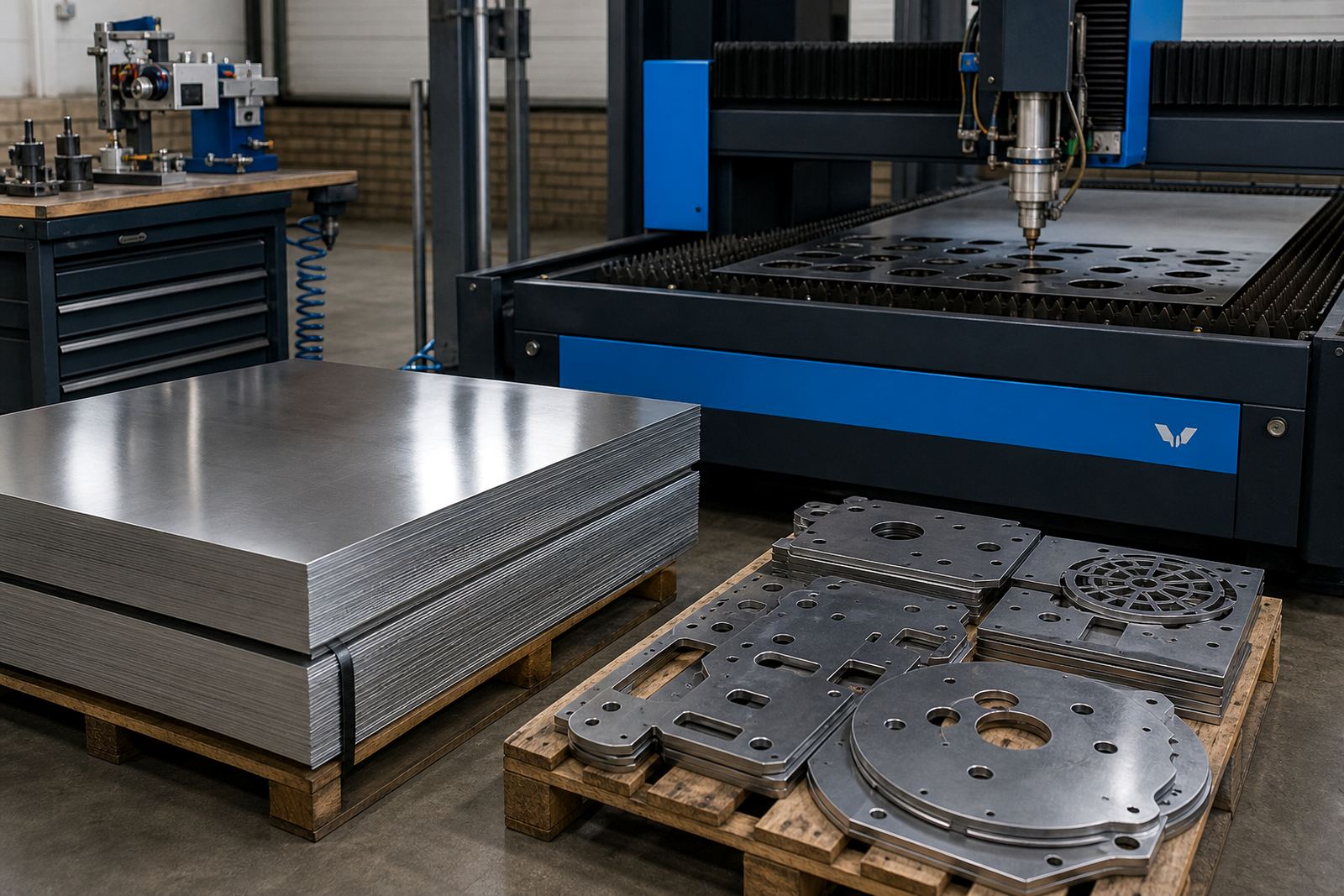
Thick sheet jobs usually show problems in the cut before they show problems anywhere else. A head that was fine on lighter gauge can struggle once piercing gets longer, heat builds up and the assist gas has to push harder through a smaller opening.
In practical terms, the signs are not subtle. You see dross hanging on the underside, a wider kerf, more taper and a rougher finish on corners or lead-ins. If the ceramic ring is cracked, the protective window is marked or the nozzle bore is no longer clean and round, the cut can drift fast on thicker material.
- Plate offcuts that run hot and hold slag
- Long pierce cycles that leave spatter on the nozzle face
- Cut edges that change as the sheet warms up
- More frequent focus checks after crashes or heavy use
What usually sits on the machine for heavy gauge cutting
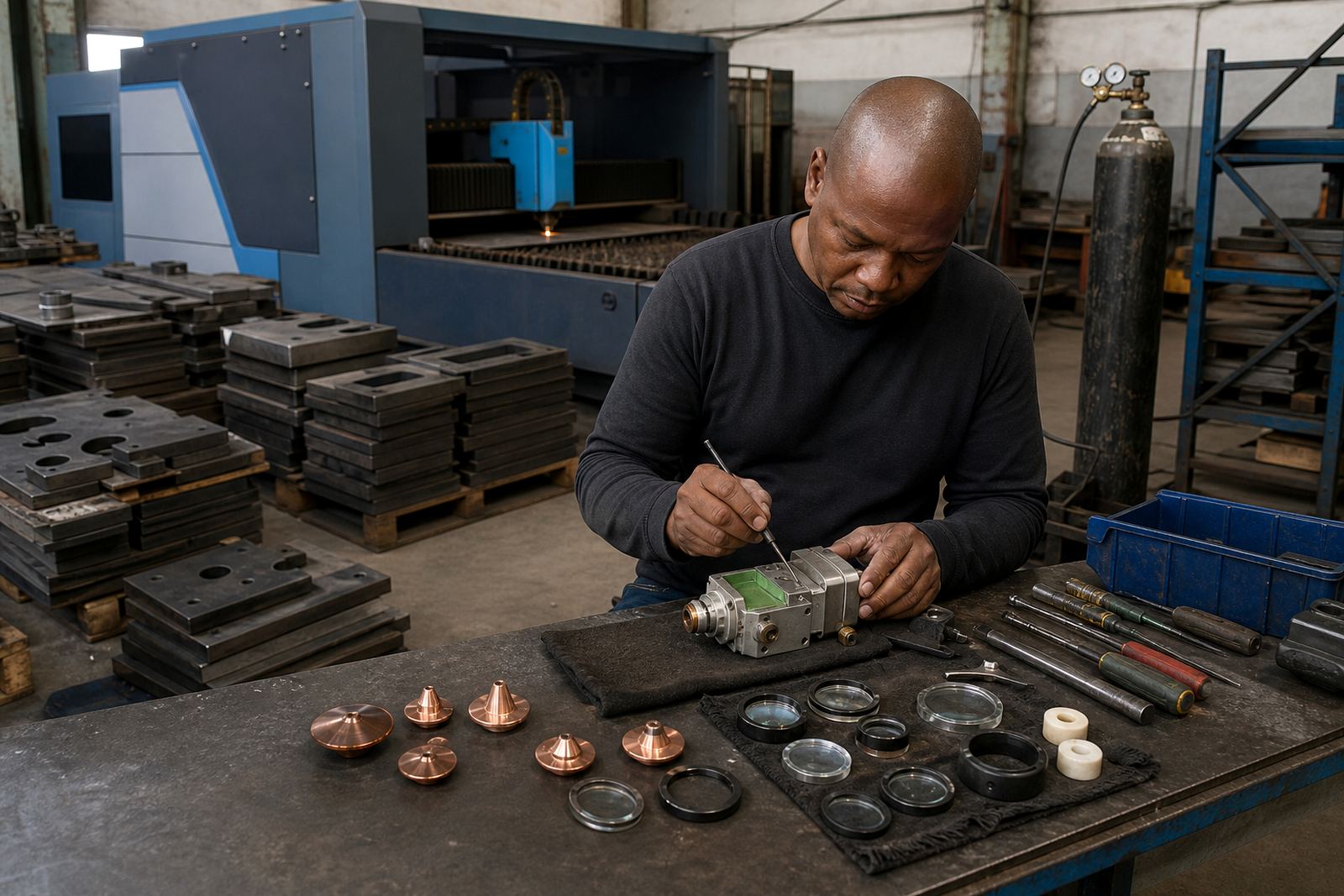
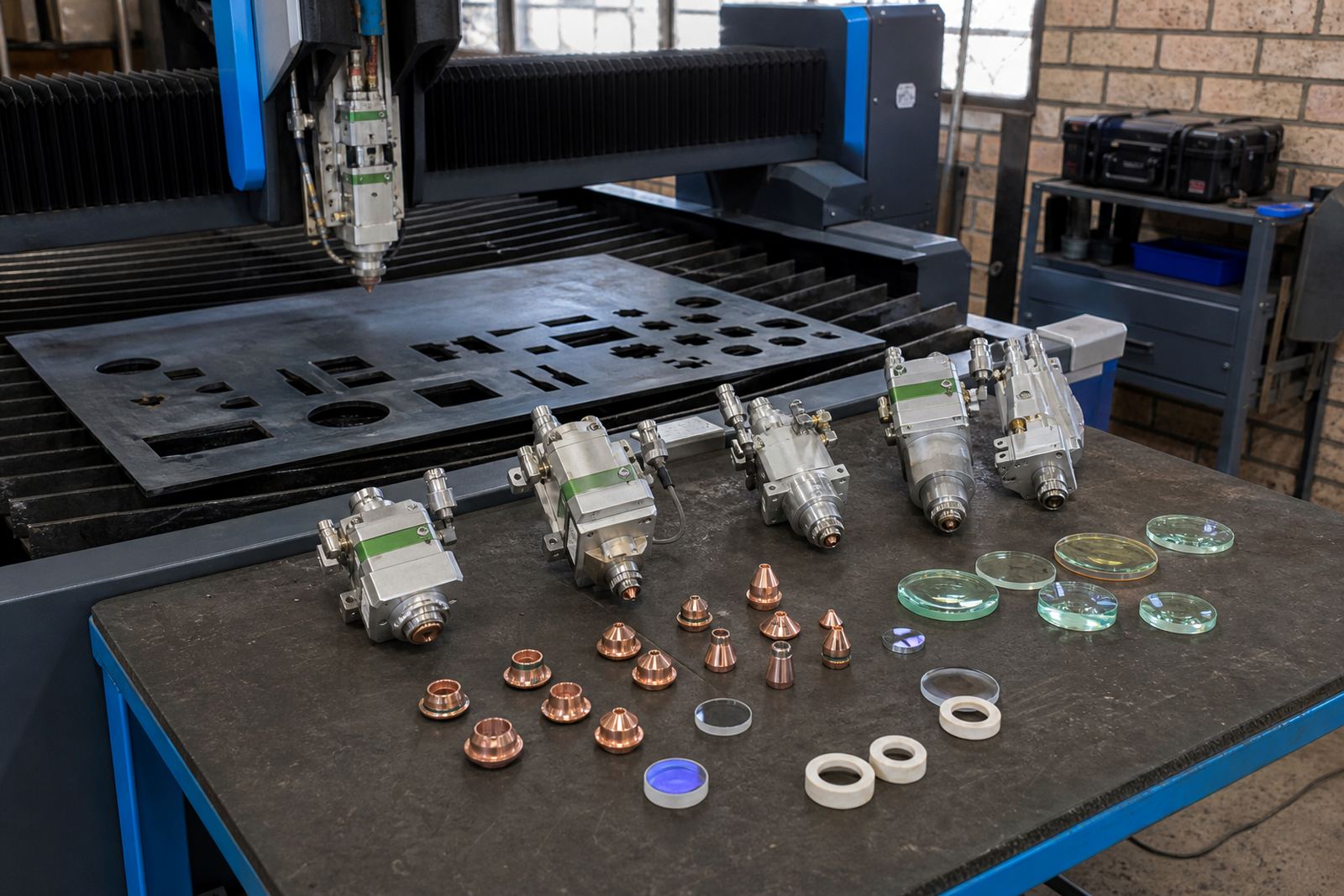
A thick sheet setup still depends on the same core parts, but the condition of each part matters more. The head carries the focus and collimator lenses, the nozzle directs the gas jet, the protective window keeps dust and splash away from the optics and the ceramic ring holds the assembly steady and insulated.
For heavier plate, single layer and double layer nozzles both get used, depending on the cut style and gas choice. A double layer nozzle can help the gas stream stay more stable on some jobs, while a single layer nozzle is often used where the process and material call for a direct, well centred jet. The wrong nozzle size or a worn bore can make thicker material behave badly, even if the settings looked fine on the last job.
- Fibre laser cutting head with clean internal optics
- Single layer or double layer nozzle matched to the job
- Protective window in good condition and free of haze
- Ceramic ring seated properly with no cracking
- Capacitive height sensing checked for stable tracking
Layout details that save a day of plate cutting
Thick material needs more than a good program. The cut path should allow the head to pierce without kicking slag back into the nozzle face, and the sheet needs enough support so the plate does not sag while heat builds. On bigger tables, a bent or dirty support slat can change stand-off enough to spoil a section of the job.
Gas flow also deserves attention. If the gas path is restricted, pressure alone will not rescue the cut. Lines, fittings and the head inlet must be clear, and the nozzle must be centred so the flow stays even at the tip. On busy shops in Johannesburg or Pretoria, we often see plate work slowed by small alignment faults rather than by the laser source itself.
A useful check list for thick sheet work is below:
- Keep lead-ins away from corners where heat can build
- Check stand-off on every nozzle change and after crash events
- Inspect the gas path before blaming the cutting file
- Clean spatter before it hardens on the nozzle face
- Recheck focus settings when the material thickness changes sharply
Common faults that show up on heavier plate
Thick sheet cutting is unforgiving when the head is slightly off. A nozzle that looks usable may still be out of centre by enough to push the jet off line. That can show up as one side of the cut polishing while the other side tears, or as a burr that only appears at the end of a long run.
Protective windows are another frequent trouble spot. Once the window has a mark or heat haze, the beam can lose shape before it reaches the cut. Lens cleaning helps, but it has to be done with a steady hand and the right routine, because careless cleaning can scratch a part that still had life left in it. Ceramic rings also fail more often on plate work, usually after heat, impact or repeated nozzle changes.
- Nozzle centring drift after a minor head contact
- Contaminated lens surfaces from poor cleaning habits
- Capacitive sensor readings that do not track smoothly
- Head seal wear that lets dust collect inside the body
Bench servicing and on-site alignment for plate shops
Some heads are better removed and checked on the bench, especially after a crash or when the optics have taken a heavy dust load. Bench service lets us inspect the focus and collimator lenses, the sealing surfaces, the ceramic ring and the nozzle seating in proper light, with the parts stripped down far enough to see wear that gets missed on the machine.
On-site alignment suits shops that cannot spare the machine for long or need the head checked in its working position. That matters where plate batches move through quickly and the operator needs confidence that the focus setting, nozzle centring and height sensing are all reading correctly under real cutting conditions. Across South Africa, from Cape Town to Rustenburg, the same pattern repeats: small alignment faults cost more on thick material than on light sheet.
For shops planning service work, the usual budget ranges are shaped by the fault, the travel distance and the parts needed. A simple nozzle centring or focus check can cost a few thousand Rand, while a more complete bench service with protective window replacement, lens cleaning and ceramic ring work can reach the mid thousands. Crash damage inspection, seal rebuilds and spare head preparation sit higher, especially when extra parts are needed and the head has to be stripped and reset carefully.
The heavy-gauge cut usually needs a cleaner small detail
Thick plate work is often judged by the smallest detail at the nozzle tip. A clean bore, the right focus position and a stable gas path can be the difference between a usable edge and a job that needs rework. When the head is kept clean and aligned, the machine spends less time fighting the process and more time cutting the plate the way it should.
For practical support in Spartan, Kempton Park and across the country, Raytool handles bench head service, on-site head alignment, protective window replacement, lens cleaning, ceramic ring replacement, capacitive sensor checks and spare head preparation for shops that run heavy sheet work day after day.