Daily cutting on mild steel needs the head kept honest
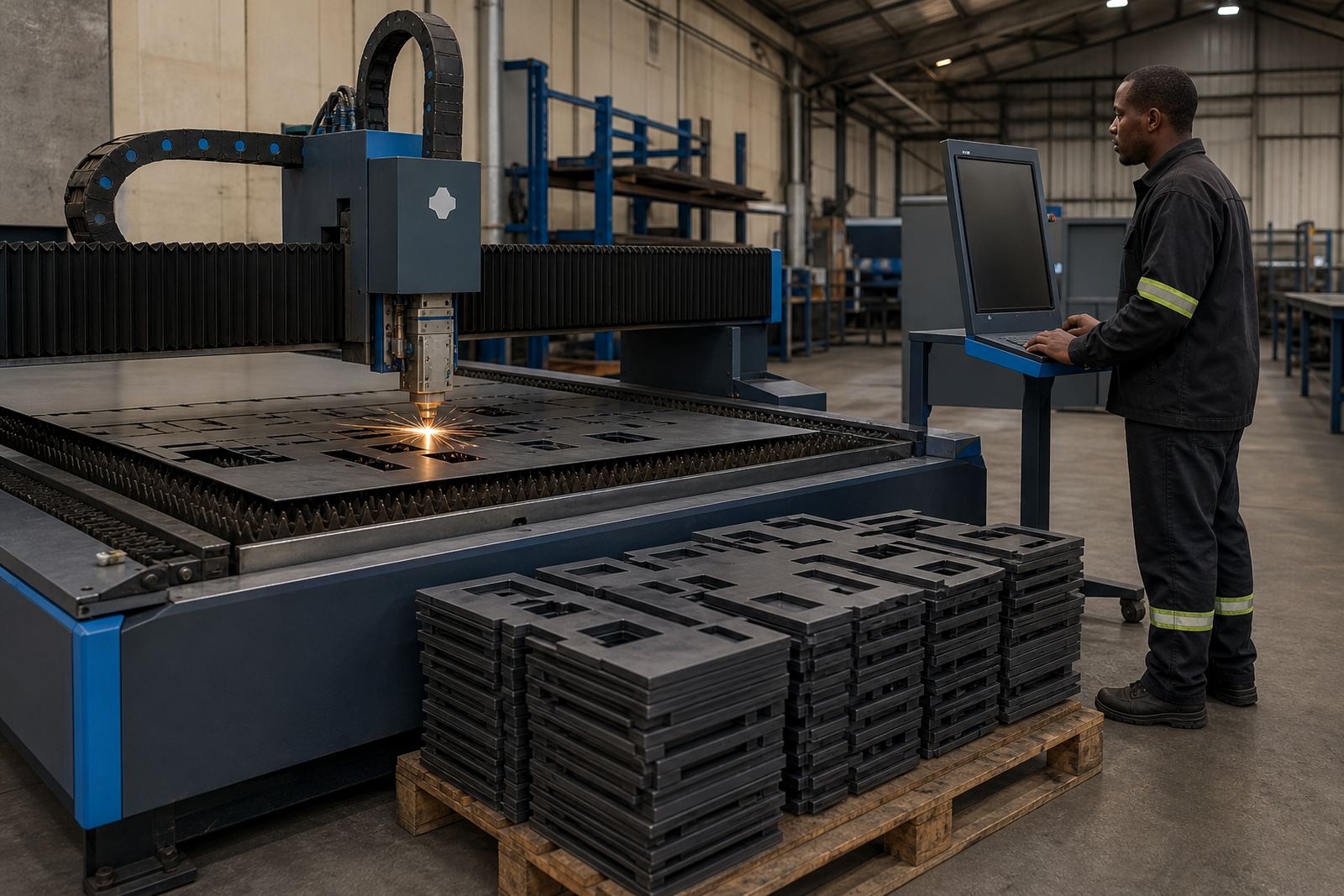
Mild steel runs are often repetitive, but the head does not get to be lazy. Sheet thickness changes, tip wear and fine dust from cut edges all work on the same assembly, so the nozzle, ceramic ring, protective window and lens stack need regular attention. On a busy line in Spartan or East Rand, a head that is slightly out on centring can still cut, yet the edge will tell the story before the operator does.
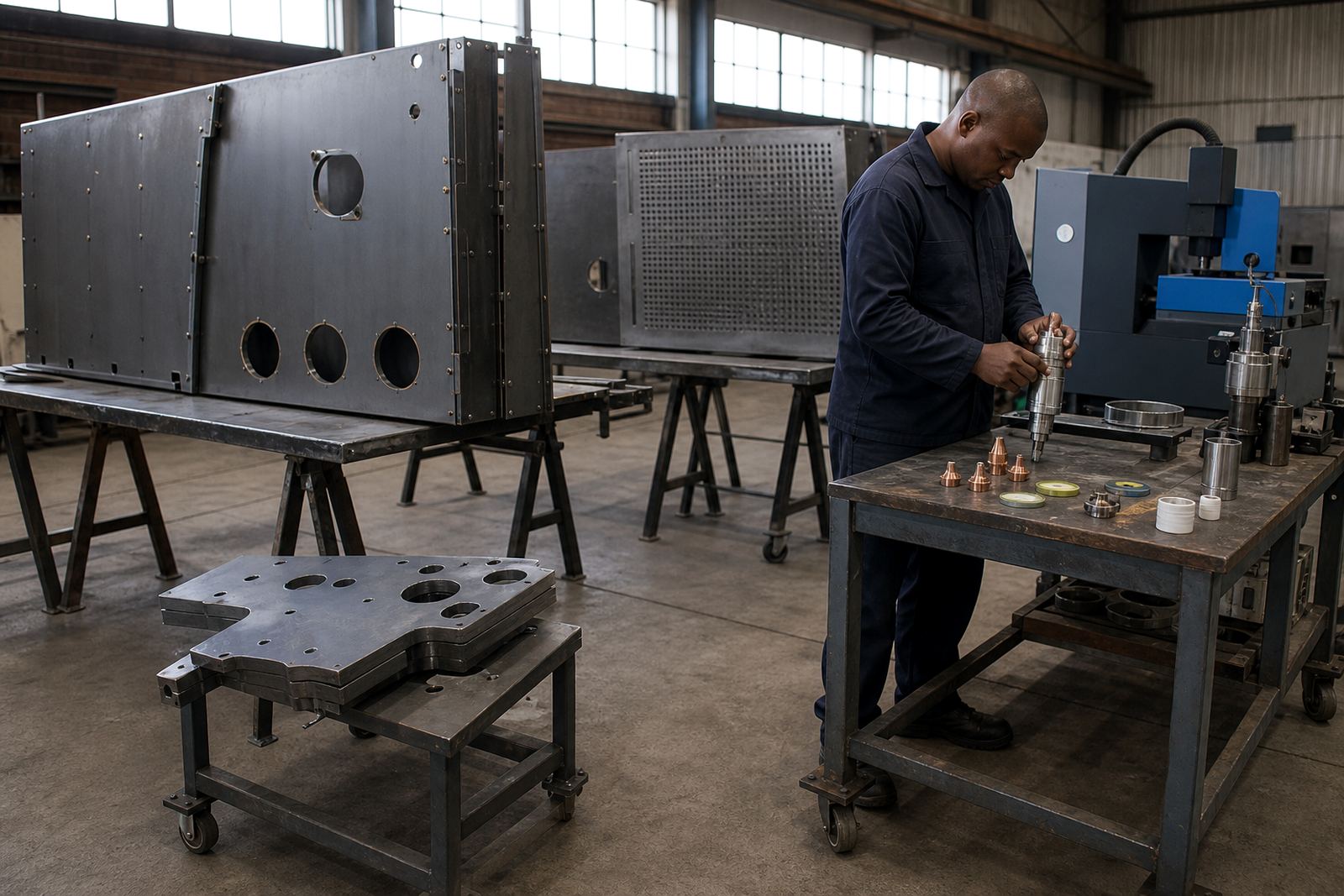
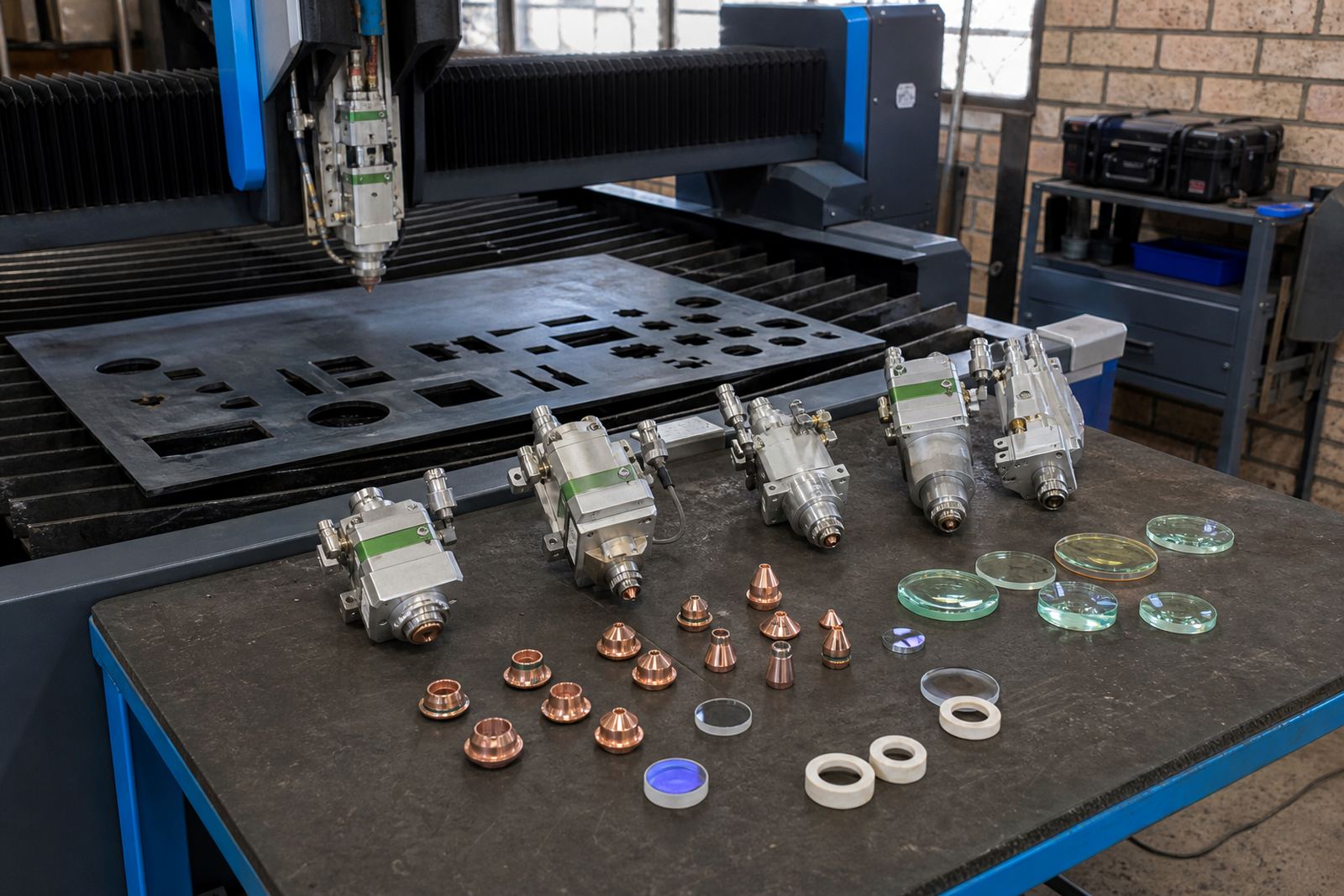
Most shops using fibre laser equipment on mild steel keep a few consumables close at hand: single layer and double layer nozzles, focus and collimator lenses, protective windows and ceramic rings. That kit supports day-to-day cutting, but the real gain comes from a proper check of focus position, gas path condition and the capacitive height sensing system. When those parts stay aligned, pierces are cleaner and the cut face is less likely to show dross or flare marks.
- Nozzle wear changes the gas stream, which affects cut width and edge finish.
- Protective windows need replacement when spatter or haze starts to scatter the beam.
- Lens cleaning matters on sheet-metal lines where fine dust builds up quickly.
- Capacitive sensing needs a stable signal so the head keeps the correct stand-off.
Typical setups seen in mild steel shops
Many mild steel shops run nested sheets, small batch work and repeat components through the same machine. That means the head must switch between thicker plate and lighter gauge material without losing its setting. In practical terms, the usual setup includes a cutting head with a ceramic ring, a focus lens, a collimator lens and a protective window above the nozzle assembly.
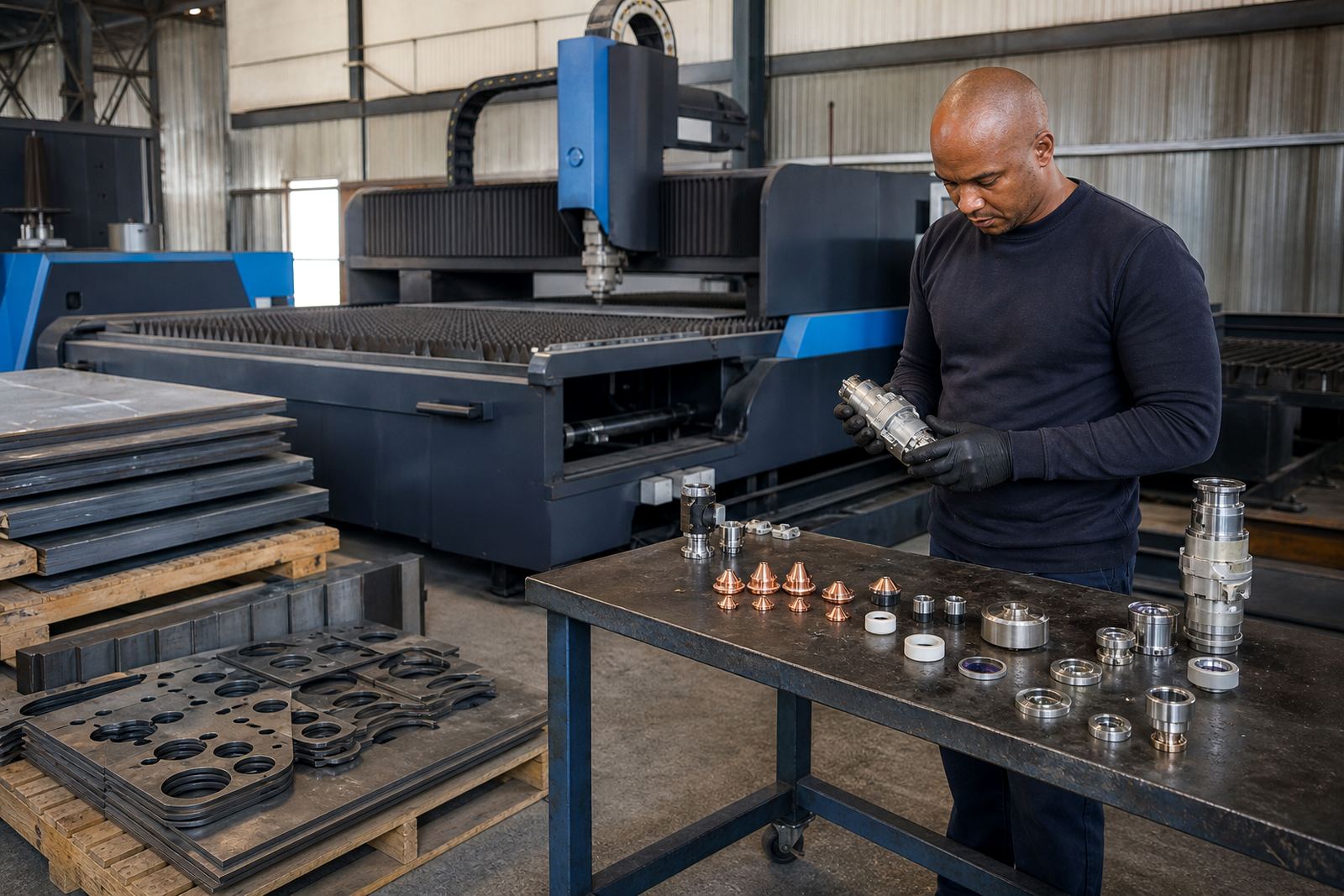
Single layer nozzles are common where the gas flow is consistent and the cut path is well controlled. Double layer nozzles are useful where the shop wants a different gas pattern for piercing or edge stability, depending on thickness and cutting style. A wrong nozzle size or a worn bore can push the cut off line, even when the program is sound. That is why bench testing of the head is useful before a problem spreads into production.
- Thin sheet usually asks for tight focus control and a clean nozzle bore.
- Heavier mild steel benefits from stable gas delivery and accurate height sensing.
- Collimator and focus lenses must be checked for haze, chips or heat marks.
- Spare head preparation helps when a line cannot wait for a full strip-down.
Layout planning for quicker floor work
In a production shop, the best layout is the one that keeps consumables near the machines and keeps faulty parts away from daily use. A clean shelf for nozzles, rings and windows is worth more than a crowded drawer with mixed sizes. On a line cutting mild steel all week, the operator should not waste time hunting for the right nozzle thread or the correct lens seal.
We see better results where the shop separates new stock, used parts and items sent for inspection. That small discipline helps with cleaning routines and stops a half worn part from being put back into service by mistake. It also helps the bench technician keep track of head seals, gas path issues and any crash damage that may need deeper work.
- Keep nozzles sorted by size and type, not mixed in one tray.
- Store lenses and windows in clean containers away from spatter.
- Mark heads that need service before they go back to the machine.
- Keep a record of nozzle swaps, focus changes and any alignment checks.
Where mild steel jobs usually go wrong
Many of the faults we see on mild steel jobs are not dramatic. The head still moves, the machine still fires and the job still gets cut, but the details slip. Common trouble starts with a dirty protective window, a nozzle that has been knocked out of centre or a focus setting that was altered to force a cut through bad material. Those quick fixes often create a longer problem.
Another regular issue is a tired ceramic ring or a damaged head seal. Once the seal is compromised, dust and fumes can work into places they should not reach. The same applies to the capacitive sensor area, where contamination can make height control inconsistent. If the machine has had a light crash, the head may need a proper bench inspection before anyone assumes the optics are still square.
- Do not keep running a nozzle once the bore has gone oval.
- Do not wash lenses with rough cloths or loose workshop wipes.
- Do not ignore a small change in pierce sound or cut sparkle.
- Do not reset focus by guesswork when the cut pattern changes.
Bench service and on-site alignment for production lines
Some heads can be dealt with on the bench, where the technician can clean, test and align them under controlled conditions. That suits protective window replacement, lens cleaning, ceramic ring replacement, gas path inspection and crash damage inspection. When the issue is on the machine or linked to setup, on-site head alignment is the better route because the full cutting conditions are visible in place.
For mild steel shops, bench service and field alignment often sit together in the same maintenance plan. A head that has been cleaned and checked in the shop can still drift once it is fitted back onto the machine, especially if the mount, cable run or sensor spacing is not correct. On-site work lets the technician check nozzle centring, focus setting and capacitive sensor behaviour against the actual cutting table and sheet stack.
Rand ranges that make sense for routine care
Budgets vary by head size, machine condition and whether the job is bench based or on-site. For routine consumables on mild steel work, many shops keep a working allowance for nozzles, protective windows, ceramic rings and lens cleaning items rather than waiting for a complete failure. A small consumables order may land in the low thousands of Rand, while a bigger maintenance visit with lenses, seals and alignment work can go much higher depending on what needs replacement.
As a rough planning guide, a nozzle and window refresh can be relatively light on cost, while lens replacement, head seal rebuild work and crash inspection push the figure up. If the head needs full bench service plus field alignment, it is sensible to plan a broader maintenance budget rather than treating each item separately. The point is not to spend more, but to avoid repeated stoppages from the same worn part.
- Small consumable top-ups often stay in the low thousands of Rand.
- Mixed service jobs with lenses and seals usually cost more than stock-only work.
- On-site alignment adds travel and setup time to the job.
- Crash damage can change the budget quickly, especially after a hard strike.