When a sheet shop changes jobs before lunch
A general sheet-metal shop rarely runs one material for long. One hour it is 0.8 mm stainless, then 3 mm mild steel, then a batch with tighter nesting and a different nozzle size. That constant change puts pressure on the fibre laser cutting head, the lens stack, the ceramic ring and the capacitive sensing set-up. If the head is slightly off-centre, the cut edge will show it quickly.
Our work suits shops that handle mixed gauges, mixed nest layouts and varied part counts through the week. The usual trouble spots are blown nozzles, dirty protective windows, lens contamination, unstable pierces and small alignment errors that only show up once the machine is cutting under pressure. A head that is clean on the outside can still be out on focus or gas flow inside, and then the shop chases faults that never seem to sit in one place.
- Frequent nozzle changes for thin and medium plate
- Protective window haze from smoke and fine spatter
- Focus drift after crashes or repeated head movement
- Capacitive sensing faults on mixed sheet heights
Head parts that matter on a busy floor
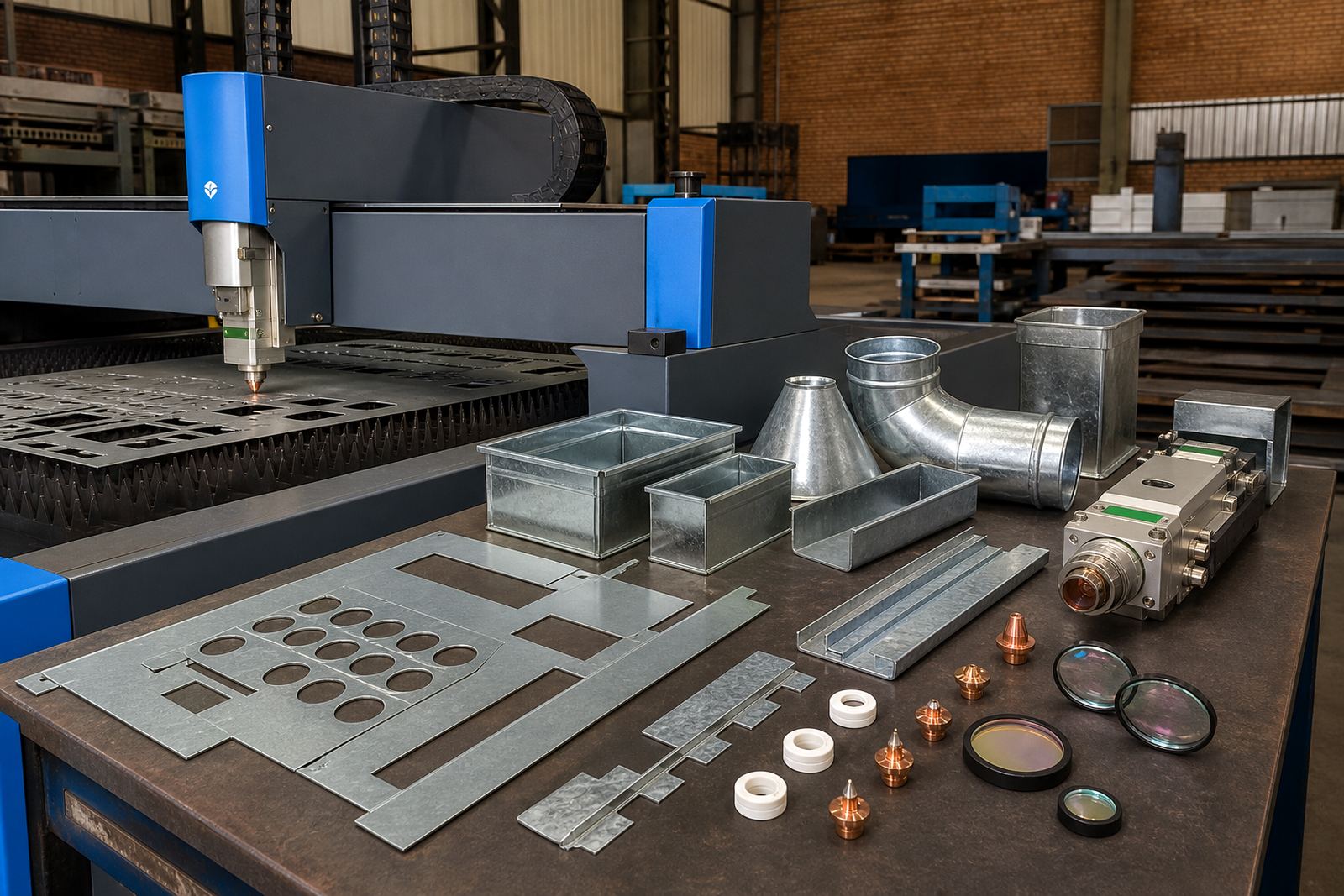
The parts most shops touch first are the nozzle, protective window and ceramic ring, but the lens set carries just as much weight. A fibre laser head relies on the focus lens and collimator lens being clean, seated correctly and matched to the cutting task. If the focus is set off by a small amount, the cut can show dross, taper or rough entry. If the collimator window is dusty, the beam quality drops before the operator notices.
Single layer nozzles suit many general cutting jobs, while double layer nozzles are often used where gas control and cut stability need more consistency. Both need the centre line checked, because even a small offset changes the way assist gas meets the melt pool. The ceramic ring, protective window and sensor path also need inspection for cracks, heat marks and tracking from contamination. On a shop floor in East Rand or Pretoria, the fine dust from daily work can be enough to shorten part life if cleaning is left too long.
- Single layer nozzles for common sheet work
- Double layer nozzles where gas control matters more
- Focus and collimator lenses that need careful handling
- Protective windows and ceramic rings that should be inspected often
Bench service that catches the quiet faults
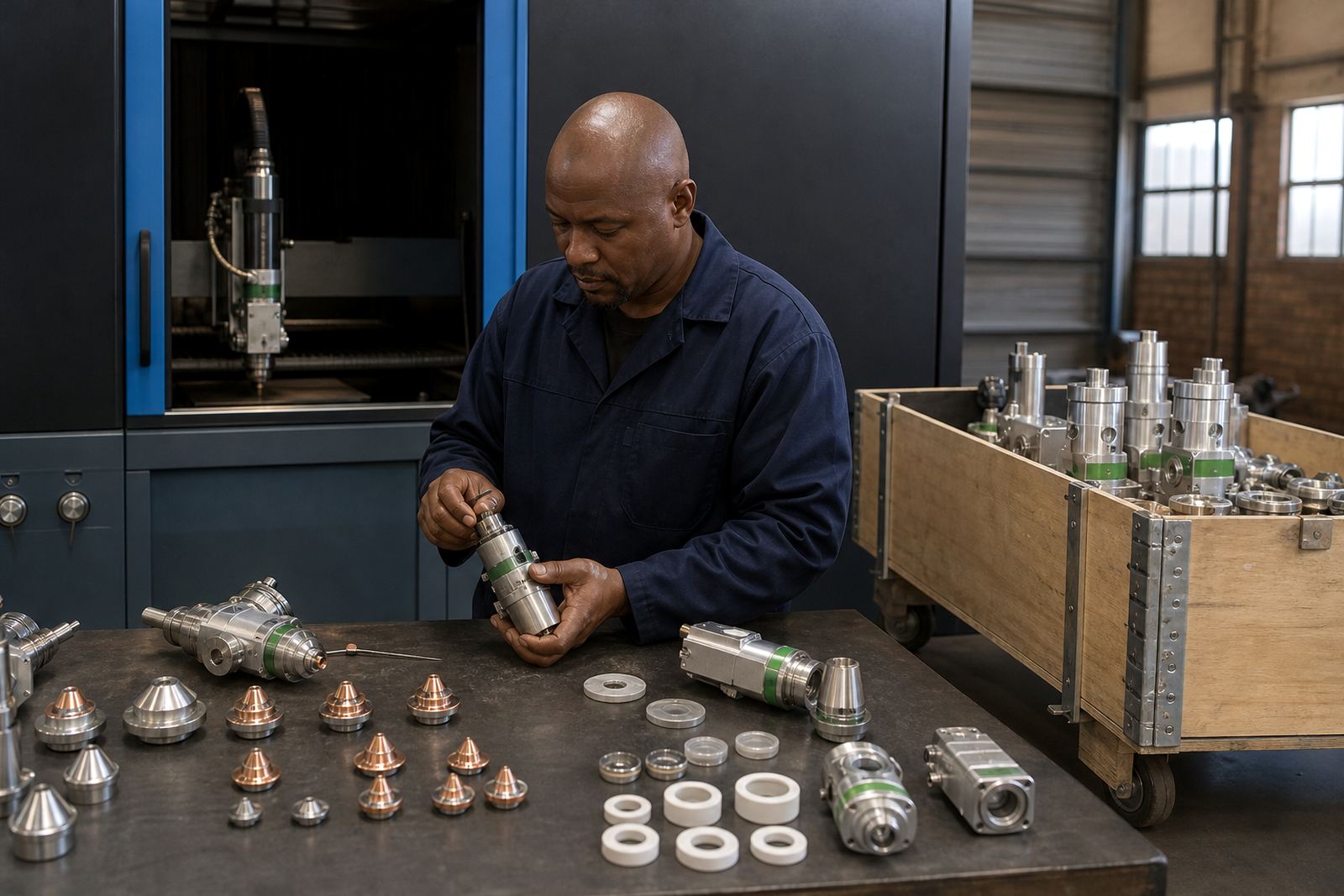
Bench Head Service is useful when a head is still usable but not behaving the way it should. We strip, inspect and clean the cutting head, then check lens condition, nozzle seat, seals, sensor parts and the general gas path. That work helps to separate a worn consumable from a problem that sits deeper in the head body. A shop may think it has a nozzle issue, when the real matter is contamination around the focus section or a damaged seal behind the window.
Cleaning routines matter more than many operators expect. Dust, oil mist and smoke residue build up around the nozzle mount, the window seat and the ceramic ring. If the shop is running long shifts, those deposits can change the way the head reads height and the way the beam enters the sheet. We also carry out head seal rebuilds and crash damage inspections where the unit has taken a knock from a misfeed or a sheet lift fault. That sort of damage may be small on the outside but messy inside.
- Bench service for heads with recurring cut faults
- Lens cleaning and protective window replacement
- Head seal rebuilds after contamination or wear
- Crash inspections after a head strike or lost cut
On-site alignment for mixed nesting and changing gauges
Some faults only show once the machine is under load, so on-site head alignment is often the better route. In a general sheet shop the machine may move from thin material to thicker plate with very little warning, and the head needs to stay centred through that shift. Our field work covers nozzle centring, focus setting checks, capacitive sensor checks and gas path inspection, with the aim of getting the head to read sheet height properly and cut where it should.
Planning matters before the technician arrives. The machine area should be clear, the common nozzle sizes should be on hand and the operator should know which faults appear most often. If the shop has been using the wrong cleaning routine or a worn ceramic ring, the alignment work will not hold for long. Shops in Cape Town, Durban and Rustenburg often see different dust, humidity and storage conditions, so the same head may need a different maintenance rhythm from one branch to the next.
- On-site head alignment for machines already in production
- Focus setting checks after repeated material changes
- Capacitive sensor checks where height reading looks unstable
- Gas path inspection for poor pierce or erratic cuts
A practical layout for stock and spares
General shops do better when their spare parts are sorted by use, not by guesswork. The common nozzles should be kept clean and sealed, lenses should stay in protective packaging until needed and replacement windows need a dry spot away from grinding dust. In humid coastal towns, a little moisture is enough to leave marks on optics if storage is careless. A simple parts tray near the machine helps the operator swap fast and keeps mixed sizes from getting muddled.
It also helps to keep a small record of what failed and when. If the same nozzle type keeps burning out, or the ceramic ring shows repeat damage, there is usually a machine-side reason that needs attention. Shops with several shifts should assign one person to basic head checks at changeover, because missed cleaning routines build up quickly. Marius Johannes van der Merwe and the team work with that kind of practical floor setup every day, from Spartan, Kempton Park out to Johannesburg and Pretoria, and the same habits carry through to smaller satellite shops as well.
- Store optics dry, sealed and away from shop dust
- Keep the common nozzle sizes separate and labelled
- Track repeated faults by machine and operator shift
- Set a short daily inspection around the cutting head
Cost ranges that suit a mixed-jobbing shop
Budgets depend on the size of the head problem and how much of the unit needs attention. A basic nozzle, window or ceramic ring change may stay at the lower end, while bench servicing with lens work or a damaged head rebuild costs more. On-site alignment adds travel, time and the nature of the fault, especially if the machine needs both sensor checks and gas path correction. Shops usually find it easier to budget for service before a fault spreads into a bigger repair.
For planning purposes, many general sheet shops set aside a working range from a few hundred Rand for individual consumables to several thousand Rand where bench work, alignment and damaged parts are involved. Spare head preparation and more involved rebuilds sit higher, particularly when multiple components need replacement at once. The useful question is not just what the part costs, but how much cut time is being lost while the head stays out of line. That is often where the real cost sits.
- Consumables such as nozzles, windows and rings: lower Rand range
- Bench service with cleaning and inspection: mid Rand range
- On-site alignment and sensor correction: mid to higher Rand range
- Crash rebuilds and spare head preparation: higher Rand range