When the sign file is right but the cut still misbehaves
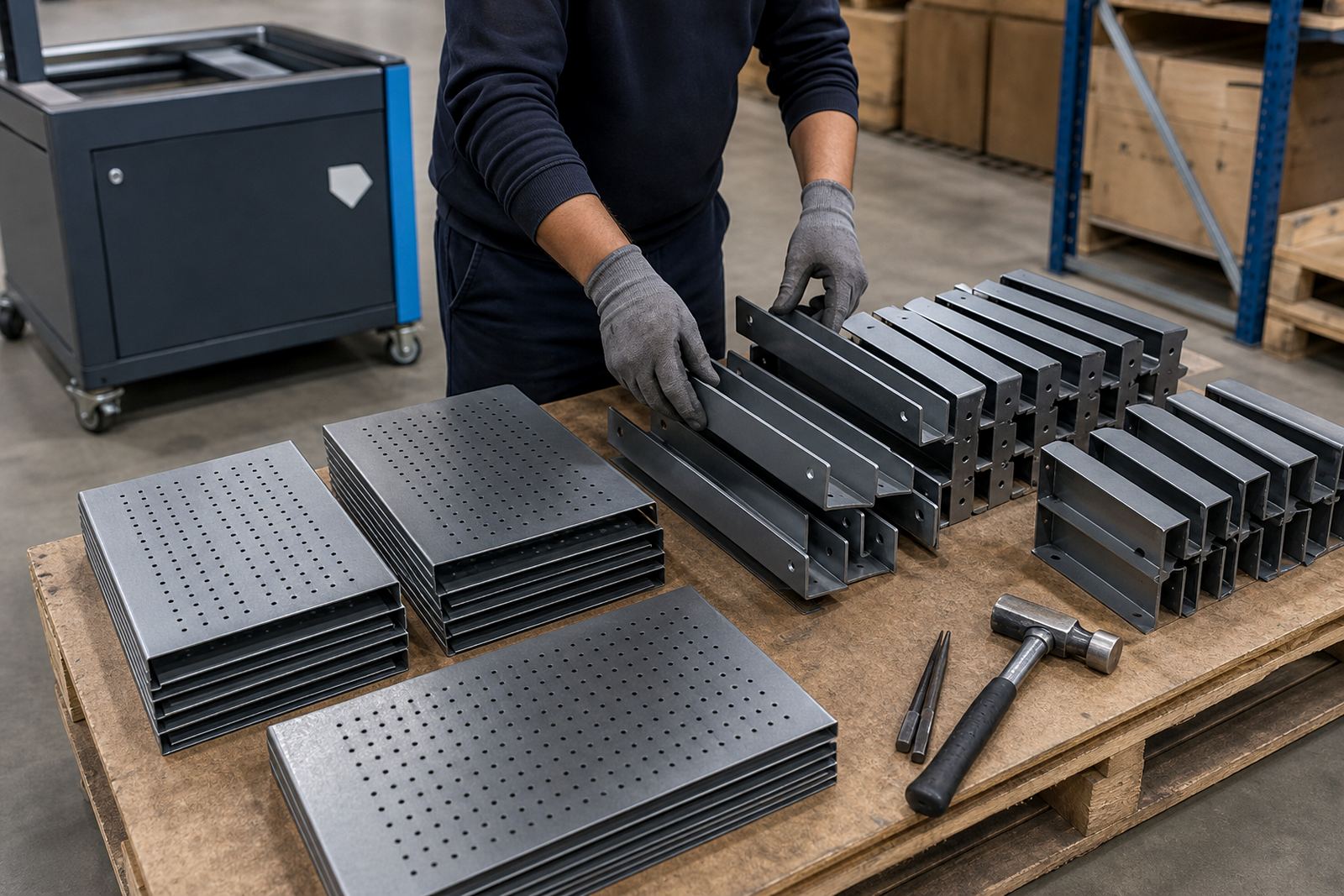
Decorative work shows every small fault. A slight nozzle offset can leave a ragged edge on thin stainless, while a tired protective window can cloud the beam path and turn a neat cut into a warm, uneven edge. In signage jobs the issue often appears on small lettering, fretwork, mounting plates and folded trim where detail matters more than raw cutting speed.
Our work with signage metal shops usually starts with the cutting head, then moves through the nozzle, focus setting and gas path. If the machine is marking, drossing or leaving one side of the kerf rougher than the other, the cause is often in the head rather than the program. On fine work, that difference is easy to see once the part is cleaned and painted.
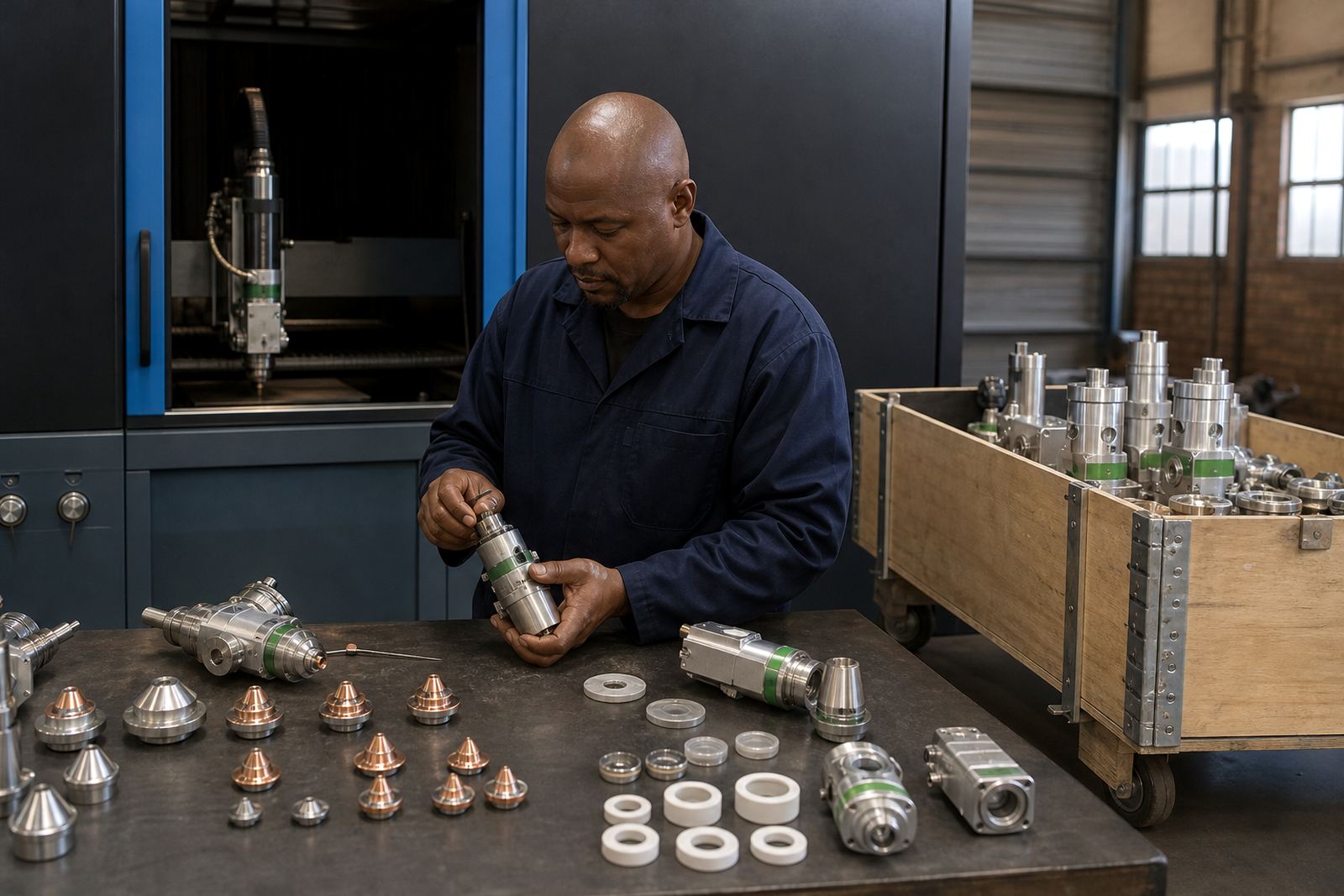
We handle fibre laser cutting heads, nozzles, focus and collimator lenses, protective windows and ceramic rings for sheet-metal cutting machines. Bench service suits heads that need stripping, cleaning and checking under better light, while on-site alignment helps when the machine is already installed and the cutting issue shows up across a full sheet.
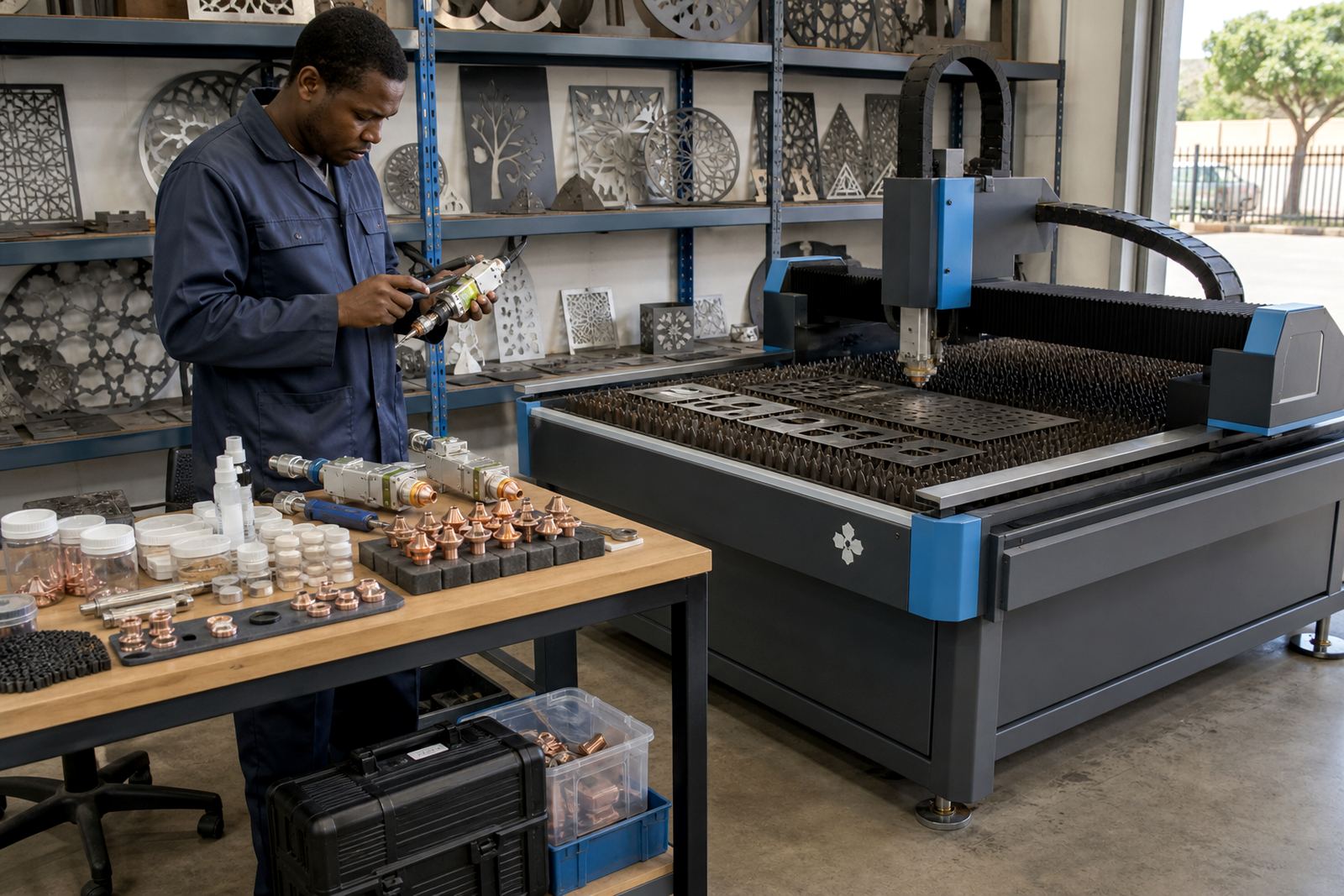
Typical kit in a signage workshop
A signage shop does not usually run only one material or one thickness. A good week may include mild steel for letters, stainless for fascia work and aluminium for decorative panels. That mix asks for stable focus, clean assist gas flow and a nozzle setup that matches the thickness and finish expected on the job.
- Fibre laser cutting head with capacitive height sensing
- Single and double layer nozzles for different sheet thicknesses
- Focus lens and collimator lens matched to the head design
- Protective windows to keep dust and spatter out of the optics path
- Ceramic ring for electrical isolation and sensor stability
- Gas path parts that keep pressure and flow consistent
When a shop is cutting small logos or script, the beam shape and stand-off height matter more than on broad industrial parts. A clean lens and a centred nozzle help the machine hold detail at corners and in small internal cuts, especially where the design has tight curves or fine bridges.
Layout advice for shops that cut signs and decorative panels
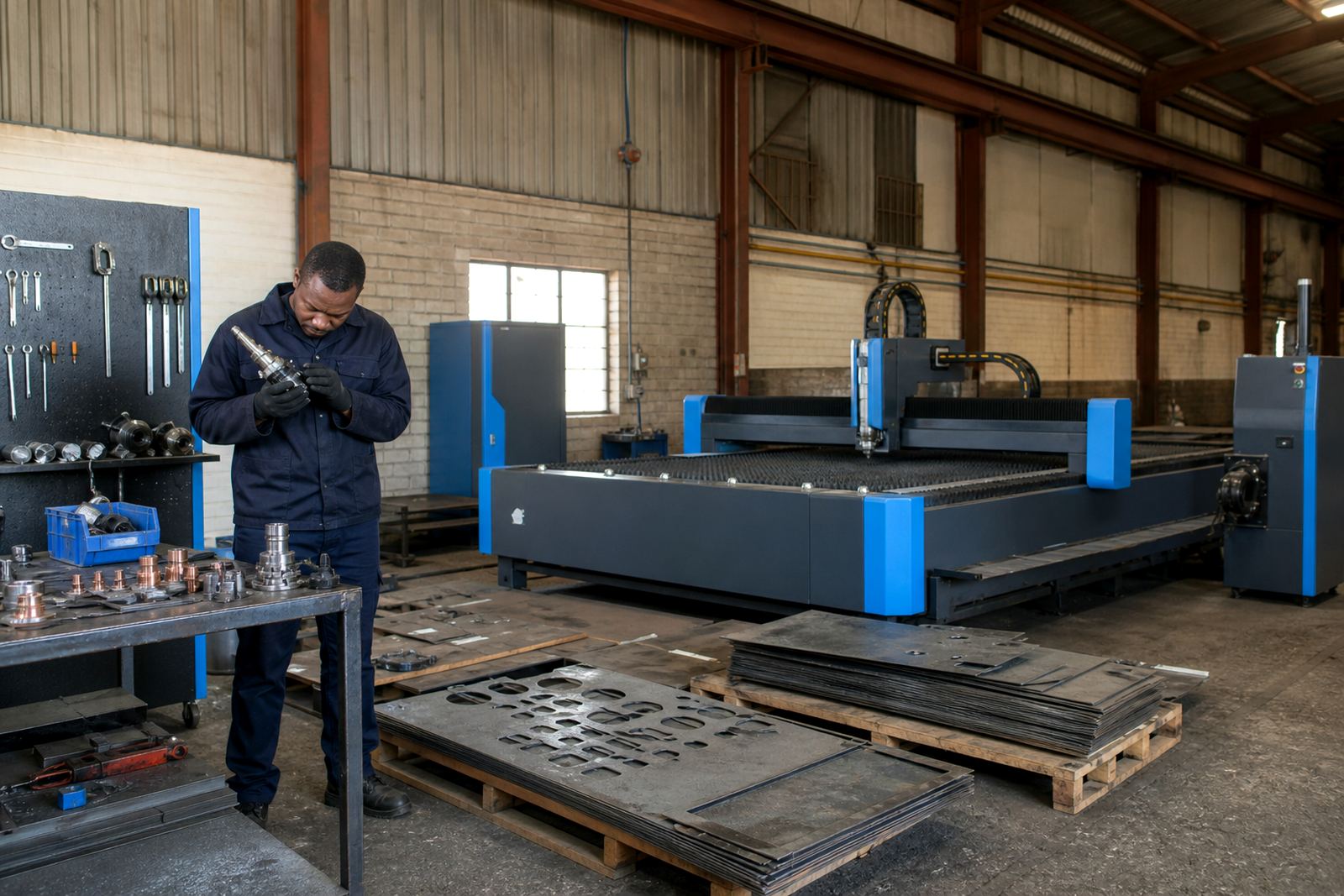
For signage work, the cutting table should stay clear around the head zone so the technician can reach the nozzle, ceramic ring and protective window without dragging tools across the machine bed. Store spare consumables in a dry place, since coastal moisture and workshop dust can shorten the life of lenses and windows if they are left exposed on a bench.
It also helps to keep jobs grouped by material and finish. Thin stainless, mild steel and aluminium often need different nozzle sizes and different focus checks. A neat material rack, labelled spare parts and a record of head settings reduce the chance of mixing consumables between jobs that look similar but cut very differently.
Where the workshop runs several sign sizes in one shift, set aside a clean bench for head service and inspection. That makes it easier to check the lens seat, inspect the gas path and verify that the ceramic ring is not cracked or heat stained. A small alignment issue can waste a full sheet before it becomes obvious at the edge of the part.
Faults that show up first on lettering and trim
Signage jobs are often the first place a small fault becomes visible. The machine may still cut large panels acceptably, but small text shows the problem immediately. A poor nozzle centre, dirty protective window or incorrect focus can all change the cut edge enough to affect paint adhesion and final fit.
- Bevel on one side of a thin part
- Dross sticking to the underside of small letters
- Rounded internal corners where the file calls for a sharp break
- Frequent pierce marks on decorative edges
- Fluctuating cut quality after head contact or a light crash
Capacitive sensor checks matter here too. If the head reads height poorly, the nozzle stand-off shifts and the cut edge follows it. On signs, that often means extra filing, more rework and a slower move into paint or powder coat. A focused check on the head can save a sheet that would otherwise be scrapped or cut again.
What bench service and on-site alignment usually cover
Bench head service suits heads that need a proper strip, cleaning and inspection. We check the lens seats, ceramic ring condition, gas path, seals and general head wear, then rebuild where needed. That process is useful after dust ingress, a crash, repeated nozzle strikes or a season of heavy cutting on fine work.
On-site alignment is better when the issue sits in the installed machine setup. That can include nozzle centring, focus setting check, capacitive sensor check and head alignment against the machine axis. For signs and decorative work, a head that is only slightly off can still cut, but it rarely cuts cleanly enough for letters and visible trim.
We also prepare spare heads for shops that cannot afford to stop a production run mid-job. In practice that means a ready unit, checked consumables and the right settings for the machine environment. It is practical for workshops that batch cut repeat signage parts and need less interruption when a head starts showing wear.
Budget ranges for signage metal work in rand
The budget depends on the condition of the head and optics, and on whether the job is done in the workshop or on site. A simple consumable change is a different matter from a full strip, lens replacement and head realignment. Shops cutting signs and decorative panels usually want a clear split between parts cost and labour so they can plan around the next batch of work.
As a rough guide, nozzle and ceramic ring work may fall in the low hundreds of rand, while protective windows and lens-related items can climb into the higher hundreds or more, depending on the head type and condition. Full bench service, rebuild work and on-site alignment are normally priced against the machine fault, access and travel, since no two installations sit in the same state.
For busy signage shops in Johannesburg, Pretoria, Durban, Cape Town and Rustenburg, the real question is often whether the head can be cleaned and reset for fine work before the next production run. That is usually the point where a small service cost can protect a much larger batch of cut parts.