When stainless jobs start showing burr and tint
Stainless cutting shops usually notice trouble in the parts before they notice it in the machine. A kerf that was neat last week begins to leave heavier burr, dross sticks harder on the underside, and the edge colour changes where the cut should have stayed bright. That is often where nozzle wear, lens contamination, a tired ceramic ring or a small focus shift starts to show.
Spartan, Kempton Park is a practical base for this kind of support because many shops run mixed plate sizes and shift between thin sheet and heavier stainless. The cutting head has to stay clean, centred and correctly set for the gas and thickness being used. When that slips, even a good fibre source can waste sheet and time.
- Typical signs include rough pierce marks, uneven kerf width and spatter near the start point.
- Stainless work is sensitive to focus position, gas purity and nozzle condition.
- A small alignment fault can show up first on corners, micro-tabs and closely spaced nests.
The head and optics set-up most stainless shops run
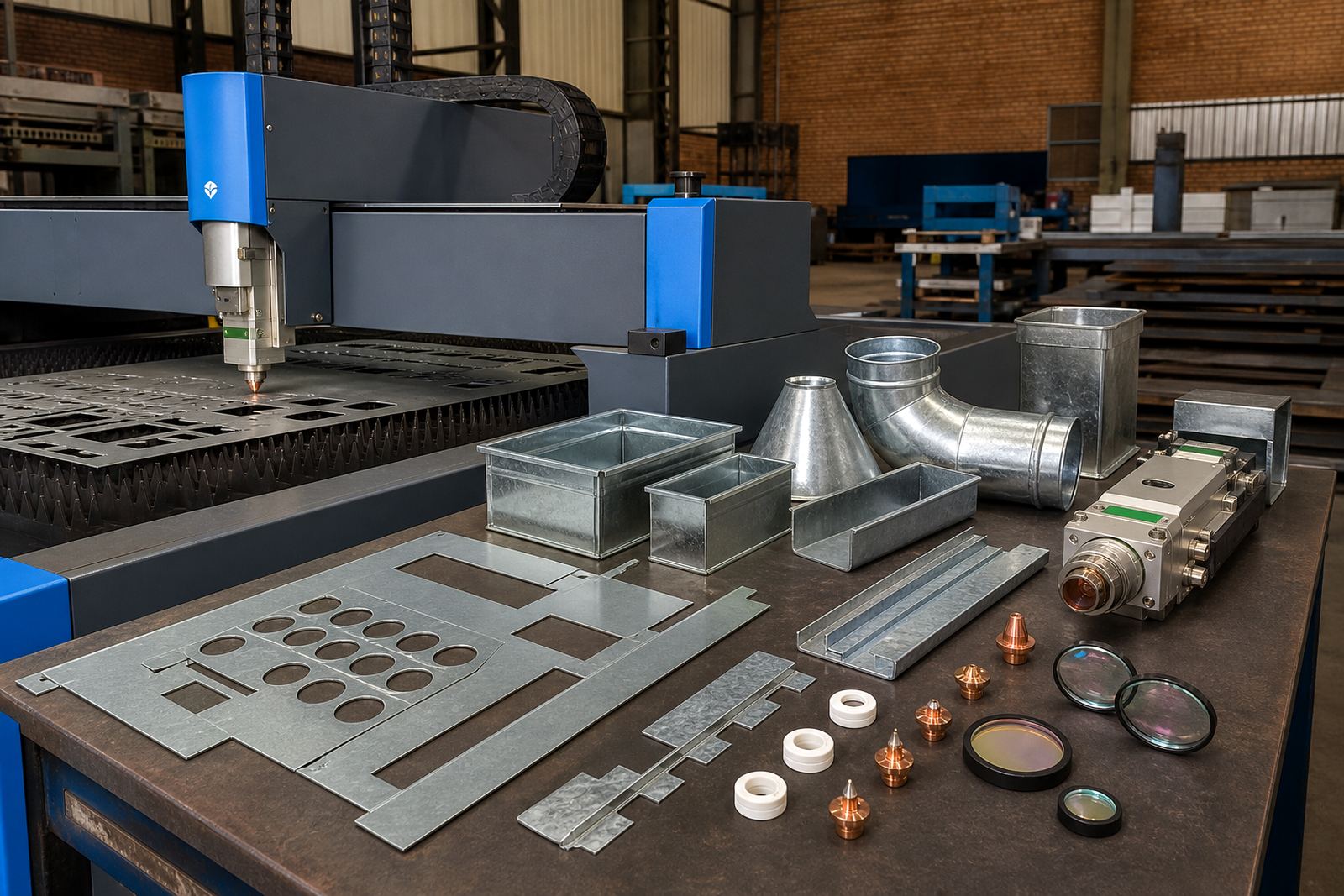
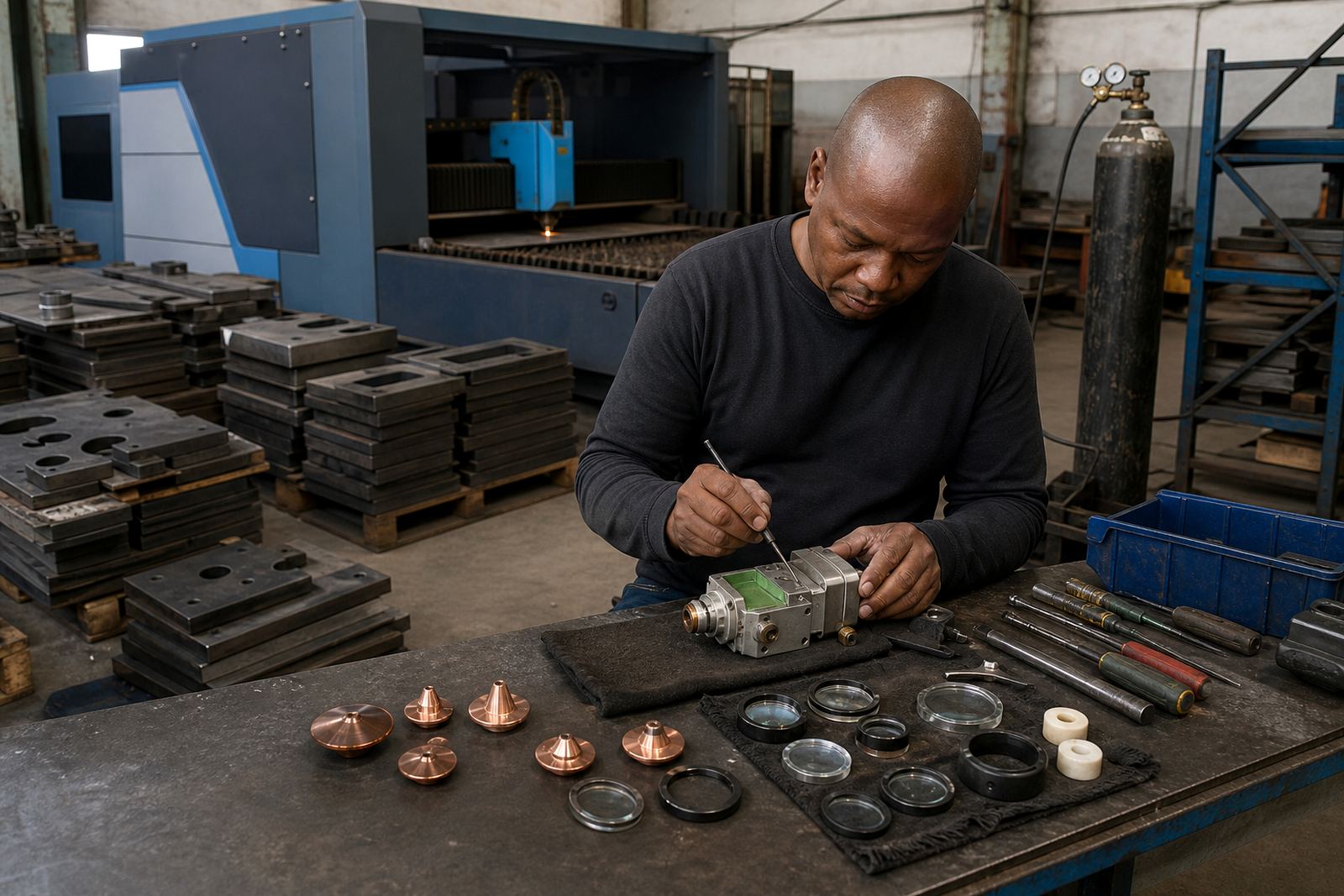
Most sheet-metal shops cutting stainless use a fibre laser head with a nozzle, a focus lens, a collimator lens, a protective window and a ceramic ring around the head body. The nozzle may be single layer or double layer depending on the cut style, gas use and material thickness. A clean optical path matters because stainless shows every small fault in the edge finish.
Capacitive height sensing has to read the sheet properly or the head sits too high or too low at the wrong moment. That can affect pierce quality and make the cut look wider than it should. Focus settings also need to suit the job, especially on thinner stainless where a slight change can alter the finish on the top edge and underside.
- Single layer nozzles are common for direct gas flow and straightforward cutting tasks.
- Double layer nozzles help with gas control on more demanding jobs.
- Protective windows should be checked for haze, pitting and heat marks before they become a bigger fault.
- Lens cleaning routines must stay careful, with proper handling and clean storage between jobs.
Layout choices that help a stainless shop cut cleaner
Good workshop layout is about more than machine position. It also means making room near the head station for nozzle changes, ceramic ring replacement, lens handling and a clean bench for inspection. Stainless work produces fine dust and small metal particles that can enter parts if the area is cramped or the routine is careless.
In shops across Johannesburg, Pretoria and the East Rand, we often see the same pattern. The machine is well chosen, but the consumables are stored too close to grinding dust, open boxes or oily rags. That shortens the life of windows and lenses and makes alignment work harder than it should be.
- Keep optics in sealed containers and away from heat, dust and vibration.
- Separate clean handling from dirty strip-down work.
- Allow space for head access, especially where gantries and guarding are tight.
- Plan a bench area where small parts can be inspected without rushing.
Common mistakes that cost stainless shops sheet quality
One of the biggest mistakes is running worn nozzles for too long because the cut still looks acceptable from a distance. Stainless is less forgiving at the edge, and a worn nozzle can throw the gas stream off enough to leave a rougher finish. Another common problem is cleaning optics too late, after a window has already started to heat stain or the lens surface has picked up residue.
We also see heads fitted back after maintenance without a proper centring check. If the nozzle and beam are not aligned, the cut may still go through but the quality suffers on tight features and thin material. Ceramic rings are another small item that gets overlooked until the fault becomes obvious. Once cracked or contaminated, they can upset the stability of the head.
- Using the wrong nozzle style for the thickness and gas setup.
- Skipping a focus setting check after changing consumables.
- Ignoring small sensor drift on the height system.
- Handling lenses without proper cleaning practice or storage.
Bench service and on-site alignment for local production pressure
Certain faults are better sorted on the bench, where the head can be opened, cleaned and examined in a controlled setting. Others need on-site alignment because the issue shows up only when the head is mounted on the machine and working under real production conditions. We cover Bench Head Service, Nozzle Centring, Focus Setting Check, Protective Window Replacement, Lens Cleaning, Ceramic Ring Replacement, Capacitive Sensor Check, Gas Path Inspection, Head Seal Rebuild, Crash Damage Inspection and Spare Head Preparation.
For shops in Durban or Cape Town that run stainless through humid air, contamination and surface marks can build differently than they do inland. That makes routine inspection worth the effort. A bent nozzle seat, a damaged seal or a dirty gas path can spoil the cut long before the machine operator sees a fault on the screen.
- Bench service suits heads that need strip-down, cleaning and careful inspection.
- On-site alignment helps when the machine, rail position or mounting needs checking in place.
- Crash damage should be assessed before more parts are run through a faulty head.
Budget ranges that make sense in rand
Stainless shops usually plan around a mix of routine consumables and occasional service work. A nozzle change, protective window replacement or ceramic ring swap is a smaller budget item. Lens cleaning, focus checks and sensor inspection sit in the middle. A full bench service or crash inspection is a bigger line item because it takes longer and can involve several parts at once.
As a working guide, many shops keep a small monthly consumables budget from about R1 500 to R6 000 for regular nozzle, window and ring use, depending on cutting hours and material range. Bench service or alignment work can move from about R2 500 to R12 000 when the job includes inspection, rebuild work or replacement optics. More involved repairs, especially after a crash, can sit higher once damaged parts are identified.
It helps to budget by machine count and shift load rather than by guesswork. A busy stainless shop near Rustenburg may spend differently from a lighter production floor in Pretoria, even if both use similar heads.