When a farm workshop needs parts that fit without rework
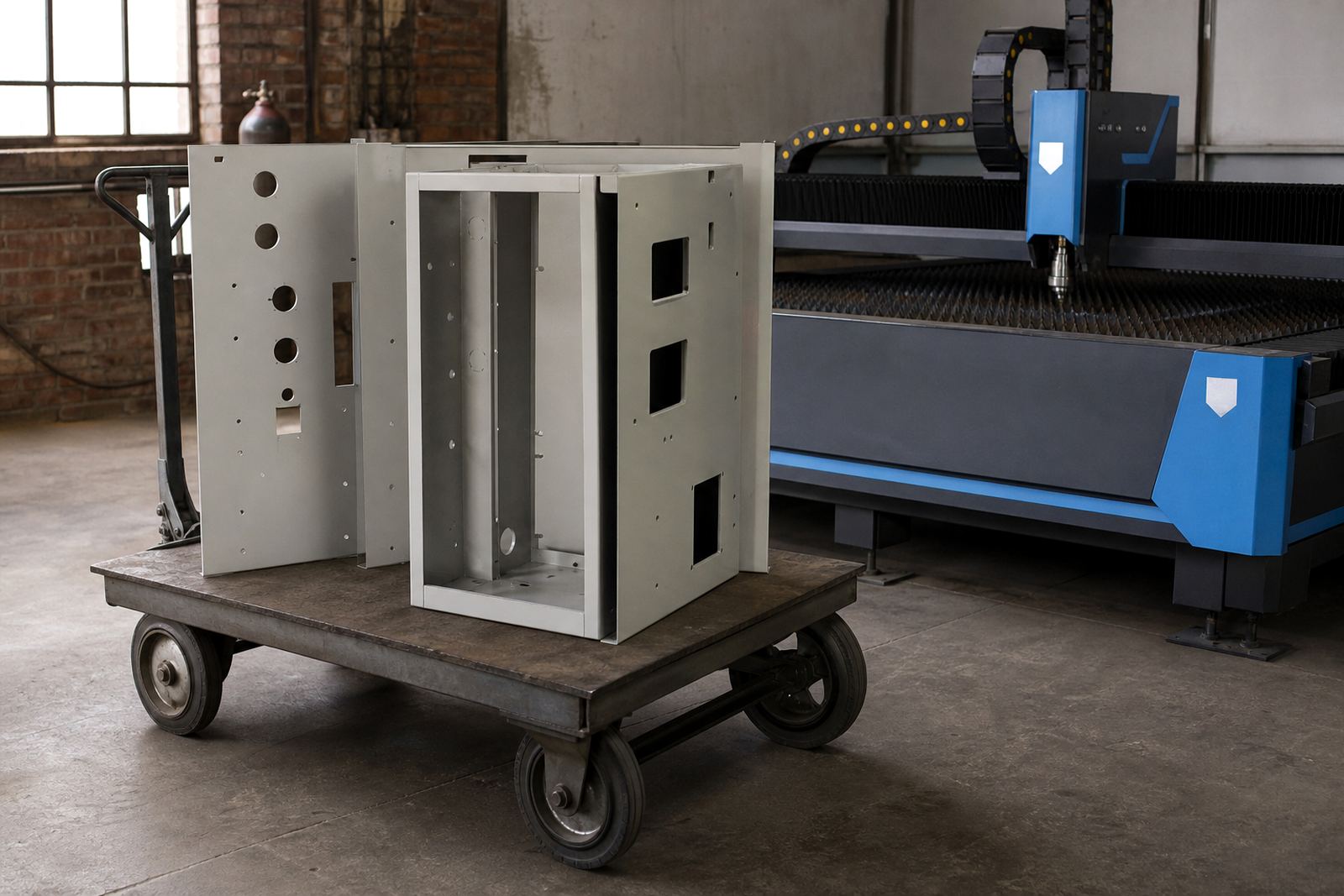
Farm workshops and agri equipment shops work with steel that has to go back into service quickly, whether it is a bracket for a baler, a guard for a mixer, or a repair plate for a trailer frame. The cutting head on a fibre laser machine sits at the centre of that job. When the nozzle is worn, the lens is marked, or the ceramic ring is cracked, cut quality drops and the machine starts wasting time on clean-up.
We handle replacement parts and head servicing for shops that cut a steady mix of mild steel and stainless parts. The work usually starts with the cut face, the edge condition and the way the head tracks over the sheet. If the kerf is uneven, or the pierce leaves too much splash, the issue may sit in nozzle condition, focus position, gas flow or the capacitive sensing setup. Those checks matter when the parts are meant for field repairs and not display pieces.
The parts stack most agri shops keep on hand
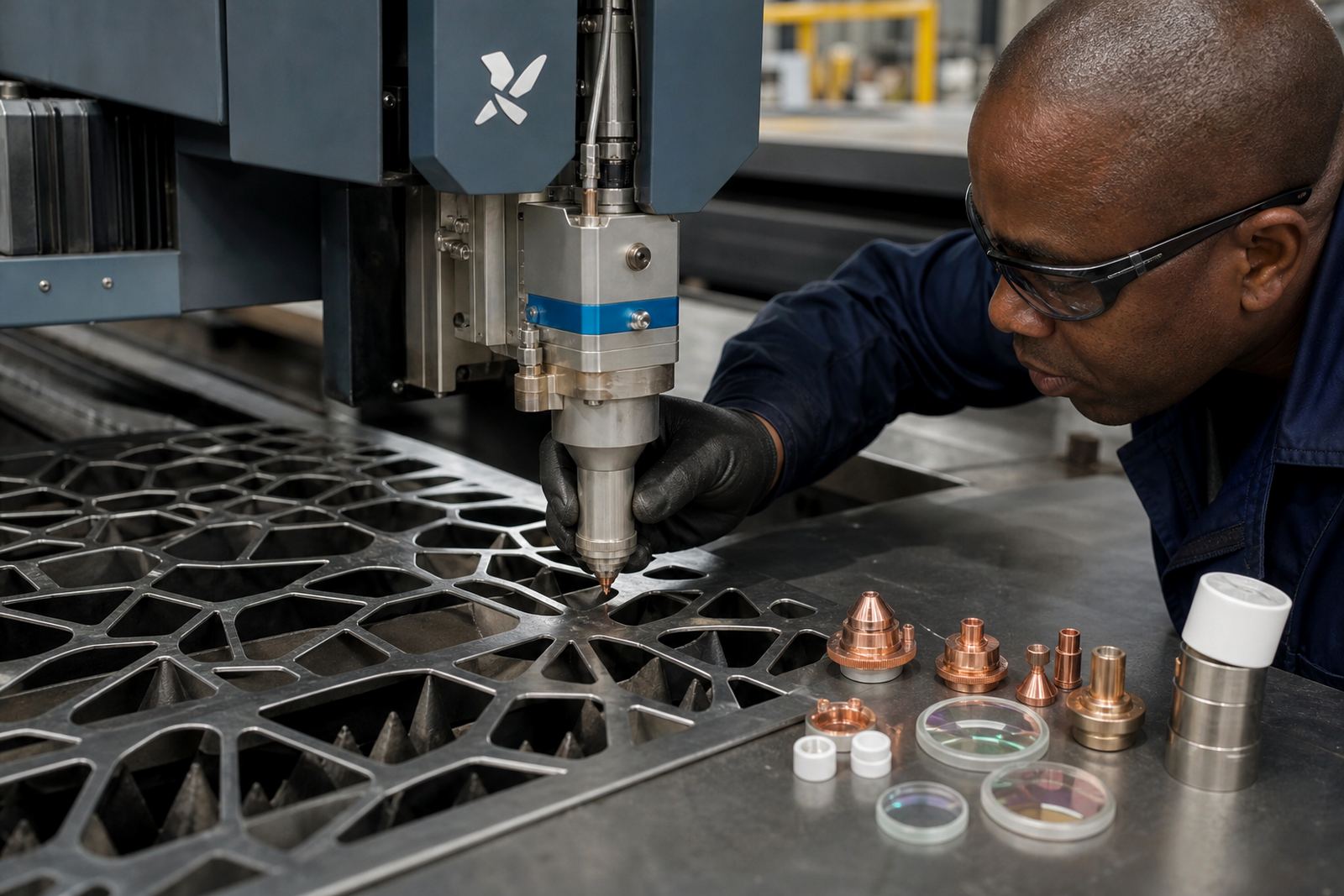
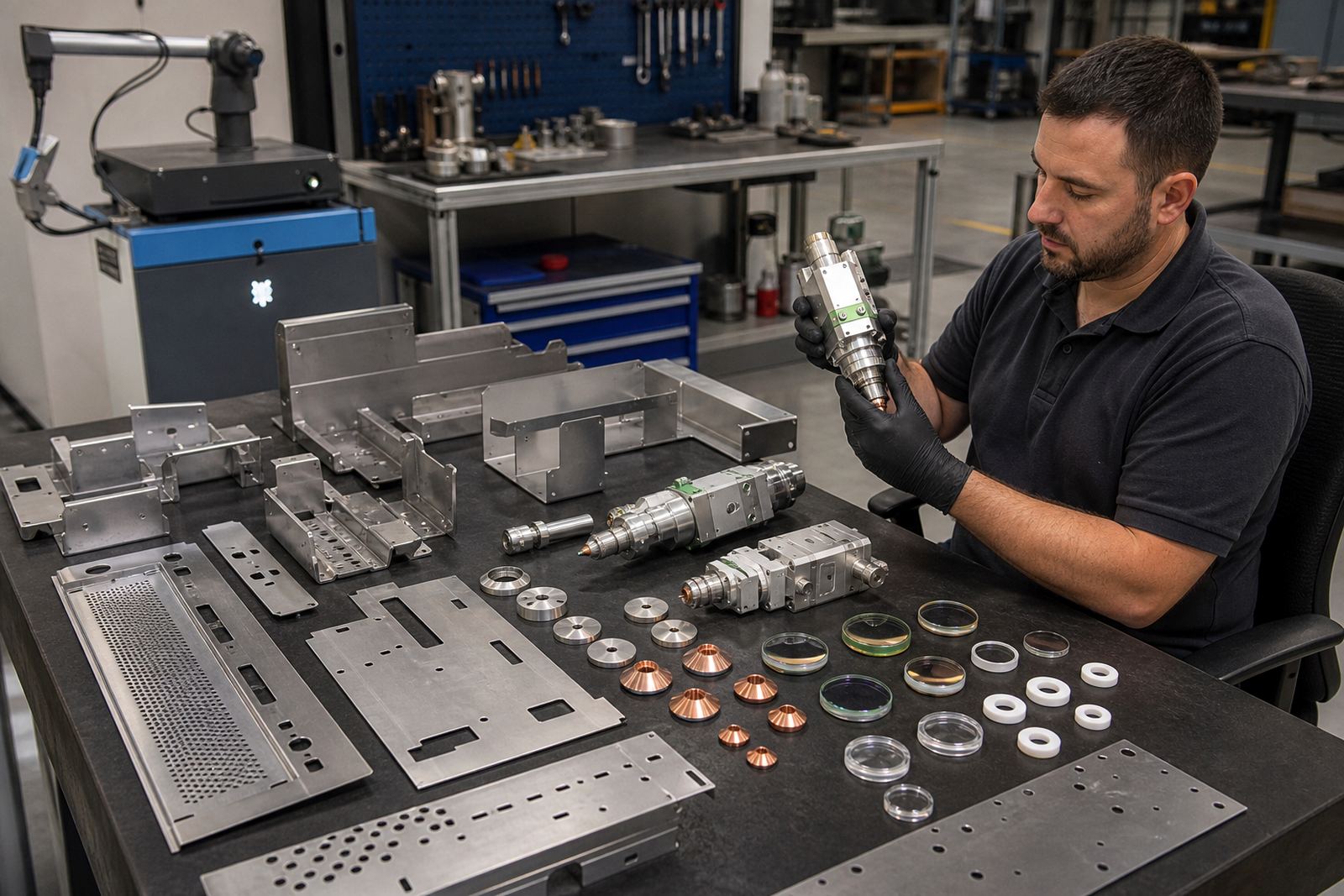
A practical shop keeps the cutting head consumables close to the machine, not in a back store room under dust and offcuts. The usual set includes single layer nozzles, double layer nozzles, focus lenses, collimator lenses, protective windows and ceramic rings. Shops that cut thicker repair plates often keep more than one nozzle size, because the cut behaviour changes with material thickness and assist gas pressure.
- Single layer nozzles for cleaner, lighter work and routine cutting
- Double layer nozzles for specific cutting conditions and thicker plate work
- Protective windows to shield the optics from spatter and smoke
- Focus and collimator lenses for beam quality and cutting stability
- Ceramic rings that keep the head seated and aligned correctly
When a lens is cloudy or a window shows heat spots, the machine may still run, but the cut edge often tells the story. On agri parts that will be bolted on outdoors, a rough edge or angled cut can turn into a fitment issue at the workshop bench.
Bench service for heads that need careful setting
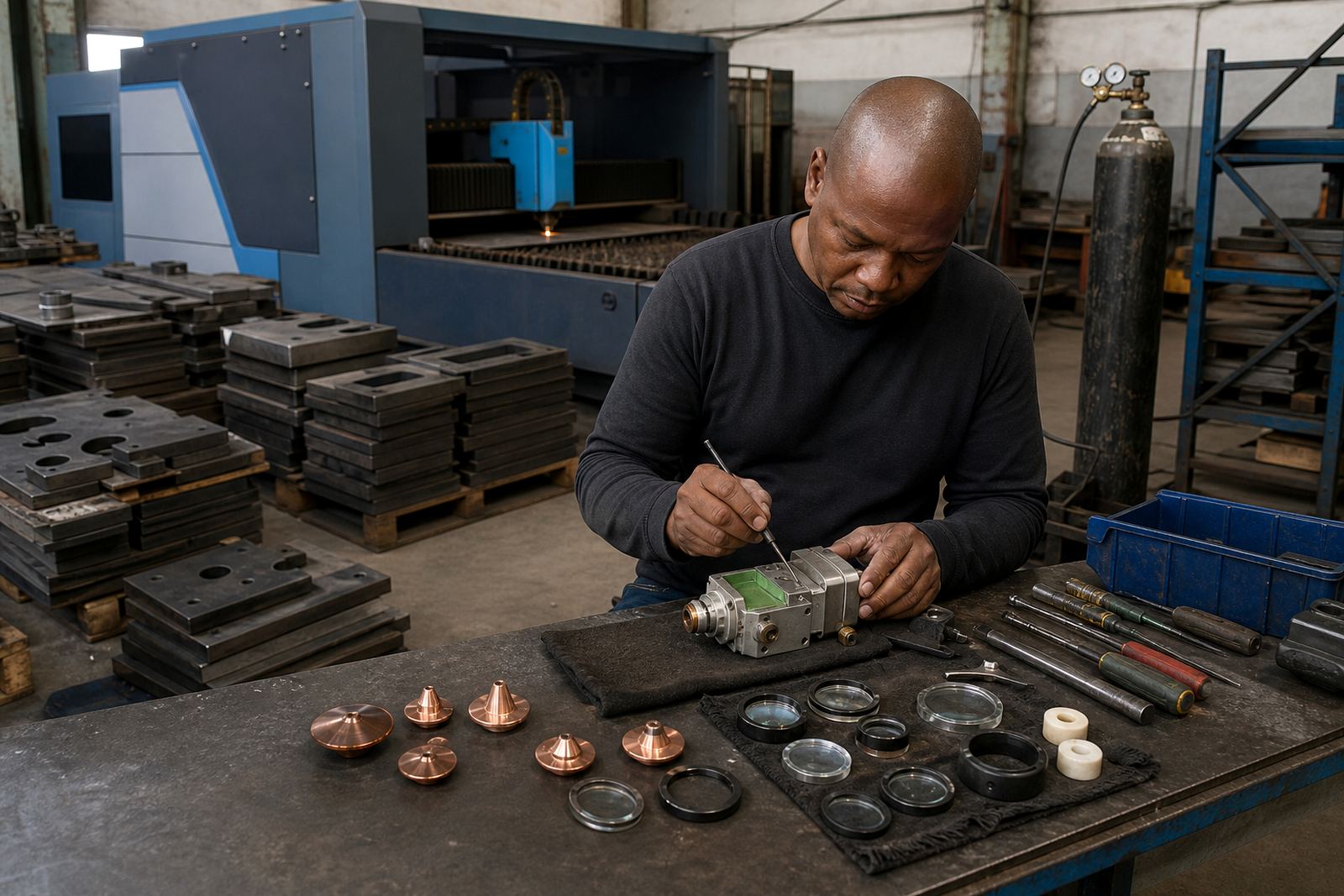
Bench service suits heads that need cleaning, inspection and a proper check of the optical path. We strip down what needs attention, clean the visible contamination, inspect seals and test the condition of the parts that control focus and beam delivery. A clean head does not mean a good head if the centre line is off or the nozzle seat has taken a knock.
Bench Head Service is often the better call after a crash mark, a long spell of cutting dust, or a change in cut quality that points to the head itself. Focus settings are checked against the material and the machine setup, while the capacitive sensor is checked for stable height sensing over the sheet. If the gas path is restricted the cut face can show dross, blackening or flare marks that look like a bigger fault than it really is.
- Nozzle centring to keep the beam on target
- Lens cleaning for smoke film and light contamination
- Head seal rebuild where dust or gas leakage has started
- Gas path inspection where cut quality has turned uneven
On-site alignment for workshops that cannot sit idle
Some agri equipment shops cannot pull a cutting head off the machine for long, especially when they are working through seasonal repair jobs. On-site Head Alignment helps when the machine is cutting, but not cutting well enough for repeatable parts. The work focuses on alignment, nozzle position, sensor checks and the way the head tracks across the cutting table.
We support sheet-metal teams in Johannesburg, Pretoria, Rustenburg, the East Rand, Durban and Cape Town who need their machine ready for everyday cutting. If a head has taken a light crash, or the nozzle is cutting off centre, a field alignment can save a lot of rework. The technician checks the machine behaviour on the spot and adjusts the settings that affect cut consistency on real jobs, not only in theory.
Layout and planning notes for a busy repair floor
Agri shops usually work in mixed spaces, with repair bays, cutting tables and parts storage all close together. That layout can work well, but only if clean consumables stay separate from grinding dust, oil mist and loose offcuts. Protective windows and nozzles should be kept in sealed packs until needed, and the bench area should have a clean surface for optic handling.
It helps to keep the common nozzle sizes close to the machine and to label the parts by thickness range, not by guesswork. A simple job card that records the last nozzle, lens check and ceramic ring change can save a lot of confusion when the same machine cuts guards in the morning and patch plates in the afternoon. In damp coastal towns the optics deserve extra care, because humidity can leave film and light corrosion where the head has been opened too often.
- Store optics away from grinding sparks and cutting dust
- Keep a clean cloth set for lens handling only
- Record head changes after crashes or unusual cut marks
- Separate wear parts for thin sheet and thicker repair plate work
Budget bands for replacement parts and service work
Budgets vary with the head type, the size of the optics and whether the job is a parts swap or a full service. For a small consumables order covering nozzles, a protective window and a ceramic ring or two, many workshops plan for about R1,500 to R6,000 depending on the cutting setup. A set with focus and collimator lenses, plus a deeper inspection, can sit between R6,000 and R18,000.
Bench servicing, alignment and fault tracing depend on the condition of the head and the amount of stripping needed. A light service and alignment task may sit in the lower range, while crash damage inspection, head seal rebuilds and spare head preparation move the figure up. For agri equipment shops that cut every week, the better budget is the one that covers wear before it turns into scrap and rework.
We also see workshops lose money by waiting too long on a worn nozzle or a tired lens. The cost is more than the part alone, as it also includes the poor edge, extra filing and the time lost on a machine that should have been cutting properly.