

What earns a place in the spare parts drawer
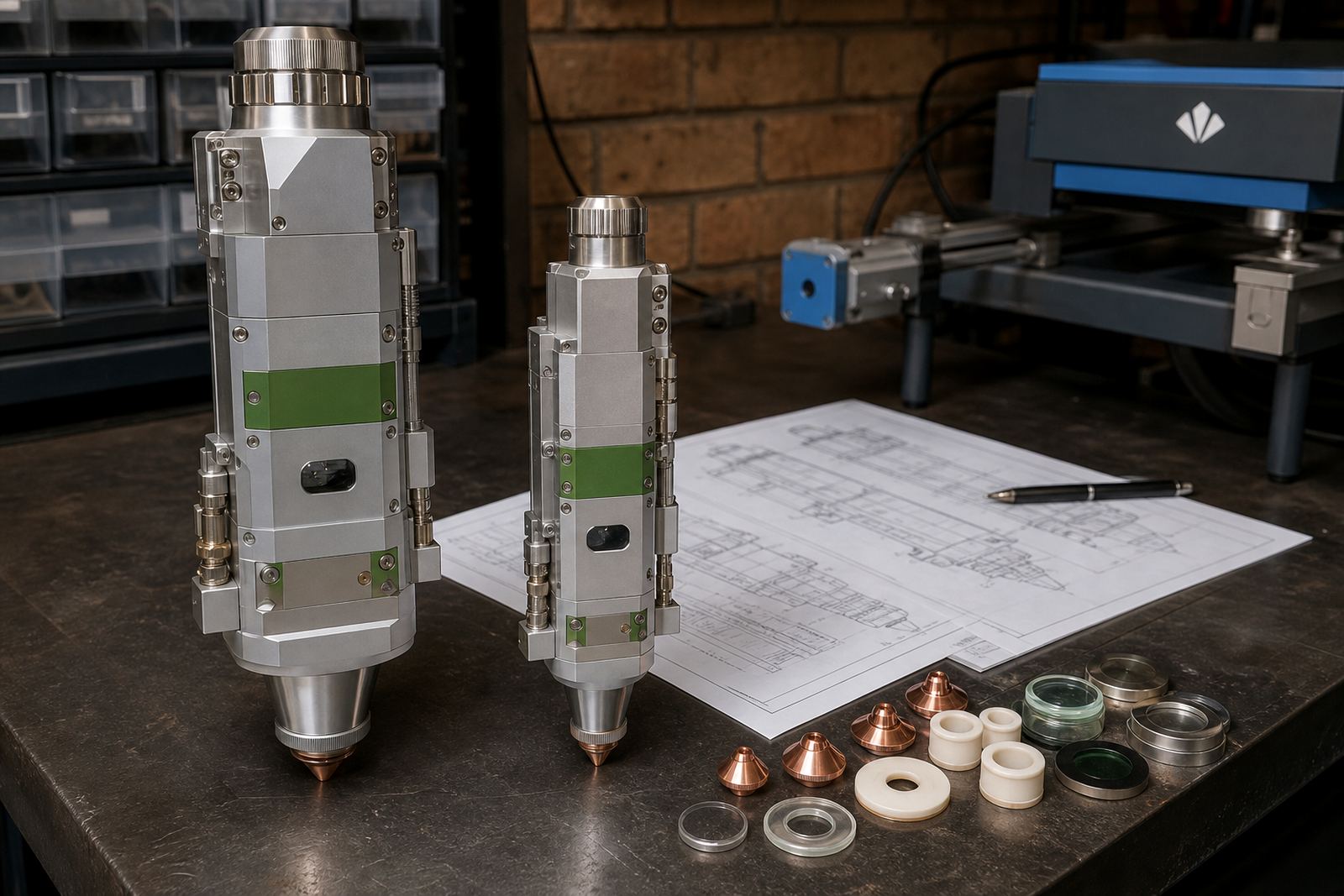
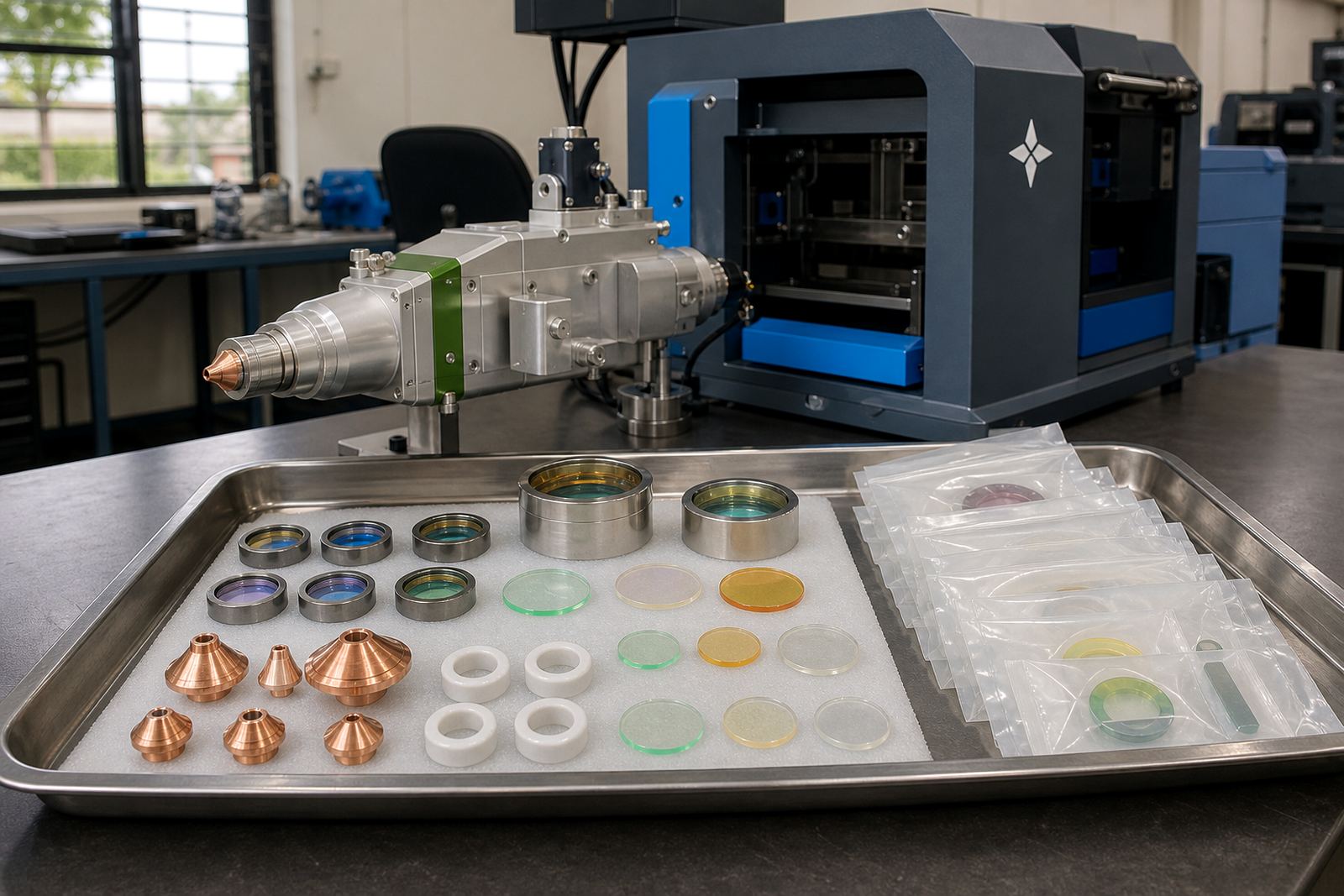
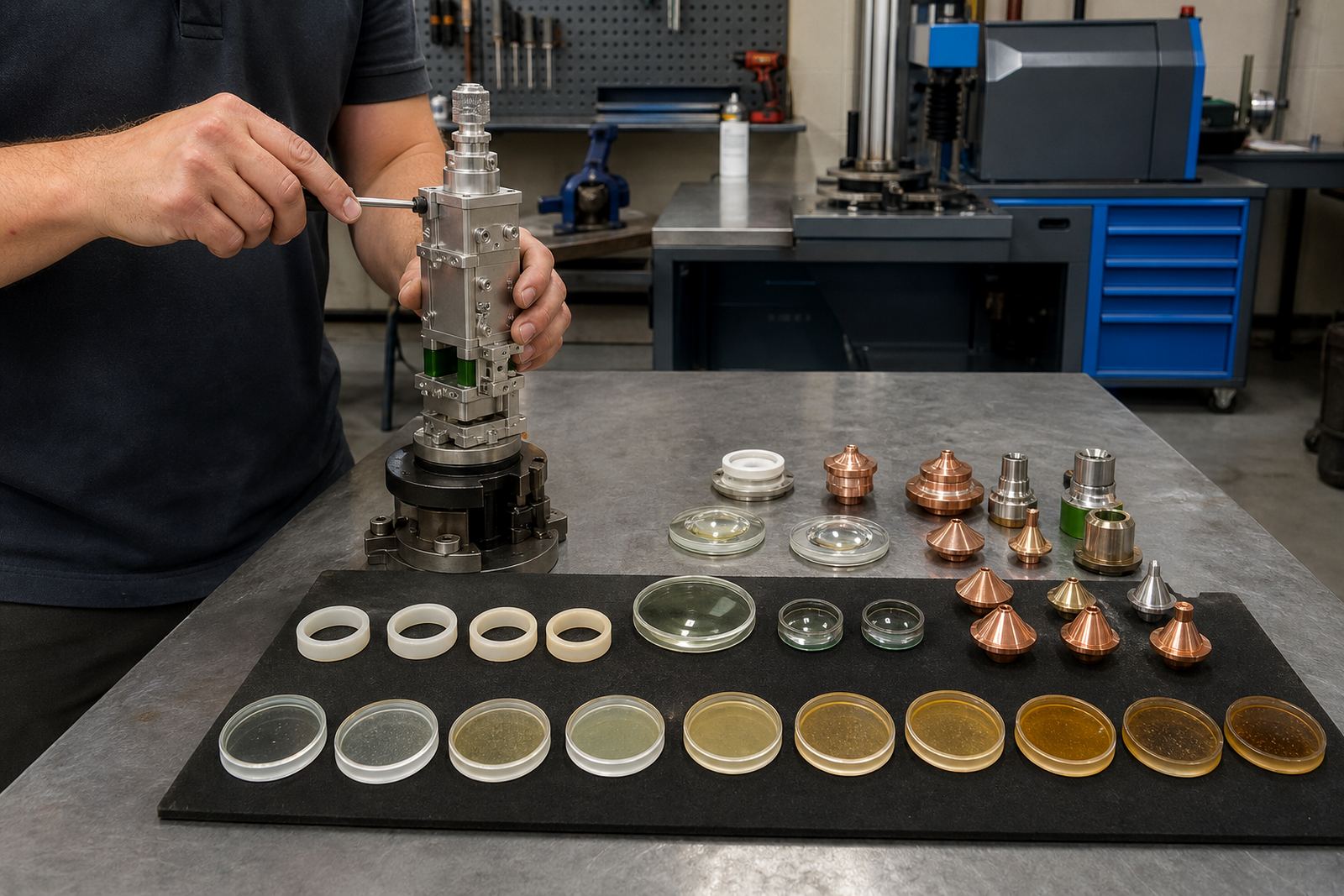
Most shops do not need a deep pile of parts, they need the items that wear predictably and the ones that stop cutting when they fail. That usually starts with nozzles in the sizes used most often, protective windows for the head model in service, focus and collimator lenses where the optics are serviced on site, and ceramic rings for the heads that run day after day. A spare head can also earn its place when a machine carries long runs, mixed materials or tight delivery windows.
Consumables should be chosen with the machine setup in mind. The nozzle bore, standoff control, gas type and sheet thickness all shape what belongs in stock. If the shop cuts mild steel through a broad thickness range, the short list is different from a workshop that spends most of its time on thin stainless or aluminium. One tidy stock line is usually better than a cupboard full of parts nobody fits.
- Single layer nozzles for general cutting work.
- Double layer nozzles where airflow and wear control matter.
- Protective windows sized for the fitted cutting head.
- Focus and collimator lenses kept in clean sealed packs.
- Ceramic rings for the head bodies in daily use.
Nozzles, windows and the parts that wear first
Nozzles sit close to the cut and take the roughest life. They are exposed to spatter, dross and small crashes, so many sheet-metal shops keep more than one size of the same style. Single layer nozzles are often used for straightforward cutting work, while double layer nozzles are common where a more stable gas flow or longer service life is needed. The right stock mix depends on the material range and how often the machine switches between jobs.
Protective windows are another item that should never be treated as an afterthought. A clean window protects the optics above it and helps the head keep a steady beam path. Once a window starts to cloud, mark or pick up heat damage, cut quality can drift before the fault becomes obvious to the operator. Ceramic rings matter too because they keep the head body insulated and help maintain the position of the nozzle assembly.
- Keep nozzles sorted by bore and by head type.
- Store windows in clean, dry packaging away from dust.
- Inspect ceramic rings for chips before they go near the machine.
- Separate used parts from stock to avoid mix-ups at the bench.
A stock list that suits real cutting jobs
A working stock list should follow the jobs that repeat in the shop. If the day is full of 1 mm and 2 mm sheet, the nozzle and focus set points will not match a yard that runs thicker plate. If stainless is common, a clean window and careful lens handling matter even more because small contamination marks can show up in the cut sooner than expected. Shops in humid coastal areas often keep a closer eye on packaging and storage, because moisture and dust do not help optics.
Many buyers set stock by the machine family, then by the jobs that fail most often. That means choosing the nozzle sizes that are fitted every week, the windows that suit the current head, and the lens types the bench uses during service. A spare head can also be prepared in advance for high-use lines, which helps when the running head needs cleaning, sealing or alignment work.
- Match stock to the top three material thicknesses in production.
- Keep one reserve set for each active cutting head.
- Record which parts fit the current nozzle seat and ceramic ring.
- Separate daily-use parts from bench-service parts.
Cleaning routines that protect the optics
Lens care is not glamorous, but it pays for itself in fewer bad cuts and less head trouble. Focus lenses and collimator lenses should only be handled with care and clean tools, because fingerprints, dust and fibre debris can mark the surface. Protective windows should be checked before a shift starts, and again after any crash or smoke event near the head. A small amount of contamination can turn into a larger cut issue if nobody spots it early.
Good cleaning routines also support the capacitive height sensing system. When the nozzle face is clean and the ceramic ring is sound, the head reads more consistently and follows the sheet better. That does not remove the need for proper focus settings, but it does make the settings more dependable across a longer run.
- Use clean packaging and clean gloves when fitting optics.
- Wipe only with suitable lint free materials and approved fluid.
- Check for dust around the nozzle seat and sensor area.
- Replace a window that shows marks instead of trying to stretch it.
Focus setting checks and height sensing in the stock plan
Stock planning should not stop at parts alone. A practical shop also keeps an eye on focus setting checks, nozzle centring and the capacitive sensor system that controls the head height. When those items drift, the machine can still run but the edge quality, pierce behaviour and kerf width may change. That is where a spare nozzle or clean lens helps, yet the real fix may be a head service or alignment check on the bench.
It is useful to keep a note of which heads need a firmer setting check after a crash, after a lens change or after long runs on fine gauge material. The same goes for the gas path and head seals. If the internal path is dirty or leaking, stock on the shelf will not solve the real problem on the machine.
- Check focus settings after optics changes and after crashes.
- Watch for unstable standoff or unusual head movement.
- Test sensor readings when the cut begins to wander.
- Inspect seals and gas paths before fitting fresh parts.
How many spares to keep without filling the shelf
No one number suits every workshop. A small team with one cutting machine may need only a tight kit of fast-moving parts, while a busy production floor in Johannesburg or Durban may keep deeper stocks for the heads in daily use. The best stock level is the one that covers likely wear, repeated cuts and the occasional collision without tying up money in parts that age on the shelf.
A sensible rule is to build from use, not guesswork. Start with the nozzles and windows fitted most often, add the lenses and ceramic rings that match the serviced heads, then keep one prepared reserve for the machine that cannot wait while a bench repair is carried out. If the shop sends a head for service or needs field alignment work, that reserve can keep production moving while the main unit is checked.
- Count what is used in a normal cutting cycle for one week.
- Add extra stock for high wear jobs and crash risk.
- Keep service parts for the head models actually on the floor.
- Review slow moving stock before it becomes dead stock.
A short stock check before the next shift starts
Before the next run, glance through the parts that matter most. Are the nozzles sorted by size, are the windows clean and sealed, are the ceramic rings intact, and are the lenses stored where dust cannot reach them? If the answer is no for any of them, the stock room needs attention before the machine does. That habit saves a lot of wasted setup time in a busy week.
For shops that want the stock to match the machine rather than the other way round, the best approach is to tie consumables to the active heads, the usual cutting range and the service pattern in the workshop. our contact form can be used when you need help matching head consumables, bench service or on-site alignment to the parts already in use.
- Confirm the nozzle sizes that are actually in use.
- Check that protective windows match the head fitted to the machine.
- Make sure spare optics are clean, sealed and labelled.
- Keep a note of any head that needs service before the next long run.