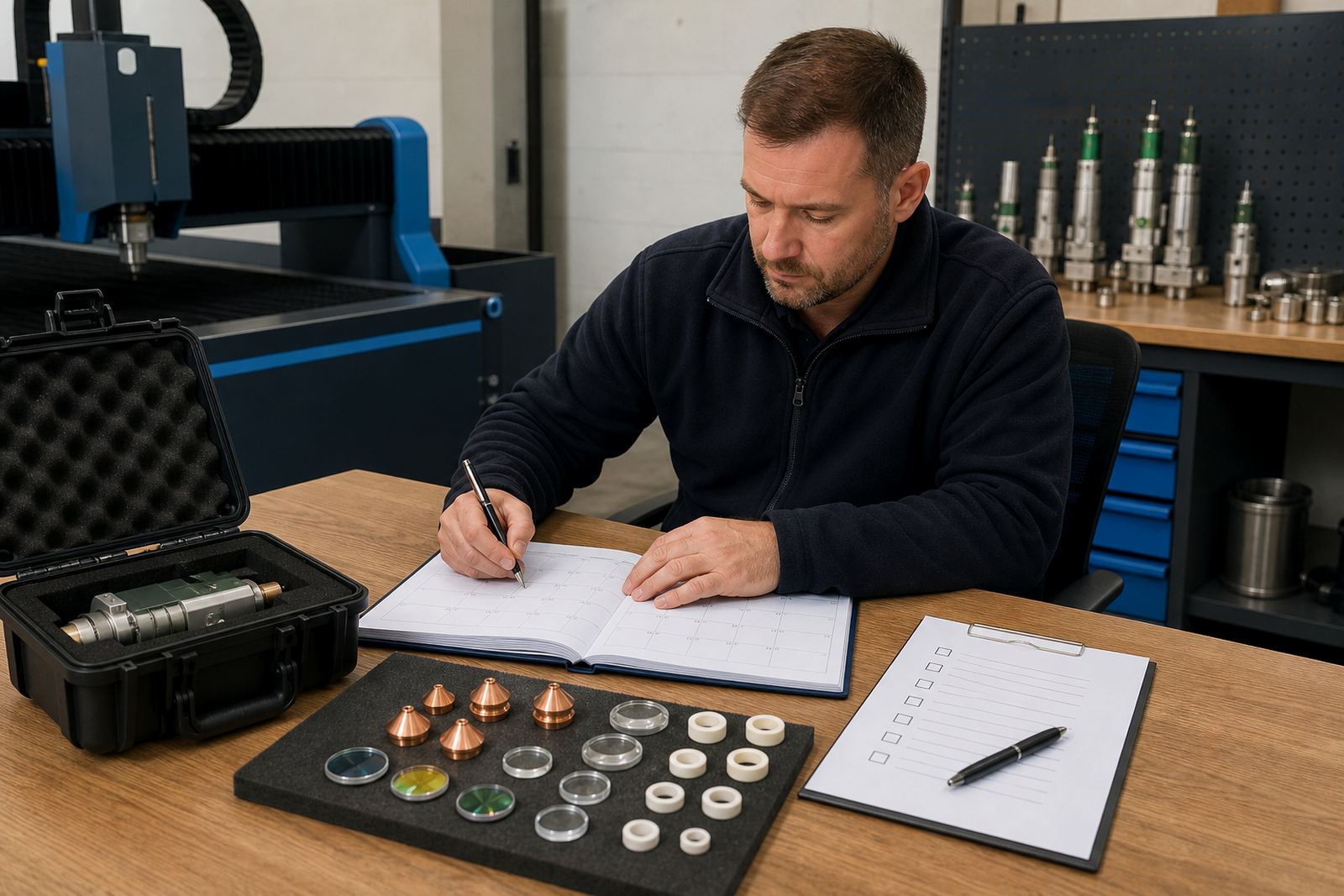
Start with the material mix on your bench
Steel, stainless steel and aluminium all ask for different cut behaviour, and the head has to suit the mix you run most often. A shop that spends its week on thin gauge mild steel will not need the same head setup as one cutting heavier plate, especially where edge quality matters on long runs.
Look at the thickness range first, then think about the cut volume. If your work shifts from short jobs to extended runs, a head with stable focus control and a sensible consumable layout saves a lot of stoppage later on. In coastal towns, dust and humidity can change how quickly consumables wear, so the housing and seals need attention too.
Match the head to the machine space you have
Some machines leave generous room around the head body, while others run tight gantries and narrow clearances. That space affects nozzle access, lens handling and how easily a technician can inspect the ceramic ring and lower seal area.
- Check whether the head clears the shuttle or pallet edges.
- Allow room for a clean lens change without forcing tools in sideways.
- Keep enough access for nozzle centring and protective window checks.
- Make sure the cable and cooling paths do not rub on moving parts.
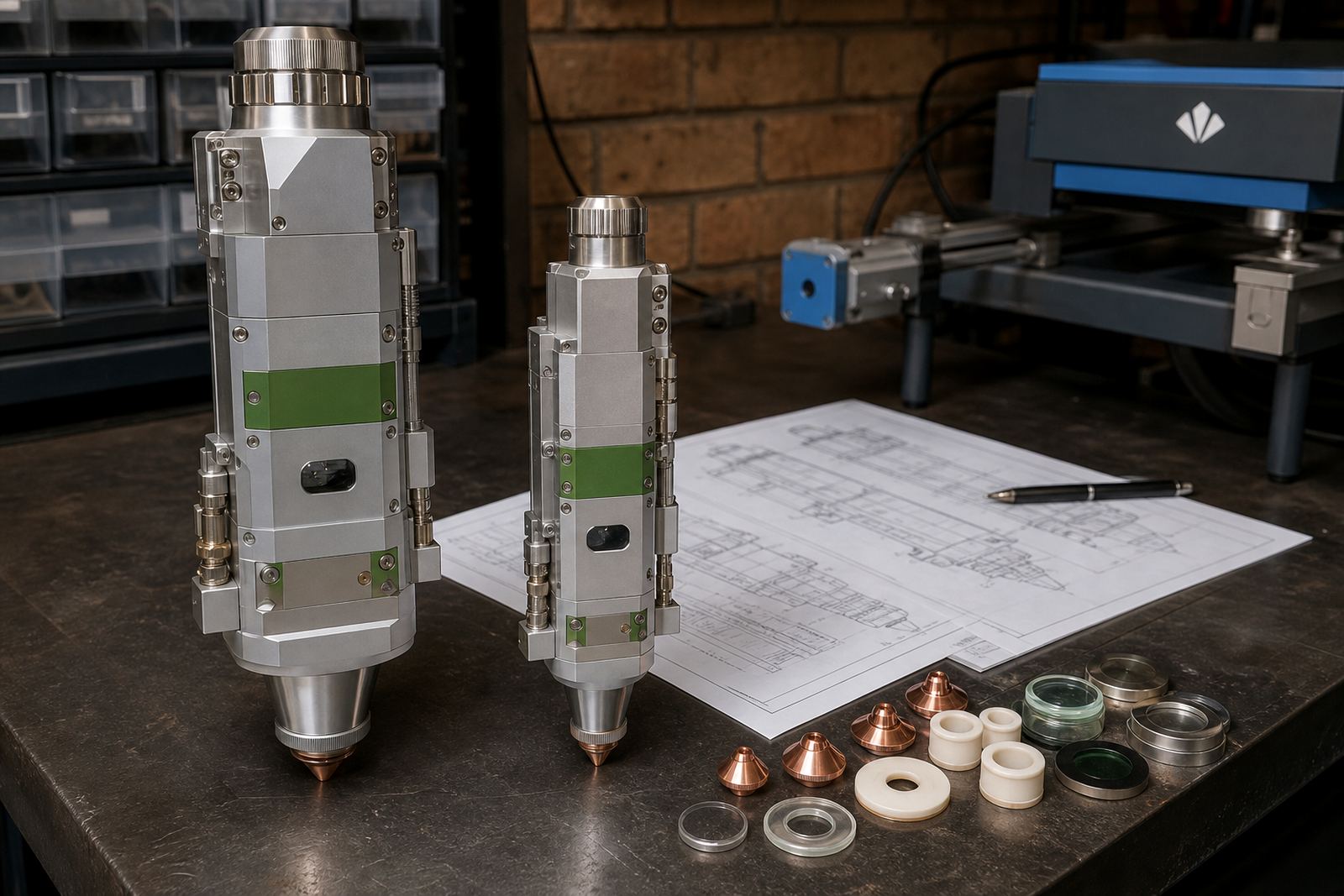
When the machine layout is cramped, a compact head often makes daily servicing easier. A larger head can still work well, but only when the shop has the access to keep it clean and aligned.
Know the difference between nozzles and lenses
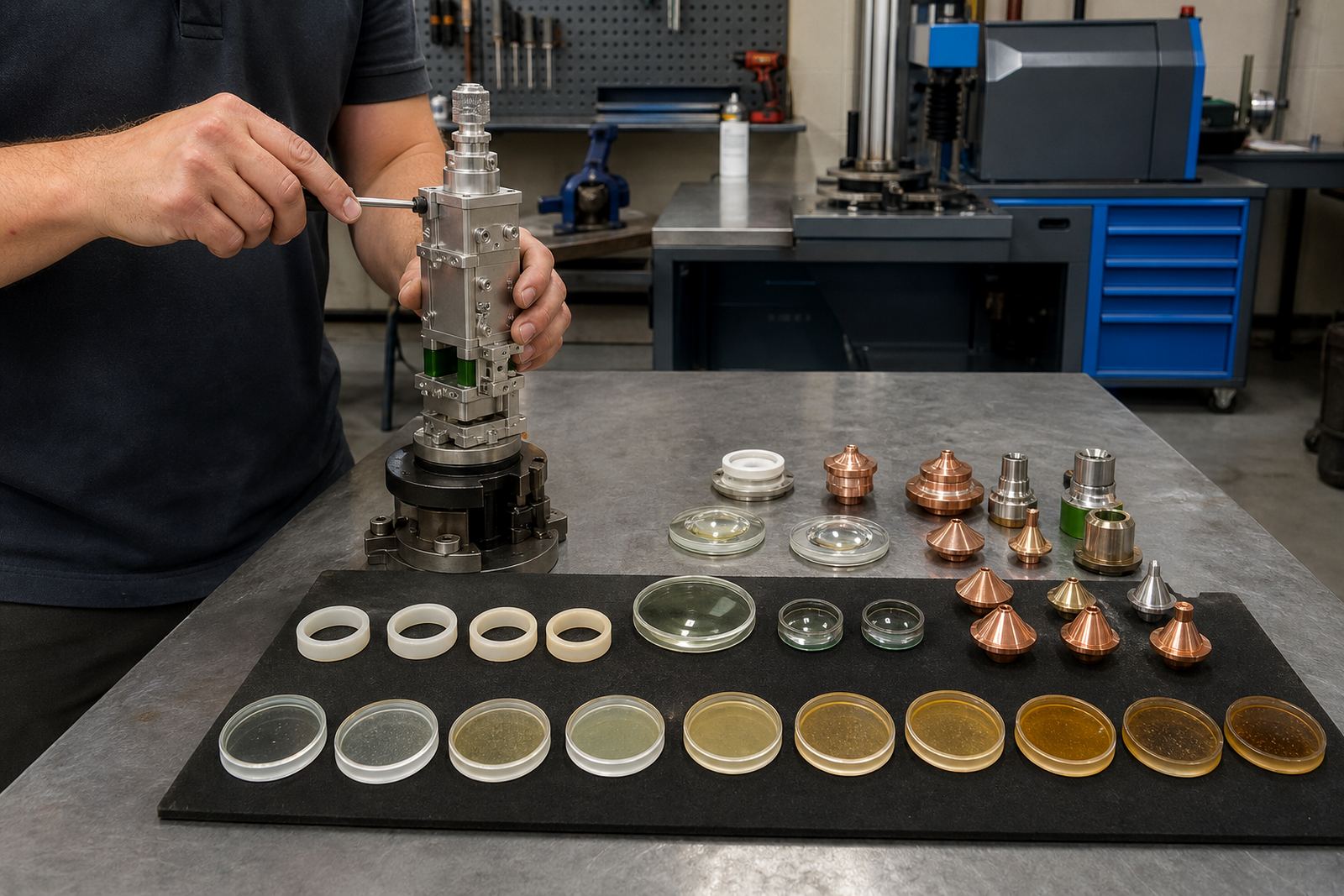
Single layer and double layer nozzles both have a place, and the choice depends on cut quality, gas use and the material surface. A clean nozzle seat and accurate centring are just as important as the nozzle shape itself.
Focus and collimator lenses need steady handling, careful cleaning routines and proper storage. A scratched lens can upset the beam path, while a dirty protective window can disguise the real fault until cut quality drops. Many faults that look like alignment trouble begin with poor cleaning, worn seals or a damaged lower consumable.
- Use the right nozzle size for the sheet thickness and kerf.
- Inspect the focus lens for haze, chips or heat marks.
- Keep the collimator lens free of dust and stray fibre.
- Replace the protective window before marks spread across the face.
Set the sensing system for consistent cuts
Capacitive height sensing helps the head track the sheet surface and keep stand-off steady through small variations in flatness. If the sensor drifts or picks up contamination, the cut can lose stability and the pierce point may shift.
Focus settings need to be checked against the actual cutting programme, not guessed from a previous job. A correct focus check helps the machine hold edge quality across corners and internal cut-outs. For shops running varied sheet sizes, the sensing setup should suit the work that fills most of the week, not only the easiest sample piece.
- Check the sensor face for dirt, spatter and wear.
- Confirm the stand-off setting against the machine material range.
- Inspect the cable route for bends that catch during travel.
- Recheck focus after a nozzle change or a crash event.
Plan for bench service before the fault grows
A head that can be stripped, cleaned and rebuilt on the bench is easier to keep in service than one that only gets attention after a major failure. Bench service helps with lens cleaning, seal replacement, ceramic ring changes and gas path inspection, all before the damage spreads.
Crash marks, scorched seals and worn threads are easier to spot on the bench than during a rushed shift. If a head has taken impact, a proper inspection should include the body, internal alignment points and the lower consumable seat. Spare head preparation also helps when a production line cannot wait for a full strip-down.
Decide when on-site alignment is the better call
Some faults sit in the machine setup rather than the head alone. In those cases, on-site head alignment makes sense because the technician can check the cutting position, sensor behaviour and beam path while the machine is under real working conditions.
On-site work suits shops in Johannesburg, Pretoria, Durban, Cape Town, Rustenburg and across the East Rand when moving the machine is not practical. It also helps when the issue appears only under full travel or during a specific programme. If the head is mechanically sound but cuts are drifting, field alignment can save a lot of trial and error.
- Choose on-site work when the machine cannot be removed from production.
- Use bench service when internal parts need stripping or rebuild work.
- Ask for a capacitive sensor check if the height is unstable.
- Request a nozzle centring check after any head service or impact.
A short checklist before you choose the head
Keep the choice practical. Start with duty, then look at space, sensing, nozzle access and the support you need for cleaning and alignment. A good head choice should suit the way the shop really works, not only the brochure description.
When in doubt, compare the head against the exact sheet-metal mix, the machine envelope and the service path you want for the next round of work. That keeps the decision grounded in daily production and practical needs.