Start with the cutting schedule, not the spares shelf
Before a head comes off the machine, work out which jobs can sit for a shift, which sheets must clear the table, and which nest files cannot slip. A shop in Spartan will plan differently from a yard in Durban, especially where moisture, dust and cutting hours change the wear on optics and seals.
List the head serial if available, the nozzle type in use, the lens set fitted, and any recent crash marks. That gives the bench technician a clean picture of what to inspect instead of hunting through notes after the unit is already open.
- Confirm the machine model and head type.
- Note the current nozzle size and layer style.
- Record last fault marks, smoke traces or cutting drift.
- Set aside the spare head if the line cannot wait.
Choose the service window around real production gaps
Bench service should fit between cutting runs, not force a fresh stoppage at the worst point in the week. If the line handles thin sheet all morning and heavier plate later, use the gap to remove the head, package it properly and send the spare into service if one is available.
Keep a clear decision on whether the head is staying on site for alignment or coming to the workshop for a full strip. That choice affects transport, cleaning time, seal checks and whether the lens stack must be removed before the machine starts its next batch.
Pack the head so the repair bench sees the real fault
A fibre laser cutting head can show one problem on the machine and another once it is opened. Dirt from the gas path, a damaged ceramic ring, a chipped protective window or a tilted nozzle holder may all hide behind the first symptom.
Send the head in with the parts and notes that matter, not a loose bundle of guesswork. A proper handover saves time on the bench and reduces the chance of missing a small part that affects cut quality later.
- Wrap optics in clean, dry material.
- Keep nozzles separated by layer and size.
- Label damaged windows, rings and seals.
- Include any crash photos or scrap samples if available.
Use the bench visit to reset the small details
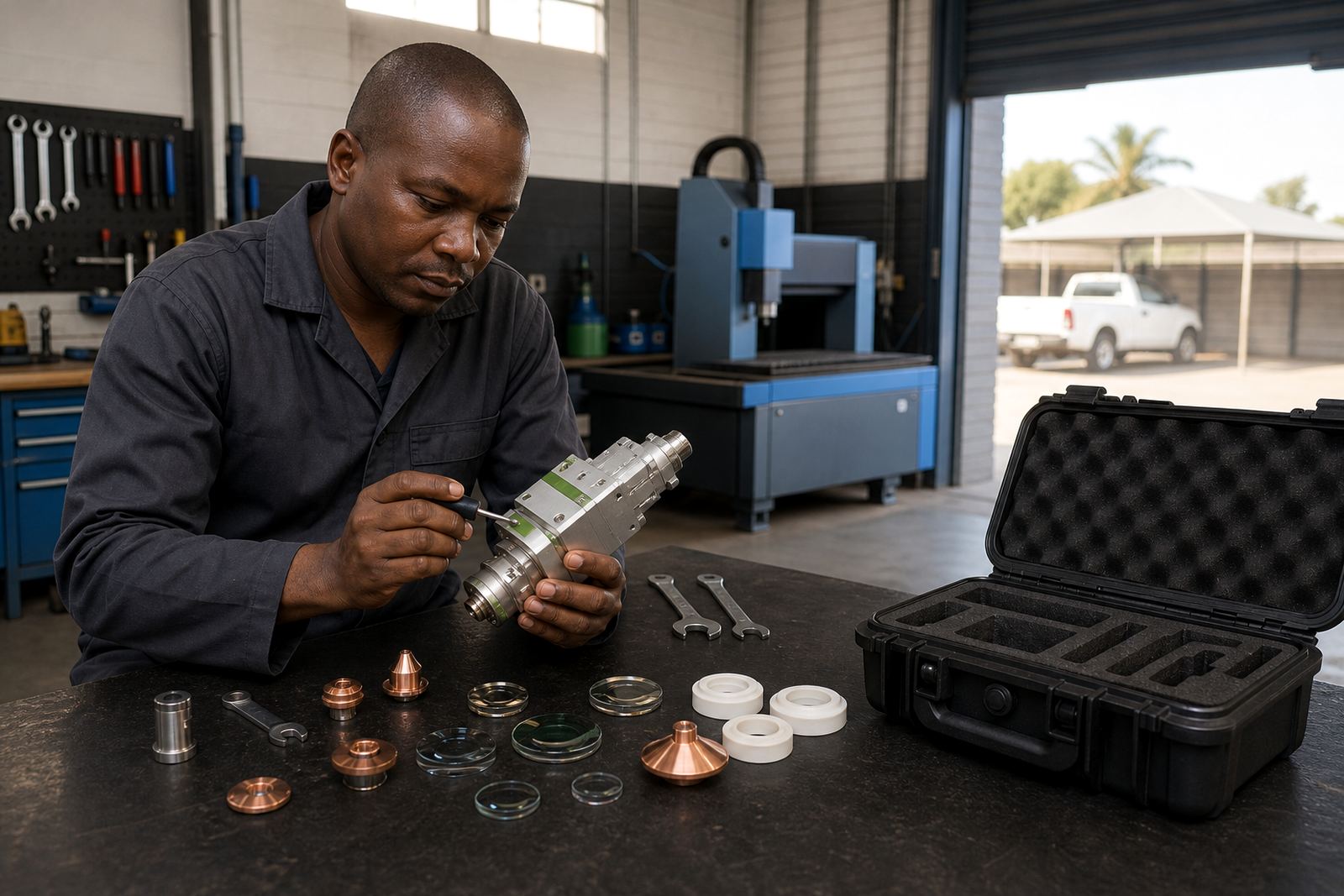
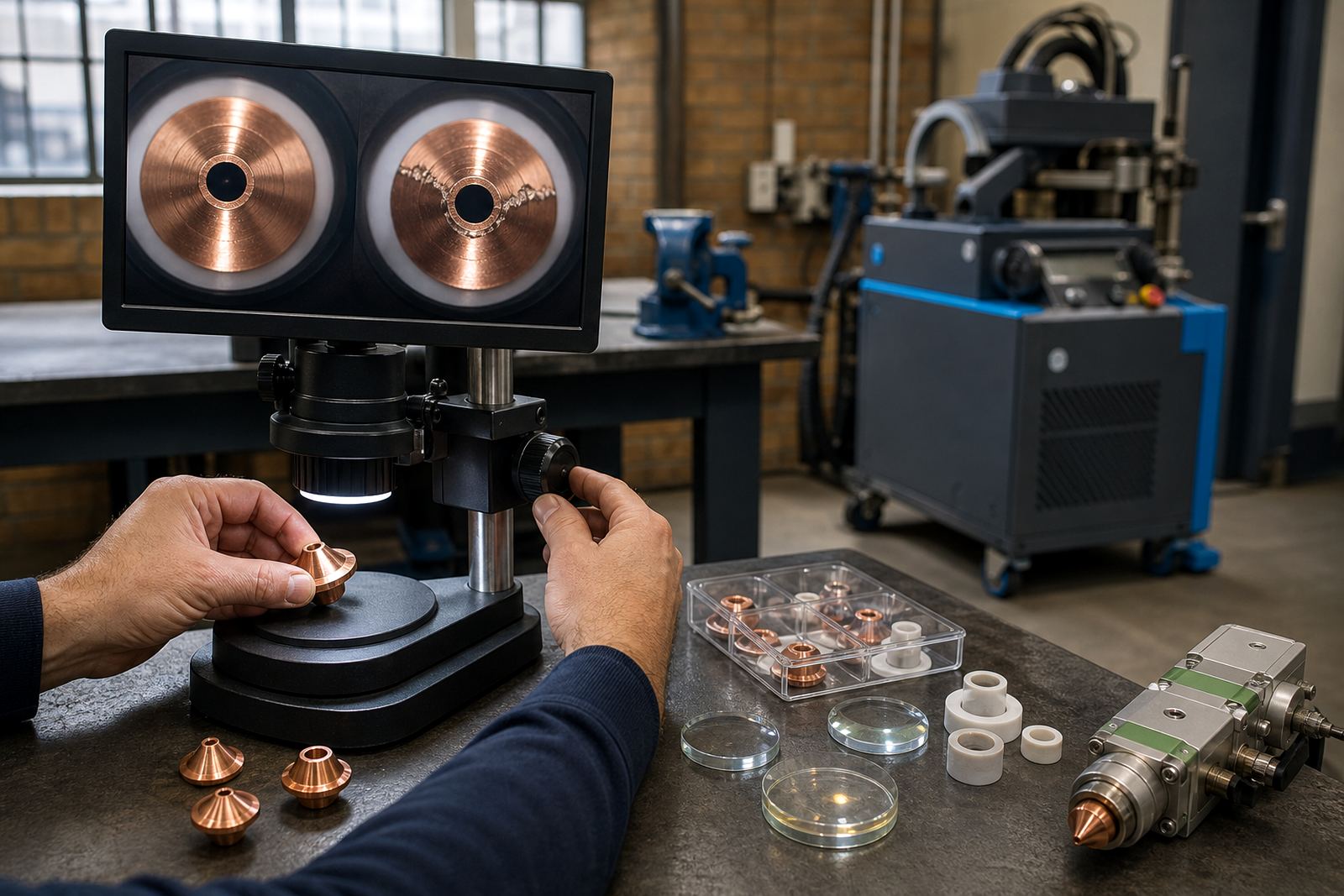
Bench service is the right time for nozzle centring, focus setting checks, lens cleaning and a proper look at the capacitive sensing path. Small errors in centring or focus can leave burrs, striations or uneven pierce marks that look like a cutting program problem when the head is really out of tune.
Cleaning should be careful and controlled. Lenses need proper handling, the protective window must sit clean in its carrier, and the ceramic ring should be checked for chips or heat marks before the head goes back to work.
For many sheet-metal shops, the useful order is simple: inspect first, clean second, replace worn parts third, then set the head geometry last. That sequence keeps the service from chasing its own tail.
When on-site alignment is the better call
Some heads should not leave the shop floor if the machine position, beam path or cutting table needs live checking. On-site head alignment is practical when the issue sits in the machine setup rather than inside the head body alone.
A technician can check the cutting height behaviour, confirm the sensor reading, inspect the gas path and verify whether the head tracks correctly under real cutting conditions. That is often the better route after a crash, or when repeated nozzle wear points to a setting issue rather than a parts fault.
- Use on-site alignment after a collision or Z-axis problem.
- Choose it if the machine is cutting poorly after a change in sheet thickness.
- Call for live checks when the same fault returns after part replacement.
Keep a spare head ready before the machine stops
A spare head is not a luxury on a busy line, it is part of the downtime plan. If the main head needs a seal rebuild, lens replacement or deeper inspection, a prepared spare can keep the cutting room moving while the damaged unit sits on the bench.
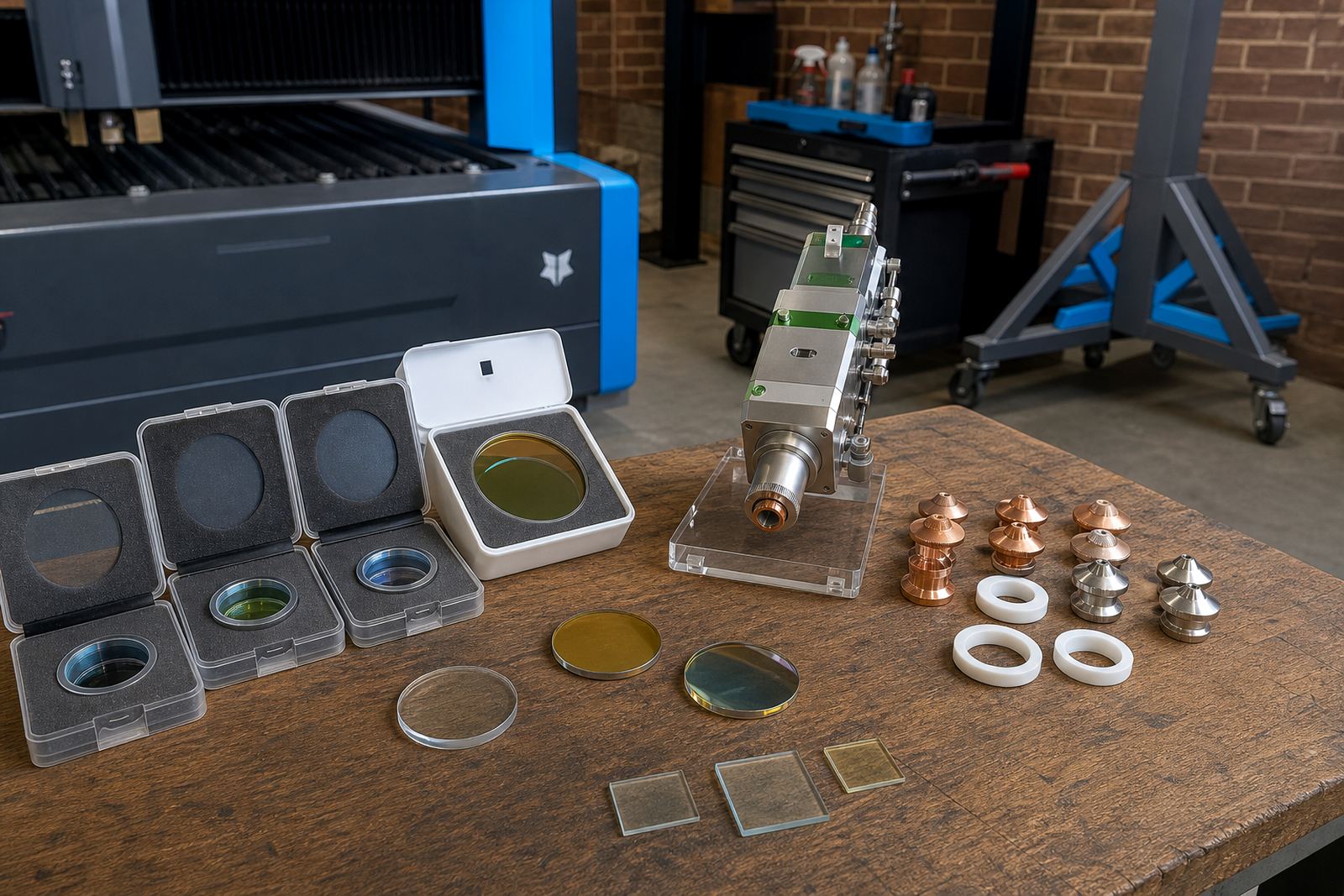
Good spare head prep means the optics are clean, the nozzle path is correct, the ceramic ring is sound and the focus setting is recorded. It also helps to keep a small stock of single layer and double layer nozzles, protective windows and common seals near the machine so the next service does not start from zero.
What a clean handover file should hold
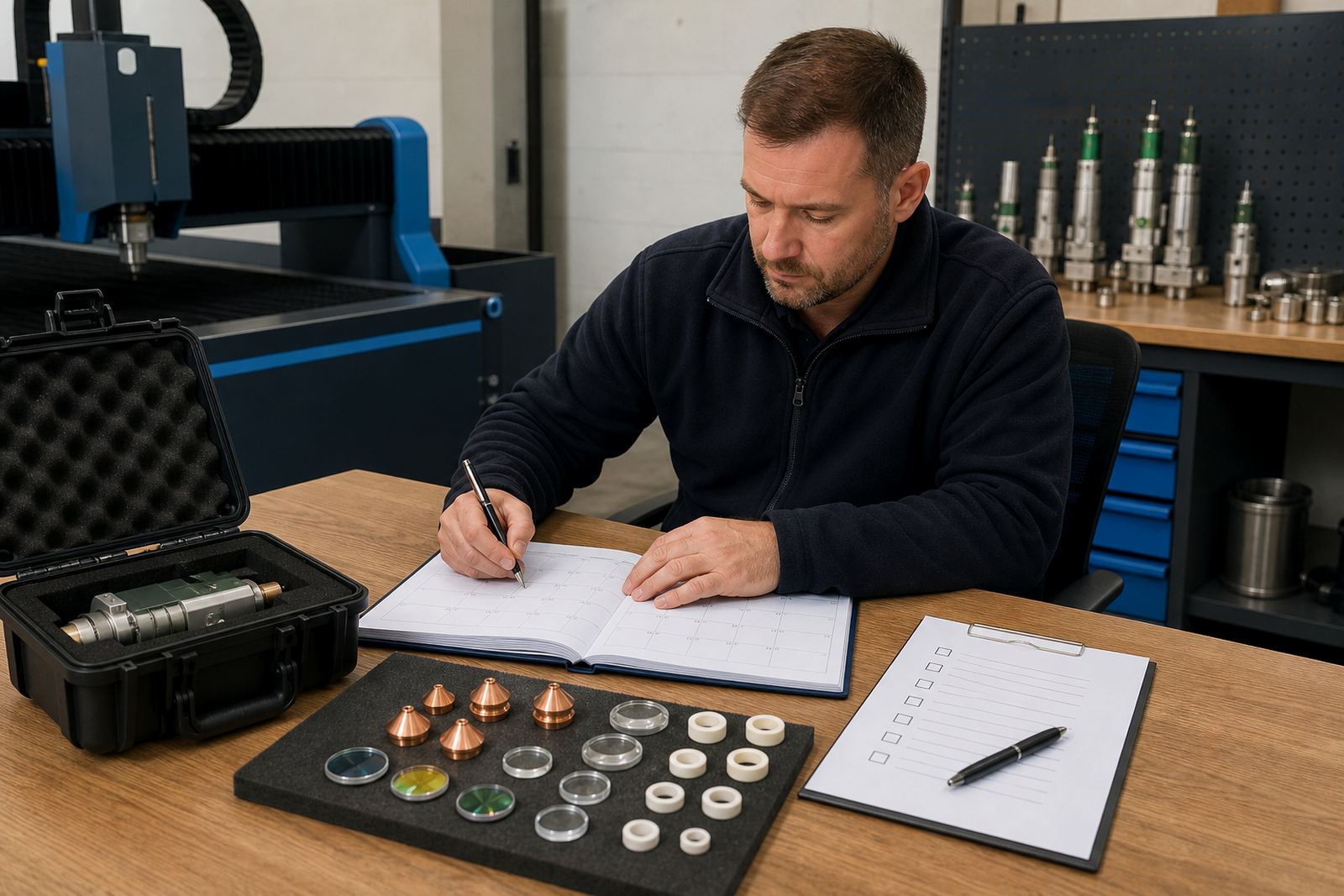
A short service file helps both the workshop and the site crew. It does not need long notes, only the facts that affect alignment, cleaning and parts selection. If the machine runs across Johannesburg, Pretoria, Durban, Cape Town or Rustenburg, the same file can travel with the head and avoid repeating the details.
Keep the record practical and direct. The best notes are the ones a technician can read while standing at the bench with gloves on and no time to guess.
- Machine name and head type.
- Problem seen before removal.
- Parts already changed on site.
- Any changes to focus, nozzle or sensor behaviour.
- Contact form details for the person handling the job.