Start with the parts that take the first hit
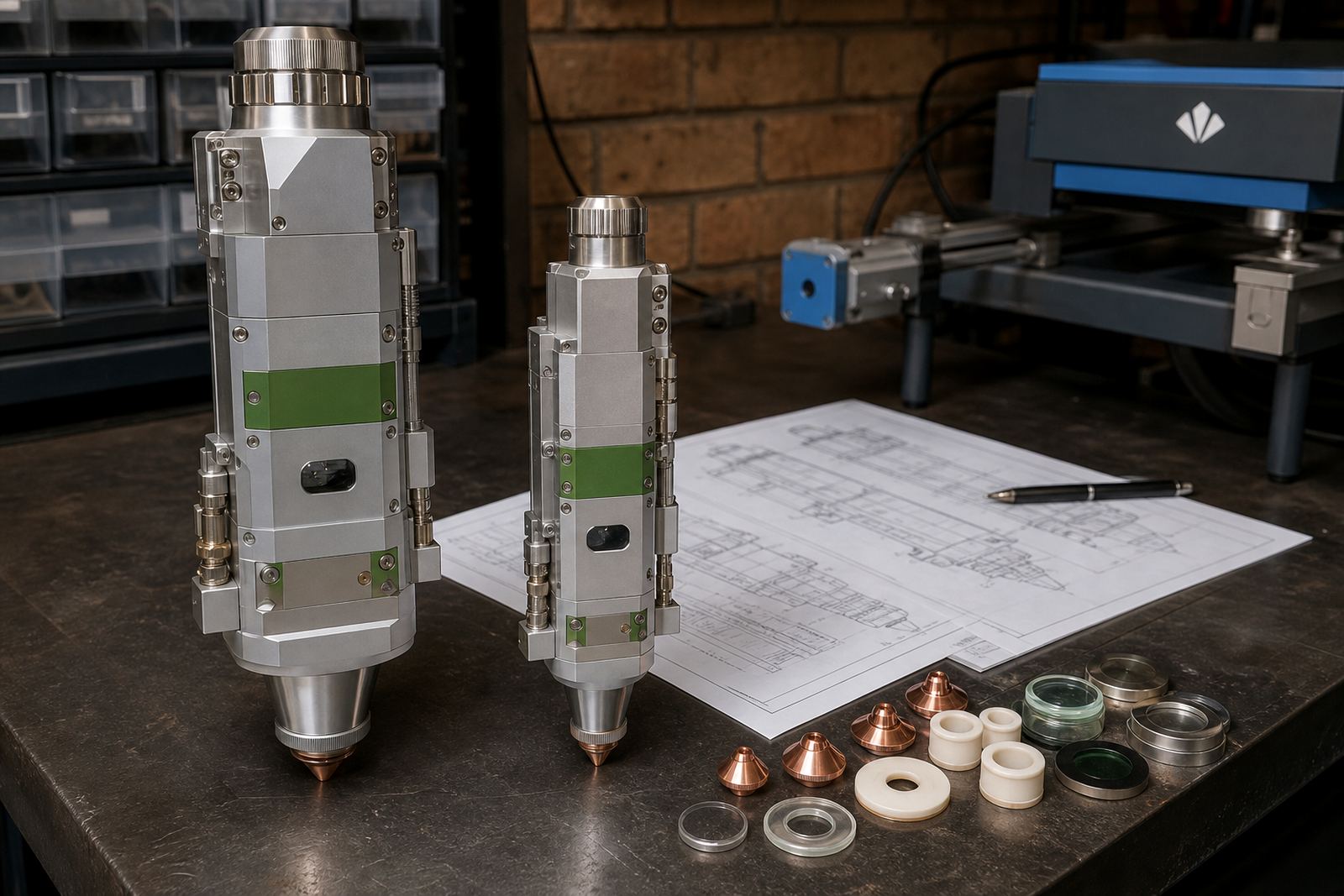
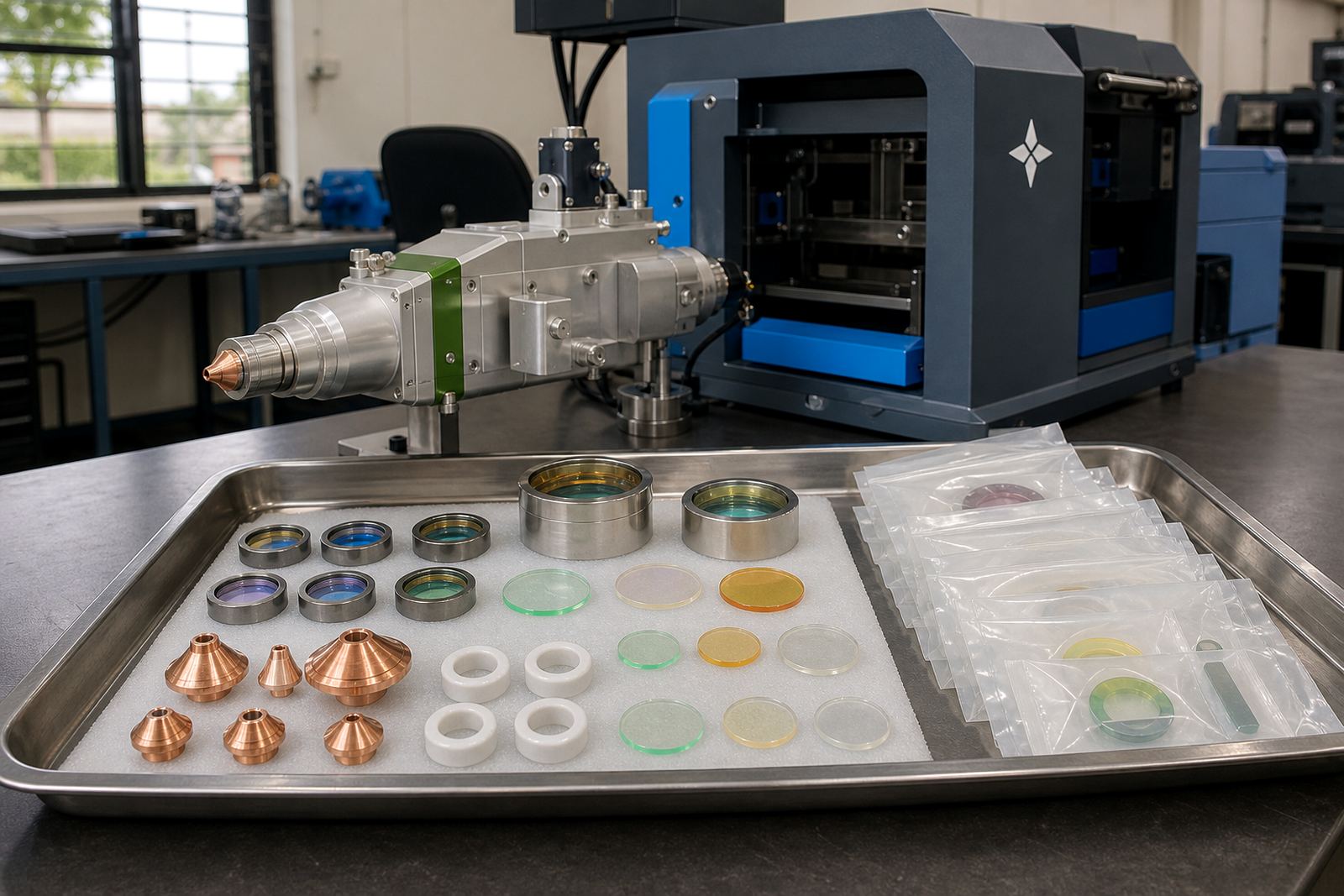
The nozzle, protective window and ceramic ring sit in the path of heat, spatter and fine dust. When one of those parts is off centre or dirty, the cut edge often shows it before the operator notices a larger fault.
In sheet-metal work, the waste usually starts with small habits: wiping with the wrong cloth, leaving a nozzle loose, or pushing a head back into service after a minor crash. A clean head is not about looks only, it is about keeping the beam path stable and the assist gas where it should be.
- Check the nozzle tip for oval wear, burrs and soot build-up.
- Look for haze, specks or pin marks on the protective window.
- Inspect the ceramic ring for chips, cracks and loose seating.
- Confirm that the head seals and mating faces are clean before refitting.
Nozzle care that saves parts instead of spending them
Single layer and double layer nozzles both need proper centring. If the gas jet leaves the bore off axis, the cut can pick up dross and the nozzle takes the heat load unevenly. That is how a part that should last becomes a throwaway item far too early.
Keep a separate container for cleaned nozzles and another for worn ones. Mixed storage leads to scratched bores, bent tips and unnecessary change-outs. A nozzle that is dropped on a steel floor may still fit, but the bore can be out enough to cause poor cut quality.
- Fit nozzles with clean fingers or clean tools only.
- Do not over-tighten the body against the ceramic ring.
- Replace nozzles that show heat marks around the bore.
- Keep single layer and double layer types separated on the shelf.
Protective windows last longer when the head stays clean
The protective window is there to take the dirt before it reaches the costly optics. If the gas path is leaking, the window can fog or pit faster than expected. That is why window waste is often linked to seals, dust control and cleaning routine, not just the window itself.
Use a clean lint-free wipe and the correct solvent for the optic surface. Never rub a window with workshop cloth, paper towel or a dirty glove. Fine scratches may not show at first, but they scatter the beam and make the next job harder to hold on spec.
- Replace any window with edge chips or a milky patch in the coating.
- Check the head seal and retaining surfaces before fitting a new window.
- Keep spare windows sealed until needed.
- Handle each window by the edge only, with dry hands.
Ceramic rings and why alignment matters more than most people think
A ceramic ring does more than hold parts in place. It sets the base for the head stack, helps protect the body from heat and supports a steady run of the cutting head. When the ring is chipped or not seated correctly, the nozzle position can shift just enough to waste consumables and cut quality.
After a crash or a noisy cut start, check the ring before you blame the lens. A ring with hairline cracks can still hold together for a while, but it often lets the head drift or vibrate under load. That movement increases wear on the nozzle and window too.
- Inspect for chips around the outer edge and mounting face.
- Replace rings that show heat stress or crushed corners.
- Make sure the ring sits flat before any alignment work.
- Keep spare rings dry and away from metal dust.
Focus settings and capacitive sensing need a stable baseline
Focus settings are only useful when the sensing system is reading the sheet correctly. If the capacitive height sensing is dirty or the sensor face is damaged, the head may ride too high or too low. That can burn through a nozzle, mark a window or leave the cut edge rough.
Set the focus on known material thicknesses and recheck after lens cleaning, nozzle replacement or any head service. The aim is not guesswork, it is repeatable cut height and a clean gas stream through the bore. In shops that run mixed gauge sheet, small changes in focus often make a bigger difference than people expect.
- Clean the sensor area before checking height readings.
- Confirm the focus position after any crash or head strip-down.
- Watch for unstable height jumps on reflective or oily sheet.
- Record the working focus setting for common material types.
A service routine that cuts waste across the week
A useful routine is not complicated. It starts with a quick visual check before the first cut, then a deeper inspection when the shift ends or the head has worked through heavy spatter. Shops that keep to a routine usually use fewer emergency parts and see less guesswork around faults.
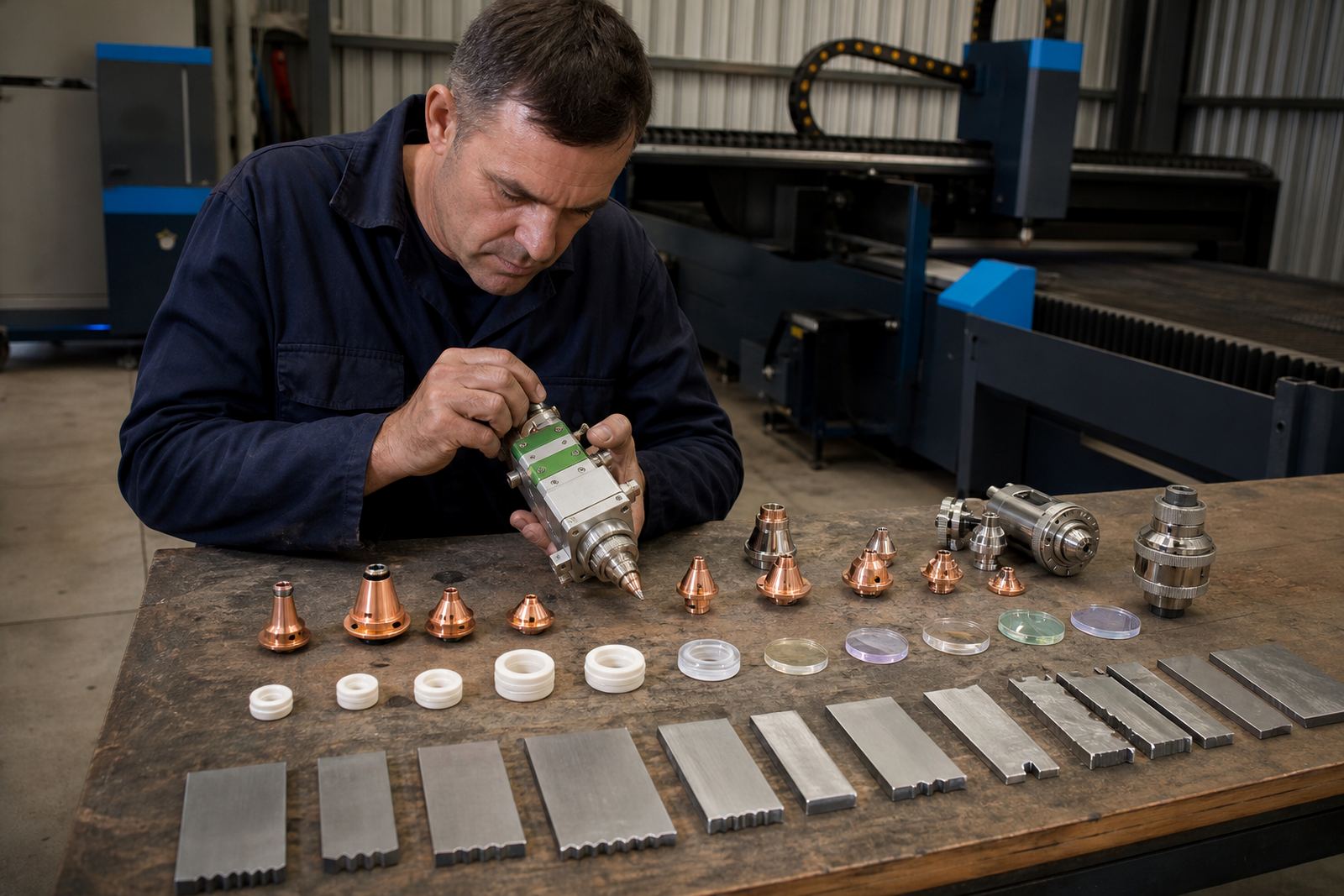
Raytool handles bench servicing and on-site head alignment for fibre laser cutting heads used in sheet-metal work. That includes nozzle centring, lens cleaning, protective window replacement, ceramic ring replacement, capacitive sensor checks, gas path inspection, head seal rebuild and crash damage inspection. The point is to keep the beam path steady and the consumables in the right condition for the job.
- Wipe the external head surfaces before and after production.
- Check gas flow and head seals during regular maintenance.
- Hold a modest stock of nozzles, windows and ceramic rings so the machine does not stand idle over a worn part.
- Send the head for bench service when wear marks start to repeat.